


Question: Case Study #10 - Recruiting When qualified candidates are scarce, recruiting becomes extremely competitive, particularly when companies go after the same candidate. This often happens
Case Study #10 - Recruiting When qualified
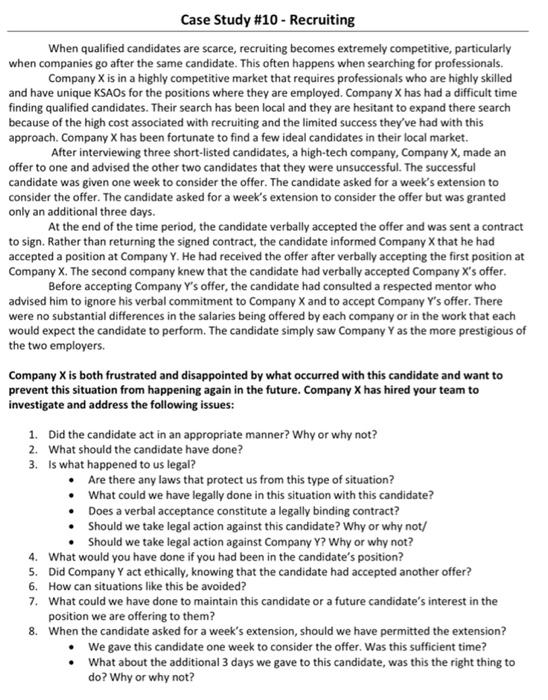
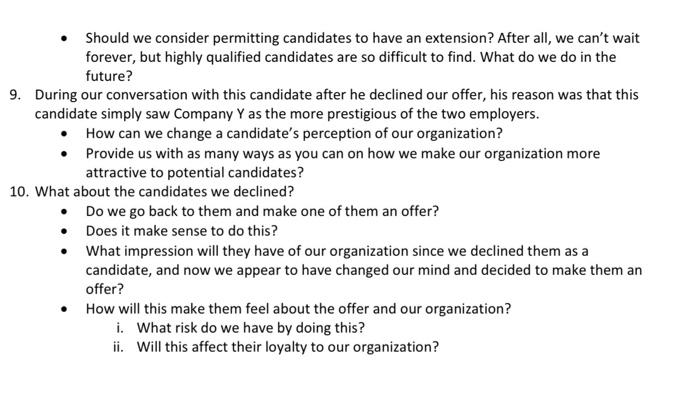
Case Study #10 - Recruiting When qualified candidates are scarce, recruiting becomes extremely competitive, particularly when companies go after the same candidate. This often happens when searching for professionals. Company X is in a highly competitive market that requires professionals who are highly skilled and have unique KSAOs for the positions where they are employed. Company X has had a difficult time finding qualified candidates. Their search has been local and they are hesitant to expand there search because of the high cost associated with recruiting and the limited success they've had with this approach. Company X has been fortunate to find a few ideal candidates in their local market. After interviewing three short-listed candidates, a high-tech company, Company X, made an offer to one and advised the other two candidates that they were unsuccessful. The successful candidate was given one week to consider the offer. The candidate asked for a week's extension to consider the offer. The candidate asked for a week's extension to consider the offer but was granted only an additional three days. At the end of the time period, the candidate verbally accepted the offer and was sent a contract to sign. Rather than returning the signed contract, the candidate informed Company that he had accepted a position at Company Y. He had received the offer after verbally accepting the first position at Company X. The second company knew that the candidate had verbally accepted Company X's offer. Before accepting Company Y's offer, the candidate had consulted a respected mentor who advised him to ignore his verbal commitment to Company and to accept Company Y's offer. There were no substantial differences in the salaries being offered by each company or in the work that each would expect the candidate to perform. The candidate simply saw Company Y as the more prestigious of the two employers. Company X is both frustrated and disappointed by what occurred with this candidate and want to prevent this situation from happening again in the future. Company X has hired your team to investigate and address the following issues: 1. Did the candidate act in an appropriate manner? Why or why not? 2. What should the candidate have done? 3. Is what happened to us legal? Are there any laws that protect us from this type of situation? What could we have legally done in this situation with this candidate? Does a verbal acceptance constitute a legally binding contract? Should we take legal action against this candidate? Why or why not/ Should we take legal action against Company Y? Why or why not? 4. What would you have done if you had been in the candidate's position? 5. Did Company Y act ethically, knowing that the candidate had accepted another offer? 6. How can situations like this be avoided? 7. What could we have done to maintain this candidate or a future candidate's interest in the position we are offering to them? 8. When the candidate asked for a week's extension, should we have permitted the extension? We gave this candidate one week to consider the offer. Was this sufficient time? What about the additional 3 days we gave to this candidate, was this the right thing to do? Why or why not? Should we consider permitting candidates to have an extension? After all, we can't wait forever, but highly qualified candidates are so difficult to find. What do we do in the future? 9. During our conversation with this candidate after he declined our offer, his reason was that this candidate simply saw Company Y as the more prestigious of the two employers. How can we change a candidate's perception of our organization? Provide us with as many ways as you can on how we make our organization more attractive to potential candidates? 10. What about the candidates we declined? Do we go back to them and make one of them an offer? Does it make sense to do this? What impression will they have of our organization since we declined them as a candidate, and now we appear to have changed our mind and decided to make them an offer? How will this make them feel about the offer and our organization? i. What risk do we have by doing this? ii. Will this affect their loyalty to our organization

Step by Step Solution

There are 3 Steps involved in it

1 Expert Approved Answer
Step: 1 Unlock blur-text-image

Question Has Been Solved by an Expert!

Get step-by-step solutions from verified subject matter experts

Step: 2 Unlock
Step: 3 Unlock

Students Have Also Explored These Related General Management Questions!