







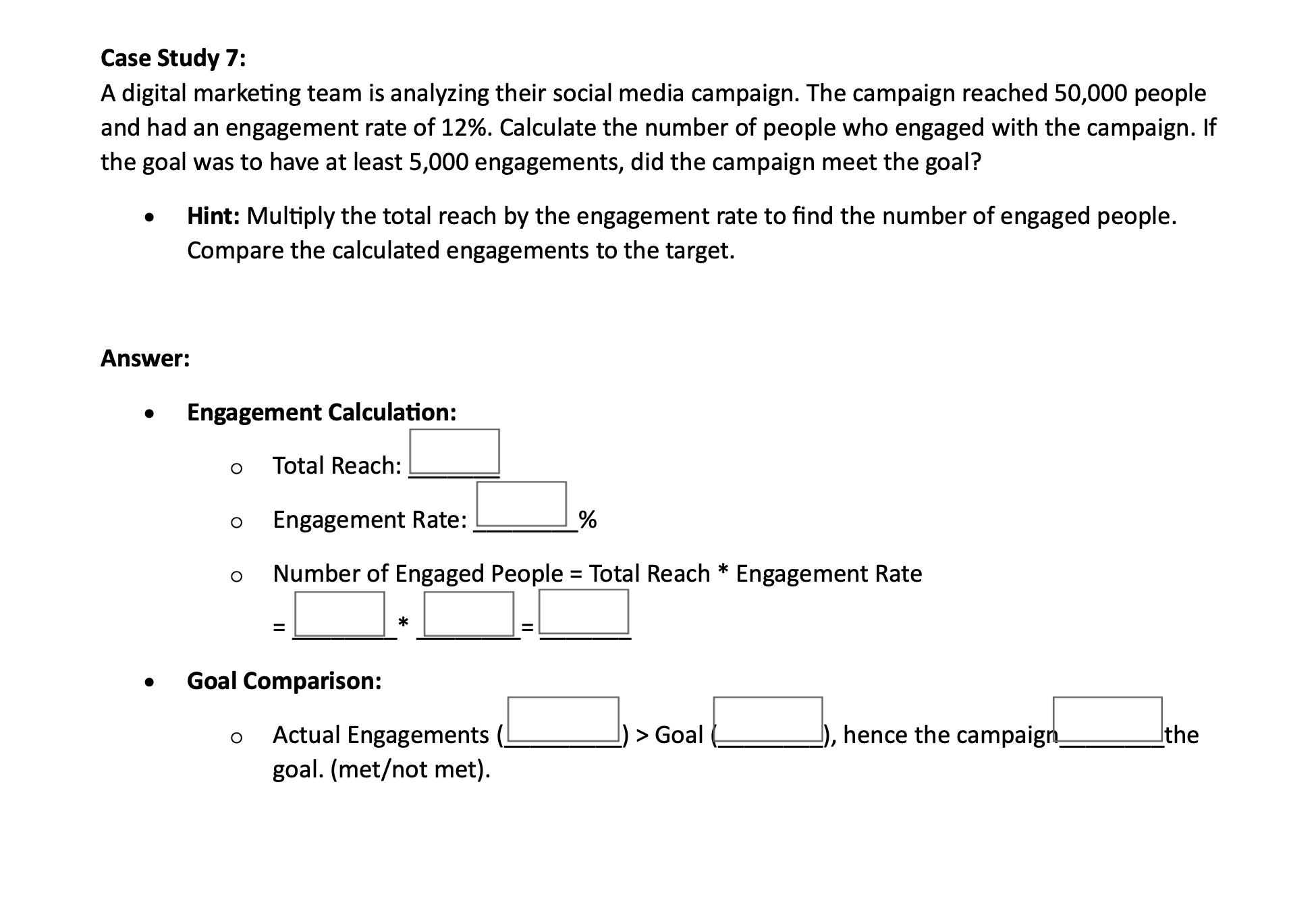
Question: Case Study 7 : A digital marketing team is analyzing their social media campaign. The campaign reached 5 0 , 0 0 0 people and
Case Study :
A digital marketing team is analyzing their social media campaign. The campaign reached people and had an engagement rate of Calculate the number of people who engaged with the campaign. If the goal was to have at least engagements, did the campaign meet the goal?
Hint: Multiply the total reach by the engagement rate to find the number of engaged people. Compare the calculated engagements to the target.
Answer:
Engagement Calculation:
Total Reach:
Engagement Rate:
Number of Engaged People Total Reach Engagement Rate
quad
Goal Comparison:
Actual Engagements Goal I hence the campaigr the goal. metnot met Case Study :
A company's website sees a reduction in its bounce rate from to If the website receives visitors, how many fewer people bounced? Also, calculate the new number of visitors who stayed on the site.
Hint: Calculate the number of initial and new bounces using the bounce rates and subtract to find the reduction. Subtract the new bounces from the total visitors to find the number of visitors who stayed.
Answer:
Bounce Rate Calculation:
Initial Bounce Rate:
New Bounce Rate:
Number of Visitors:
Initial Bounces Initial Bounce Rate Number of Visitors ldotsquad quad
New Bounces New Bounce Rate Number of Visitors
ldots
Reduction in Bounces Initial Bounces New Bounces
Number of Visitors who Stayed:
New Visitors who Stayed Number of Visitors New Bounces
Case Study :
An ecommerce site has a conversion rate of and wants to increase it to If the site currently receives visitors, calculate the increase in the number of conversions needed to achieve the new conversion rate.
Hint: Multiply the initial and new conversion rates by the number of visitors to find the initial and new conversions. Subtract to find the increase in conversions.
Answer:
Initial Conversions:
Initial Conversion Rate:
Number of Visitors:
Initial Conversions Initial Conversion Rate Number of Visitors
New Conversions:
New Conversion Rate:
New Conversions New Conversion Rate Number of Visitors
Increase in Conversions:
Increase in Conversions New Conversions Initial Conversions Case Study :
A company's digital marketing campaign generated leads from visitors. Out of these leads, converted into customers. Calculate the leadtovisitor conversion rate and the leadtocustomer conversion rate. Determine if the leadtocustomer conversion rate is above or below mathbf
Hint: Divide the number of leads by the number of visitors and multiply by to find the leadtovisitor conversion rate. Divide the number of customers by the number of leads and multiply by to find the leadtocustomer conversion rate. Compare the calculated rate to
Answer:
LeadtoVisitor Conversion Rate:
Number of Leads:
Number of Visitors:
LeadtoVisitor Conversion Rate Number of Leads Number of Visitors
quad quad quad
LeadtoCustomer Conversion Rate:
Number of Customers:
LeadtoCustomer Conversion Rate Number of Customers Number of Leads
quad quad quad
Comparison:
The LeadtoCustomer Conversion Rate is
Step by Step Solution
There are 3 Steps involved in it
1 Expert Approved Answer
Step: 1 Unlock

Question Has Been Solved by an Expert!
Get step-by-step solutions from verified subject matter experts
Step: 2 Unlock
Step: 3 Unlock
 Study Help