







Question: what are the main points that can adapt to this PowerPoint? how related? Explain Case Study 7 Rural-Urban Migration and Urbanization in Developing Countries: India
 what are the main points that can adapt to this PowerPoint? how related? Explain
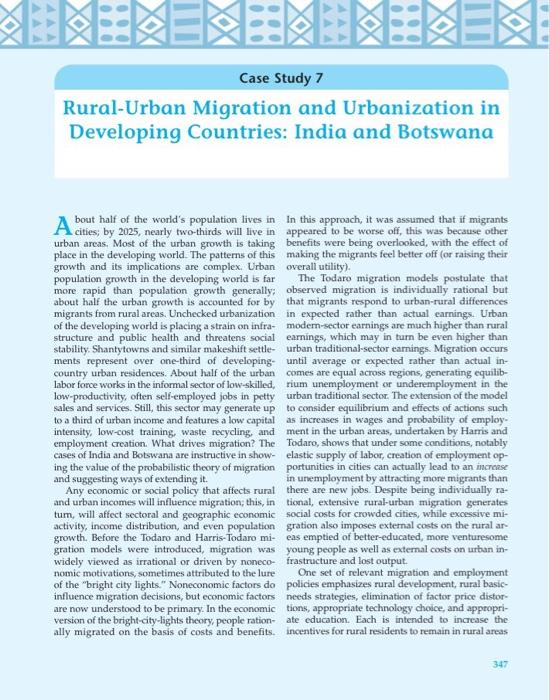
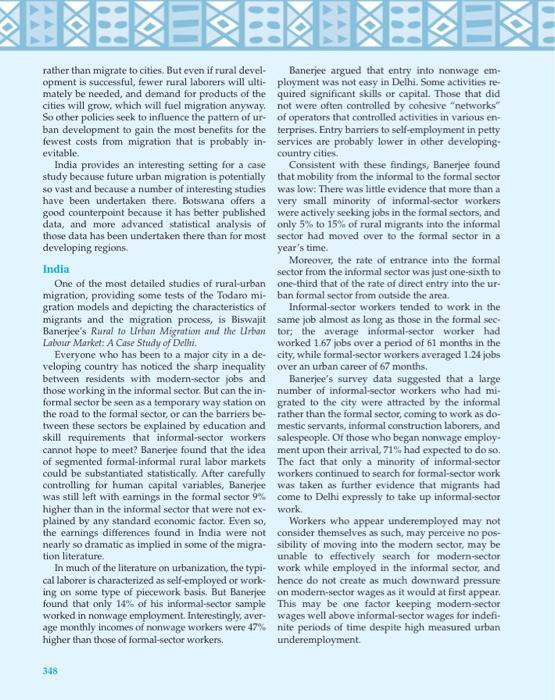
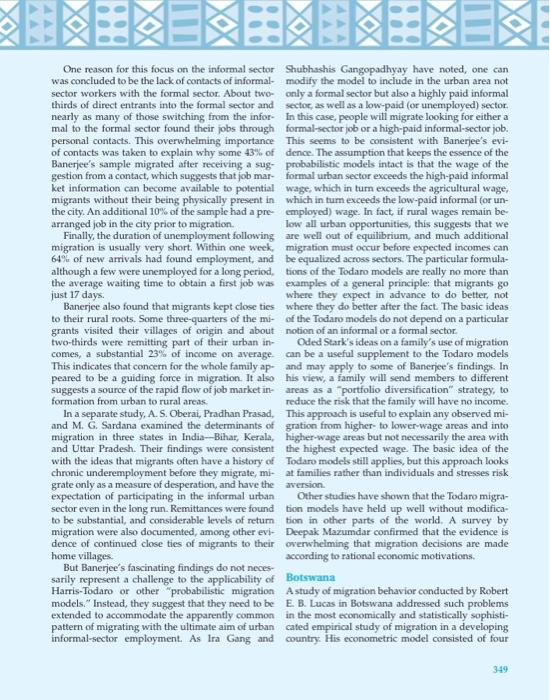
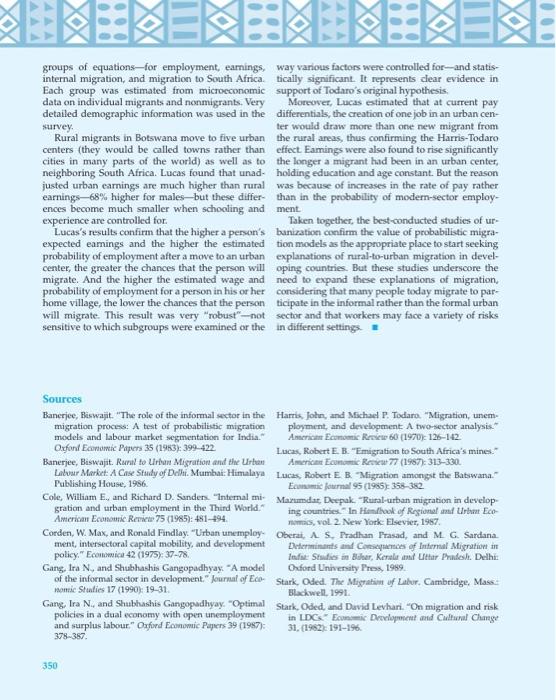
Case Study 7 Rural-Urban Migration and Urbanization in Developing Countries: India and Botswana bout half of the world's population lives in urban areas. Most of the urban growth is taking place in the developing world. The patterns of this growth and its implications are complex. Urban population growth in the developing world is far more rapid than population growth generally; about half the urban growth is accounted for by migrants from rural areas. Unchecked urbanization of the developing world is placing a strain on infra- structure and public health and threatens social stability. Shantytowns and similar makeshift settle- ments represent over one-third of developing- country urban residences. About half of the urban labor force works in the informal sector of low-skilled, low-productivity, often self-employed jobs in petty sales and services. Still, this sector may generate up to a third of urban income and features a low capital intensity, low-cost training, waste recycling, and employment creation. What drives migration? The cases of India and Botswana are instructive in show- ing the value of the probabilistic theory of migration and suggesting ways of extending it. Any economic or social policy that affects rural and urban incomes will influence migration; this, in tum, will affect sectoral and geographic economic activity, income distribution, and even population growth. Before the Todaro and Harris-Todaro mi- gration models were introduced, migration was widely viewed as irrational or driven by noneco- nomic motivations, sometimes attributed to the lure of the "bright city lights." Noneconomic factors do influence migration decisions, but economic factors are now understood to be primary. In the economic version of the bright-city-lights theory, people ration- ally migrated on the basis of costs and benefits. In this approach, it was assumed that if migrants benefits were being overlooked, with the effect of making the migrants feel better off (or raising their overall utility). The Todaro migration models postulate that observed migration is individually rational but that migrants respond to urban-rural differences in expected rather than actual earnings. Urban modern-sector earnings are much higher than rural earnings, which may in turn be even higher than urban traditional-sector earnings. Migration occurs until average or expected rather than actual in- comes are equal across regions, generating equilib- rium unemployment or underemployment in the urban traditional sector. The extension of the model to consider equilibrium and effects of actions such as increases in wages and probability of employ- ment in the urban areas, undertaken by Harris and Todaro, shows that under some conditions, notably elastic supply of labor, creation of employment op- portunities in cities can actually lead to an increase in unemployment by attracting more migrants than there are new jobs. Despite being individually ra- tional, extensive rural-urban migration generates social costs for crowded cities, while excessive mi- gration also imposes external costs on the rural ar- eas emptied of better-educated, more venturesome young people as well as external costs on urban in- frastructure and lost output. One set of relevant migration and employment policies emphasizes rural development, rural basic- needs strategies, elimination of factor price distor- tions, appropriate technology choice, and appropri- ate education. Each is intended to increase the incentives for rural residents to remain in rural areas 347
Step by Step Solution
3.37 Rating (153 Votes )
There are 3 Steps involved in it
The main points that can be adapted to this PowerPoint are that migration is driven by economic factors that migrants often have a preference for the informal urban sector and that the duration of une... View full answer

Get step-by-step solutions from verified subject matter experts
 Study Help