







Question: Case Study: Apple Inc. vs . FBI ( 2 0 1 6 ) Background In December 2 0 1 5 , a terrorist attack in
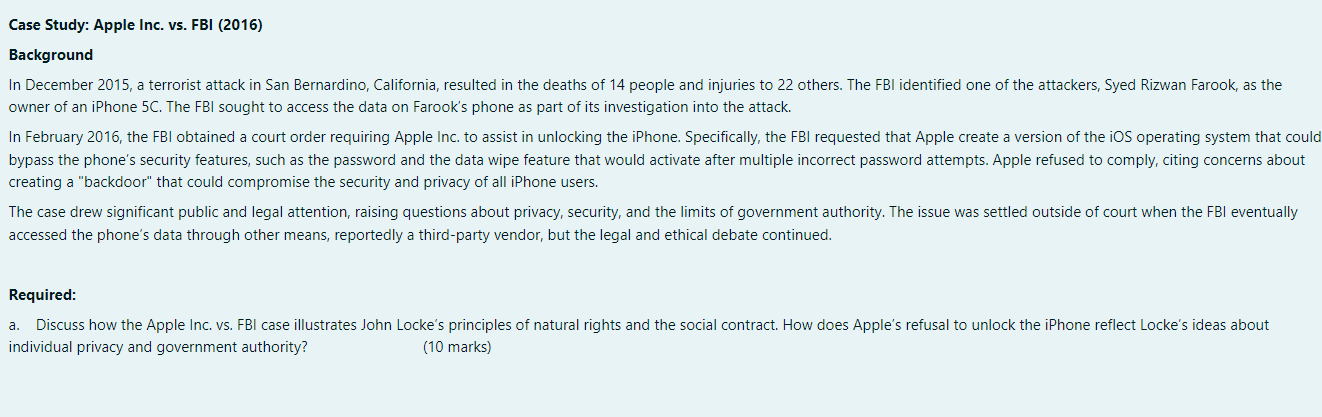
Case Study: Apple Inc. vs FBI
Background
In December a terrorist attack in San Bernardino, California, resulted in the deaths of people and injuries to others. The FBI identified one of the attackers, Syed Rizwan Farook, as the
owner of an iPhone C The FBI sought to access the data on Farook's phone as part of its investigation into the attack.
In February the FBI obtained a court order requiring Apple Inc. to assist in unlocking the iPhone. Specifically, the FBI requested that Apple create a version of the iOS operating system that could
bypass the phone's security features, such as the password and the data wipe feature that would activate after multiple incorrect password attempts. Apple refused to comply, citing concerns about
creating a "backdoor" that could compromise the security and privacy of all iPhone users.
The case drew significant public and legal attention, raising questions about privacy, security, and the limits of government authority. The issue was settled outside of court when the FBI eventually
accessed the phone's data through other means, reportedly a thirdparty vendor, but the legal and ethical debate continued.
Required:
a Discuss how the Apple Inc. vs FBI case illustrates John Locke's principles of natural rights and the social contract. How does Apple's refusal to unlock the iPhone reflect Locke's ideas about
individual privacy and government authority?
marks
Step by Step Solution
There are 3 Steps involved in it
1 Expert Approved Answer
Step: 1 Unlock

Question Has Been Solved by an Expert!
Get step-by-step solutions from verified subject matter experts
Step: 2 Unlock
Step: 3 Unlock
 Study Help