



Question: Case Study: Navigating Operational and Ethical Challenges in a Publishing Firm's Transition You are a manager in a privately held publishing firm. The firm is
Case Study: Navigating Operational and Ethical Challenges in a Publishing Firm's Transition
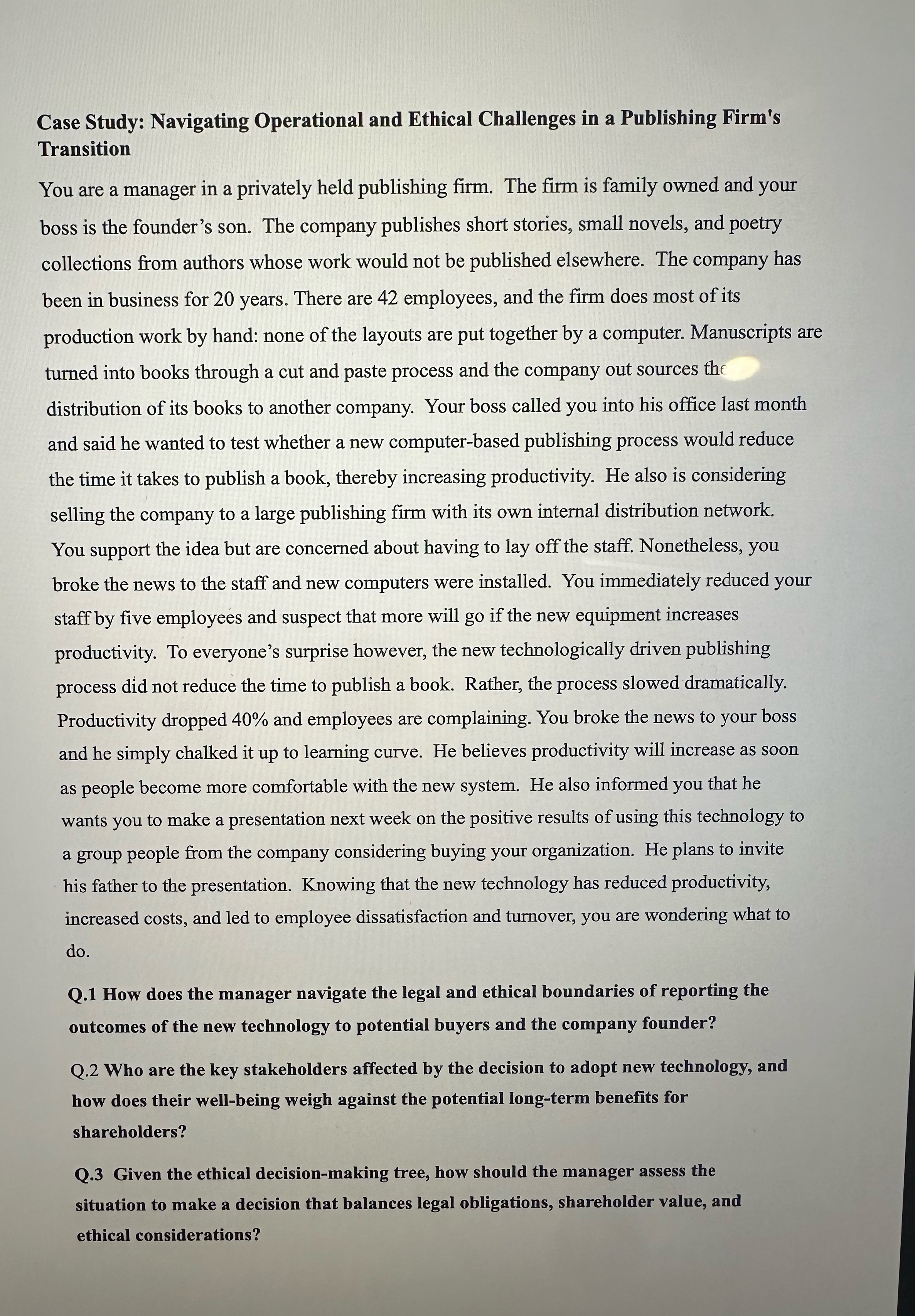
You are a manager in a privately held publishing firm. The firm is family owned and your boss is the founder's son. The company publishes short stories, small novels, and poetry collections from authors whose work would not be published elsewhere. The company has been in business for years. There are employees, and the firm does most of its production work by hand: none of the layouts are put together by a computer. Manuscripts are turned into books through a cut and paste process and the company out sources the distribution of its books to another company. Your boss called you into his office last month and said he wanted to test whether a new computerbased publishing process would reduce the time it takes to publish a book, thereby increasing productivity. He also is considering selling the company to a large publishing firm with its own internal distribution network. You support the idea but are concerned about having to lay off the staff. Nonetheless, you broke the news to the staff and new computers were installed. You immediately reduced your staff by five employees and suspect that more will go if the new equipment increases productivity. To everyone's surprise however, the new technologically driven publishing process did not reduce the time to publish a book. Rather, the process slowed dramatically. Productivity dropped and employees are complaining. You broke the news to your boss and he simply chalked it up to learning curve. He believes productivity will increase as soon as people become more comfortable with the new system. He also informed you that he wants you to make a presentation next week on the positive results of using this technology to a group people from the company considering buying your organization. He plans to invite his father to the presentation. Knowing that the new technology has reduced productivity, increased costs, and led to employee dissatisfaction and turnover, you are wondering what to do
Q How does the manager navigate the legal and ethical boundaries of reporting the outcomes of the new technology to potential buyers and the company founder?
Q Who are the key stakeholders affected by the decision to adopt new technology, and how does their wellbeing weigh against the potential longterm benefits for shareholders?
Q Given the ethical decisionmaking tree, how should the manager assess the situation to make a decision that balances legal obligations, shareholder value, and ethical considerations?
Step by Step Solution
There are 3 Steps involved in it
1 Expert Approved Answer
Step: 1 Unlock

Question Has Been Solved by an Expert!
Get step-by-step solutions from verified subject matter experts
Step: 2 Unlock
Step: 3 Unlock