Question: Case Study: please someone should help me answer my case study assignment. thank you 1. What do you do when one of your small competitors
Case Study: please someone should help me answer my case study assignment. thank you
1. What do you do when one of your small
competitors pulls out its big gun?
2. "Do you really think people will renew their contracts with us out of nostalgia
3. Should Joe ignore or respond to TelZip's bold
move?
4. It's crunch time, and your star has quit. Whom should you turn to?
5. Should Tim take a chance on his rookie?
6. Rob had put an end to the gripe sessions. As
The Growing Places employees who he was fond of saying, "I can't deal with people whose feelings bruise so easily. Are we grown-ups or babies who need coddling?"
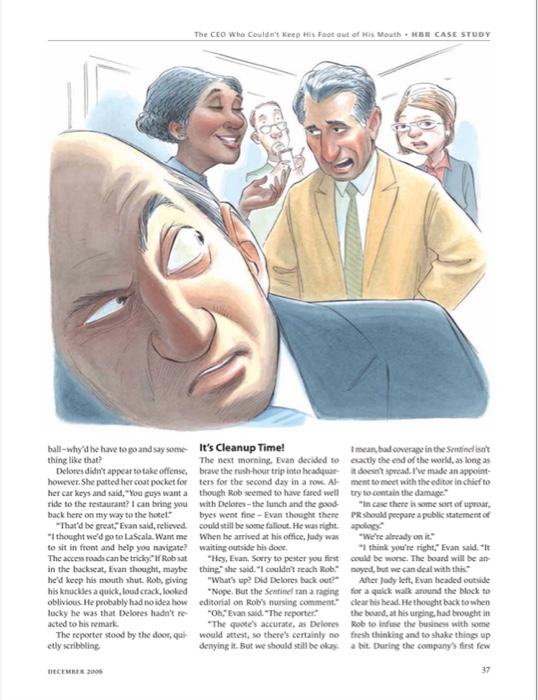
LUSTRATION ELLE EXPERIENCE Case Study F The Experts Georg Tacke is the co-CEO of Simon-Kucher & Partners. He is based in Bonn Germany Anne Gro Gulla is the group branding director for Telenor Group in Oslo, Norway HBR's fictional cases present dilemmas faced by real leaders and offer solutions from experts HBR.ORG Marco Bertin is an assistant professor of marketing at London Business School Nirmalya Kumar is a professor of marketing and codirector of the Aditya Birta India Centre at London Business School What do you do when one of your small competitors pulls out its big gun? by Marco Bertini and Nirmalya Kumar The Upstart's Assault oseph Ulan spent his first few his lips narrow "Free broadband forever with TelZipt Save at least C450 a year when you switch from Meridicom minutes in the office on Wednesday Googling the weather in Sardinia He, Ana, and the boys were set to fly there on Saturday, and although he wasn't looking forward to the Alitalia flight, the prospect of two weeks on the beach seemed heavenly. No questions from his CEO about why the new customer initia tives were behind schedule. No excuses from the landline, mobile, and broadband division heads about why their respec tive service centers and billing systems couldn't be integrated. No meetings to run, no presentations to prepare. He couldn't TelZip, a small mobile network opera tor eager to break into new markets, had decided to offer free broadband service to business customers who were willing to leave their current provider and enter into a long-term contract. As the oldest and largest telecommunications player in the country, Meridicom was accustomed to seeing both old and new competitors- bigger mobile companies, cable TV opera- tors, and internet providers-undercut its prices on all types of services by the usual 10%. Meridicom was the industry price leader, so when it published rates, every one else reacted predictably. But Teip was now changing the game-not only giving away a high-growth, high-margin product but attacking Meridicom head-on. wait to step out of his chief marketing officer suit and into his Daddy sandals and swim trunks. Only 72 more hours, Joe thought, smil ing as he opened that morning's Financial Times. But the ad spanning page 3 made EXPERIENCE Joe had barely digested the news when CEO Gerald Segner opened the door. "Why didn't we know about this?" he asked, stern but calm. "We suspected that TelZip was planning to go after new markets, Joe answered. "But I must admit I didn't expect it to be broadband-or for them to give it away free for life." "Look, the ad is a shock, but it's not really TelZip I'm worried about," Segner said. "We've ignored price attacks from gnats like these in the past, and we always come out on top. Meridicom is one of the best-known brands in this country, in Europe even-and customers, especially business customers, know and trust our quality. We don't want to jeopardize that. But the real question is: Could this threat become bigger? The word 'free' gets atten- tion, especially from the press. If our larger competitors follow suit, would customers then take the offer more seriously? "It's a good question." "Don't forget, this isn't only free broad- band," Segner continued. "If customers decide to migrate to TelZip, we'll lose their landline revenue and, worse, the connec tion between the local exchange and their home or office. That's the umbilical cord- it's how we gather data about customers and figure out how to build and sell them tomorrow's telecom services. 160 Harvard Business Review July-August 2010 "Do you really think people will renew their contracts with us out of basket of bus. First, it's almost August nostalgia?" Joe nodded. He may have been new to the business, but he understood the Importance of owning the last mile" in the network. "This is just the sort of thing I brought you over from Pimmit for" Segner said. "You picked the right fights there, internally and externally. You got the division heads to work together and even built market share with all those newbies nipping at your heels. And you did it without hurting the brand. I'm sure you can do it again here." and the entire country is about to shut down. No one is going to make a serious business decision now. Second, Telip isn't offering anything for free. You have to pay for the landline service. Customers are not stupid. And even the discount doesn't really matter. Our business customers em- phasize price in focus groups and on ques tionnaires. But when it comes down to it, choosing a communications provider is about trade-offs, and they care most about quality and convenience. We have an 85% market share in landline, compared with Tellip's 5%. Would you trust them with your conference call? And you know how much businesses-even individuals-hate the hassle of switching landline providers Heels Dug In An hour later Joe and the Meridicom division heads-Adam Dupree at Landline, Emeline Ricard at Ilroadband, and Frank Lopez at Mobile-were sitting around a table in the executive dining room. Even on normal days these meetings were contentious, so Joe had decided to bring everyone up to the 12th floor and order pastries, coffee, and tea. Harder to shout with food in your mouth, he figured. "Yes, but you can't say Meridicom is convenient for our customers. If anything. we complicate their lives." Joe countered masking his exasperation. "When businesses use us for all three services, we send them three bill! When they have questions, we have them talk to call centers in three different countries. Do you really think people will renew their contracts with us out of nostalgia "I've been in this business longer than both of you, and I can tell you it'll blow over" Adam said, pouring coffee into a porcelain cup but ignoring the overflowing "Don't even think about offering our service for nothing" Emeline said. "Tellip can do it because their broadband business is brand-new. We have a 60% market share, and we're contributing 25% to the top line right now. We're also the fastest growing part of this company, and we have the highest margins. So you can't kill us off. If Meridicom is going to offer discounts, all the product lines need to take the pain. "We shouldn't discount at all Adam said. "But if we do, it's certainly not coming out of our business. We're number one in our market, 70% of Meridicom's revenues. Why should we cut prices? That was the trouble. Segner wanted to end this bickering and focus all the units on improving the customer experience. He had been frustrated by his own lack of progress for six months and then brought Joe in to help. In theory, the division heads should agree to their CEO's strategy But "Can my own tets be used against me CARTEL HERORG The truth was Joe hadn't decided. Doing nothing, as Adam had advised, might make sense. Telip wasn't a large competitor, and Segner cared more about pricing power and margins than about small dips in market share. But perhaps Charles was right to advocate for a direct response. Meridicom was large enough to make "free forever" credible, maybe even turn this challenge into an opportunity. The question was how-and, given the dif- ficulty Joe had already faced in getting the divisions to work together, how quickly. Should Joe ignore or respond to TelZip's bold move? the fastest way to expand your business knowledge with the world's largest book summary company Books piling up on your desk or nightand? No time to read! You're not alone. For years successful executives have been relying on getAbtract to summarize the most critical business books and deliver them in a flash Now you can too! Our subscriptions give you access to more than 5,000 business book summaries, including the latest books from Harvard Business Press-summarized exclusively by grAbstract We provide various formas for your computer Phone BlackBerry x audio Nowhere we you find such breadth and degch Nowhere Subscriptions range from $89 30 summaries) to $299 (unlimited access) Sign up now and see why hundreds of thousands of business professionals use gecAbstrac 100% GUARANTEED Corporate Solutions getAbstract Tell us what yould do if you were in Joe's shoes Shy when it came down to it, they cared more about protecting their turf than working together. They were quasi-independent operators, still remunerated based on the performance of their own units. And because all three continued to make money for the company, it would be hard to move them away from the status quo. Frank had been quietly sipping tea and taking notes in his Moleskine. Adam and Emeline, whose divisions were several times the size of his, called him "the doo- dler" behind his back. But Joe considered him to be the most thoughtful of the three. "Adam," Frank said, "I think you're ignoring that Tellip is a serious player in the mobile phone market now. They have a 25% share, compared with our 5%, and a lot of name recognition. The only way we're going to catch up to them and others in that business is by offering something more compelling. Sure, customers care about both service and price, especially nowadays. But they also want predict ability about what their costs will be each month, and mobile is the biggest and most variable component of that. Broadband is less of a worry because it's a foxed charge. Still, if you're looking for reliable rates, free forever is about as good as it gets Joe sighed. Yes, free forever was pretty hard to beat. Fire and Wine Joe was standing outside the little wine shop around the corner from his office, trying to remember whether his wife wanted red or white for the dinner party that night, when he heard a shout from behind him. "Joe, I'm so glad I ran into you." It was Charles DeGraff, Meridicom's head of sales. "Has this TelZip thing driven you to drink?" "It's been rough. But, no, my wife asked me to pick up some wine, and I know this guy always ducks out before "You should try the one down the street-open until 11 and 10% off when you buy six bottles. Anyway, while I have you, I want to say that this Telip thing is a huge opportunity for us. We should match them-full-page ad in tomorrow's FT. Show all these little guys who's boss. Sure, margins might suffer for a while. But we'll kill everyone else off and keep-even boost-our market share." "You really think we should fight fire "Look, all I hear from our major busi ness customers is that we're too expensive. They tell me: How can we run a success- ful company when we're paying so much to you?' Segner wants us to focus on the customer, right? Well, the customer wants us to acknowledge the competition in our market and give them a better deal Sit Tight or Stand Up? Joe had missed his kids bedtime and was on track to be late with the wine for the dinner party when Segner stopped by on his way out of the building "Just checking in about Teip. What's the plan Conquer Biz Bestsellers in a Flash TURNE Daniel Vasconcelos HBR Case Study BY SARAH GREEN COMMENTARY BY MICHAEL SCHRAGE, CAROL A. WALKER, AND PAUL MULLER Is the Rookie Ready? It's crunch time, and your star has quit. Whom should you turn to? BUY GIFT WRAP-Jots. New Year's Day reservations-Cafe Paris? (Too much ss?) Tim O'Connell paused, pen hover ing above his Driscoll Software note pad, to watch the snow swirling out side his window. Then, decisively, the ballpoint descended: More stamps come as a relief, because Alessan dra and Tim, the unit head, didn't exactly mesh. Tim was a classic soft ware geek-methodical, khaki-clad, and, unless you were cracking jokes about binary code, fairly reserved. He had been visibly uncomfortable with Alessandra's almost hacker esque person her sarcastic sense of humor, visible tattoos, and odd hours Her Vespa was more likely to be in the company lot at 9:00 PM than at 9000 AM. She could find bugs faster than anyone che in the company, but Twenty minutes later he put the handset back in its cradle. a reorg had left her reporting to Tim, and six months later she The phone rang, and he reached for it, his mind still on his to-do list. What am I forgetting? "This is Tim O'Connell," he said. The conversa- tion that followed drove all holiday thoughts from his mind. had announced she was leaving The Client That Stole Christmas Tim had responded by promoting his next-best program mer-Kristen-to fill the position. And although Kristen was excited by the opportunity to be a manager, things had not pone as smoothly as she'd hoped. Alessandra's chartreuse com boy boots had turned out to be very tough to fill Chewing a large bite of turkey sandwich, Kristen Hammersmith pressed her palms together behind her back, relishing the se ries of cracks and pops between her shoulders. It had been a long year, and she'd spent too much of it hunched over this desk. She believed that Driscoll did important work-building reliable, if expensive, software for businesses whose systems couldn't afford to fail-but it could be stressful. Sometimes she had nightmares about a bug in the Driscoll system that oper ated airplane landing gear. Kristen was looking forward to a week off between Christ mas and New Year's- with her mother doing all the cook ing-as a much-needed chance to unwind. Most of her team was taking time off, too. So not a creature will be BlackBerrying she thought with quiet glee. She took another bite of sandwich The past few months had seen more turmoil than usual. Kristen's boss, Alessandra Sandoval, had decamped to set up her own business as a technical consultant. The move had HBR's cases, which are fictional present common managerial diemmas and offer concrete solutions from experts hor.org December 2009 Harvard Business Review 33 HBR Case Study is the Rookie Ready? just as Tim poked his head around her cubicle wall. "Kristen, I'm sorry to interrupt your lunch," he said, "but I need a quick word with you." "Mmkay." She grabbed her notebook, hastily swallowed, and followed him back to his office. Tim closed the door. "Remember Hybara Casinos?" he asked. "Of course," she replied. "One of our biggest customers, until they decided last year that our software was too expensive. "Well, they'd like to come back. Effec tive immediately. This should have been good news, but Tim didn't sound pleased. "What's the catch?" Kristen said. Tim leaned back against his desk and folded his arms across his chest. "Their new cheapo setup has been crashing. and the lost revenue is more than what they would have paid Driscoll for a sys tem that doesn't fail. When it goes down, the slot machines don't work, the staff can't make or access any hotel reserva- tions- everything basically comes to a standstill. Even the bartenders rely on the system to keep track of the high roll- ers' favorite cocktails. Hybara is under standably upset, and wants the problem fixed in time to make a clean start in the new year." He paused, and Kristen finished the thought for him: "Which is only two weeks away." "You've seen our numbers this year," he said baidly. "People have a hard time investing in expensive systems in this economic climate. Driscoll needs this revenue." Tim usually displayed all the emotion of a mouse pad; Kristen was startled by his intensity now. "And I'm assuming they want the bells and whistles they're accustomed to?" she said. "Meaning someone has to show up in person at their Barcelona headquarters?" She'd meant it as a question, but Tim merely put on a grateful smile and moved to open his office door. "Thanks, Kristen. I knew you'd see the urgency 34 Harvard Business Review December 2009 hbr.org "Wait a minute, Tim," Kristen said. "You told them yes? This type of project would normally take us six weeks! You told them we could do it in two?" "Kristen," he replied gravely, "Hybara is crucial to us. I'm counting on you and your team to deliver. I'm sorry about the timing, but it is what it is. I know it's asking a lot, but without this revenue we may be looking at staff reductions next year. Kristen tried to keep her voice even "Given the timing, someone will have to be in Spain over the holidays-in all like lihood, on Christmas Day. Plus, most of my team-including me-has vacation plans. What do I tell them?" "This is going to be one of your first big challenges as the new team manager. Be clear, and be firm. Tell them that com pany policy is always that vacations are subject to business needs. I have faith Getting a six-week project done in two weeks? Insane. could tell, they hadn't yet responded to Kristen's He gazed thoughtfully at the phone, seriously tempted to call Alessandra. He had no doubt that her consulting fees were astronomical, and bringing her in would mean swallowing his pride-not to mention losing face in front of his superiors at Driscoll. Still, Alessandra knew Hybara's team and systems better than anyone still with the company. And she was fluent in Spanish. Having some one parachute in who literally spoke the client's language would probably go a long way. But his turning to Alessandra might threaten Kristen's chances of ever gain ing her team's respect. She'd been in the role only about two months, and even if her management skills had so far failed to materialize, he still considered her a high potential. In August, for instance, in you, Kristen-that's why I promoted you. Please get back to me by the end of the day." He opened the door, and Kristen knew the discussion was over. She re- turned to her cube and her now-soggy sandwich, her appetite gone. Pro and Con Tim sat down slowly at his desk. Al though he'd told Kristen he had faith in her, he was deeply concerned about handing a project of this magnitude over to a rookie - especially a rookie who hadn't yet shown any ability to ef fectively lead her team. He hated to admit it, but this was just the sort of situation he'd worried about when Alessandra decided to leave. Her programming style was infuriat- ing-no safeguards, no process, just her intuition"-and her ego was grating, but the team had responded to Alessandra's rebel-with-a-laptop style. As far as he when the software that ran the Bue- nos Aires stock exchange had crashed, Kristen had gotten it back up and run- ning, though she'd had to cut short her vacation to do it. She was still very young-she'd joined Driscoll right out of college, four years before-and had consistently excelled. Heaving a sigh, he decided it was something to think about over lunch. With the kind of day he'd been having so far, it would have to be something hot and greasy. The Bearer of Bad News Kristen sat cross-legged in her desk chair, resisting the urge to spring into frantic action. The snow seemed to fall upward to- ward the white sky as it blew in eddies against the window. She allowed herself a few moments to gaze at it and wallow. This wasn't the first time something like this had happened - her stint in Holiday HYE CA Buenos Aires leaped to mind. But then she'd been content to help. Alessandra had a gift for getting people on board. She'd made Kristen feel that she was pitching in on a project that mattered not just to Driscoll's balance sheet but to the wider world. Somehow, rescuing a stock exchange seemed more urgent than rescuing a chain of casinos that couldn't get their slots working-espe- cially if Christmas had to be canceled to do it. She pulled up Hybara's file. Getting a six-week project done in two weeks-with out sacrificing quality? Insane. A few minutes later, Kristen closed ber laptop and stood up. Tim had told her to strong arm her team members about their vacations, but she felt she should keep her word. She'd given them permission to take the time off. She had become friends with Grahame and Veronica in the days when the three of them were together in the program ming trenches, and Grahame had been talking about his trip to New Zealand for months. Veronica's in-laws were super- demanding, Kristen couldn't just parrot some company line about the vacation policy. She pecked over the gray cubicle di vider. Her team members were all sit ting at their desks. "Guys?" she said. All six of them looked up "Let's go into 102 and chat They filed into the conference room, a couple of them comparing their futile attempts to get this year's hot holiday toy: a video game that let you play Led Zeppelin songs as different members of the band. "My eight-year-old just asked me what a stairway to heaven' is" Veronica was saying, "and wants to know if Santa will bring her one for Christmas" hbr.org December 2009 Harvard Business Review 35 HBR Case Study is the Rookie Ready? "And you said?" Grahame replied with a smile. "I said that song is about the escalators at the Hopedale Mall, because there's a Cinnabon right at the top of them, which is her idea of heaven." The team laughed, but Kristen cleared her throat."So, we're in a bit of a pickle, she began. She took a deep breath. "Hy bara Casinos wants to return to the fold, so to speak, and Driscoll has agreed to get them set up with a new system by the end of the year." She tried to drive the point home with eye contact, but glanced away quickly as the incredulous faces turned to her. "I know that's only two weeks away, she continued. "But I think we can do it if we all pull together. I've already cut two Alessandra's services would cost $400 an hour - far more than Tim had imagined. weeks out of the project plan by elimi nating the time we usually bake in for scoping. We know Hybara's needs pretty well, so this should be just an upgrade. Fingers crossed. I'm hoping you guys can suggest more ways to tighten up the timeline. I'll need those suggestions by the close of business today" Six grave faces stared back at her. No one spoke. "Now, I know you guys have holiday plans already in the works, including a couple of you who have made vacation requests." Grahame interrupted. "Requests that you approved" "Yes...that's right," Kristen said, look ing down at the table. "I'm hoping that when you get back to me with your suggestions, you can let me know what your constraints are. We'll try to work around them, but I'm really sorry-1 can't make any promises. I know we're asking a lot, but this is very important to the company. Thanks, guys." 36 Harvard Business Review December 2009 hbr.org As they left the room, Kristen saw Grahame and Veronica exchange a sig nificant look. What's that supposed to mean? she thought. Tim said be clear and firm, and I was clear and firm! On the way back to her desk she found her self, not for the first time, wishing she could just work on software. Who You Gonna Call? It was 7:00 PM, and Tim's windows looked out into darkness. The snow had stopped a couple of hours earlier. Half of a cold meatball sub sat on his desk, and the other half was playing havoc with his insides. He still hadn't heard from Kristen-but he had talked briefly with Alessandra. It had been awkward, but she'd given him a quote. Her services would cost $400 an hour-far more than held imagined. He wouldn't be surprised if she'd jacked her price up just for him. But she was willing to fly to Barcelona, and she sounded confident that she could ram the project through. He'd said he would think it over and call her back. "Well, think fast," she'd replied, and he could almost hear her triumphant smile through the phone. "My schedule fills up quickly. Just then his computer pinged, and he turned to see a message from Kristen titled "Hybara situation": Tim, sorry not to get back to you sooner. I've spoken with my team about Hybara-was definitely firm, and clear!-but we seem to be at an impasse. Grahame Binkle had some great suggestions about how to trim the project timeline down further, but he has nonce- fundable tickets to New Zealand and says he can't change them. Veronica Matthews also pointed out some good ways to tighten the schedule, but her entire extended family is descending on Christmas Eve, and she won't be able to come in either. The other four are willing to work, but I'm not sure we can meet the deadline without all six people chipping in I'm heading out now, but was wondering-do you think Hybara would take the upgrade any later? Tim stepped out of his office, pull- ing on his gloves, in time to see Kristen wrapping a thick plaid scarf around her neck. "Walking to the subway?" he inquired. When she nodded, he said, "Me, too. Let's walk and talk." He waited until they were outside the building and shuffling through the ankle-deep snow before asking her how the meeting had gone. "Good," she replied. "I think. It's just too bad about the timing. Do you think Hybara would give us three weeks in- stead of two "Kristen," he said, ignoring her ques tion, "do you think your team members still consider you as, you know, one of them? Or are they starting to see you as someone they need to listen to?" She thought about Veronica and Gra hame, and the look they'd exchanged after the meeting-not to mention their refusal to help over the holidays. How would Alessandra have handled that? Would she have gotten them to pitch in, vacation plans or no? Kristen hadn't the faintest idea. But she didn't want to admit that to Tim. Instead, she said, "Tim, let me answer your question with a question. Why do you ask?" Tim knew it was time for him to make a decision. He just didn't know how to choose. Should Tim take a chance on his rookie? Three commentators offer expert advice. Sarah Greenisgreen@harvardbusiness org) is an assistant editor for Harvard Busi ness Review Group OLVASCONCELLO HBR CASE STUDY The CEO Who Couldn't Keep His Foot out of His Mouth by Lisa Burrell Four years into the job, a top executive has revitalized his company's financial performance. But his verbal gaffes threaten to ruin staff morale, alienate customers, and drag down the firm's share price. Is it time for him to go? "Hear's WHERE the one-year-olds hang out," said Evan Breyer, the chairman and founder of Growing Places, usher ing the small tour group into the Infant 2 room. He couldn't remember the last time he'd helped with a tour at the child care company's flagship facility. Proba bly not since he'd opened it seven years ago. This was a special case, though-he needed to be on hand to meet some im portant guests. Besides, he always got a kick out of seeing the children. Judy Snow, the vice president of cor porate affairs, led everyone inside. Four kids decked out in big, sloppy art shirts, elbow deep in shaving cream, were seated along the outer curve of a cashew-shaped table. They smeared and slapped at the mess in front of them. "That's one of our sensory stations Jody said. "As you can see, it's a hit?" The other three children in the room were digging through a large toy chest and stockpiling choice pieces of loot. 35 DECEMBER 2006 mesa UNG SET JOHEN HBR's cases, which are fictional present common managerial dilemmas and offer concrete solutions from experts. HBR CASE STUDY. The CEO Who Couldn't Keep His Foot out of His Mouth Elmo dolls of all sizes figured heavily in the mix. Judy gestured toward a shelf holding tubs of Cheerios, raisins, and Goldfish crackers, joking to the tour group, "Anyone want a snack?" been calling her because he was work-cifics, so he asked for them. That was ing on a piece about child care in the his style. community. "Sure," Evan had said. "Let's make it a twofer." He'd heard that De lores was incredibly warm. She could probably be counted on to coo over the little ones and ask nice questions. She'd set a pleasant tone for the coverage. Delores graciously complied. "The teachers-where did you find them? They're so seasoned. I expected to meet a bunch of kids right out of high school. There were a few, but most of your staff seem quite experienced In response to this apparently gen eral invitation, a little girl dropped the maracas she'd been clutching and tod died over to the food. The teacher clos est to the bins dipped into the raisins with a Dixie cup and said, "Okay, Ada, but just a few. "We pay them," Rob said simply. "What else?" Delores did her job nicely. She fell in love with every child she met, even the rowdy preschoolers. When the group stepped into the Infant 1 room for a minute to say hello to the babies, De lores put a hand to her chest. Judy chuckled and continued with her spiel about activities that develop If Rob sat in the backseat, Evan thought, maybe he'd keep his mouth shut. Rob, giving his knuckles a quick, loud crack, looked oblivious. Evan wished Rob would tone it down a little, but he knew that probably wouldn't happen. Although Rob gen- erated great ideas and had a gift for putting them in motion-the company had him to thank for its recent rapid growth-he didn't give two hoots about diplomacy. In fact, he took a certain amount of pride in his no-nonsense approach to business and the success it had brought him in a touchy-feely industry. Evan laughed. "Sorry," he said. "We can't let you take any of them home fine motor skills. After they finished up in Infant 2, Evan thought, they should peek in on the babies-a sweet note to end the tour on-before meeting up with Rob Miranda, the CEO, for lunch. "You don't know how much of a pleasure this is for me," she said. "I spend all my time talking about what's good for children, but I don't get to spend time with them. My own are all grown up!" As the group headed upstairs to the corporate offices, where they had left their things, Evan heard Rob's voice in the hallway. Good, he thought. After the reporter left, they could all head to lunch together. Evan had asked Judy to arrange this walkabout to woo a potential sponsor for a new program. The board of Grow ing Places wanted the company to pro vide scholarships for kids whose families demonstrated financial need, and a cor- porate sponsor seemed like the perfect way to pay for the scholarships. Of the companies considered, the most promis ing turned out to be Thrivand, a maker of infant formulas, cereals, and begin ners' foods. The board hoped to offer scholarships at a number of the com- pany's day care facilities to start with and then, if the sponsor was pleased with the good press, extend the program to the other centers. "The lactation rooms Judy told us about are a stroke of brilliance, Delores added, willing enough, at this point, to heap on the praise. She was right, too-they were one of Rob's many ideas that had paid off. Growing Places pro- vided mostly on-site child care and pre- school classes for 60 companies in the midwester United States. At each cen ter, the children's parents worked right next door, and Rob had spent time drum- ming up ways to capitalize on their proximity. Since women who breast- feed often have a hard time keeping up with it after they return from mater nity leave, Rob had figured they would appreciate a convenient place to nurse their babies during breaks in the work- day. The lactation rooms had been a huge draw-instrumental in winning over many parents who'd considered hiring a nanny or choosing a day care center closer to home-and the host companies were thrilled to have such an attractive perk to add to their recruit- ment tools. Evan led the way into his office, which he had kept after Rob had succeeded him as CEO four years ago and Evan had scaled back his role. He scooped up the coats that were slung on the back of his desk chair. Delores Dayton, head of PR at Thri- vand, had seemed enthusiastic about the idea; she'd agreed to fly with a few of her colleagues to Dublin, Ohio, to see Growing Places flagship facility and talk over the possibilities. Judy had asked Evan if she could invite a local reporter to tag along for the tour. The reporter had "What'd you think?" Rob blurted as he burst into Evan's office not 30 sec onds later. As everyone turned toward the door, Evan took the opportunity to swipe some dust off his desk with his sleeve. He didn't spend a lot of time there, but it was starting to look as though he'd have to come in more often, given the additional supervision Rob had seemed to require lately. "The moms do like them," Rob said. "What gets me, though, is how long some of these kids nurse. If they're old enough to ask for a Coke, it's time to move on" Lisa Burrell (burrell@hbs.harvard.edu) is a manuscript editor at HBR "It was lovely Delores said. "What was lovely about it?" Rob wanted to know. He smiled a little, but his tone wasn't light. He wanted spe You've got to be kidding. Evan thought. Delores had tossed Rob a soft- 36 HARVARD BUSINESS REVIEW BORG ball-why'd he have to go thing like that? and say some Delores didn't appear to take offense, however. She patted her coat pocket for her car keys and said, "You guys want a ride to the restaurant? I can bring you back here on my way to the hotel" "That'd be great," Evan said, relieved. "I thought we'd go to LaScala. Want me to sit in front and help you navigate? The access roads can be tricky" If Rob sat in the backseat, Evan thought, maybe he'd keep his mouth shut. Rob, giving his knuckles a quick, loud crack, looked oblivious. He probably had no idea how lucky he was that Delores hadn't re- acted to his remark. The reporter stood by the door, qui etly scribbling DECEMBER 2006 The CEO Who Couldn't Keep His Foot out of His Mouth HBR CASE STUDY It's Cleanup Time! I mean, bad coverage in the Sentinel isn't exactly the end of the world, as long as it doesn't spread. I've made an appoint- ment to meet with the editor in chief to try to contain the damage" The next morning, Evan decided to brave the rush-hour trip into headquar- ters for the second day in a row. Al- though Rob seemed to have fared well with Delores-the lunch and the good- byes went fine-Evan thought there could still be some fallout. He was right When he arrived at his office, Judy was waiting outside his door. "In case there is some sort of uproar, PR should prepare a public statement of apology "We're already on it." "I think you're right," Evan said. "It could be worse. The board will be an noyed, but we can deal with this "Hey, Evan. Sorry to pester you first thing" she said. "I couldn't reach Rob." "What's up? Did Delores back out?" "Nope. But the Sentinel ran a raging editorial on Rob's nursing comment "Oh, Evan said. "The reporter "The quote's accurate, as Delores would attest, so there's certainly no denying it. But we should still be okay After Jody left, Evan headed outside for a quick walk around the block to clear his head. He thought back to when the board, at his urging, had brought in Rob to infuse the business with some fresh thinking and to shake things up a bit. During the company's first few 37 HBR CASE STUDY The CEO Who Couldn't Keep His Foot out of His Mouth years, when Evan himself was CEO, Growing Places had struggled just to break even. Of course, it wasn't his fault entirely: Child care was a tough field, and only the most innovative compa- nies turned even a modest profit. In the end, the board agreed with Evan that Growing Places needed a leader who cities on the East and West coasts were contracting with on-site child care pro viders. It would take some effort to per suade large companies in the Midwest to do the same, but this was a rare op- portunity to stand out among competi- toes. With that critical change in strat- egy, Growing Places had expanded over Evan and the rest of the board had been well aware that Rob's entrepreneurial vision came with an abrasive personality and some disregard for social convention. wasn't born and bred in the industry- someone who had a different perspec tive on the challenges the company faced and could find creative ways to generate profitable growth. the past four years from six freestand ing, garden-variety facilities in Ohio to ten times that number of on-site facili- ties at companies and universities in five states. During the search, Roh immediately distinguished himself as an attractive, though unlikely, candidate. For nearly ten years, he had been the president of a small insurance company. When he first had taken charge there, the com pany had been stable but unimpressive; by the end of his tenure, it had grown dramatically. His tack had been to focus and then refocus the company's objec tives, always targeting a new goal-re ducing whole life underwriting losses, for instance, or boosting sales of disabil ity policies-before he'd worked the pre- vious one to the bone. Rob also had a knack for knowing which services his clients really wanted. For example, although market research had indicated, at best, lukewarm interest in Webcams, which allow parents to "visit their kids over the Internet with out leaving their desks, Rob had insisted that Growing Places offer the service. It turned out that more than half of Grow ing Places' customers were willing to pay $50 a month for something that cost the company next to nothing to provide. Rob was experimental, a little restless, and an entrepreneur at heart, never happier than when six or eight pots were cooking at once, all at different temperatures. He'd seemed to be the kind of leader Growing Places needed to pull ahead in a field where high ac- creditation standards meant that most companies worth their salt did things more or less the same way. To the board's delight, Rob had turned out to be a veritable font of ideas. Even before Rob was hired, though, Evan and the rest of the board had been well aware that Rob's entrepreneurial vision came with an abrasive personal ity and some disregard for social con- vention. They'd expected him to cross a line or two-and Rob had delivered. His comment at the end of the tour cer- tainly wasn't his first verbal gaffe; in fact, it echoed earlier remarks he'd made to staff members. For example, when a few senior managers had ques tioned the wisdom of considering Thri- vand as a sponsor because of its aggres sive marketing of infant formulas-one of them had asked, "Why associate our brand with a practice that's detrimental to mother and child?"-Rob told them to get over themselves and leave the prop aganda at home. For starters, he'd suggested, why not carve out a niche and provide on-site care for client companies? It hadn't oc- curred to the board before, but why not, indeed? To recruit and retain star tal- ent, more and more companies in major 38 And then there was his comment about lesbian adoptions. Evan felt his shoulders tense up as he recalled the in- cident. At a recent staff retreat, manag ers had talked about ways to make sure that adopted children and the children of gay parents didn't feel different from their classmates. Rob stopped the dis cussion cold: "The point'll be moot if China follows through on its adoption policy and keeps lesbian couples from snapping up its girl babies." Could he be serious? Maybe it was a joke - but no one was laughing After that meeting, Evan had told Rob that he needed to find a coach to help him with his emotional intelligence. Rob had laughed but did begin seeing a coach recommended by Growing Places HR chief. Evan wondered, given recent events, how much progress Rob was making and whether he'd even agree to issue a company apology if his breast- feeding comment got more press. Choosing Rob had been a calculated risk, Evan thought as he rounded the third corner of the block-and so far, it had paid off. But had Rob crossed one line too many? If You Don't Have Something Nice to Say... Evan had agreed to get together with Alex Horowitz, a friend and fellow board member, at a high school gymnastics meet, where Alex's daughter would be competing. It'd been ten days since the Sentinel story had come out. Both men had been booked for most of the previ- ous week, and they really wanted to talk in person. This was the only way they could squeeze in a conversation before the board meeting. Evan pulled into the parking lot of Dublin South High School, right behind the visiting team's bus. He hoped Alex was there already; maybe they could talk before the meet began. But when he made his way into the gym, he couldn't find Alex. He climbed to the top of the metal bleachers to a spot where he could get some perspective on the scene. If Rob had managed to stay out of trouble after the nursing blooper, Evan HARVARD BUSINESS REVIEW | HERLORG The CEO Who Couldn't Keep His Foot out of His Mouth HBR CASE STUDY wouldn't have needed to meet with Alex. Yet, even knowing he was on no tice, Rob had done it again. At an early childhood education conference a few days after the visit from the Thrivand group, he had given a spirited keynote address on the importance of student centered preschool curricula. Afterward, he'd fielded questions. A teacher in the audience who'd identified herself as one of Growing Places' own had commented that highly customized instruction was great to strive for but not always possi- ble to implement. Evan had to admit that, under his own leadership, an incredible amount of time was consumed by staff meetings where employees were given a chance to voice their gripes. Rob had put an end to the gripe sessions. As he was fond of saying, "I can't deal with people whose feelings bruise so easily. Are we grown-ups or babies who need cod dling?" He argued that the time would be better spent improving the delivery of service. Developing a curriculum that could be used across the organization was Rob's latest initiative in this vein. to Rob, we'd be stupid not to take the long view, the stock'll bounce back, there wouldn't even be a stock price if it weren't for him-that kind of thing. The others are fed up with his loose-cannon crap, and as much as I hate to say it, I can see their point. If we're getting had press and our stock is on its way down, the last thing we need is Rob's brand of 'straight shooting' He doesn't exactly have a his tory of making nice. What's to say he'll start now?" Good point, Evan had to admit. Actu ally, with his hackles up, Rob could get even more outspoken. Evan thanked his friend for the heads-up and, before the gymnastics meet got ramped up, threaded himself through the assem- bling crowd. Rob's response? "If you all got off your rear ends and did a little prep work, there wouldn't be a problem. Grade school teachers do it all the time; pre-K shouldn't be any different. I'm not saying it's all on you, of course. Admin istrators need to pony up, too, and pro- vide some guidelines." He'd said it with a wink and a smile, thinking, Evan sup posed, that a spoonful of sagar would help the medicine go down. Of course, that's not how it had worked out. Evan's thoughts were interrupted by the sight of a sullen girl wheeling out a balance beam.Gymnasts started to fil ter in, with nylon bags slung over their shoulders. As Alex came through the double doors with his daughter, Evan caught his attention with a wave. Alex gave his daughter a quick kiss on the head and started his ascent. Evan smiled On his way home, Evan remembered the company's early days, when each quarter seemed as though it might be the last. Rob had come along at just the The Growing Places employees who had attended the conference had been Rob had put an end to the gripe sessions. As he was fond of saying, "I can't deal with people whose feelings bruise so easily. Are we grown-ups or babies who need coddling?" outraged by Rob's suggestion that they weren't pulling their weight. The ones with a lot of experience were especially irked. They didn't just teach; they nur- tured. And they used lesson plans that had worked wonderfully for years. How could Rob call them unprepared? Be- "So what's going on, besides the obvi- sides, the idea of developing a curricuous?" Evan asked when Alex plopped as he watched his friend huff his way to the top of the bleachers. down beside him. lum based on companywide guidelines even if it was customizable-grated on many teachers. As child care profes sionals, they should be trusted to impro- vise and cater to the mix of children in each class. "The board members have been in formally caucusing" Alex said. "Some of them are talking ouster, and Gwen's adding an external relations agenda item for the meeting Thursday right moment, but was his time up? Both Growing Places and its client com panies felt the consequences when Rob stuck his foot in it. The clients got angry, of course, because PR gaffes compro- mised the employee-recruitment power Growing Places was supposed to confer in the first place. And many of the of fended teachers would walk unless Rob ate his words. Evan was not going to hold his breath for that. In a matter of days, about so teach- ers, most of them highly experienced, threatened to quit. On top of that, a newswire reporter had been at the con ference, so the story spread to media outlets across the United States in no time. Online columnists and bloggers had chimed in with headlines like "Kiddie Care Exec Demands Top Qual ity from His Sweatshop Team." Gwen Larson was a big shareholder. Evan had known that she, among oth ers, would be keen to pounce, the stock price had already taken a meaningful dip since the press coverage of Rob's re- cent comments had kicked in. Everyone on the board respected Evan and trusted his strategic judg ment. They'd have their say at the meeting, but, ultimately, they'd follow his lead. "External relations" Evan shook his head."I hope Rob has the good sense to leave the room and let other people de fend him." Evan recalled that Rob had come to the company not just to spur growth but also to whip operations into shape. "There are several who will, Alex said. "The board's divided. Half are say ing we owe every ounce of our success Should Evan try to persuade the board to hang on to Rob, or should he back an ouster for the innovative but abrasive CEO? Four commentators offer expert advice DECEMBER 2006 39