







Question: Case Study Questions: 1. Based only on the information provided in the case study, use Michael Porters competitive forces model ( see figure 3.8 in
Case Study Questions:
1. Based only on the information provided in the case study, use Michael Porter’s competitive forces model (see figure 3.8 in Page 6) to analyze Bed Bath & Beyond’s (BB&Bs) competitive advantage (or disadvantage). Specifically, for each of the five components included in figure 3.8, provide one short paragraph to describe BB&Bs general business environment (for five paragraphs).
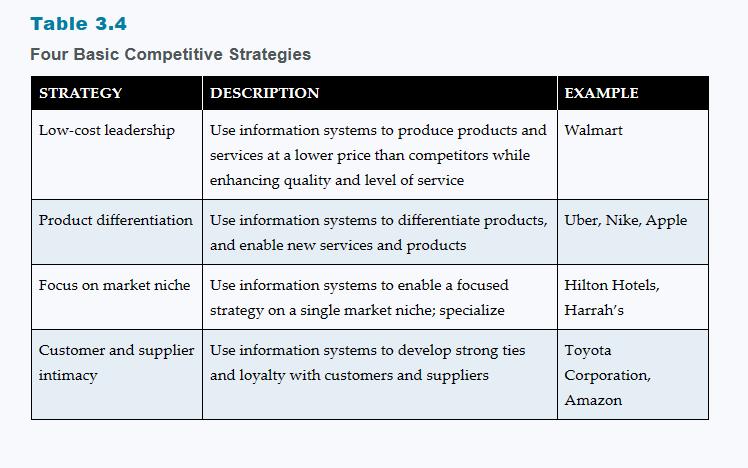
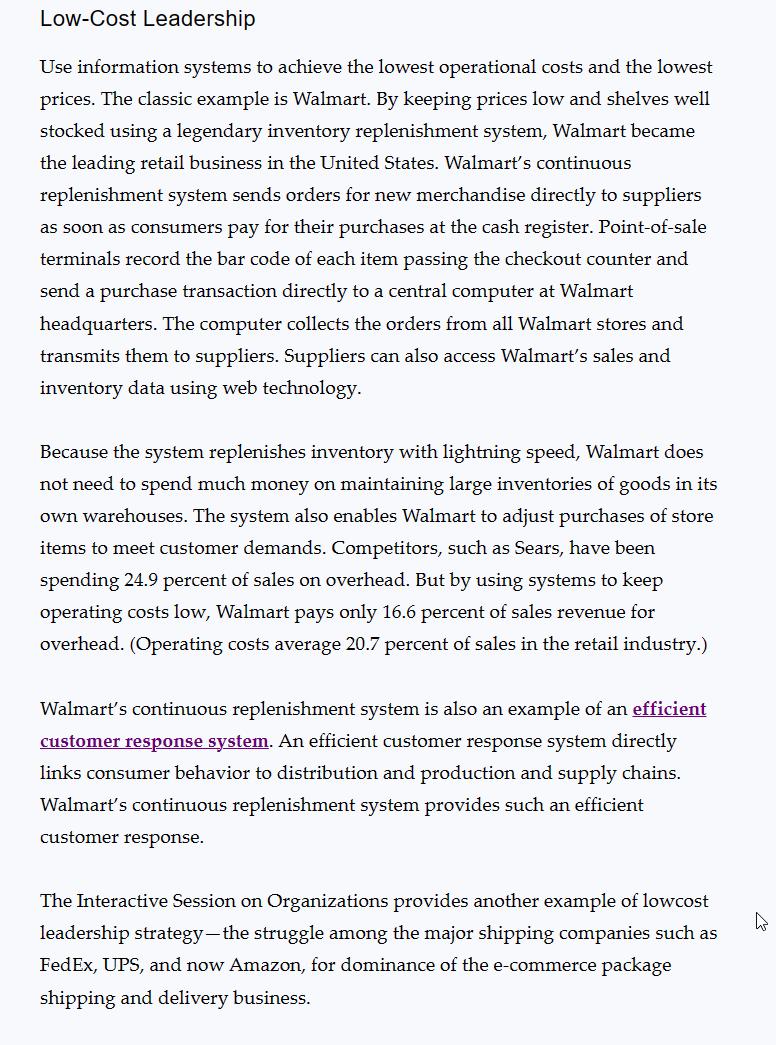
2. Based only on the information provided in the case study, which competitive strategies (see table 3.4 in Page 8) did BB&B attempt to use to counteract the negative forces you described in question one, and how specifically did they use them.
3. Based only on the information provided in the case study, describe the major issue(s) BB&B dealt with. For each of the issues you describe, explain the technological, organizational, and management factors that added to these issues.
4. Based only on the information provided in the case study, detail the solutions BB&B tried to implement.
5. Research the current state of BB&B and provide a short summary (one to two paragraphs) of your findings. Include appropriate in-text citations and references to back up your findings.
6. Evaluate the solutions described in the case study that BB&B tried to implement (as you detailed in question 4). Specifically, based on the current state of BB&B, were the solutions they attempted to implement effective? Explain why you think each “solution” worked or did not work. (Provide in-text citations/references to support your conclusions.)
7. What do you recommend BB&B do now to improve their situation? (Provide in-text citations/references to support your recommendations.)
Reference Notes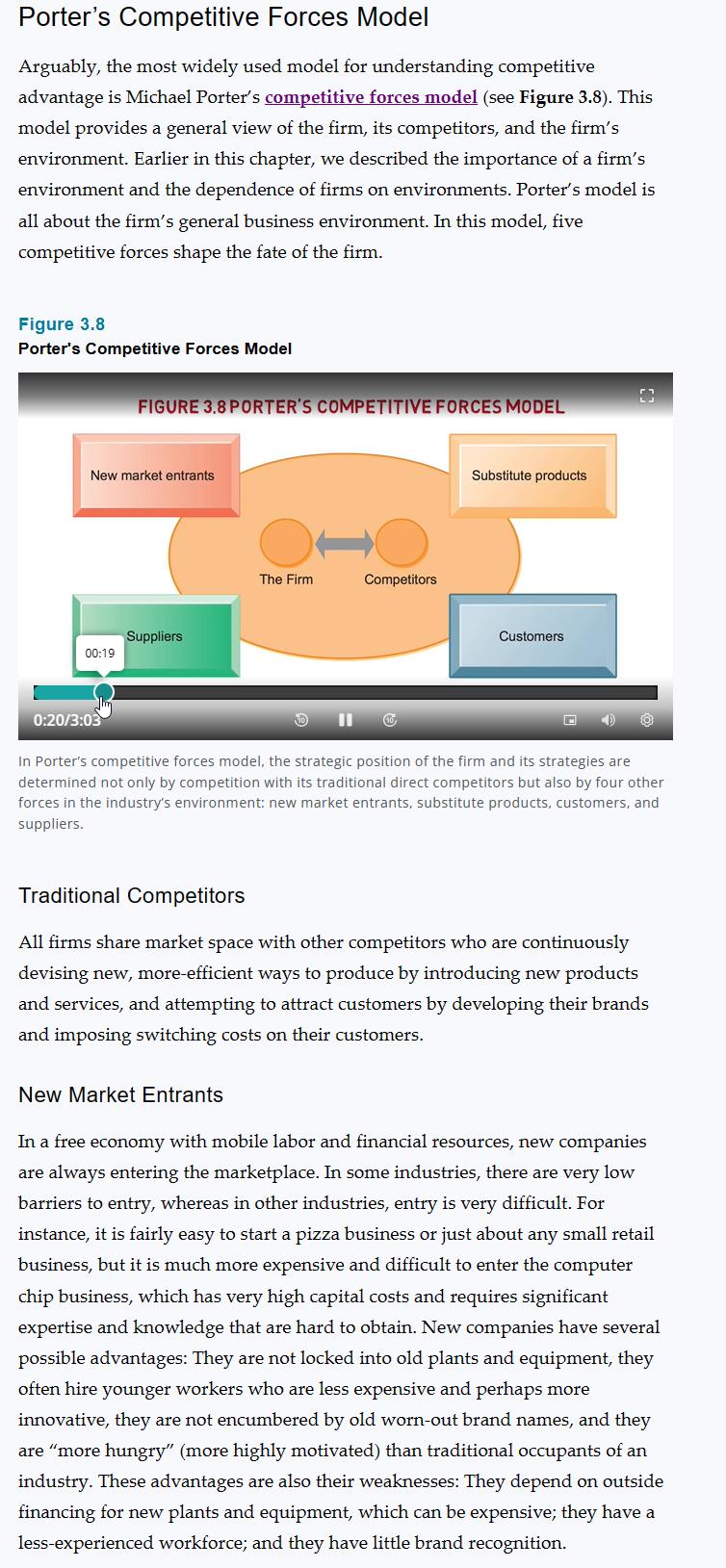
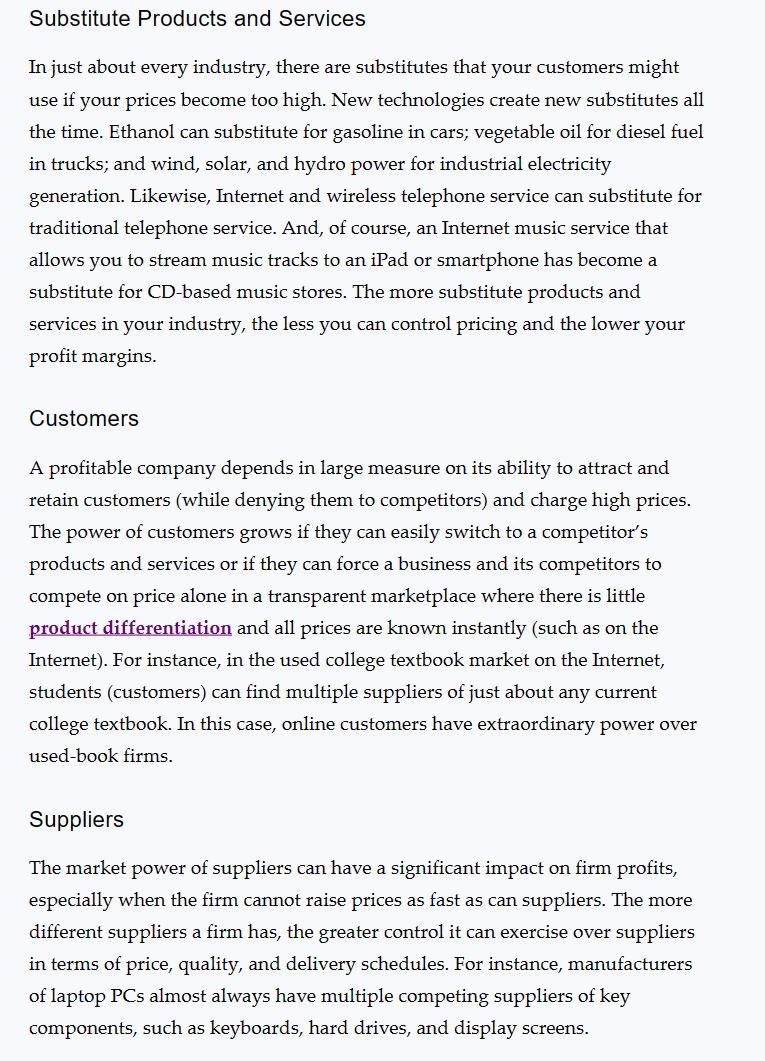
1.Based only on the information provided in the case study, use Michael Porter’s competitive forces model (see figure 3.8 in Page 6) to analyze Bed Bath & Beyond’s (BB&Bs) competitive advantage (or disadvantage). Specifically, for each of the five components included in figure 3.8 describe BB&Bs general business environment
2. Based only on the information provided in the case study, which competitive strategies (see table 3.4 in Page 8) did BB&B attempt to use to counteract the negative forces you described in question one, and how specifically did they use them.
3. Based only on the information provided in the case study, describe the major issue(s) BB&B dealt with. For each of the issues you describe, explain the technological, organizational, and management factors that added to these issues.
4. Based only on the information provided in the case study, detail the solutions BB&B tried to implement.
5. Research the current state of BB&B and provide a short summary (one to two paragraphs) of your findings..
6. . Evaluate the solutions described in the case study that BB&B tried to implement (as you detailed in question 4). Specifically, based on the current state of BB&B, were the solutions they attempted to implement effective? Explain why you think each “solution” worked or did not work
7.What do you recommend BB&B do now to improve their situation?
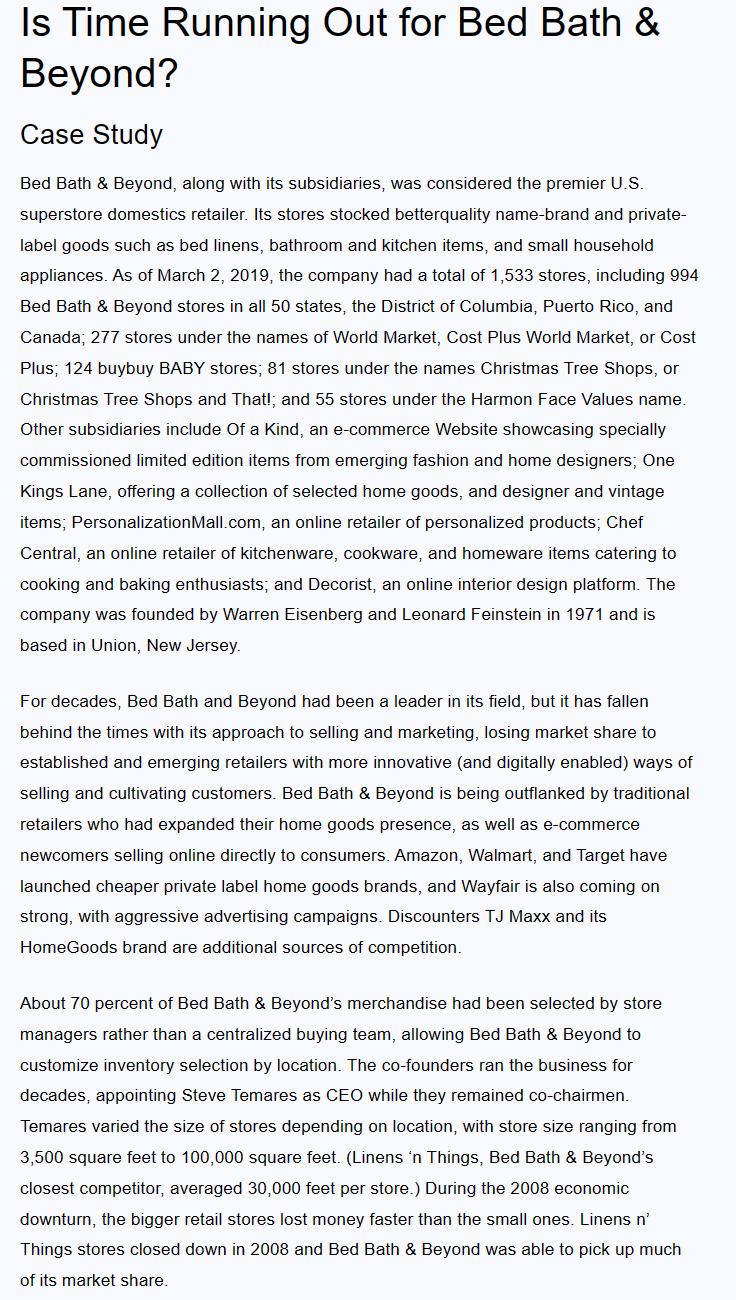
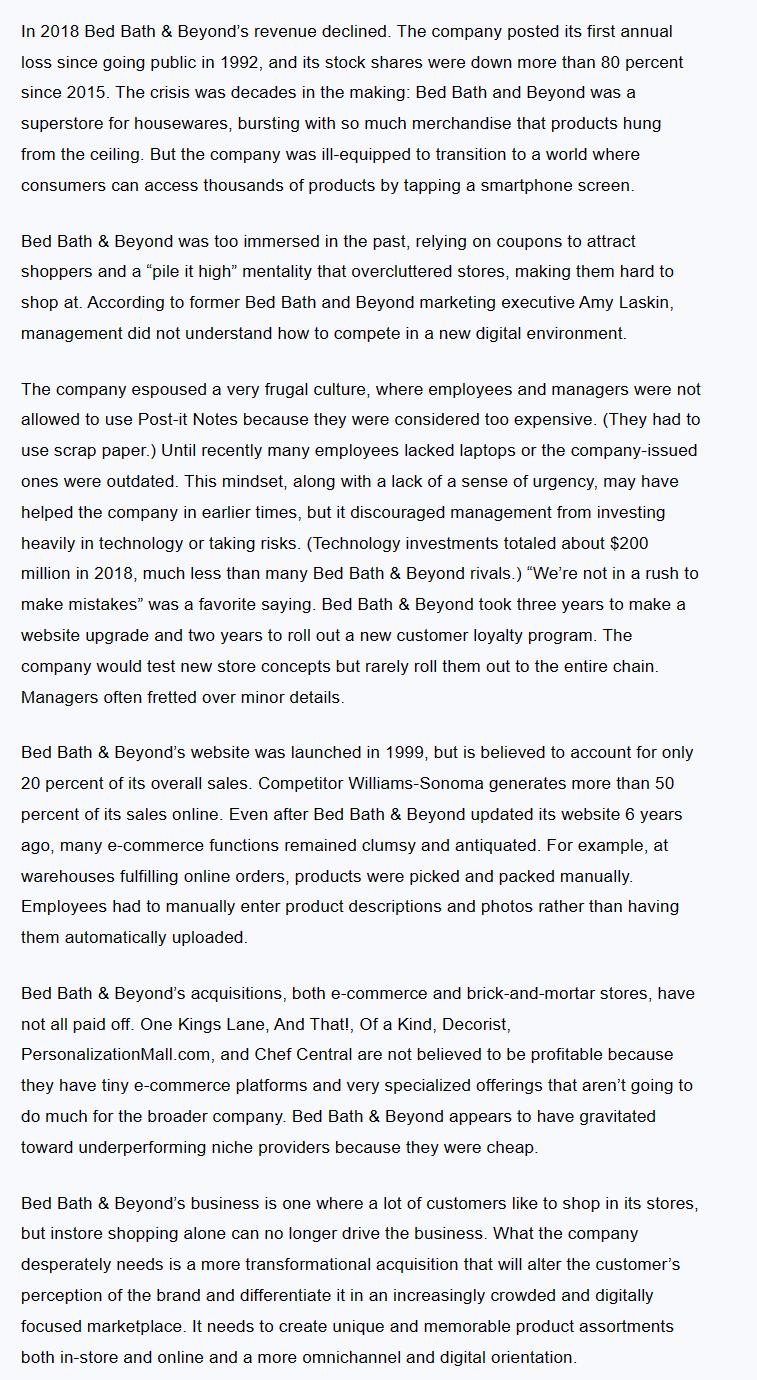
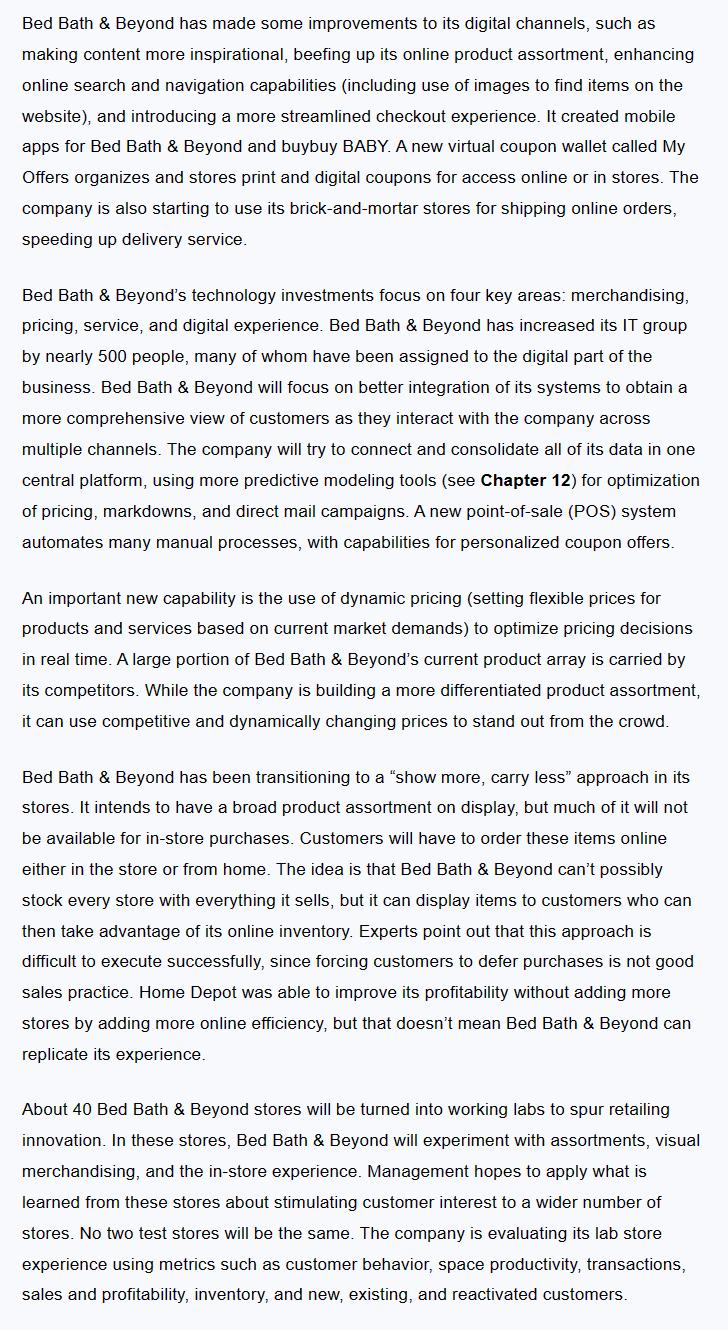
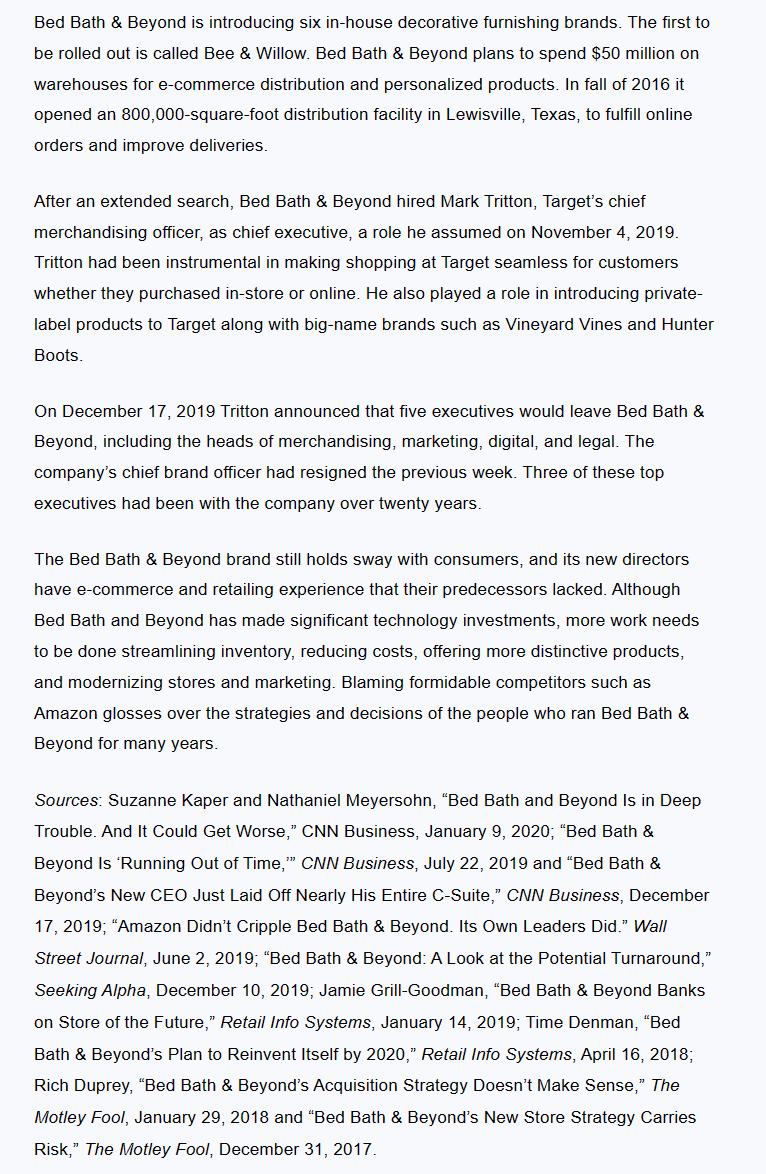
Is Time Running Out for Bed Bath & Beyond? Case Study Bed Bath & Beyond, along with its subsidiaries, was considered the premier U.S. superstore domestics retailer. Its stores stocked betterquality name-brand and private- label goods such as bed linens, bathroom and kitchen items, and small household appliances. As of March 2, 2019, the company had a total of 1,533 stores, including 994 Bed Bath & Beyond stores in all 50 states, the District of Columbia, Puerto Rico, and Canada; 277 stores under the names of World Market, Cost Plus World Market, or Cost Plus; 124 buybuy BABY stores; 81 stores under the names Christmas Tree Shops, or Christmas Tree Shops and That!; and 55 stores under the Harmon Face Values name. Other subsidiaries include Of a Kind, an e-commerce Website showcasing specially commissioned limited edition items from emerging fashion and home esigners; One Kings Lane, offering a collection of selected home goods, and designer and vintage items; Personalization Mall.com, an online retailer of personalized products; Chef Central, an online retailer of kitchenware, cookware, and homeware items catering to cooking and baking enthusiasts; and Decorist, an online interior design platform. The company was founded by Warren Eisenberg and Leonard Feinstein in 1971 and is based in Union, New Jersey. For decades, Bed Bath and Beyond had been a leader in its field, but it has fallen behind the times with its approach to selling and marketing, losing market share to established and emerging retailers with more innovative (and digitally enabled) ways of selling and cultivating customers. Bed Bath & Beyond is being outflanked by traditional retailers who had expanded their home goods presence, as well as e-commerce newcomers selling online directly to consumers. Amazon, Walmart, and Target have launched cheaper private label home goods brands, and Wayfair is also coming on strong, with aggressive advertising campaigns. Discounters TJ Maxx and its HomeGoods brand are additional sources of competition. About 70 percent of Bed Bath & Beyond's merchandise had been selected by store managers rather than a centralized buying team, allowing Bed Bath & Beyond to customize inventory selection by location. The co-founders ran the business for decades, appointing Steve Temares as CEO while they remained co-chairmen. Temares varied the size of stores depending on location, with store size ranging from 3,500 square feet to 100,000 square feet. (Linens 'n Things, Bed Bath & Beyond's closest competitor, averaged 30,000 feet per store.) During the 2008 economic downturn, the bigger retail stores lost money faster than the small ones. Linens n' Things stores closed down in 2008 and Bed Bath & Beyond was able to pick up much of its market share.
Step by Step Solution
There are 3 Steps involved in it
1 According to Porters competitive forces model it seems that Bed Bath Beyond did not possess any competitive advantage The model considers five components the threat of competition the threat of new ... View full answer

Get step-by-step solutions from verified subject matter experts
Document Format (1 attachment)

6561a3286c7e0_557597.docx
120 KBs Word File
 Study Help