







Question: 1. What is the main problem that Murarka is facing? 2. How can Murarka find out if the process involved in the premium express scheme
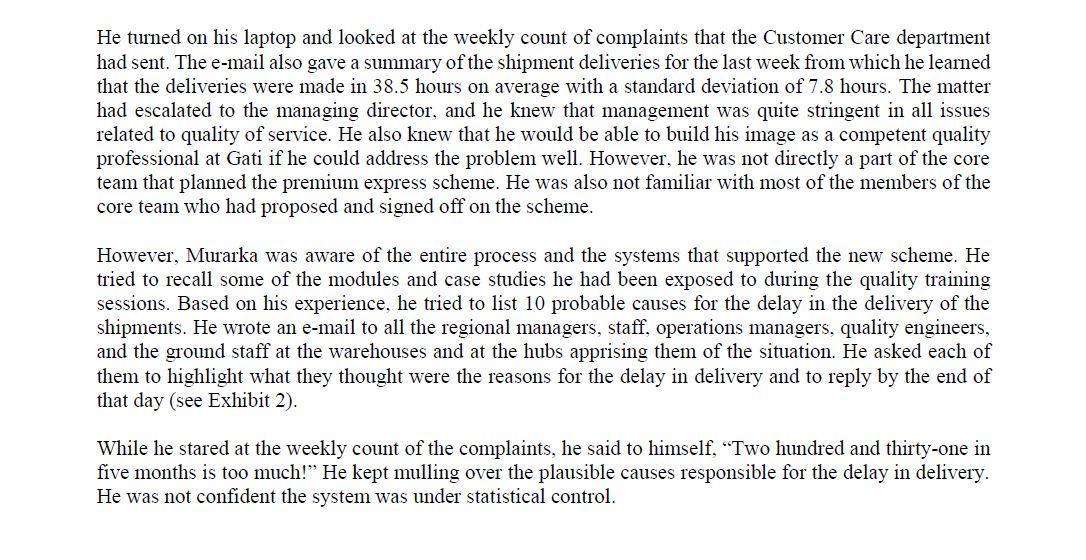
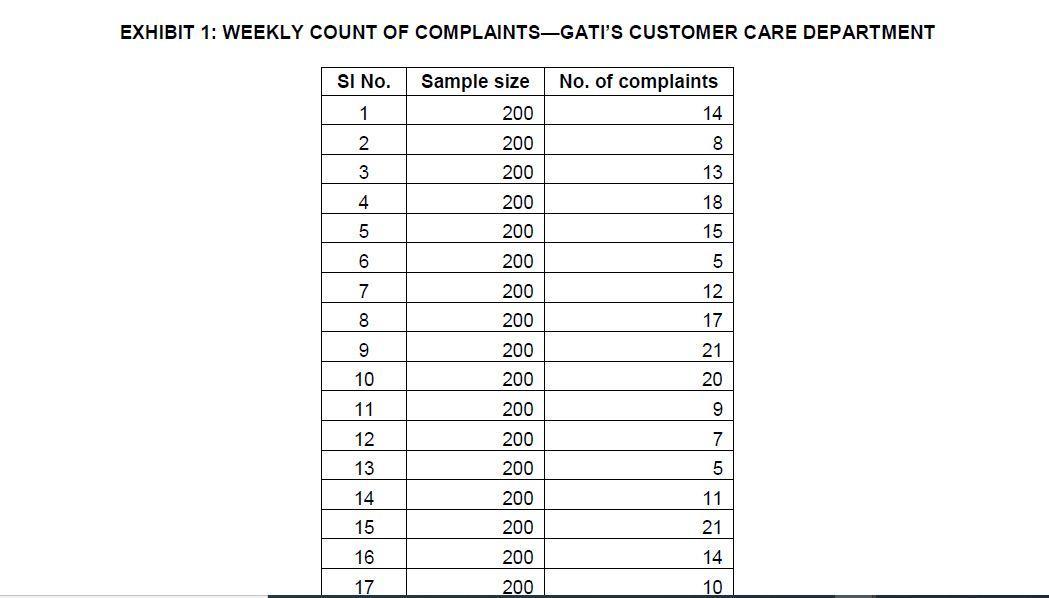
1. What is the main problem that Murarka is facing?
2. How can Murarka find out if the process involved in the premium express scheme is under statistical control?
3. What is meant by random causes and assignable causes of variation? List a few conditions when it becomes imperative to carefully investigate process variations even if the process is under statistical control.
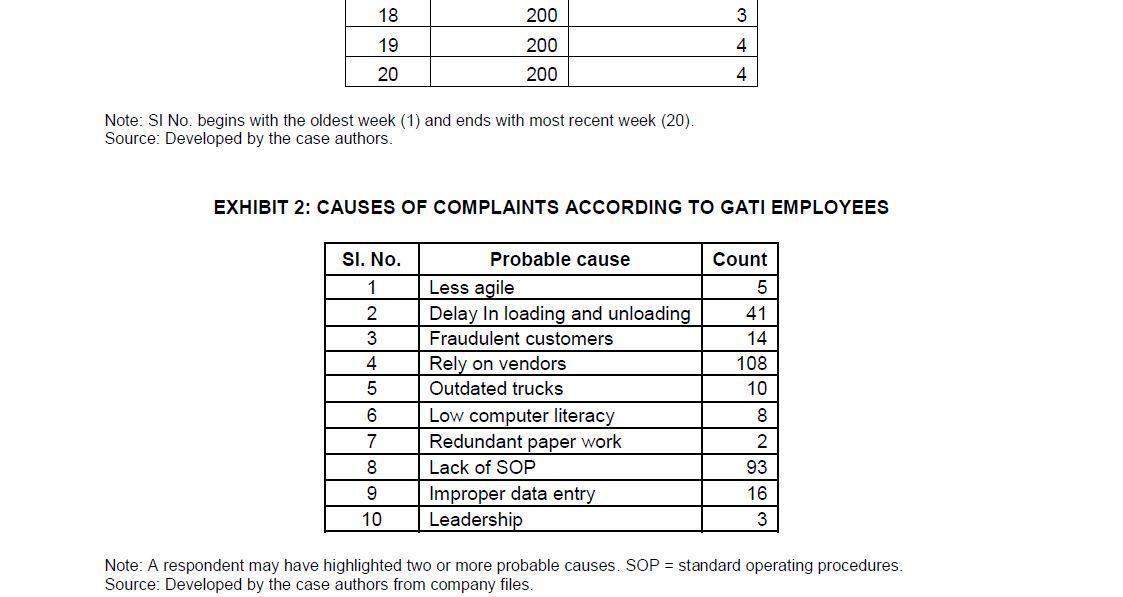
4. How can Murarka identify the potential causes for the delay in the delivery of the shipments booked under the premium express scheme? Explain and show related methods.
5. Explain in detail an approach Murarka could take to identify the major causes for the delay in shipment.
6.What is meant by process capability? How can Murarka find out if the new processes were meeting the target defect proportion?
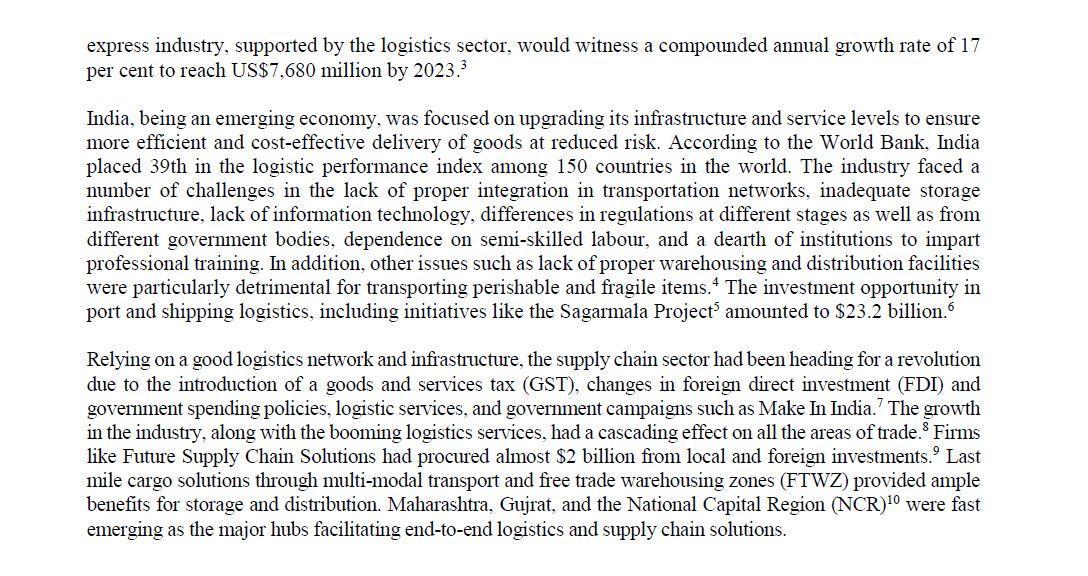
express industry, supported by the logistics sector, would witness a compounded annual growth rate of 17 per cent to reach US$7,680 million by 2023.3 India, being an emerging economy, was focused on upgrading its infrastructure and service levels to ensure more efficient and cost-effective delivery of goods at reduced risk. According to the World Bank, India placed 39th in the logistic performance index among 150 countries in the world. The industry faced a number of challenges in the lack of proper integration in transportation networks, inadequate storage infrastructure, lack of information technology, differences in regulations at different stages as well as from different government bodies, dependence on semi-skilled labour, and a dearth of institutions to impart professional training. In addition, other issues such as lack of proper warehousing and distribution facilities were particularly detrimental for transporting perishable and fragile items. The investment opportunity in port and shipping logistics, including initiatives like the Sagarmala Project amounted to $23.2 billion. Relying on a good logistics network and infrastructure, the supply chain sector had been heading for a revolution due to the introduction of a goods and services tax (GST), changes in foreign direct investment (FDI) and government spending policies, logistic services, and government campaigns such as Make In India." The growth in the industry, along with the booming logistics services, had a cascading effect on all the areas of trade. Firms like Future Supply Chain Solutions had procured almost $2 billion from local and foreign investments. Last mile cargo solutions through multi-modal transport and free trade warehousing zones (FTWZ) provided ample benefits for storage and distribution. Maharashtra, Gujrat, and the National Capital Region (NCR)10 were fast emerging as the major hubs facilitating end-to-end logistics and supply chain solutions.
Step by Step Solution
3.26 Rating (155 Votes )
There are 3 Steps involved in it
QUESTION NO 1 The main problem which Murarka is facing is that he has to uplift the company by makin... View full answer

Get step-by-step solutions from verified subject matter experts
 Study Help