







Question: case Study relating to Marketing CASE APPLICATION Keep the Heritage of the Brand Intact: Tommy Hilfiger on Weathering the ups and Downs of Retail Fashion
case Study relating to Marketing
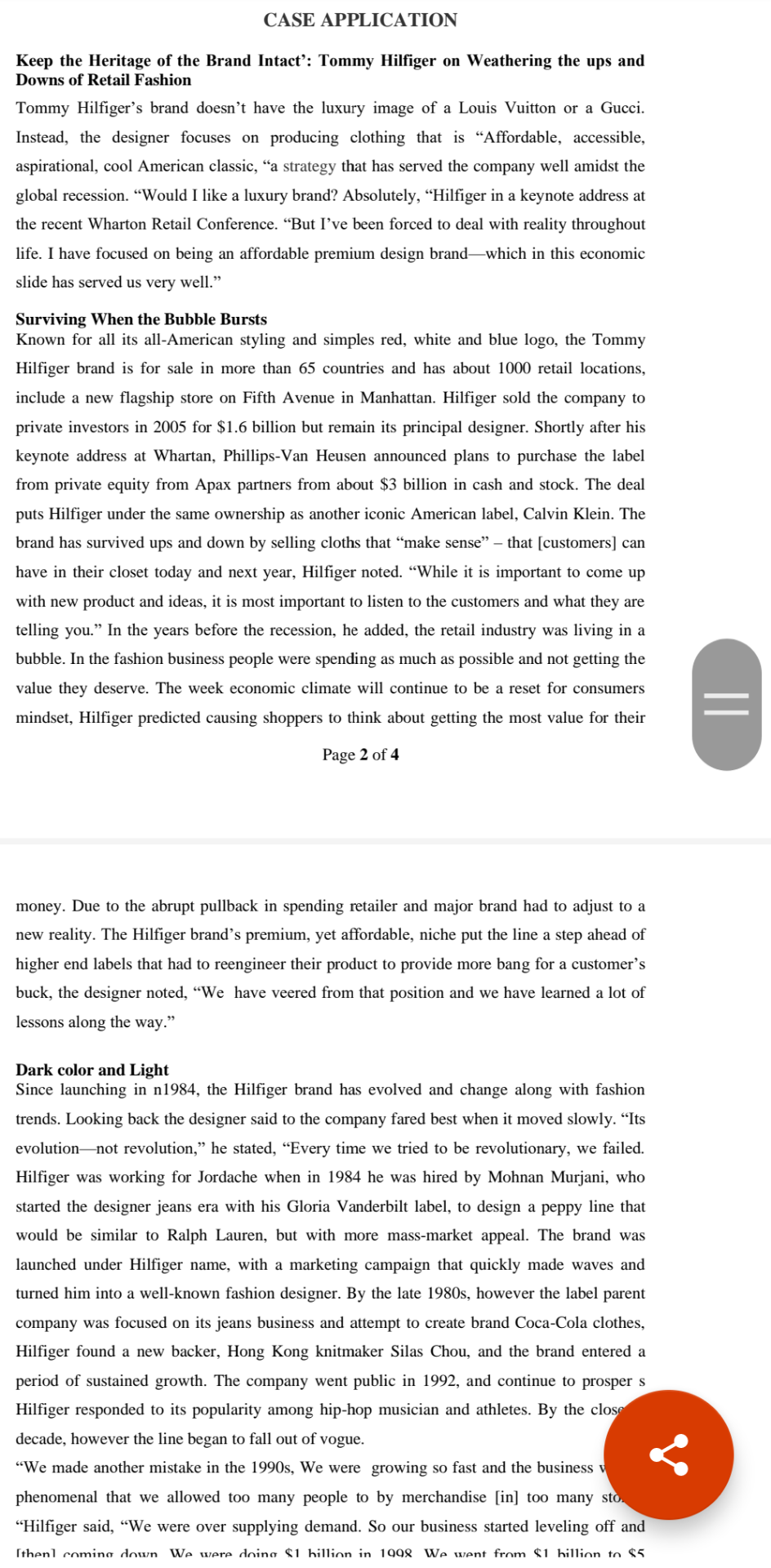
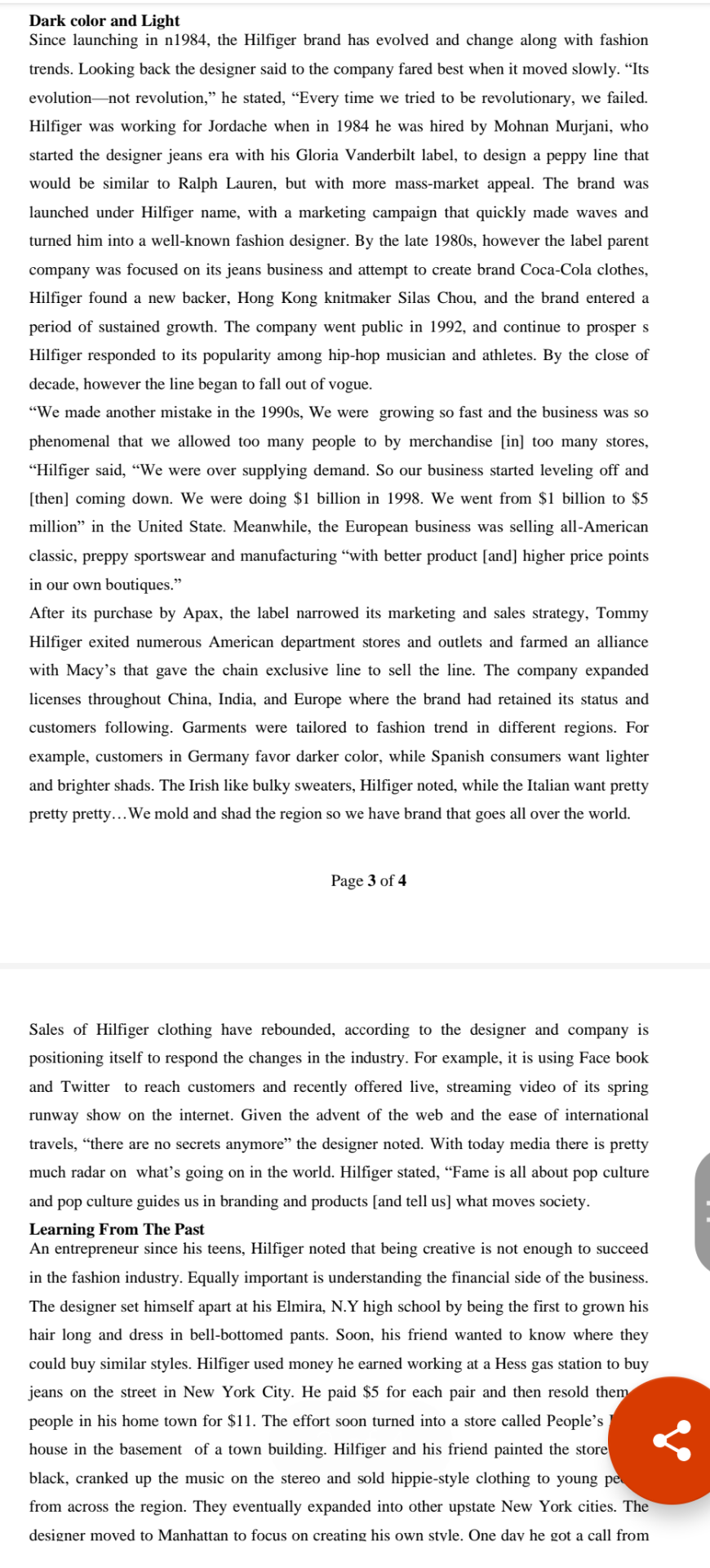
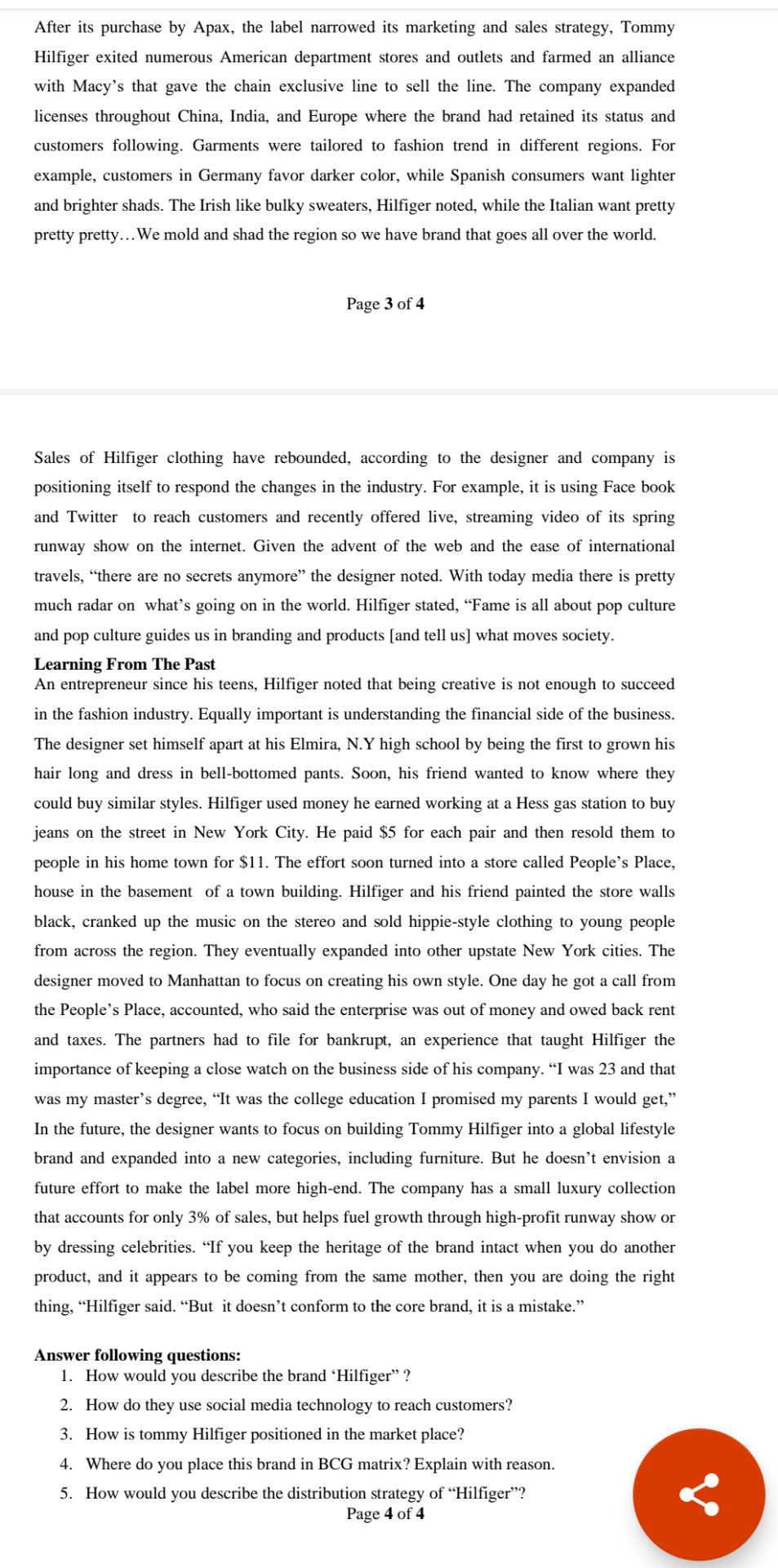
CASE APPLICATION Keep the Heritage of the Brand Intact: Tommy Hilfiger on Weathering the ups and Downs of Retail Fashion Tommy Hilfiger's brand doesn't have the luxury image of a Louis Vuitton or a Gucci. Instead, the designer focuses on producing clothing that is Affordable, accessible, aspirational, cool American classic, a strategy that has served the company well amidst the global recession. Would I like a luxury brand? Absolutely, Hilfiger in a keynote address at the recent Wharton Retail Conference. But I've been forced to deal with reality throughout life. I have focused on being an affordable premium design brandwhich in this economic slide has served us very well. Surviving When the Bubble Bursts Known for all its all-American styling and simples red, white and blue logo, the Tommy Hilfiger brand is for sale in more than 65 countries and has about 1000 retail locations, include a new flagship store on Fifth Avenue in Manhattan. Hilfiger sold the company to private investors in 2005 for $1.6 billion but remain its principal designer. Shortly after his keynote address at Whartan, Phillips-Van Heusen announced plans to purchase the label from private equity from Apax partners from about $3 billion in cash and stock. The deal puts Hilfiger under the same ownership as another iconic American label, Calvin Klein. The brand has survived ups and down by selling cloths that make sense that [customers) can have in their closet today and next year, Hilfiger noted. While it is important to come up with new product and ideas, it is most important to listen to the customers and what they are telling you. In the years before the recession, he added, the retail industry was living in a bubble. In the fashion business people were spending as much as possible and not getting the value they deserve. The week economic climate will continue to be a reset for consumers mindset, Hilfiger predicted causing shoppers to think about getting the most value for their = Page 2 of 4 money. Due to the abrupt pullback in spending retailer and major brand had to adjust to a new reality. The Hilfiger brand's premium, yet affordable, niche put the line a step ahead of higher end labels that had to reengineer their product to provide more bang for a customer's buck, the designer noted, We have veered from that position and we have learned a lot of lessons along the way. Dark color and Light Since launching in n1984, the Hilfiger brand has evolved and change along with fashion trends. Looking back the designer said to the company fared best when it moved slowly. Its evolutionnot revolution, he stated, Every time we tried to be revolutionary, we failed. Hilfiger was working for Jordache when in 1984 he was hired by Mohnan Murjani, who started the designer jeans era with his Gloria Vanderbilt label, to design a peppy line that would be similar to Ralph Lauren, but with more mass-market appeal. The brand was launched under Hilfiger name, with a marketing campaign that quickly made waves and turned him into a well-known fashion designer. By the late 1980s, however the label parent company was focused on its jeans business and attempt to create brand Coca-Cola clothes, Hilfiger found a new backer, Hong Kong knitmaker Silas Chou, and the brand entered a period of sustained growth. The company went public in 1992, and continue to prosper s Hilfiger responded to its popularity among hip-hop musician and athletes. By the close decade, however the line began to fall out of vogue. We made another mistake in the 1990s, We were growing so fast and the business phenomenal that we allowed too many people to by merchandise [in] too many sto. Hilfiger said, We were over supplying demand. So our business started leveling off and Ithen coming down We were doing $1 billion in 1998 We went from $1 billion to $5 Dark color and Light Since launching in n1984, the Hilfiger brand has evolved and change along with fashion trends. Looking back the designer said to the company fared best when it moved slowly. Its evolutionnot revolution, he stated, Every time we tried to be revolutionary, we failed. Hilfiger was working for Jordache when in 1984 he was hired by Mohnan Murjani, who started the designer jeans era with his Gloria Vanderbilt label, to design a peppy line that would be similar to Ralph Lauren, but with more mass-market appeal. The brand was launched under Hilfiger name, with a marketing campaign that quickly made waves and turned him into a well-known fashion designer. By the late 1980s, however the label parent company was focused on its jeans business and attempt to create brand Coca-Cola clothes, Hilfiger found a new backer, Hong Kong knitmaker Silas Chou, and the brand entered a period of sustained growth. The company went public in 1992, and continue to prosper s Hilfiger responded to its popularity among hip-hop musician and athletes. By the close of decade, however the line began to fall out of vogue. We made another mistake in the 1990s, We were growing so fast and the business was so phenomenal that we allowed too many people to by merchandise [in] too many stores, Hilfiger said, We were over supplying demand. So our business started leveling off and [then] coming down. We were doing $1 billion in 1998. We went from $1 billion to $5 million in the United State. Meanwhile, the European business was selling all-American classic, preppy sportswear and manufacturing with better product [and] higher price points in our own boutiques. After its purchase by Apax, the label narrowed its marketing and sales strategy, Tommy Hilfiger exited numerous American department stores and outlets and farmed an alliance with Macy's that gave the chain exclusive line to sell the line. The company expanded licenses throughout China, India, and Europe where the brand had retained its status and customers following. Garments were tailored to fashion trend in different regions. For example, customers in Germany favor darker color, while Spanish consumers want lighter and brighter shads. The Irish like bulky sweaters, Hilfiger noted, while the Italian want pretty pretty pretty... We mold and shad the region so we have brand that goes all over the world. Page 3 of 4 Sales of Hilfiger clothing have rebounded, according to the designer and company is positioning itself to respond the changes in the industry. For example, it is using Face book and Twitter to reach customers and recently offered live, streaming video of its spring runway show on the internet. Given the advent of the web and the ease of international travels, there are no secrets anymore the designer noted. With today media there is pretty much radar on what's going on in the world. Hilfiger stated, Fame is all about pop culture and pop culture guides us in branding and products and tell us] what moves society. Learning From The Past An entrepreneur since his teens, Hilfiger noted that being creative is not enough to succeed in the fashion industry. Equally important is understanding the financial side of the business. The designer set himself apart at his Elmira, N.Y high school by being the first to grown his hair long and dress in bell-bottomed pants. Soon, his friend wanted to know where they could buy similar styles. Hilfiger used money he earned working at a Hess gas station to buy jeans on the street in New York City. He paid $5 for each pair and then resold them people in his home town for $11. The effort soon turned into a store called People's house in the basement of a town building. Hilfiger and his friend painted the store black, cranked up the music on the stereo and sold hippie-style clothing to young pe from across the region. They eventually expanded into other upstate New York cities. The designer moved to Manhattan to focus on creating his own style. One day he got a call from After its purchase by Apax, the label narrowed its marketing and sales strategy, Tommy Hilfiger exited numerous American department stores and outlets and farmed an alliance with Macy's that gave the chain exclusive line to sell the line. The company expanded licenses throughout China, India, and Europe where the brand had retained its status and customers following. Garments were tailored to fashion trend in different regions. For example, customers in Germany favor darker color, while Spanish consumers want lighter and brighter shads. The Irish like bulky sweaters, Hilfiger noted, while the Italian want pretty pretty pretty... We mold and shad the region so we have brand that goes all over the world. Page 3 of 4 Sales of Hilfiger clothing have rebounded, according to the designer and company is positioning itself to respond the changes in the industry. For example, it is using Face book and Twitter to reach customers and recently offered live, streaming video of its spring runway show on the internet. Given the advent of the web and the ease of international travels, there are no secrets anymore the designer noted. With today media there is pretty much radar on what's going on in the world. Hilfiger stated, Fame is all about pop culture and pop culture guides us in branding and products (and tell us] what moves society. Learning From The Past An entrepreneur since his teens, Hilfiger noted that being creative is not enough to succeed in the fashion industry. Equally important is understanding the financial side of the business. The designer set himself apart at his Elmira, N.Y high school by being the first to grown his hair long and dress in bell-bottomed pants. Soon, his friend wanted to know where they could buy similar styles. Hilfiger used money he earned working at a Hess gas station to buy jeans on the street in New York City. He paid $5 for each pair and then resold them to people in his home town for $11. The effort soon turned into a store called People's Place, house in the basement of a town building. Hilfiger and his friend painted the store walls black, cranked up the music on the stereo and sold hippie-style clothing to young people from across the region. They eventually expanded into other upstate New York cities. The designer moved to Manhattan to focus on creating his own style. One day he got a call from the People's Place, accounted, who said the enterprise was out of money and owed back rent and taxes. The partners had to file for bankrupt, an experience that taught Hilfiger the importance of keeping a close watch on the business side of his company. I was 23 and that was my master's degree, It was the college education I promised my parents I would get, In the future, the designer wants to focus on building Tommy Hilfiger into a global lifestyle brand and expanded into a new categories, including furniture. But he doesn't envision a future effort to make the label more high-end. The company has a small luxury collection that accounts for only 3% of sales, but helps fuel growth through high-profit runway show or by dressing celebrities. If you keep the heritage of the brand intact when you do another product, and it appears to be coming from the same mother, then you are doing the right thing, Hilfiger said. But it doesn't conform to the core brand, it is a mistake. Answer following questions: 1. How would you describe the brand 'Hilfiger ? 2. How do they use social media technology to reach customers? 3. How is tommy Hilfiger positioned in the market place? 4. Where do you place this brand in BCG matrix? Explain with reason. 5. How would you describe the distribution strategy of Hilfiger? Page 4 of 4Step by Step Solution
There are 3 Steps involved in it
1 Expert Approved Answer
Step: 1 Unlock

Question Has Been Solved by an Expert!
Get step-by-step solutions from verified subject matter experts
Step: 2 Unlock
Step: 3 Unlock
 Study Help