Question: Case Study Report on the Tokyo 2020 Olympic Games preparations In June 2019 the Coordination Commission for the Games of the XXXII Olympiad, Tokyo 2020,
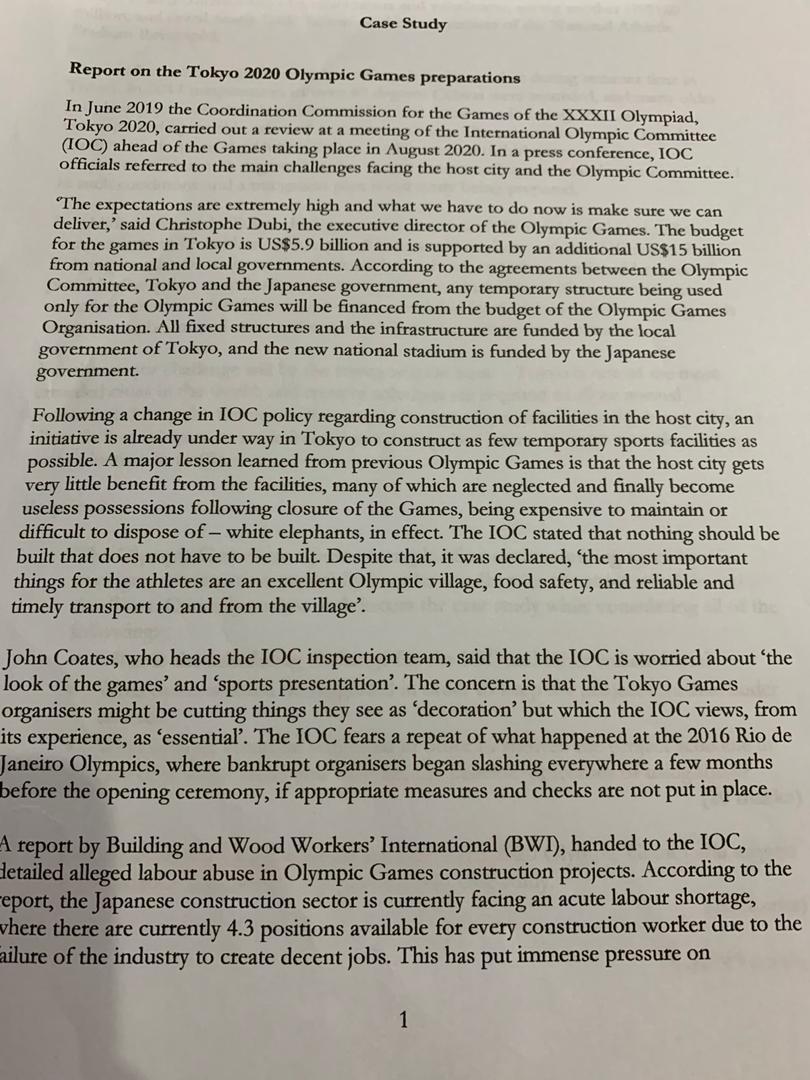
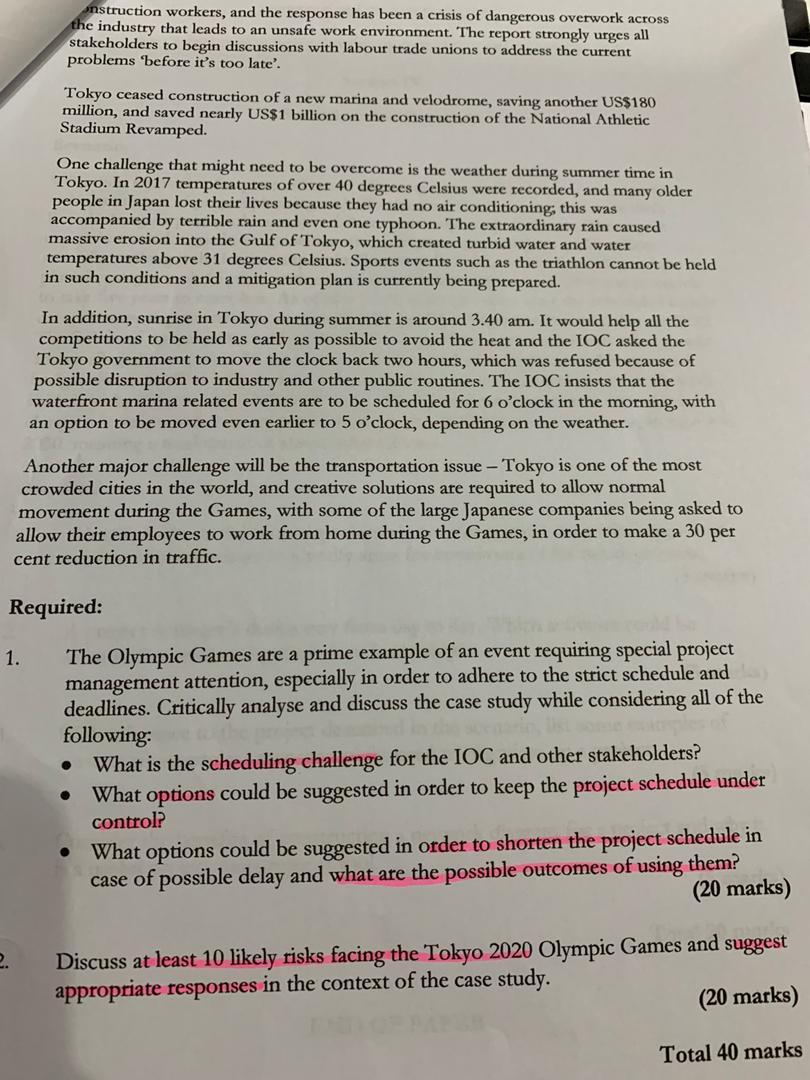
Case Study Report on the Tokyo 2020 Olympic Games preparations In June 2019 the Coordination Commission for the Games of the XXXII Olympiad, Tokyo 2020, carried out a review at a meeting of the International Olympic Committee (IOC) ahead of the Games taking place in August 2020. In a press conference, IOC officials referred to the main challenges facing the host city and the Olympic Committee. 'The expectations are extremely high and what we have to do now is make sure we can deliver,' said Christophe Dubi, the executive director of the Olympic Games. The budget for the games in Tokyo is US$5.9 billion and is supported by an additional US$15 billion from national and local governments. According to the agreements between the Olympic Committee, Tokyo and the Japanese government, any temporary structure being used only for the Olympic Games will be financed from the budget of the Olympic Games Organisation. All fixed structures and the infrastructure are funded by the local government of Tokyo, and the new national stadium is funded by the Japanese government. Following a change in IOC policy regarding construction of facilities in the host city, an initiative is already under way in Tokyo to construct as few temporary sports facilities as possible. A major lesson learned from previous Olympic mes is that the host city gets very little benefit from the facilities, many of which are neglected and finally become useless possessions following closure of the Games, being expensive to maintain or difficult to dispose of - white elephants, in effect. The IOC stated that nothing should be built that does not have to be built. Despite that, it was declared, 'the most important things for the athletes are an excellent Olympic village, food safety, and reliable and timely transport to and from the village'. John Coates, who heads the IOC inspection team, said that the IOC is worried about 'the look of the games' and 'sports presentation? The concern is that the Tokyo Games organisers might be cutting things they see as decoration' but which the IOC views, from its experience, as 'essential. The IOC fears a repeat of what happened at the 2016 Rio de Janeiro Olympics, where bankrupt organisers began slashing everywhere a few months before the opening ceremony, if appropriate measures and checks are not put in place. A report by Building and Wood Workers' International (BWI), handed to the IOC, detailed alleged labour abuse in Olympic Games construction projects. According to the eport, the Japanese construction sector is currently facing an acute labour shortage, vhere there are currently 4.3 positions available for every construction worker due to the ailure of the industry to create decent jobs. This has put immense pressure on 1 anstruction workers, and the response has been a crisis of dangerous overwork across the industry that leads to an unsafe work environment. The report strongly urges all stakeholders to begin discussions with labour trade unions to address the current problems 'before it's too late'. Tokyo ceased construction of a new marina and velodrome, saving another US$180 million, and saved nearly US$1 billion on the construction of the National Athletic Stadium Revamped. One challenge that might need to be overcome is the weather during summer time in Tokyo. In 2017 temperatures of over 40 degrees Celsius were recorded, and many older people in Japan lost their lives because they had no air conditioning this was accompanied by terrible rain and even one typhoon. The extraordinary rain caused massive erosion into the Gulf of Tokyo, which created turbid water and water temperatures above 31 degrees Celsius. Sports events such as the triathlon cannot be held in such conditions and a mitigation plan is currently being prepared. In addition, sunrise in Tokyo during summer is around 3.40 am. It would help all the competitions to be held as early as possible to avoid the heat and the IOC asked the Tokyo government to move the clock back two hours, which was refused because of possible disruption to industry and other public routines. The IOC insists that the waterfront marina related events are to be scheduled for 6 o'clock in the morning, with an option to be moved even earlier to 5 o'clock, depending on the weather. Another major challenge will be the transportation issue - Tokyo is one of the most crowded cities in the world, and creative solutions are required to allow normal movement during the Games, with some of the large Japanese companies being asked to allow their employees to work from home during the Games, in order to make a 30 per cent reduction in traffic. Required: 1. The Olympic Games are a prime example of an event requiring special project management attention, especially in order to adhere to the strict schedule and deadlines. Critically analyse and discuss the case study while considering all of the following: What is the scheduling challenge for the IOC and other stakeholders? What options could be suggested in order to keep the project schedule under control? What options could be suggested in order to shorten the project schedule in case of possible delay and what are the possible outcomes of using them? (20 marks) 2. Discuss at least 10 likely risks facing the Tokyo 2020 Olympic Games and suggest appropriate responses in the context of the case study. (20 marks) Total 40 marks Case Study Report on the Tokyo 2020 Olympic Games preparations In June 2019 the Coordination Commission for the Games of the XXXII Olympiad, Tokyo 2020, carried out a review at a meeting of the International Olympic Committee (IOC) ahead of the Games taking place in August 2020. In a press conference, IOC officials referred to the main challenges facing the host city and the Olympic Committee. 'The expectations are extremely high and what we have to do now is make sure we can deliver,' said Christophe Dubi, the executive director of the Olympic Games. The budget for the games in Tokyo is US$5.9 billion and is supported by an additional US$15 billion from national and local governments. According to the agreements between the Olympic Committee, Tokyo and the Japanese government, any temporary structure being used only for the Olympic Games will be financed from the budget of the Olympic Games Organisation. All fixed structures and the infrastructure are funded by the local government of Tokyo, and the new national stadium is funded by the Japanese government. Following a change in IOC policy regarding construction of facilities in the host city, an initiative is already under way in Tokyo to construct as few temporary sports facilities as possible. A major lesson learned from previous Olympic mes is that the host city gets very little benefit from the facilities, many of which are neglected and finally become useless possessions following closure of the Games, being expensive to maintain or difficult to dispose of - white elephants, in effect. The IOC stated that nothing should be built that does not have to be built. Despite that, it was declared, 'the most important things for the athletes are an excellent Olympic village, food safety, and reliable and timely transport to and from the village'. John Coates, who heads the IOC inspection team, said that the IOC is worried about 'the look of the games' and 'sports presentation? The concern is that the Tokyo Games organisers might be cutting things they see as decoration' but which the IOC views, from its experience, as 'essential. The IOC fears a repeat of what happened at the 2016 Rio de Janeiro Olympics, where bankrupt organisers began slashing everywhere a few months before the opening ceremony, if appropriate measures and checks are not put in place. A report by Building and Wood Workers' International (BWI), handed to the IOC, detailed alleged labour abuse in Olympic Games construction projects. According to the eport, the Japanese construction sector is currently facing an acute labour shortage, vhere there are currently 4.3 positions available for every construction worker due to the ailure of the industry to create decent jobs. This has put immense pressure on 1 anstruction workers, and the response has been a crisis of dangerous overwork across the industry that leads to an unsafe work environment. The report strongly urges all stakeholders to begin discussions with labour trade unions to address the current problems 'before it's too late'. Tokyo ceased construction of a new marina and velodrome, saving another US$180 million, and saved nearly US$1 billion on the construction of the National Athletic Stadium Revamped. One challenge that might need to be overcome is the weather during summer time in Tokyo. In 2017 temperatures of over 40 degrees Celsius were recorded, and many older people in Japan lost their lives because they had no air conditioning this was accompanied by terrible rain and even one typhoon. The extraordinary rain caused massive erosion into the Gulf of Tokyo, which created turbid water and water temperatures above 31 degrees Celsius. Sports events such as the triathlon cannot be held in such conditions and a mitigation plan is currently being prepared. In addition, sunrise in Tokyo during summer is around 3.40 am. It would help all the competitions to be held as early as possible to avoid the heat and the IOC asked the Tokyo government to move the clock back two hours, which was refused because of possible disruption to industry and other public routines. The IOC insists that the waterfront marina related events are to be scheduled for 6 o'clock in the morning, with an option to be moved even earlier to 5 o'clock, depending on the weather. Another major challenge will be the transportation issue - Tokyo is one of the most crowded cities in the world, and creative solutions are required to allow normal movement during the Games, with some of the large Japanese companies being asked to allow their employees to work from home during the Games, in order to make a 30 per cent reduction in traffic. Required: 1. The Olympic Games are a prime example of an event requiring special project management attention, especially in order to adhere to the strict schedule and deadlines. Critically analyse and discuss the case study while considering all of the following: What is the scheduling challenge for the IOC and other stakeholders? What options could be suggested in order to keep the project schedule under control? What options could be suggested in order to shorten the project schedule in case of possible delay and what are the possible outcomes of using them? (20 marks) 2. Discuss at least 10 likely risks facing the Tokyo 2020 Olympic Games and suggest appropriate responses in the context of the case study. (20 marks) Total 40 marks




