Question: Case Study: Scalability and LooptWorks: Use Only What Exists The motto for Portland, Oregon-based LooptWorks is use only what exists. In fact, all of the
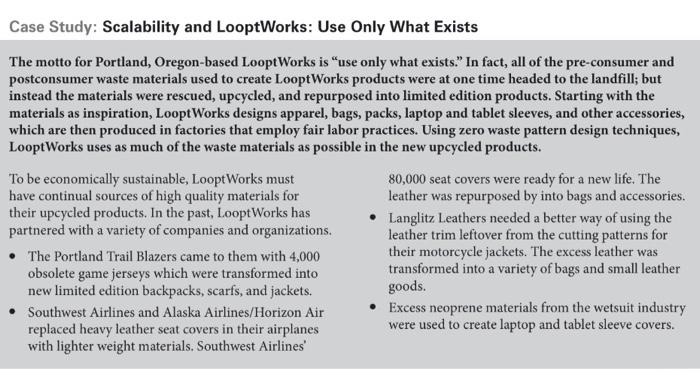
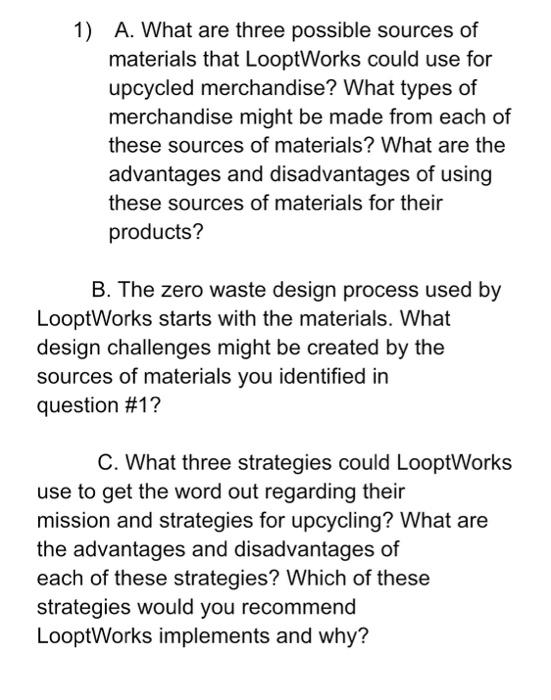
Case Study: Scalability and LooptWorks: Use Only What Exists The motto for Portland, Oregon-based LooptWorks is "use only what exists." In fact, all of the pre-consumer and postconsumer waste materials used to create LooptWorks products were at one time headed to the landfill; but instead the materials were rescued, upcycled, and repurposed into limited edition products. Starting with the materials as inspiration, LooptWorks designs apparel, bags, packs, laptop and tablet sleeves, and other accessories, which are then produced in factories that employ fair labor practices. Using zero waste pattern design techniques, LooptWorks uses as much of the waste materials as possible in the new upcycled products. To be economically sustainable, Loopt Works must have continual sources of high quality materials for their upcycled products. In the past, LooptWorks has partnered with a variety of companies and organizations. The Portland Trail Blazers came to them with 4,000 obsolete game jerseys which were transformed into new limited edition backpacks, scarfs, and jackets. Southwest Airlines and Alaska Airlines/Horizon Air replaced heavy leather seat covers in their airplanes with lighter weight materials. Southwest Airlines' 80,000 seat covers were ready for a new life. The leather was repurposed by into bags and accessories. Langlitz Leathers needed a better way of using the leather trim leftover from the cutting patterns for their motorcycle jackets. The excess leather was transformed into a variety of bags and small leather goods. Excess neoprene materials from the wetsuit industry were used to create laptop and tablet sleeve covers. As part of the team of designers and product developers at Loopt Works, you are always on the lookout for sources of materials for upcycling projects and for opportunities to get the word out regarding the mission and strategies of LooptWorks. 1) A. What are three possible sources of materials that LooptWorks could use for upcycled merchandise? What types of merchandise might be made from each of these sources of materials? What are the advantages and disadvantages of using these sources of materials for their products? B. The zero waste design process used by LooptWorks starts with the materials. What design challenges might be created by the sources of materials you identified in question #1? C. What three strategies could LooptWorks use to get the word out regarding their mission and strategies for upcycling? What are the advantages and disadvantages of each of these strategies? Which of these strategies would you recommend LooptWorks implements and why









 Study Help