







Question: Case Study Title: Comparative Structural Analysis of Pratt and Howe Truss Configurations Using RISA - 2 D Objective: This project involves analyzing and comparing the
Case Study Title: Comparative Structural Analysis of Pratt and Howe Truss
Configurations Using RISAD
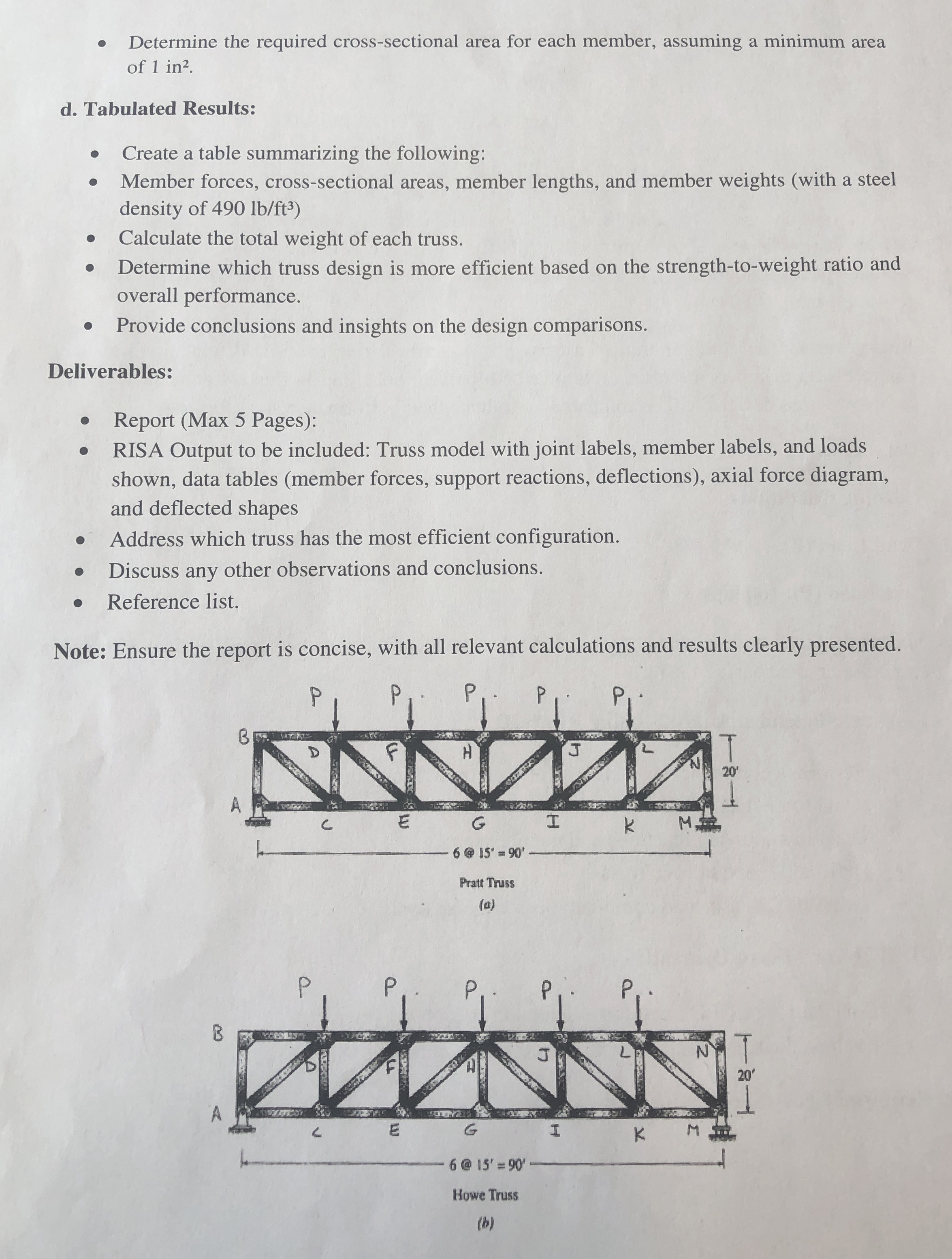
Objective: This project involves analyzing and comparing the structural performance of two classic truss designsPratt and Howe trussesunder identical loading conditions using RISAD software. The goal is to identify the most efficient truss configuration based on factors such as material usage, deflection, internal forces, and overall stability, with a focus on the strengthtoweight ratio.
Background: The configuration of a truss plays a critical role in its structural performance. Compression members are often "reinforced" to prevent buckling. In this assignment, the Pratt and Howe truss designs will be compared to evaluate their performance and efficiency.
Details:
Loading Conditions:
Dead Load P: kips
Live Load P: kips
Material: Steel with a yield stress of ksi for tension members and critical stress for compression members: ksi
Tasks: a Structural Analysis Using RISAD:
Perform a comprehensive analysis of each truss, including:
Axial force diagrams
Diagrams showing reactions and member forces
Deflected shape of each truss
Use ASCE LRFD load combinations for the analysis.
b LRFD Axial Force Demand:
Calculate the LRFD axial force demand for each member.
Exclude the truss's selfweight from these calculations.
c Required CrossSectional Area:
Determine the required crosssectional area for each member, assuming a minimum area of
d Tabulated Results:
Create a table summarizing the following:
Member forces, crosssectional areas, member lengths, and member weights with a steel density of
Calculate the total weight of each truss.
Determine which truss design is more efficient based on the strengthtoweight ratio and overall performance.
Provide conclusions and insights on the design comparisons.
Deliverables::
RISA Output to be included: Truss model with joint labels, member labels, and loads shown, data tables member forces, support reactions, deflections axial force diagram and deflected shapes
Reference list.
Note: Ensure the report is concise, with all relevant calculations and results clearly presented. Please answer all the steps and include RISA Graphs and tables
I really appreciate your help:
Step by Step Solution
There are 3 Steps involved in it
1 Expert Approved Answer
Step: 1 Unlock

Question Has Been Solved by an Expert!
Get step-by-step solutions from verified subject matter experts
Step: 2 Unlock
Step: 3 Unlock
 Study Help