







Question: Case Study Top - Slice Drivers Introduction Two years ago, Top - Slice Company moved from just making golf balls to also producing oversized drivers.
Case Study TopSlice Drivers
Introduction
Two years ago, TopSlice Company moved from just making golf balls to also producing oversized drivers. TopSlice makes three different models: the Bomber, the Hook King, and the Sir SliceALot. As the names suggest, the last two clubs help correct for golfers who either hook or slice the ball when driving.
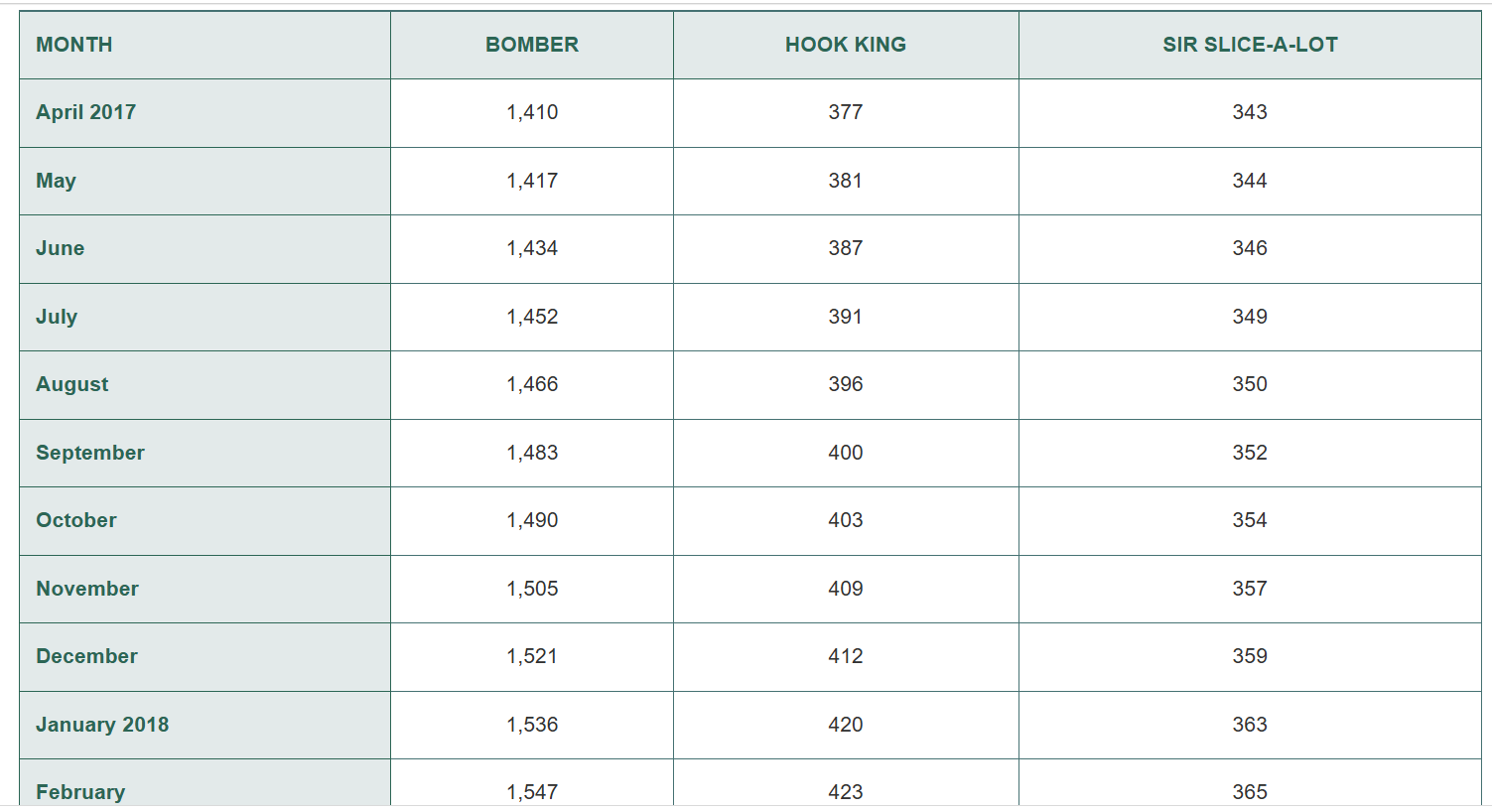
While TopSlice is pleased with the growing sales for all three models see the following tables the numbers present Jacob Lee, the production manager, with a dilemma. Jacob knows that the current manufacturing work cell is capable of producing only drivers per month, and total sales seem to be rapidly approaching that number. Jacobs staff has told him it will take at least three months to plan for and implement an expanded work cell.
MONTH BOMBER HOOK KING SIR SLICEALOT
April
May
June
July
August
September
October
November
December
January
February
March
April
May
June
July
August
September
October
November
December
January
February
March
Questions
Develop a quantitative forecast model for Jacob. Which modeling technique did you choose, and why? What are the assumptions behind your model?
According to your model, when will TopSlice need to have the expanded work cell up and running? What are the implications for when Jacob should start the expansion effort?
Now suppose that over lunch the marketing vice president says to Jacob:
Were feeling a lot of heat from Chinese manufacturers who are offering very similar clubs to ours, but at significantly lower prices. The legal department is working on a patent infringement case, but if we cant block these clubs from entering the market, I expect to see our sales flatten, and maybe even fall, over the rest of the year.
What questions should Jacob ask? How would the answers to these questions affect the forecast? Does it still make sense to use quantitative forecasting under these circumstances? Why? begintabularlccc
hline MONTH & BOMBER & HOOK KING & SIR SLICEALOT
hline April & & &
hline May & & &
hline June & & &
hline July & & &
hline August & & &
hline September & & &
hline October & & &
hline November & & &
hline December & & &
hline January & & &
hline
endtabularbegintabularcccc
hline February & & &
hline March & & &
hline April & & &
hline May & & &
hline June & & &
hline July & & &
hline August & & &
hline September & & &
hline October & & &
hline November & & &
hline December & & &
hline January & & &
hline
endtabular
Questions
Develop a quantitative forecast model for Jacob. Which modeling technique did you choose, and why? What are the assumptions behind your model?
According to your model, when will TopSlice need to have the expanded work cell up and running? What are the implications for when Jacob should start the expansion effort?
Now suppose that over lunch the marketing vice president says to Jacob:
We're feeling a lot of heat from Chinese manufacturers who are offering very similar clubs to ours, but at significantly lower prices. The legal department is working on a patent infringement case, but if we can't block these clubs from entering the market, I expect to see our sales flatten, and maybe even fall, over the rest of the year.
What questions should Jacob ask? How would the answers to these questions affect the forecast? Does it still make sense to use quantitative forecasting under these circumstances? Why?
Step by Step Solution
There are 3 Steps involved in it
1 Expert Approved Answer
Step: 1 Unlock

Question Has Been Solved by an Expert!
Get step-by-step solutions from verified subject matter experts
Step: 2 Unlock
Step: 3 Unlock
 Study Help