







Question: Case Study Ubiquitous Computing, which makes the user utilize the communication and computing ability more easily and merges the information space with physical space, has
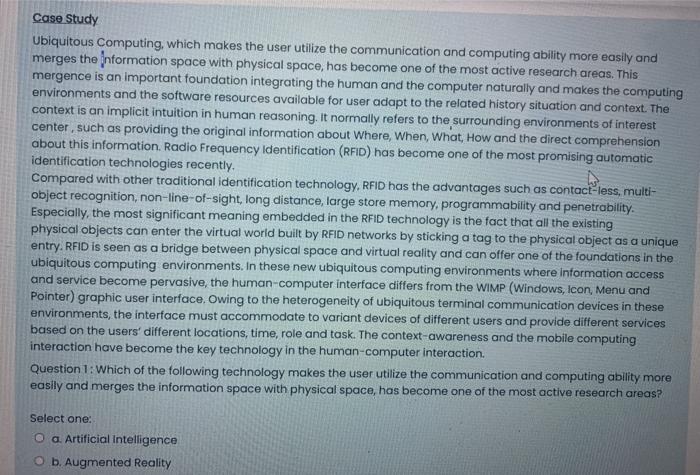
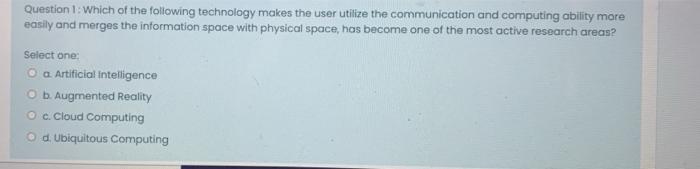
Case Study Ubiquitous Computing, which makes the user utilize the communication and computing ability more easily and merges the information space with physical space, has become one of the most active research areas. This mergence is an important foundation integrating the human and the computer naturally and makes the computing environments and the software resources available for user adapt to the related history situation and context. The context is an implicit intuition in human reasoning. It normally refers to the surrounding environments of interest center, such as providing the original information about where, When, What, How and the direct comprehension about this information, Radio Frequency Identification (RFID) has become one of the most promising automatic identification technologies recently. Compared with other traditional identification technology, RFID has the advantages such as contact-less, multi- object recognition, non-line-of-sight, long distance, large store memory, programmability and penetrability. Especially, the most significant meaning embedded in the RFID technology is the fact that all the existing physical objects can enter the virtual world built by RFID networks by sticking a tag to the physical object as a unique entry. RFID is seen as a bridge between physical space and virtual reality and can offer one of the foundations in the ubiquitous computing environments. In these new ubiquitous computing environments where information access and service become pervasive, the human-computer interface differs from the WIMP (Windows, Icon, Menu and Pointer) graphic user interface. Owing to the heterogeneity of ubiquitous terminal communication devices in these environments, the interface must accommodate to variant devices of different users and provide different services based on the users' different locations, time, role and task. The context-awareness and the mobile computing interaction have become the key technology in the human-computer interaction. Question 1: Which of the following technology makes the user utilize the communication and computing ability more easily and merges the information space with physical space, has become one of the most active research areas? Select one: O a. Artificial Intelligence b. Augmented Reality Question 1: Which of the following technology makes the user utilize the communication and computing ability more easily and merges the information space with physical space, has become one of the most active research areas? Select one: O a Artificial intelligence O b. Augmented Reality c. Cloud Computing d. Ubiquitous Computing
Step by Step Solution
There are 3 Steps involved in it

Get step-by-step solutions from verified subject matter experts
 Study Help