







Question: CASE STUDY: Waiting Lines (Queuing) For this assignment, you will analyze a case study and prepare a short executive report (plus appendices) that discusses the
CASE STUDY: Waiting Lines (Queuing) For this assignment, you will analyze a case study and prepare a short executive report (plus appendices) that discusses the conditions of the case and your recommendations. J ETGREEN AIRLINES A new low budget airline has decided to offer a regional flights out of Newark International Airport. The majority of their flights out of Newark depart in the morning so passengers typically arrive at the airport between 6am and 8am. Minjun Kim, the operations manager at the airport, has been tasked with determining the most efficient way of organizing their check-in process. The success of his role will be greatly measured by his cost saving measures and the overall satisfaction of the passengers. Many passengers do not have checked luggage so they can print their boarding passes at home and proceed directly to security lines. For passengers with luggage or those that need assistance, they will need to check-in with a clerk upon arrival to the airport. Mr. Kim has to design the check-in area including weighing and checking in luggage with the goal of optimizing staffing levels and offering excellent customer service. During this timeframe, an average of 72 passengers arrive at check-in each hour. A clerk spends an average of 4 minutes with each passenger to verify the ticket, confirm the destination, confirm seating, weigh luggage, and process charges, if applicable. Mr. Kims goal is to keep the time that a passenger needs to spend waiting in line and checking-in to a minimum. Below are the current proposals that Mr. Kim is considering to manage the queuing process. PROPOSAL 1. Proposal 1 is a standard check-in layout where there are exactly six clerks on duty, each with a separate waiting line where passengers upon entering the airport choose one of the six lines and remain on that line until the clerk assigned to that line is available. PROPOSAL 2. Proposal 2 would designate one of the six clerks as a line for quick-service frequent flyers registering with a corporate account. Approximately 25% of the passengers fall into this category. Because these corporate customers are already in the system and know the routine, their registration takes an average of just 2.5 minutes. Without these passengers on the other five lines, the average time to register a non-corporate passenger would increase to 4.5 minutes. Under this proposal, the non-corporate passengers would choose any of the other five separate lines. PROPOSAL 3. Proposal 3 is to re-configure the check-in area to have just one single-line system. All passengers would wait on the same wrap-around line and then be processed by whichever of the six clerks became available. (The only difference between proposal 1 and proposal 3 is the line formation) Note that this would require space to accommodate what could be a significant queue. PROPOSAL 4. Proposal 4 is a variation on proposal 3. In this proposal, pairs of clerks will work together as a team so there will only be three check-in stations. There will still be a single line and passengers will proceed to the next available check-in station (server). Since the clerks are working as a team, they now are able to process a check-in in an average of just 2 minutes. PROPOSAL 5. Proposal 5 uses a self-service kiosk. The time that a passenger spends at the kiosk is comparable to the time it takes for a clerk to process the check-in; however, since check-ins are automated the service time would be a constant 4 minutes. Because some passengers do have personal questions and need to pay for luggage, Mr. Kim estimates that approximately 15% of the passengers, would use the self-service kiosk. He hopes that this percent will increase in the future. For the remaining 85% of the passengers, they would have a single queue for passengers who need traditional check- in clerks. This line would be serviced by five clerks working independently. Similar to the initial proposal, each clerk can process a check-in in an average of 4 minutes per passenger. PROPOSAL 6. Mr. Kim is open to your suggestions. Please provide a suggestion for a better check-in system. Describe your proposal and be sure to compare your performance measures to the other proposals, if possible. INSTRUCTIONS: Prepare a one to two page Executive Summary which should include the following sections:
a. (20 points) Case Synopsis (include a brief summary of the case and the issue that Minjun Kim is facing include a description for your Proposal 6)
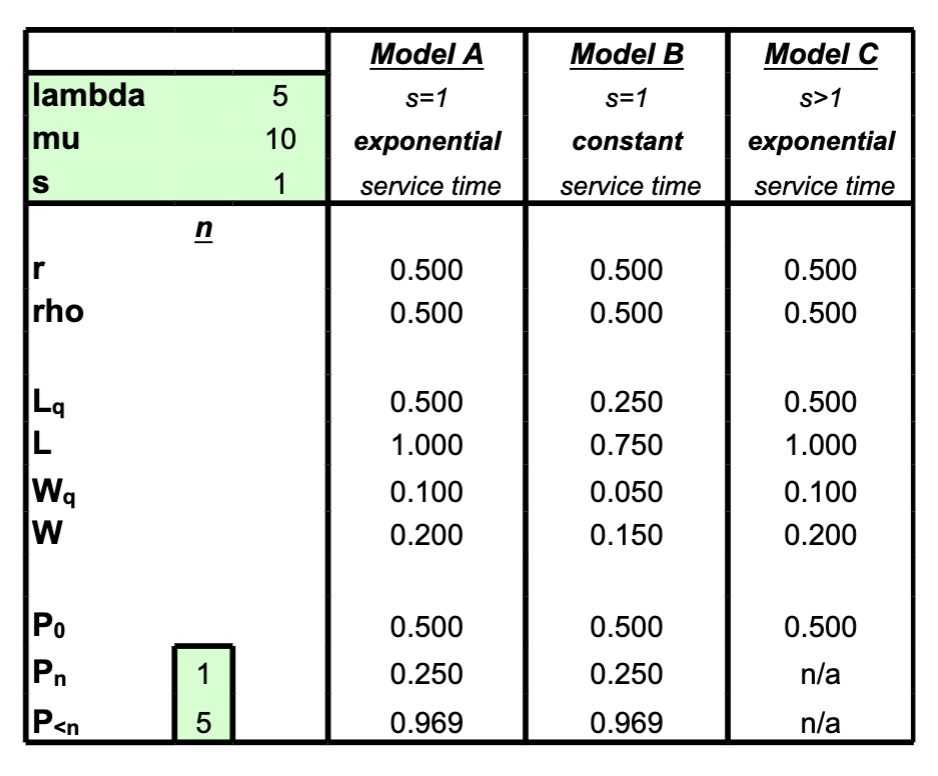
b. (20 points) Methodology (include a discussion of what information was provided and how you used this information to analyze the problem - create a summary table containing the data for of each of the proposals including the model or models used to evaluate each proposal, the value(s) of lambda and value(s) of mu)
c. (40 points) Findings and Conclusions i. Determine the performance measures (eg. average time a passenger spends checking-in, etc.) under each of the stated proposals. HINT: for proposals with multiple systems (eg. 25% corporate passengers, 75% regular passengers) sum the total number of passengers waiting and calculate a weighted average time waiting. ii. Compare the various proposals using relevant performance measures (time spent waiting in line / in system, number of passengers waiting in line / in system, etc.). You should include a summary table of for the performance measures for each Proposal.
d. (20 points) Recommendation i. Based on your analysis, which option do you recommend? Why? ii. What other issues must Minjun Kim consider in making this decision (other factors)?
Step by Step Solution
There are 3 Steps involved in it

Get step-by-step solutions from verified subject matter experts
 Study Help