



Question: case study Warren Oats is a highly successful executive for American Auto Suppliers, a Chicago-based company that makes original-equipment specialty parts for Ford, GM, and
case study
Warren Oats is a highly successful executive for American Auto Suppliers, a Chicago-based company that makes original-equipment specialty parts for Ford, GM, and Chrysler. Rather than retreat before the onslaught of Japanese automakers, AAS decided to counterattack and use its reputation for quality and dependability to win over customers in Japan. Oats had started in the company as an engineer and worked his way up to become one of a handful of senior managers who had a shot at the next open vice-president position. He knew he needed to distinguish himself somehow, so when he was given a chance to lead the AAS attack on the Japanese market, he jumped at it.
Oats knew he did not have time to learn Japanese, but he had heard that many Japanese executives speak English, and the company would hire a translator anyway. The toughest part about leaving the United States was persuading his wife, Carol, to take an eighteen-month leave from her career as an attorney with a prestigious Chicago law firm. Carol finally persuaded herself that she did not want to miss an opportunity to learn a new culture. So, armed with all the information they could gather about Japan from their local library, the Oats headed for Tokyo.
Known as an energetic, aggressive salesperson back home, Warren Oats wasted little time getting started. As soon as his office had a telephoneand well before all his files had arrived from the StatesOats made an appointment to meet with executives of one of Japans leading automakers. Oats reasoned that if he was going to overcome the famous Japanese resistance to foreign companies, he should get started as soon as possible.
Oats felt very uncomfortable at that first meeting. He got the feeling that the Japanese executives were waiting for something. It seemed that everyone but Oats was in slow motion. The Japanese did not speak English well and appeared grateful for the presence of the interpreter, but even the interpreter seemed to take her time in translating each phrase. Frustrated by this seeming lethargy and beginning to doubt the much-touted Japanese efficiency, Oats got right to the point. He made an oral presentation of his proposal, waiting patiently for the translation of each sentence. Then he handed the leader of the Japanese delegation a packet containing the specifics of his proposal, got up, and left. The translator trailed behind him as if wanting to drag out the process even further.
By the end of their first week, both Oats and his wife were frustrated. Oatss office phone had not rung once, which did not make him optimistic about his meeting with another top company the following week. Carol could scarcely contain her irritation with what she had perceived of the Japanese way of life. She had been sure that a well-respected U.S. lawyer would have little trouble securing a job with a Japanese multinational corporation, but the executives she had met with seemed insulted that she was asking them for a job. And the way they treated their secretaries! After only a week in Japan, both Carol and Warren Oats were ready to go home.
A month later, their perspective had changed radically, and both looked back on those first meetings with embarrassment. Within that month, they had learned a lot about the Japanese sense of protocol and attitudes toward women. Warren Oats believed he was beginning to get the knack of doing business with the Japanese in their manner: establishing a relationship slowly, almost ritualistically, waiting through a number of meetings before bringing up the real business at hand, and then doing so circumspectly. It was difficult for Oats to slow his pace, and it made him nervous to be so indirect, but he was beginning to see some value in the sometimes humbling learning process he was going through.
 Topic: Culture Shock and International Business Management
Use the numbered subsections below (4.1, 4.2, 4.3, 4.4, 4.5) to structure your responses in paragraph format.
Total points = 50
Case Study: Culture shock refers to the feeling of disorientation experienced by people when they move to an unfamiliar cultural environment or when they are suddenly exposed to a different way of life or set of attitudes. This can be the result of immigration or a visit to a new country, a move between social environments, or simply a transition to another type of life.
Read the attached case study then answer the individual questions identified below.
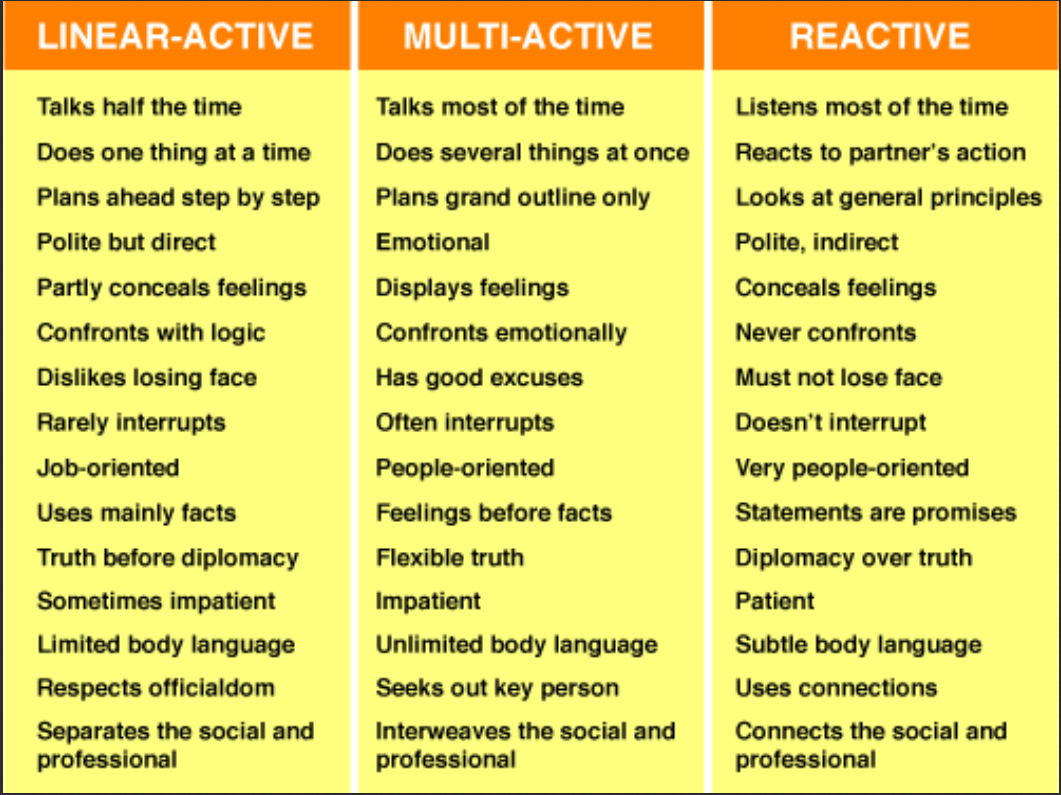
Use both the Lewis and Hall models to guide you in putting together a program that will mitigate any potential culture shock that can impede his transition and adaptation to the new cultural environment.
4.1 First, define and explain the different stages of culture shock.
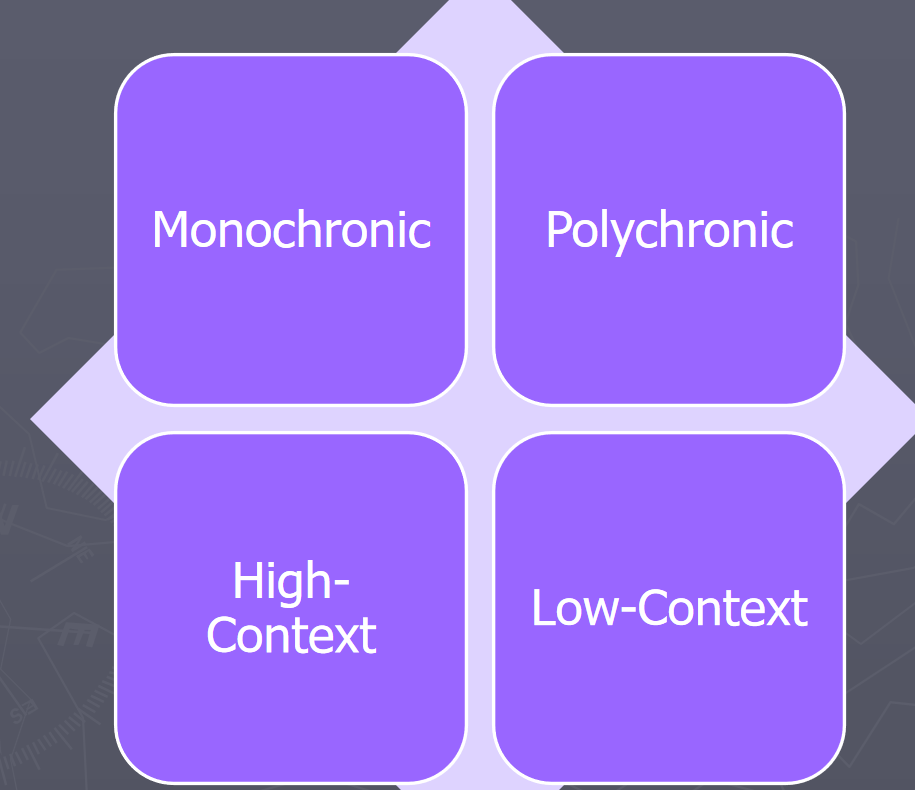
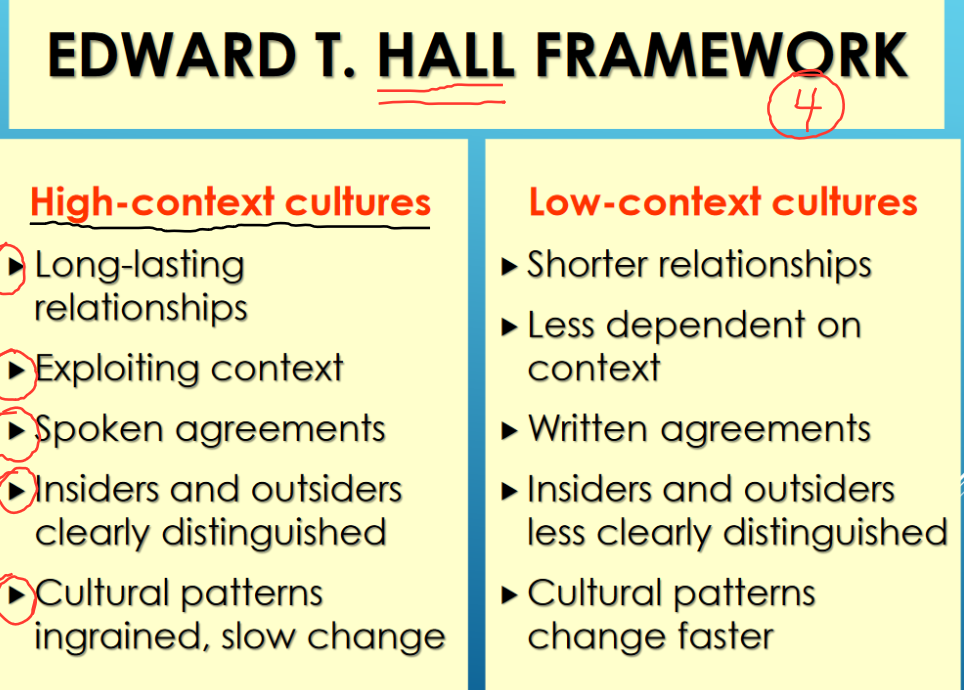
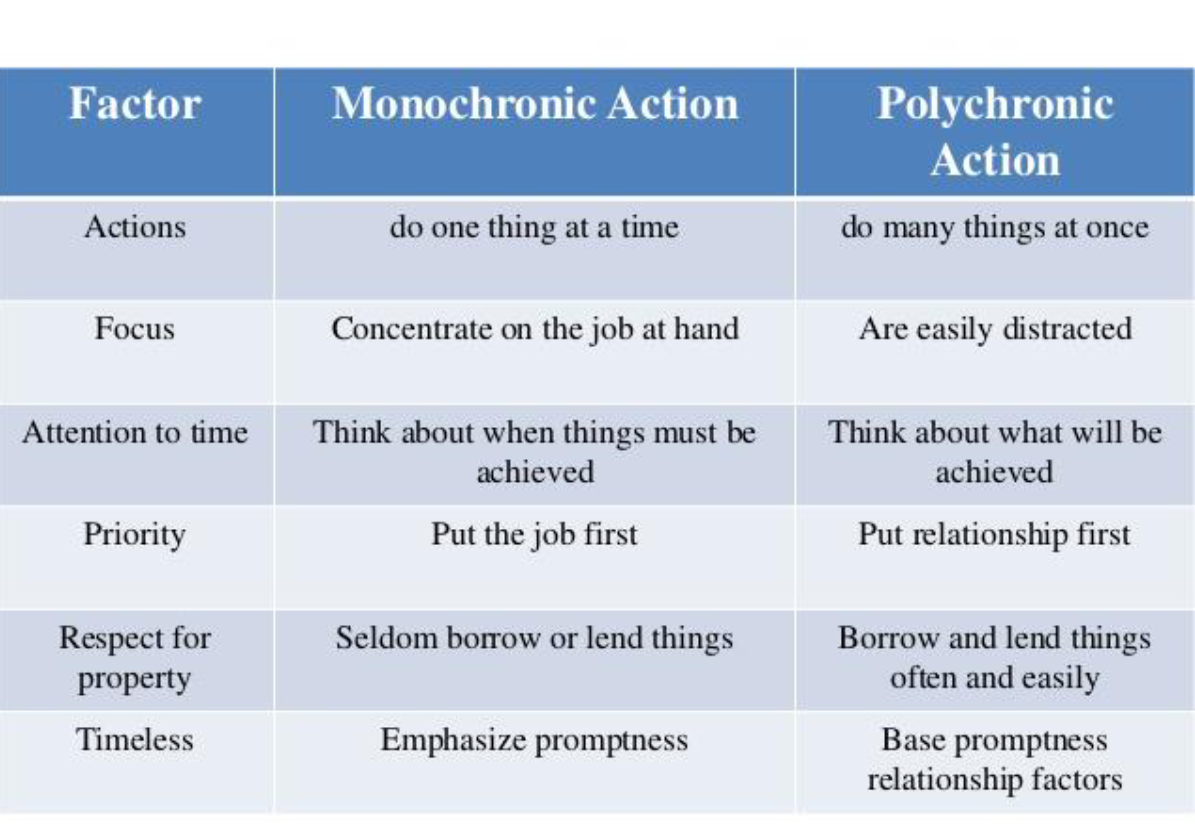
4.2 Second, relying on both Lewis (3 cultural dimensions) and Hall (4 cultural dimensions) provide a brief description of Japans national culture (host country) and the culture of the business executive and his wife (United States).
4.3 Third, what main cultural differences would you point out that exist between the culture of the Americans and the new host country? When considering the Lewis and Hall models, are there any similarities that exist between the national cultures of Japan and that of the United States?
4.4 Based upon your understanding of the situation illustrated in the case study, what would you have advised to the Oats for their pre-departure preparations to Japan? Is there something particular that they should have done in order to reduce the impact of culture shock?
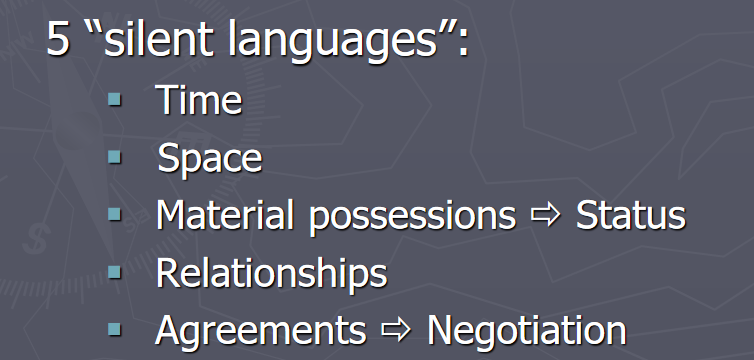
4.5 Thinking about the five silent languages, what went wrong during that first meeting between Warren Oats and his Japanese counterparts? What should he have done?
5 "silent languages": Time Space Material possessions -> Status Relationships Agreements > Negotiation Monochronic Polychronic High- Context Low-Context EDWARD T. HALL FRAMEWORK (9 High-context cultures Long-lasting relationships Exploiting context Spoken agreements Insiders and outsiders clearly distinguished Cultural patterns ingrained, slow change Low-context cultures Shorter relationships Less dependent on context Written agreements Insiders and outsiders less clearly distinguished Cultural patterns change faster Factor Monochronic Action Polychronic Action do many things at once Actions do one thing at a time Focus Concentrate on the job at hand Are easily distracted Attention to time Think about when things must be achieved Put the job first Think about what will be achieved Put relationship first Priority Seldom borrow or lend things Respect for property Borrow and lend things often and easily Base promptness relationship factors Timeless Emphasize promptness LINEAR-ACTIVE MULTI-ACTIVE REACTIVE Talks half the time Does one thing at a time Plans ahead step by step Polite but direct Partly conceals feelings Confronts with logic Dislikes losing face Rarely interrupts Job-oriented Uses mainly facts Truth before diplomacy Sometimes impatient Limited body language Respects officialdom Separates the social and professional Talks most of the time Listens most of the time Does several things at once Reacts to partner's action Plans grand outline only Looks at general principles Emotional Polite, indirect Displays feelings Conceals feelings Confronts emotionally Never confronts Has good excuses Must not lose face Often interrupts Doesn't interrupt People-oriented Very people-oriented Feelings before facts Statements are promises Flexible truth Diplomacy over truth Impatient Patient Unlimited body language Subtle body language Seeks out key person Uses connections Interweaves the social and Connects the social and professional professionalStep by Step Solution
There are 3 Steps involved in it

Get step-by-step solutions from verified subject matter experts