Question: Cautions and Alerts: The generators have plastic gears. Do not start or stop suddenly. Do not reverse suddenly. Your strength is easily superior to the
Cautions and Alerts: The generators have plasticCautions and Alerts: The generators have plasticCautions and Alerts: The generators have plasticCautions and Alerts: The generators have plastic
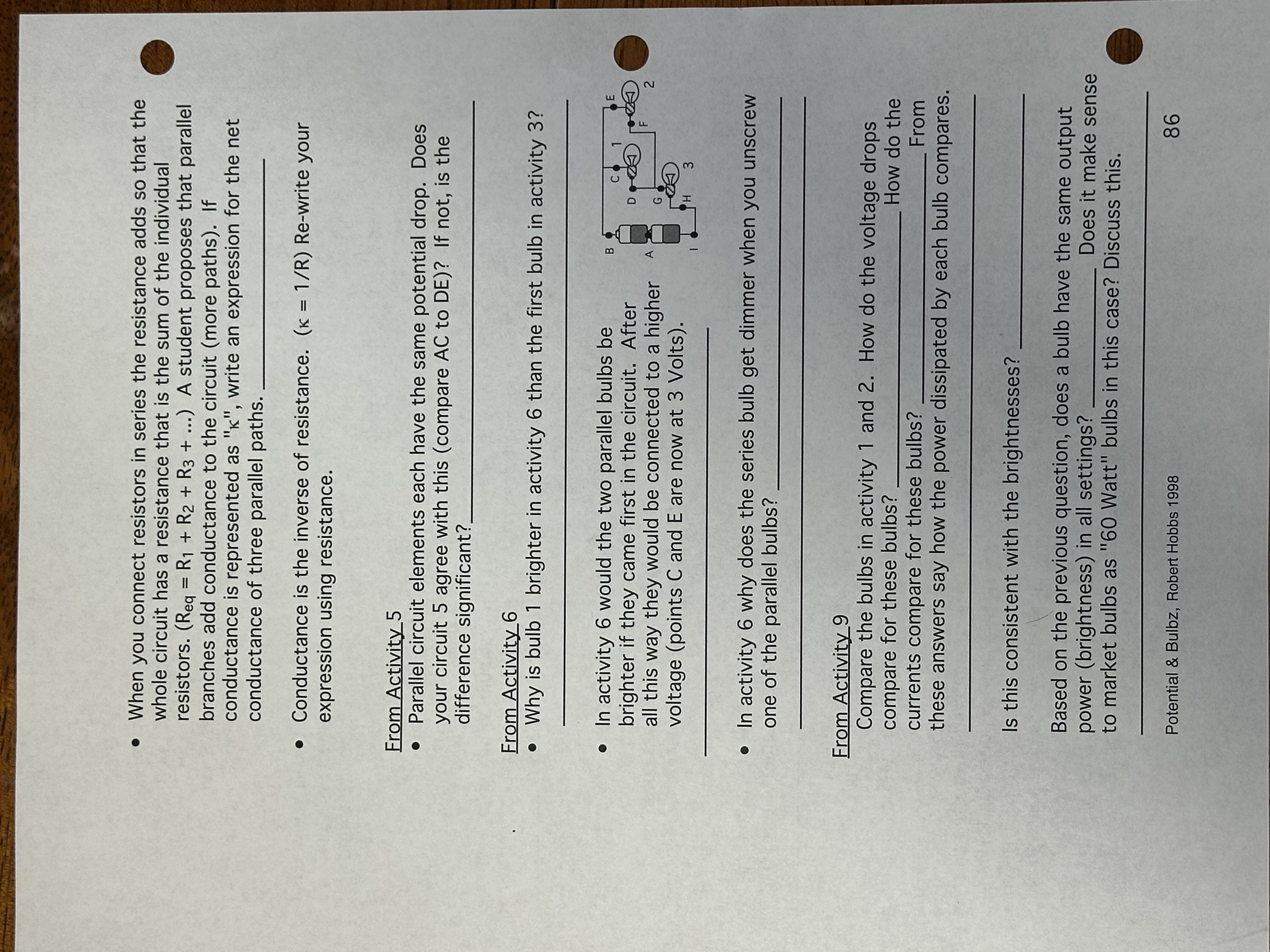
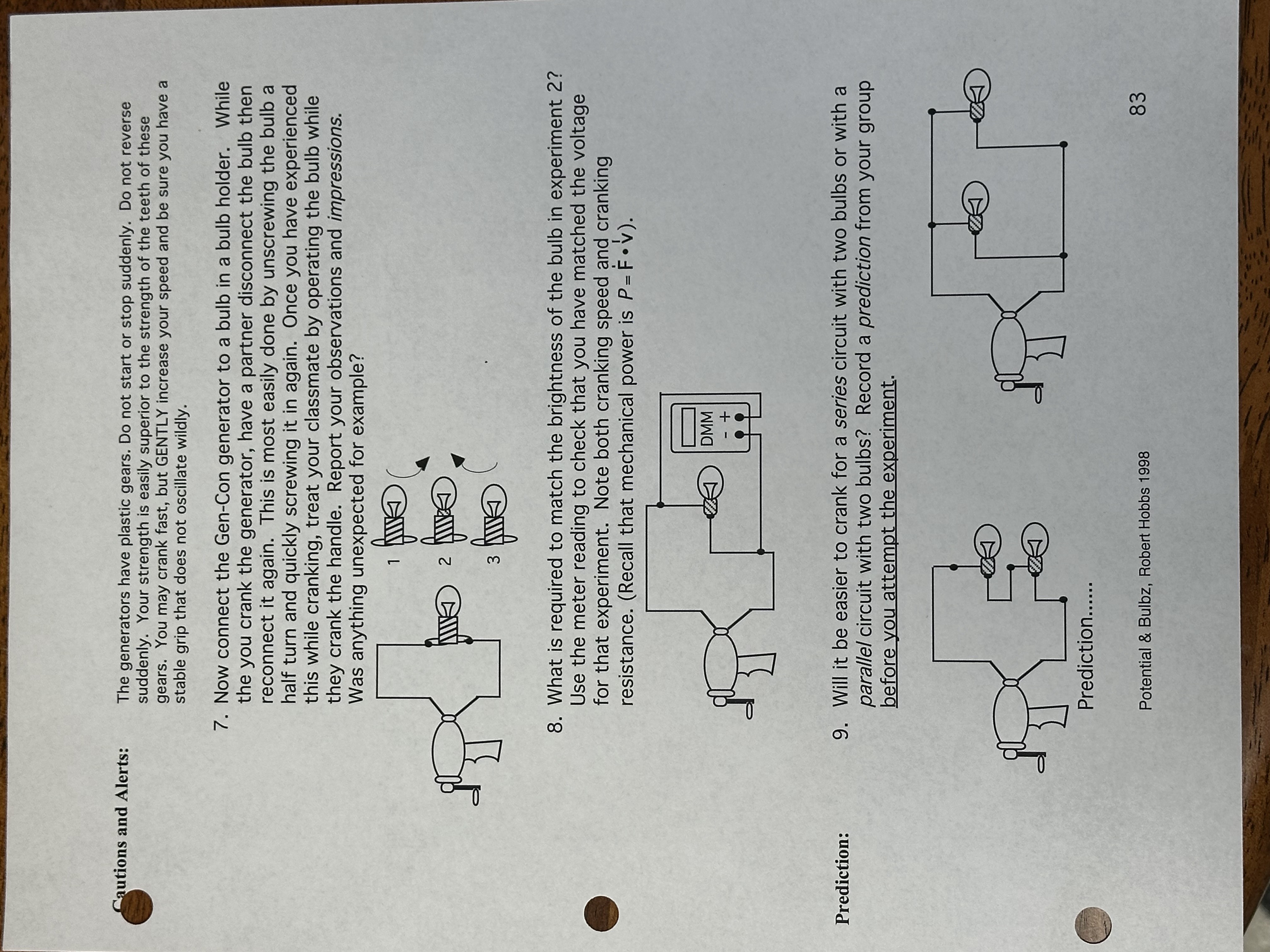
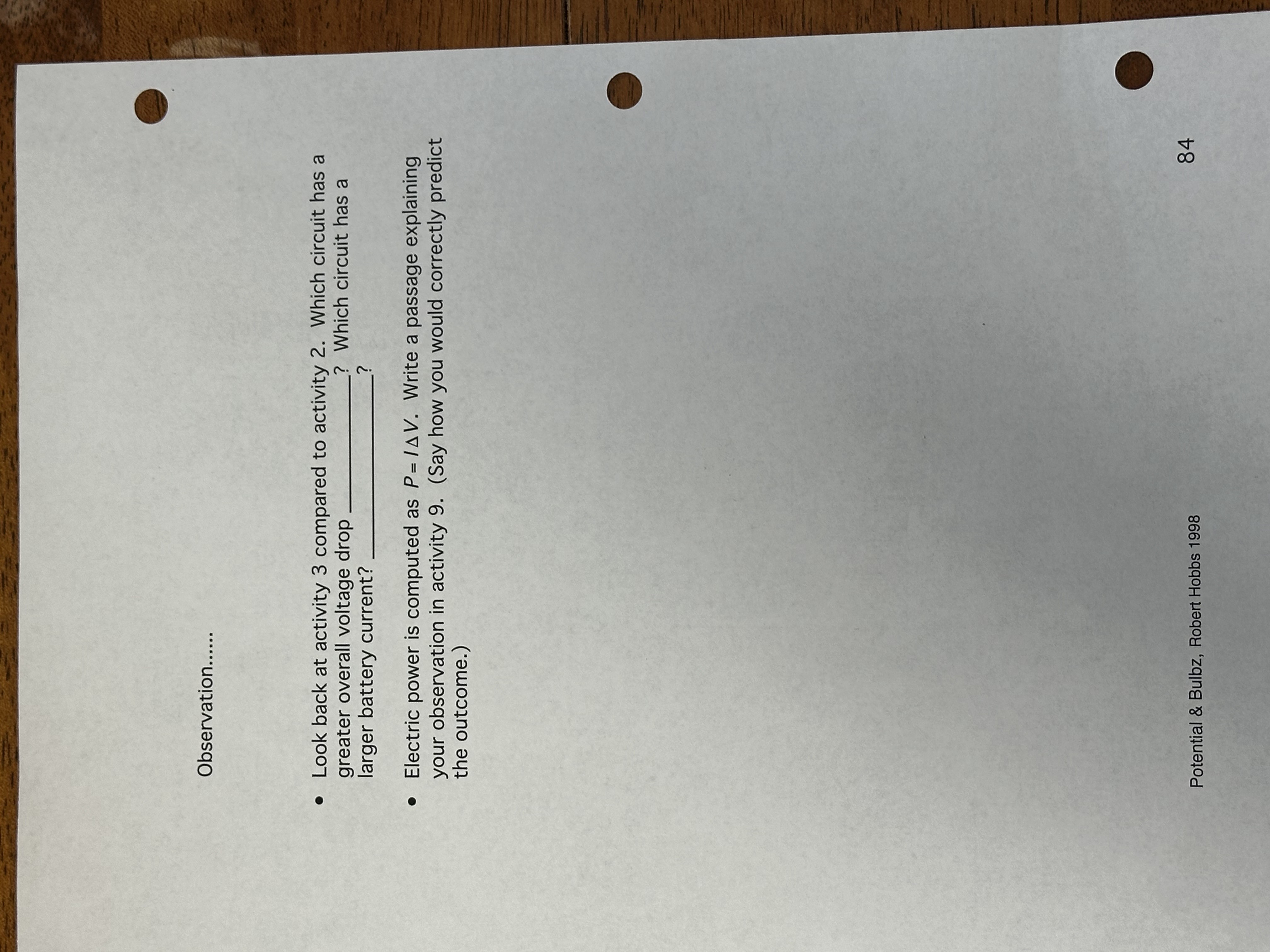
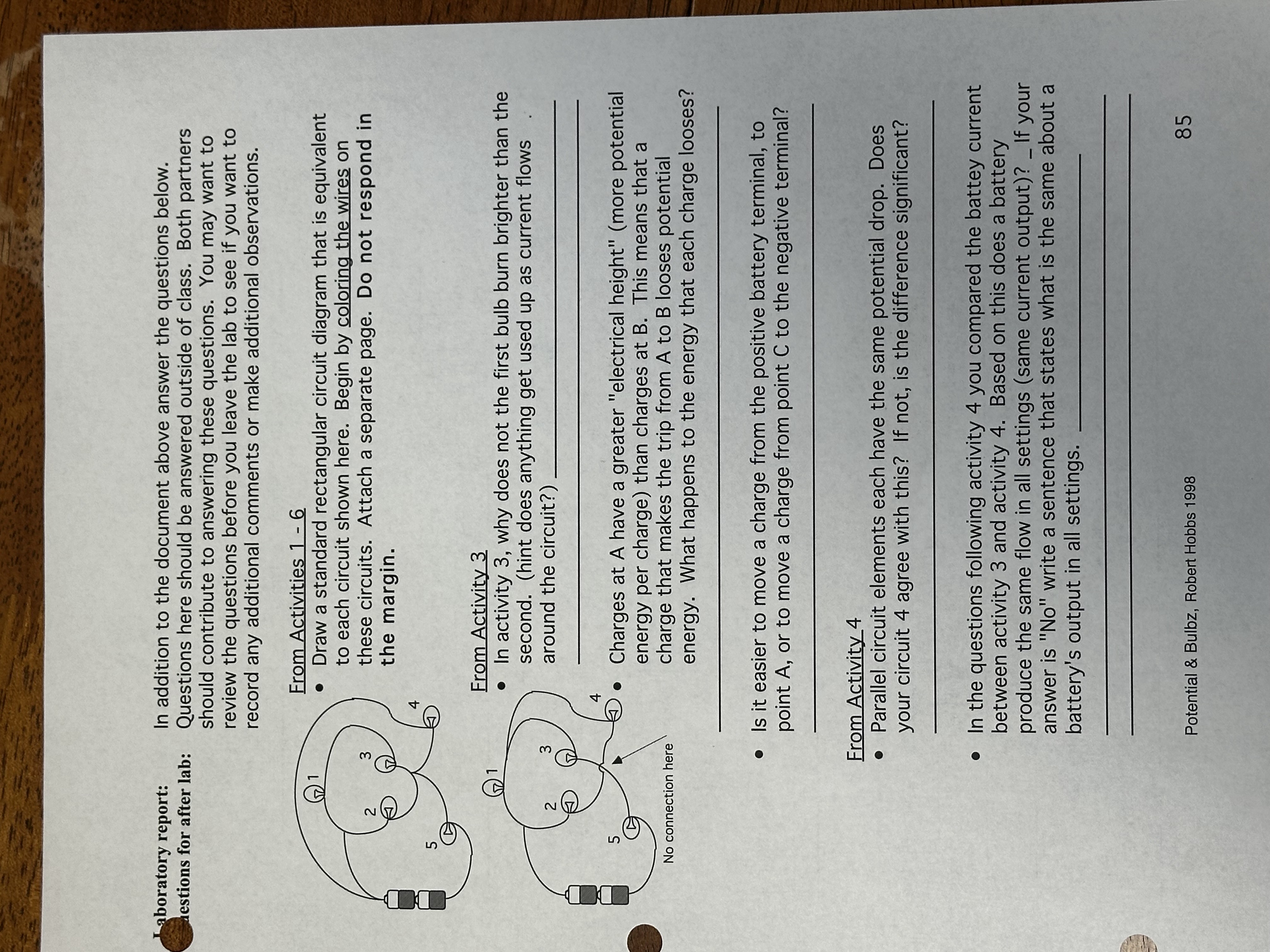
Cautions and Alerts: The generators have plastic gears. Do not start or stop suddenly. Do not reverse suddenly. Your strength is easily superior to the strength of the teeth of these gears. You may crank fast, but GENTLY increase your speed and be sure you have a stable grip that does not oscillate wildly. 7. Now connect the Gen-Con generator to a bulb in a bulb holder. While the you crank the generator, have a partner disconnect the bulb then reconnect it again. This is most easily done by unscrewing the bulb a half turn and quickly screwing it in again. Once you have experienced this while cranking, treat your classmate by operating the bulb while they crank the handle. Report your observations and impressions. Was anything unexpected for example? 8. What is required to match the brightness of the bulb in experiment 2? Use the meter reading to check that you have matched the voltage for that experiment. Note both cranking speed and cranking resistance. (Recall that mechanical power is P= F . V). DMM Prediction: 9. Will it be easier to crank for a series circuit with two bulbs or with a parallel circuit with two bulbs? Record a prediction from your group before you attempt the experiment. Prediction...... Potential & Bulbz, Robert Hobbs 1998Observation...... . Look back at activity 3 compared to activity 2. Which circuit has a greater overall voltage drop _? Which circuit has a larger battery current? . Electric power is computed as P= /AV. Write a passage explaining your observation in activity 9. (Say how you would correctly predict the outcome.) Potential & Bulbz, Robert Hobbs 1998Laboratory report: In addition to the document above answer the questions below. estions for after lab: Questions here should be answered outside of class. Both partners should contribute to answering these questions. You may want to review the questions before you leave the lab to see if you want to record any additional comments or make additional observations. From Activities 1 - 6 . Draw a standard rectangular circuit diagram that is equivalent to each circuit shown here. Begin by coloring the wires on these circuits. Attach a separate page. Do not respond in the margin. (4) From Activity 3 C . In activity 3, why does not the first bulb burn brighter than the second. (hint does anything get used up as current flows m ( around the circuit?) Charges at A have a greater "electrical height" (more potential energy per charge) than charges at B. This means that a No connection here charge that makes the trip from A to B looses potential energy. What happens to the energy that each charge looses? . Is it easier to move a charge from the positive battery terminal, to point A, or to move a charge from point C to the negative terminal? From Activity 4 . Parallel circuit elements each have the same potential drop. Does your circuit 4 agree with this? If not, is the difference significant? . In the questions following activity 4 you compared the battey current between activity 3 and activity 4. Based on this does a battery produce the same flow in all settings (same current output)? _ If your answer is "No" write a sentence that states what is the same about a battery's output in all settings. Potential & Bulbz, Robert Hobbs 1998. When you connect resistors in series the resistance adds so that the whole circuit has a resistance that is the sum of the individual resistors. (Req = R1 + R2 + R3 + ...) A student proposes that parallel branches add conductance to the circuit (more paths). If conductance is represented as "k", write an expression for the net conductance of three parallel paths . Conductance is the inverse of resistance. (k = 1/R) Re-write your expression using resistance. From Activity 5 . Parallel circuit elements each have the same potential drop. Does your circuit 5 agree with this (compare AC to DE)? If not, is the difference significant? From Activity 6 . Why is bulb 1 brighter in activity 6 than the first bulb in activity 3? . In activity 6 would the two parallel bulbs be brighter if they came first in the circuit. After all this way they would be connected to a higher A voltage (points C and E are now at 3 Volts) . In activity 6 why does the series bulb get dimmer when you unscrew one of the parallel bulbs? From Activity 9 Compare the bulbs in activity 1 and 2. How do the voltage drops compare for these bulbs? How do the currents compare for these bulbs? From these answers say how the power dissipated by each bulb compares. Is this consistent with the brightnesses? Based on the previous question, does a bulb have the same output power (brightness) in all settings? Does it make sense to market bulbs as "60 Watt" bulbs in this case? Discuss this. Potential & Bulbz, Robert Hobbs 1998
Step by Step Solution

There are 3 Steps involved in it

1 Expert Approved Answer
Step: 1 Unlock blur-text-image
Question Has Been Solved by an Expert!

Get step-by-step solutions from verified subject matter experts

Step: 2 Unlock
Step: 3 Unlock

Students Have Also Explored These Related Accounting Questions!