







Question: Ch 10 Approximating Functions Using Series 10.4 The Error in Taylor Polynomial Approximations Please show your work and answer each question The figure to the

Ch 10 Approximating Functions Using Series
10.4 The Error in Taylor Polynomial Approximations
Please show your work and answer each question
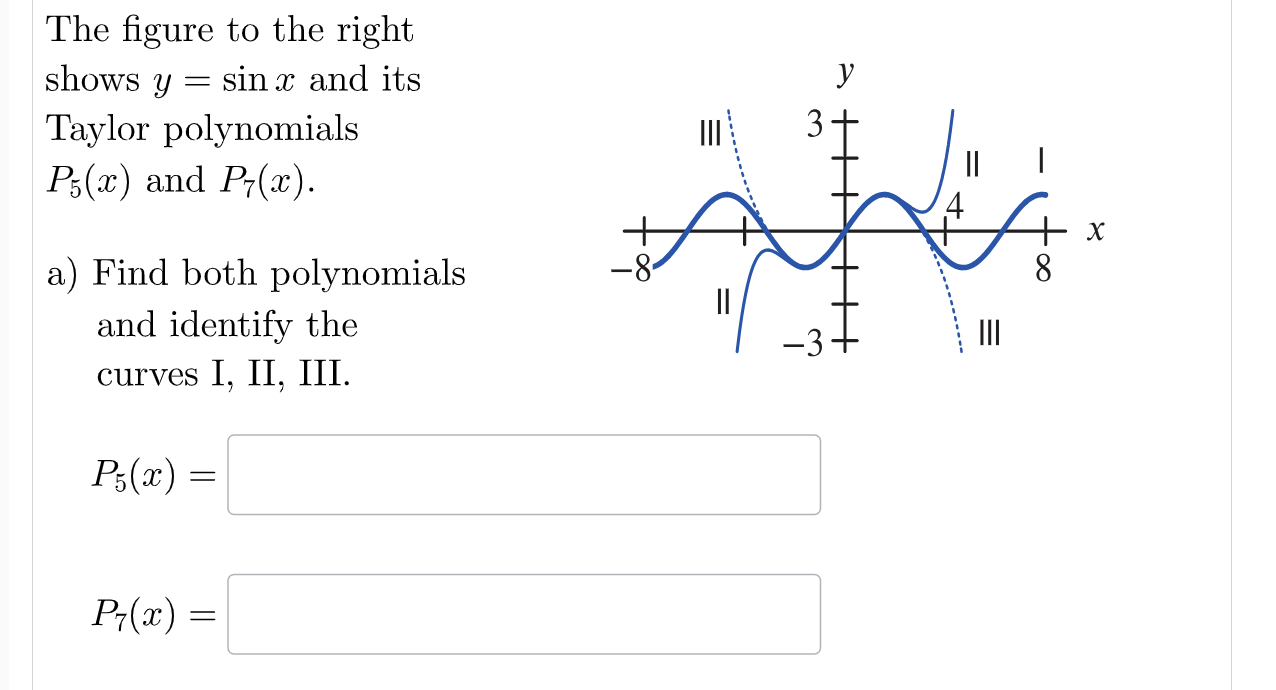
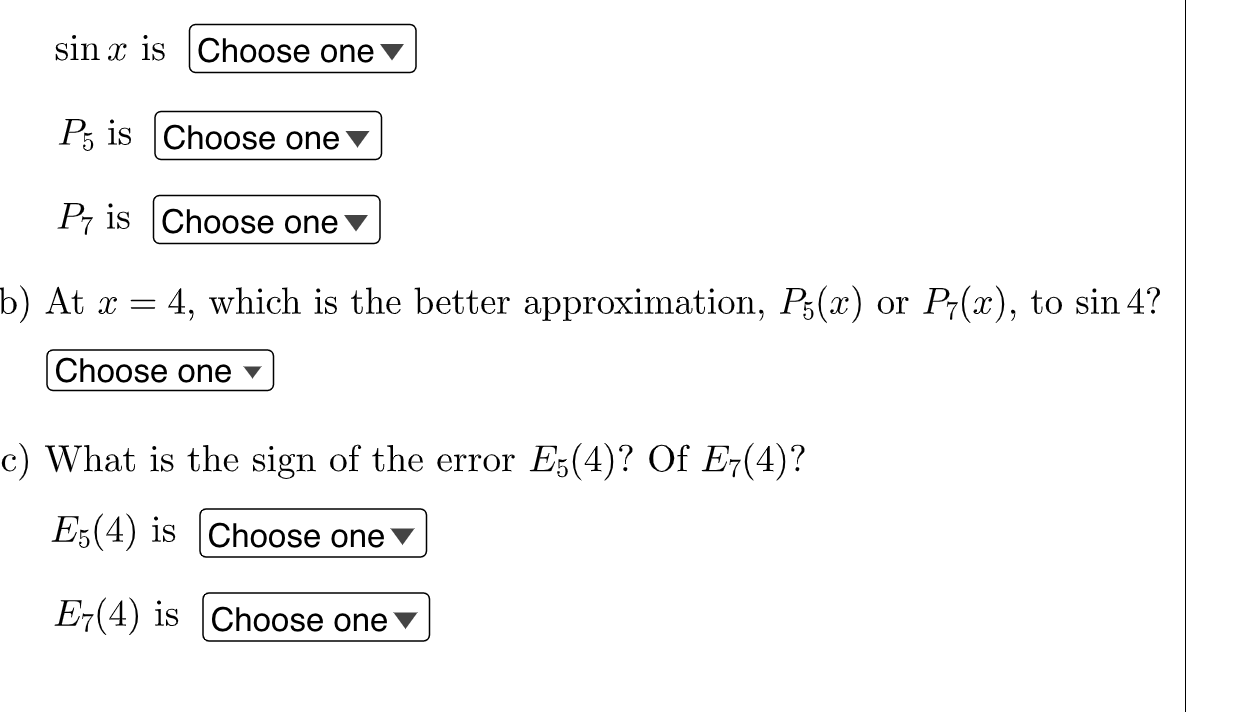

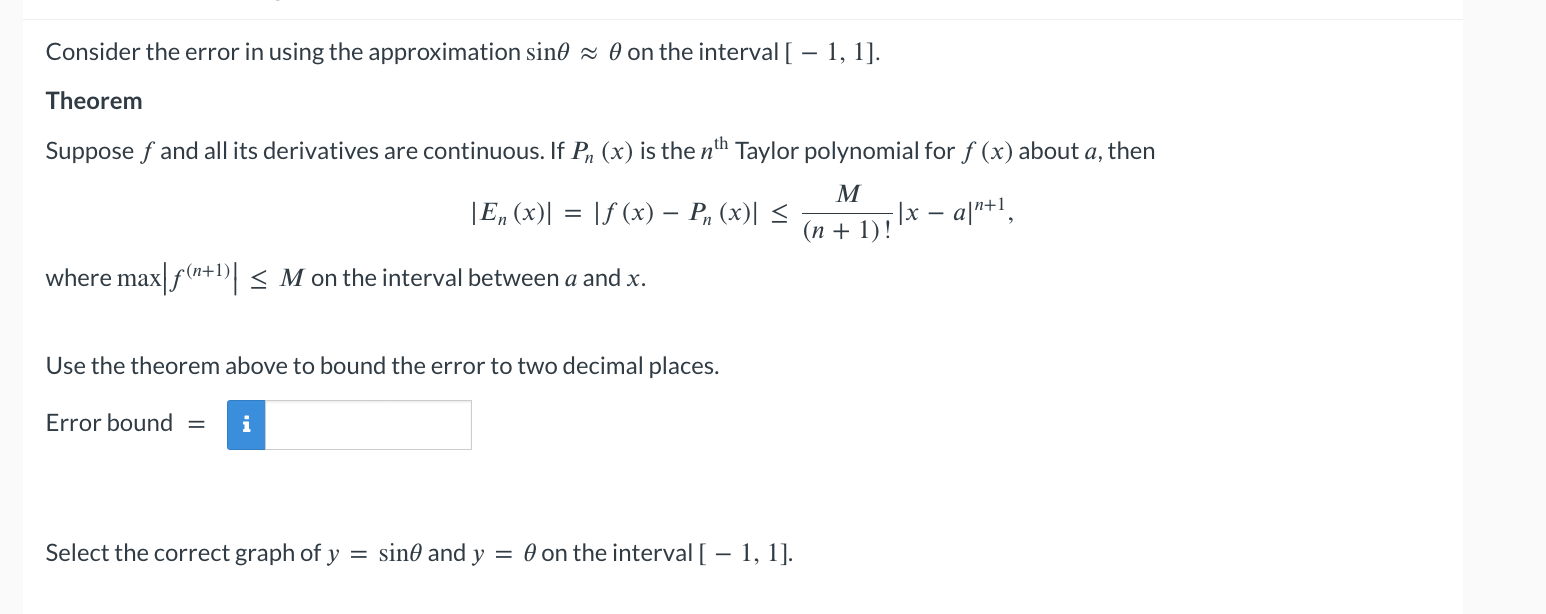
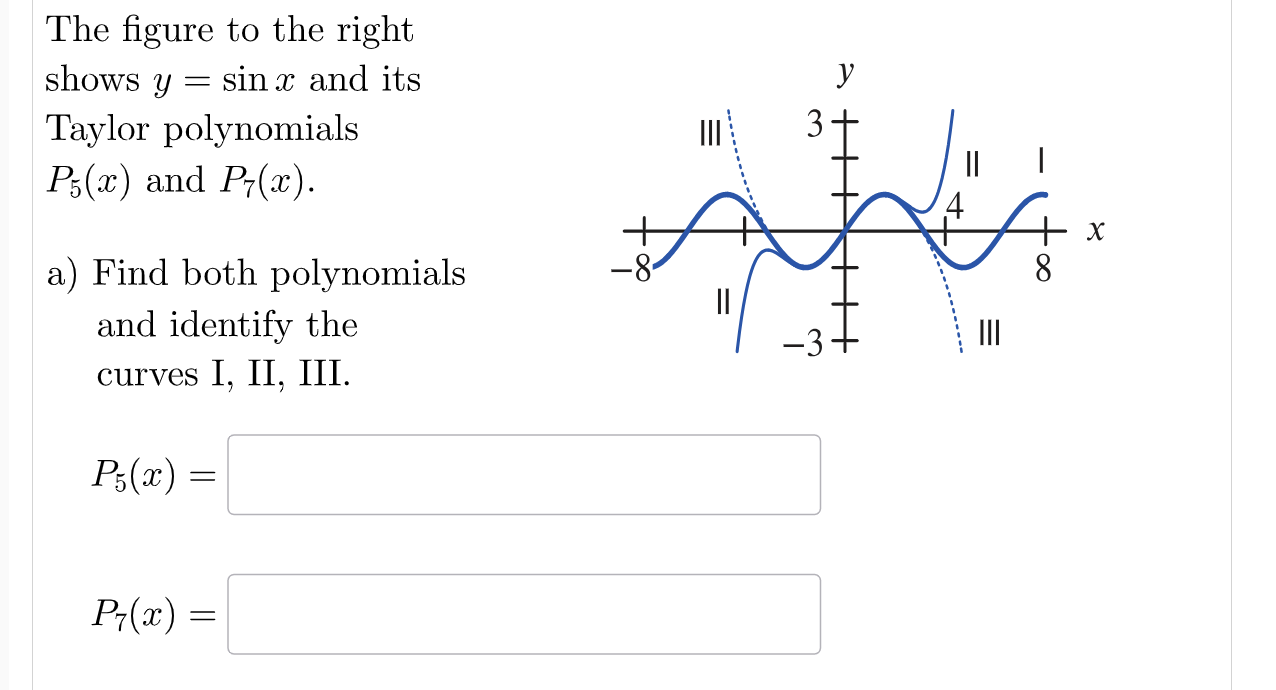
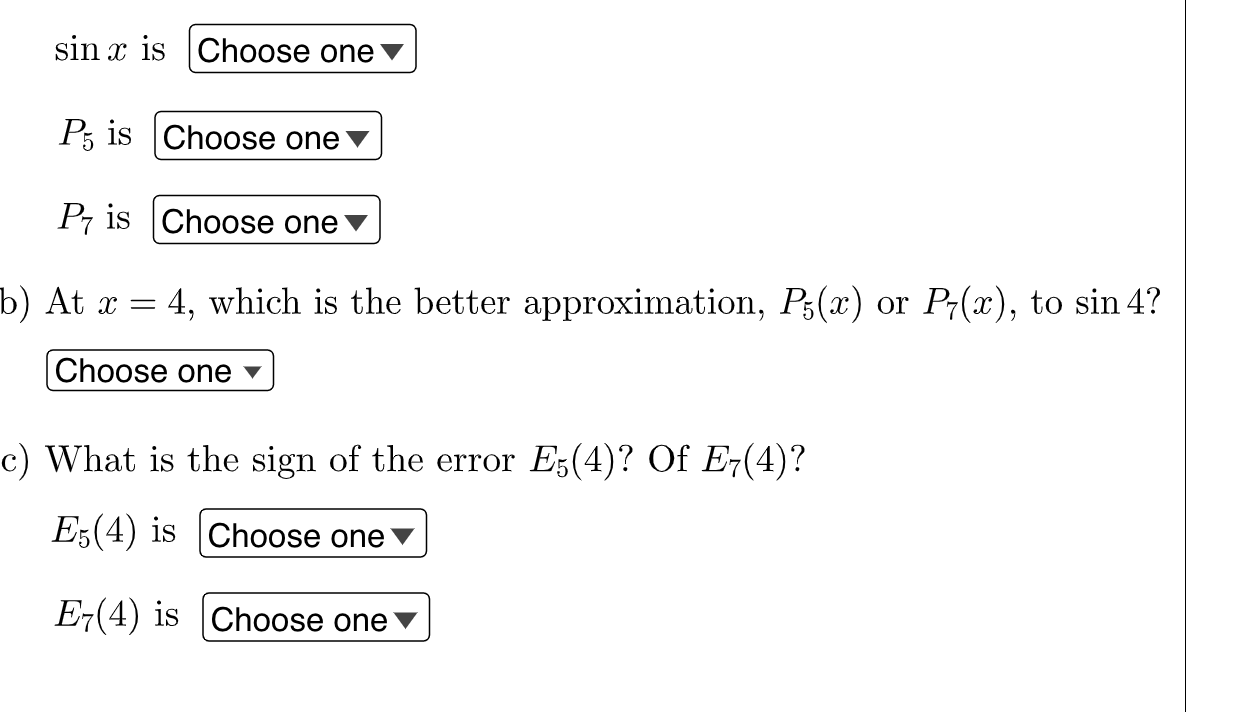
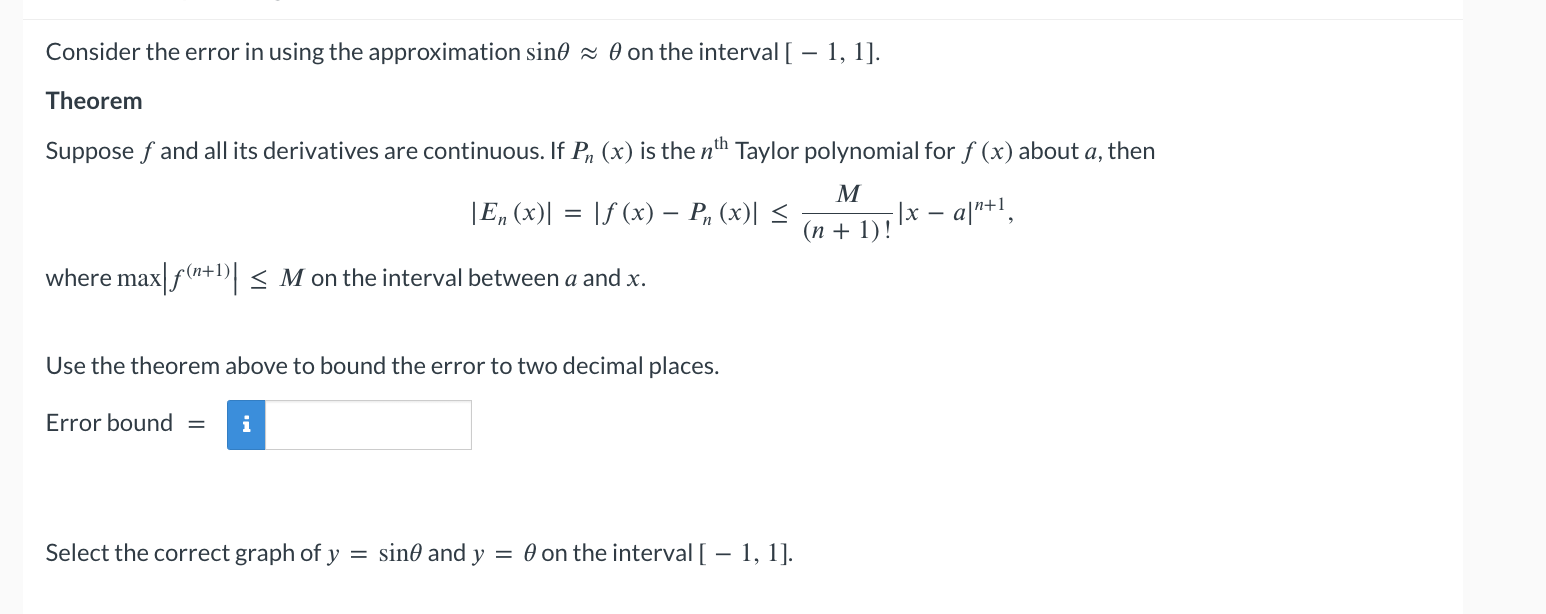
The figure to the right shows y = sin x and its Taylor polynomials III + Ps(x) and Pr(x). X a) Find both polynomials -8. E and identify the 3 III curves I, II, III. P5(2) = PT ( ac ) =sin x is Choose one P5 is Choose one P7 is Choose one b) At a = 4, which is the better approximation, Ps(x) or Pr(x), to sin 4? Choose one c) What is the sign of the error Es(4)? Of E7(4)? Es (4) is Choose one E7(4) is Choose oneFind a bound on the magnitude of the error if we approximate v2 using the Taylor approximation of degree three for V 1 + x about x = 0. Round your answer to three decimal places. Error bound =Consider the error in using the approximation sine ~ 0 on the interval [ - 1, 1]. Theorem Suppose f and all its derivatives are continuous. If Pn (x) is the n Taylor polynomial for f (x) about a, then M IEn (x)| = If (x) - Pn (x)Is ( n + 1 ) ! where max f("+])
Step by Step Solution
There are 3 Steps involved in it

Get step-by-step solutions from verified subject matter experts
 Study Help