







Question: chap 8 E8-7 Computing Bad Debt Expense Using Aging of Accounts Receivable Method [LO8-2] Brown Cow Dairy uses the aging approach to estimate Bad Debt
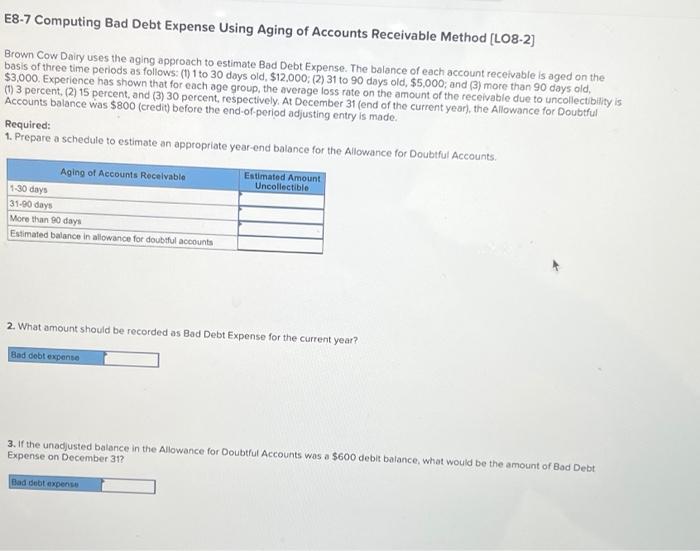
E8-7 Computing Bad Debt Expense Using Aging of Accounts Receivable Method [LO8-2] Brown Cow Dairy uses the aging approach to estimate Bad Debt Expense. The balance of each account receivable is aged on the basis of three time periods as follows: (1) 1 to 30 days old, $12,000; (2) 31 to 90 days old, $5,000; and (3) more than 90 days old, $3,000. Experience has shown that for each age group, the average loss rate on the amount of the receivable due to uncollectibility is (1) 3 percent. (2) 15 percent, and (3) 30 percent, respectively. At December 31 (end of the current year), the Allowance for Doubtful Accounts balance was $800 (credit) before the end-of-period adjusting entry is made. Required: 1. Prepare a schedule to estimate an appropriate year-end balance for the Allowance for Doubtful Accounts. Aging of Accounts Receivable Estimated Amount Uncollectible 1-30 days 31-90 days More than 90 days Estimated balance in allowance for doubtful accounts 2. What amount should be recorded as Bad Debt Expense for the current year? Bad debt expense 3. If the unadjusted balance in the Allowance for Doubtful Accounts was a $600 debit balance, what would be the amount of Bad Debt Expense on December 31? Bad debt expense
Step by Step Solution
There are 3 Steps involved in it

Get step-by-step solutions from verified subject matter experts
 Study Help