







Question: Chapter 10 Mastery This is the full question BOR CPAs, Inc. BOR CPAs, Inc. is a closely held corporation owned by three stockholders who used
Chapter 10 Mastery
This is the full question
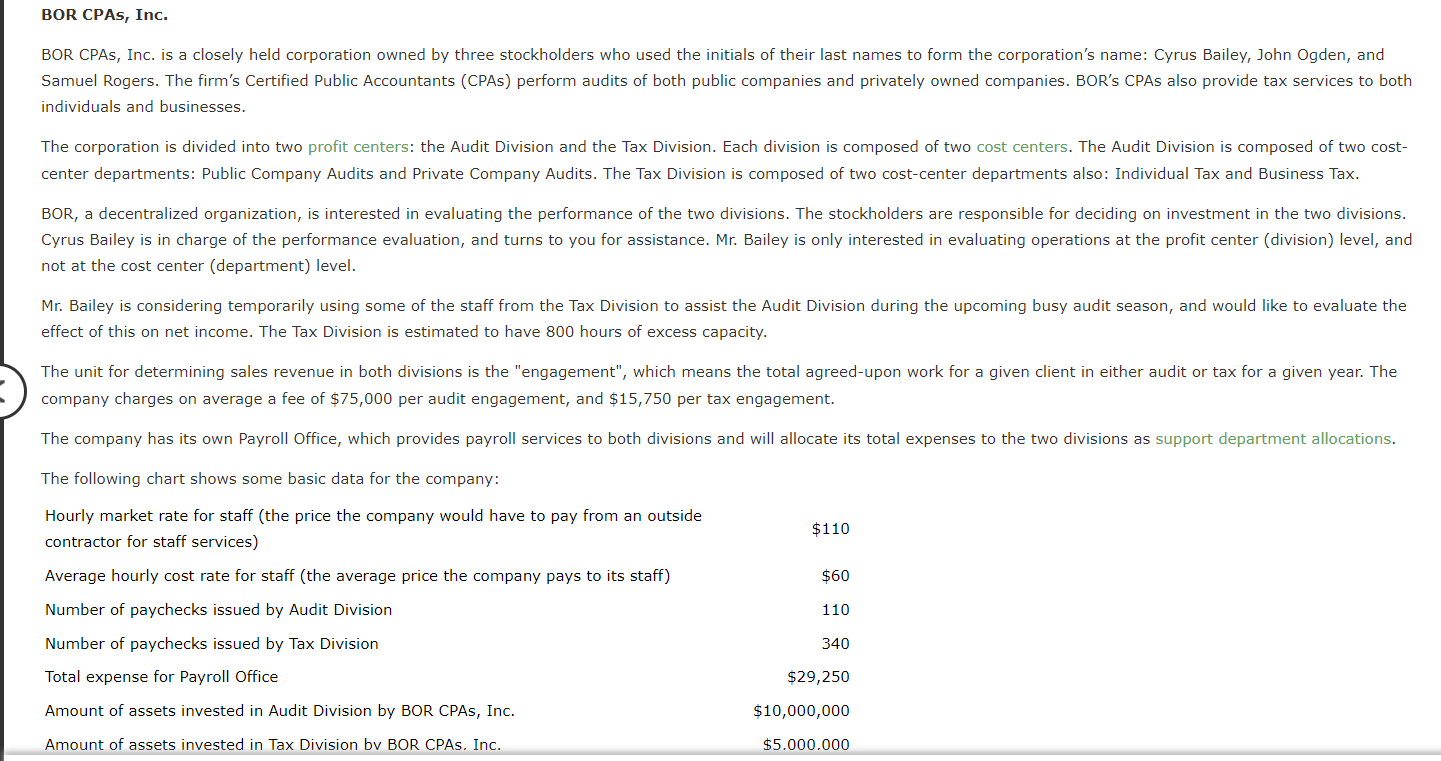
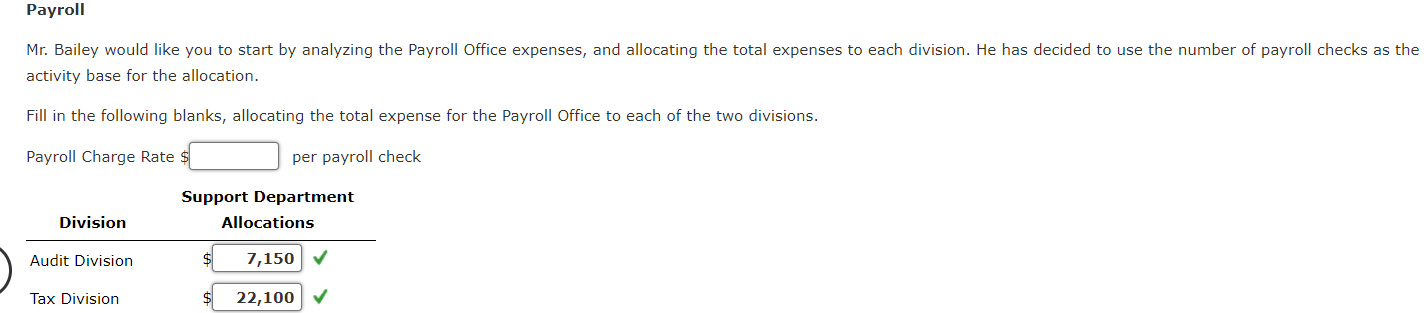
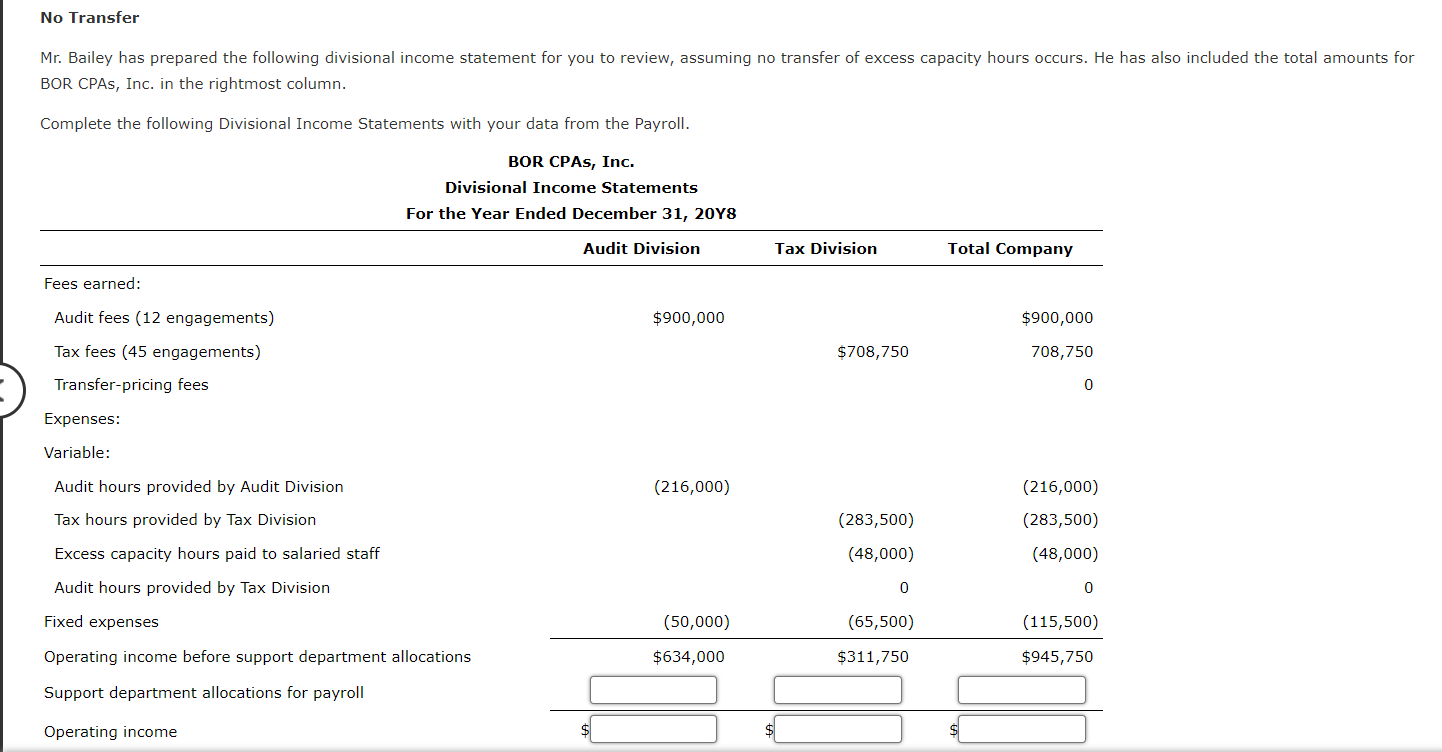
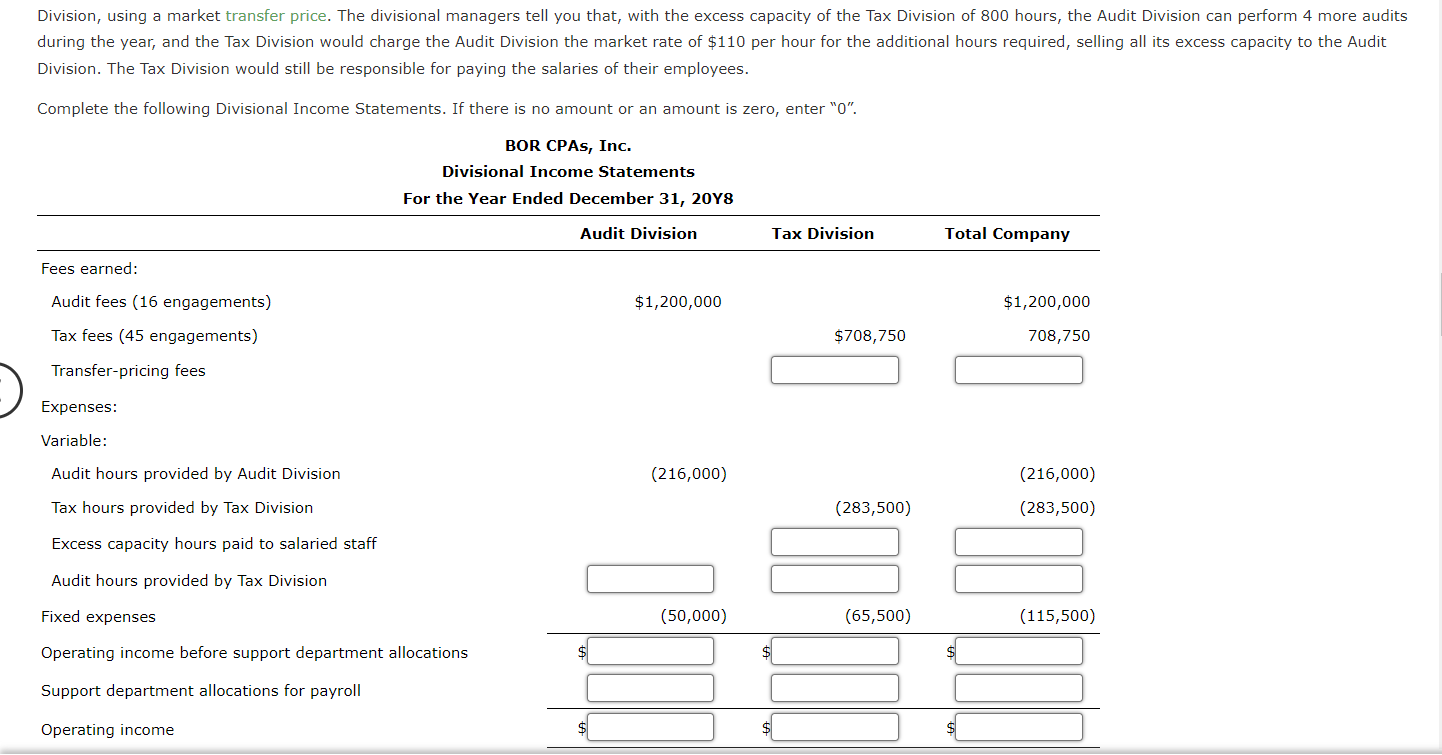
BOR CPAs, Inc. BOR CPAs, Inc. is a closely held corporation owned by three stockholders who used the initials of their last names to form the corporation's name: Cyrus Bailey, John Ogden, and Samuel Rogers. The firm's Certified Public Accountants (CPAs) perform audits of both public companies and privately owned companies. BOR's CPAs also provide tax services to both individuals and businesses. The corporation is divided into two profit centers: the Audit Division and the Tax Division. Each division is composed of two cost centers. The Audit Division is composed of two cost- center departments: Public Company Audits and Private Company Audits. The Tax Division is composed of two cost-center departments also: Individual Tax and Business Tax. BOR, a decentralized organization, is interested in evaluating the performance of the two divisions. The stockholders are responsible for deciding on investment in the two divisions. Cyrus Bailey is in charge of the performance evaluation, and turns to you for assistance. Mr. Bailey is only interested in evaluating operations at the profit center (division) level, and not at the cost center (department) level. Mr. Bailey is considering temporarily using some of the staff from the Tax Division to assist the Audit Division during the upcoming busy audit season, and would like to evaluate the effect of this on net income. The Tax Division is estimated to have 800 hours of excess capacity. The unit for determining sales revenue in both divisions is the "engagement", which means the total agreed-upon work for a given client in either audit or tax for a given year. The company charges on average a fee of $75,000 per audit engagement, and $15,750 per tax engagement. The company has its own Payroll Office, which provides payroll services to both divisions and will allocate its total expenses to the two divisions as support department allocations. The following chart shows some basic data for the company: $110 $60 Hourly market rate for staff (the price the company would have to pay from an outside contractor for staff services) Average hourly cost rate for staff (the average price the company pays to its staff) Number of paychecks issued by Audit Division Number of paychecks issued by Tax Division Total expense for Payroll Office 110 340 $29,250 Amount of assets invested in Audit Division by BOR CPAs, Inc. $10,000,000 Amount of assets invested in Tax Division by BOR CPAs. Inc. $5.000.000 Payroll Mr. Bailey would like you to start by analyzing the Payroll Office expenses, and allocating the total expenses to each division. He has decided to use the number of payroll checks as the activity base for the allocation. Fill in the following blanks, allocating the total expense for the Payroll Office to each of the two divisions. Payroll Charge Rate $ per payroll check Support Department Allocations Division Audit Division 7,150 Tax Division 22,100 No Transfer Mr. Bailey has prepared the following divisional income statement for you to review, assuming no transfer of excess capacity hours occurs. He has also included the total amounts for BOR CPAs, Inc. in the rightmost column. Complete the following Divisional Income Statements with your data from the Payroll. BOR CPAs, Inc. Divisional Income Statements For the Year Ended December 31, 2018 Audit Division Tax Division Total Company Fees earned: $900,000 $900,000 Audit fees (12 engagements) Tax fees (45 engagements) Transfer pricing fees $708,750 708,750 0 Expenses: Variable: Audit hours provided by Audit Division (216,000) (216,000) Tax hours provided by Tax Division (283,500) (283,500) (48,000) Excess capacity hours paid to salaried staff (48,000) Audit hours provided by Tax Division 0 0 Fixed expenses (50,000) (65,500) (115,500) $634,000 $311,750 $945,750 Operating income before support department allocations Support department allocations for payroll Operating income Division, using a market transfer price. The divisional managers tell you that, with the excess capacity of the Tax Division of 800 hours, the Audit Division can perform 4 more audits during the year, and the Tax Division would charge the Audit Division the market rate of $110 per hour for the additional hours required, selling all its excess capacity to the Audit Division. The Tax Division would still be responsible for paying the salaries of their employees. Complete the following Divisional Income Statements. If there is no amount or an amount is zero, enter "O". BOR CPAs, Inc. Divisional Income Statements For the Year Ended December 31, 2018 Audit Division Tax Division Total Company Fees earned: Audit fees (16 engagements) $1,200,000 $1,200,000 Tax fees (45 engagements) $708,750 708,750 Transfer-pricing fees Expenses: Variable: (216,000) (216,000) Audit hours provided by Audit Division Tax hours provided by Tax Division (283,500) (283,500) Excess capacity hours paid to salaried staff Audit hours provided by Tax Division Fixed expenses (50,000) (65,500) (115,500) 100 Operating income before support department allocations Support department allocations for payroll Operating income
Step by Step Solution
There are 3 Steps involved in it

Get step-by-step solutions from verified subject matter experts
 Study Help