Question: Chapter 12 Discussion: Diversity--Blind Recruiting (20 points) Background: The Managing Change boxed feature on page 380 is entitled Blind Recruiting. It is the basis for
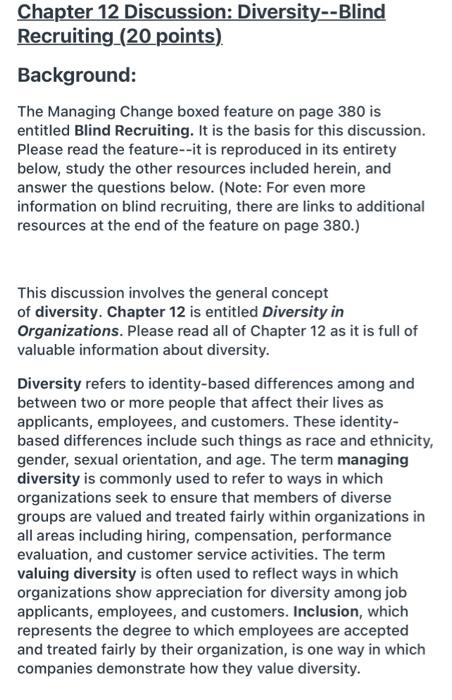
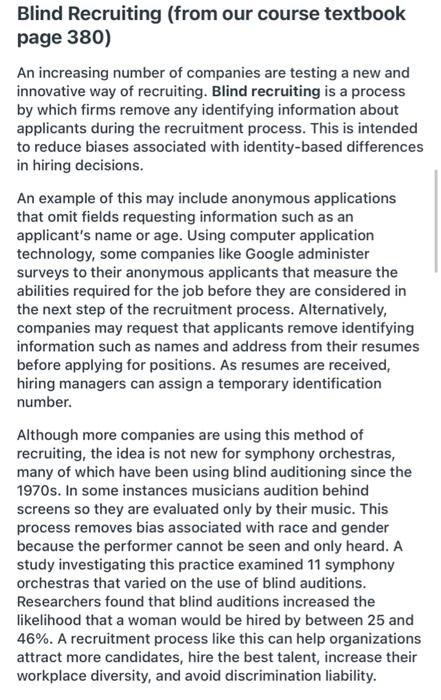
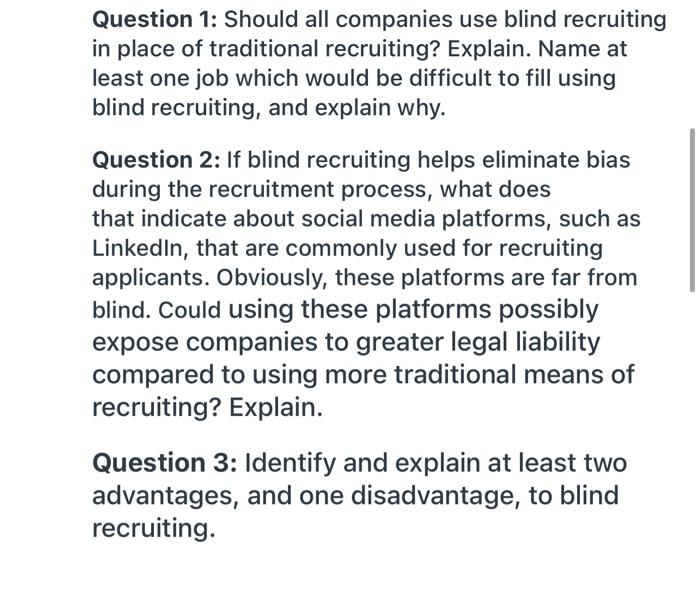
Chapter 12 Discussion: Diversity--Blind Recruiting (20 points) Background: The Managing Change boxed feature on page 380 is entitled Blind Recruiting. It is the basis for this discussion. Please read the feature--it is reproduced in its entirety below, study the other resources included herein, and answer the questions below. (Note: For even more information on blind recruiting, there are links to additional resources at the end of the feature on page 380.) This discussion involves the general concept of diversity. Chapter 12 is entitled Diversity in Organizations. Please read all of Chapter 12 as it is full of valuable information about diversity. Diversity refers to identity-based differences among and between two or more people that affect their lives as applicants, employees, and customers. These identity- based differences include such things as race and ethnicity, gender, sexual orientation, and age. The term managing diversity is commonly used to refer to ways in which organizations seek to ensure that members of diverse groups are valued and treated fairly within organizations in all areas including hiring, compensation, performance evaluation, and customer service activities. The term valuing diversity is often used to reflect ways in which organizations show appreciation for diversity among job applicants, employees, and customers. Inclusion, which represents the degree to which employees are accepted and treated fairly by their organization, is one way in which companies demonstrate how they value diversity. Blind Recruiting (from our course textbook page 380) An increasing number of companies are testing a new and innovative way of recruiting. Blind recruiting is a process by which firms remove any identifying information about applicants during the recruitment process. This is intended to reduce biases associated with identity-based differences in hiring decisions. An example of this may include anonymous applications that omit fields requesting information such as an applicant's name or age. Using computer application technology, some companies like Google administer surveys to their anonymous applicants that measure the abilities required for the job before they are considered in the next step of the recruitment process. Alternatively, companies may request that applicants remove identifying information such as names and address from their resumes before applying for positions. As resumes are received, hiring managers can assign a temporary identification number. Although more companies are using this method of recruiting, the idea is not new for symphony Orchestras, many of which have been using blind auditioning since the 1970s. In some instances musicians audition behind screens so they are evaluated only by their music. This process removes bias associated with race and gender because the performer cannot be seen and only heard. A study investigating this practice examined 11 symphony orchestras that varied on the use of blind auditions. Researchers found that blind auditions increased the likelihood that a woman would be hired by between 25 and 46%. A recruitment process like this can help organizations attract more candidates, hire the best talent, increase their workplace diversity, and avoid discrimination liability. Question 1: Should all companies use blind recruiting in place of traditional recruiting? Explain. Name at least one job which would be difficult to fill using blind recruiting, and explain why. Question 2: If blind recruiting helps eliminate bias during the recruitment process, what does that indicate about social media platforms, such as LinkedIn, that are commonly used for recruiting applicants. Obviously, these platforms are far from blind. Could using these platforms possibly expose companies to greater legal liability compared to using more traditional means of recruiting? Explain. Question 3: Identify and explain at least two advantages, and one disadvantage, to blind recruiting









 Study Help