







Question: Chapter 12 Discussion Our Chapter #12 discussion will focus on capital budgeting techniques. Using the discussion area, please address one of the following: What method(s)
Chapter 12 Discussion
Our Chapter #12 discussion will focus on capital budgeting techniques. Using the discussion area, please address one of the following:
- What method(s) of capital budgeting does your company use, and what are the reasons for using this (or these) method(s)?
- Discuss the strengths and/or weaknesses you see in the model presented in Figure 12-1 of chapter 12.
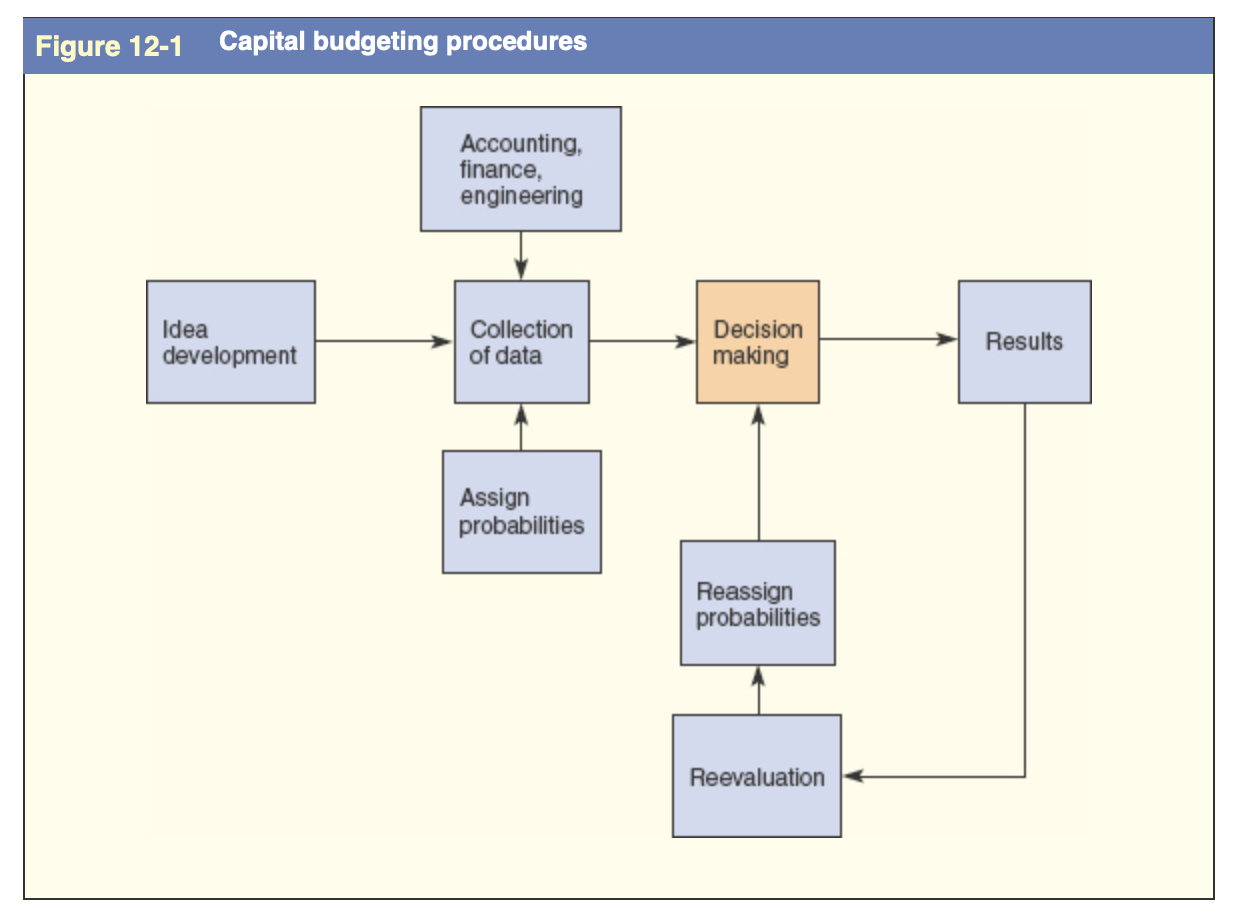
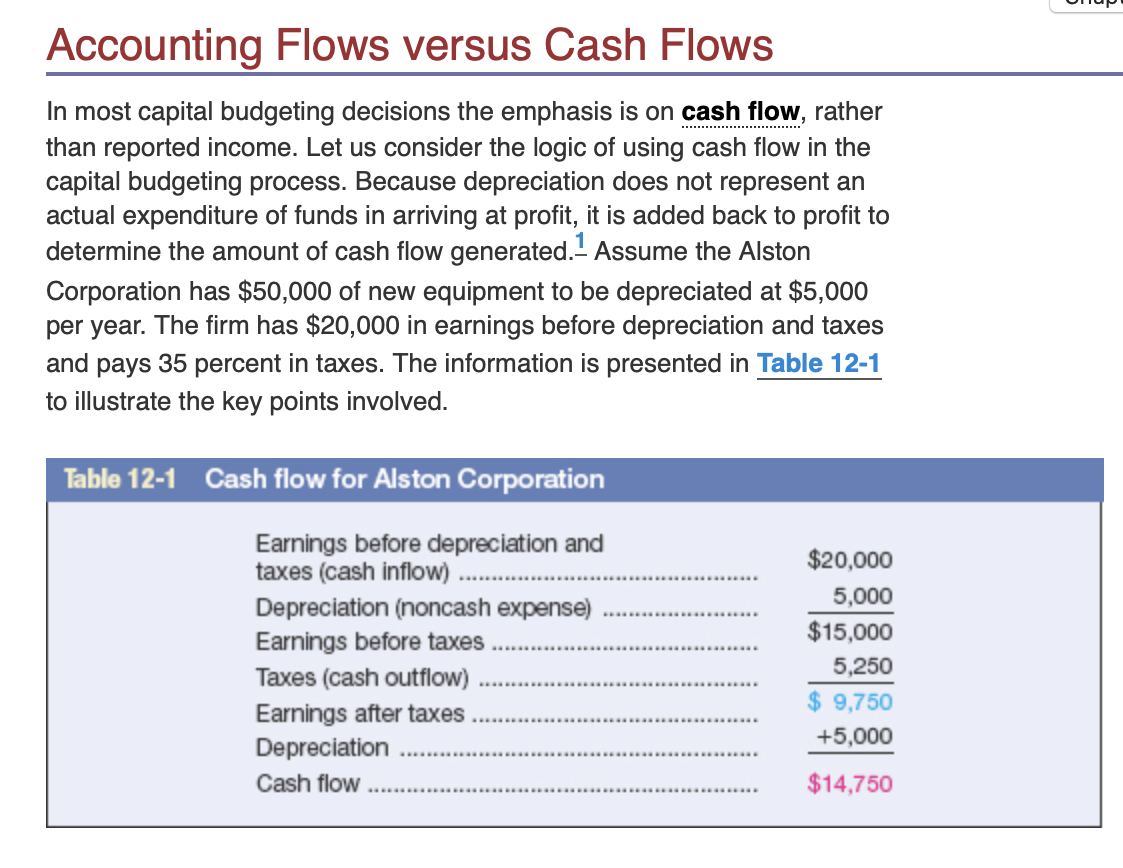
Figure 12-1 Capital budgeting procedures Accounting, finance, engineering Idea development Collection of data Decision making Results Assign probabilities Reassign probabilities Reevaluation Onup Accounting Flows versus Cash Flows In most capital budgeting decisions the emphasis is on cash flow, rather than reported income. Let us consider the logic of using cash flow in the capital budgeting process. Because depreciation does not represent an actual expenditure of funds in arriving at profit, it is added back to profit to determine the amount of cash flow generated.- Assume the Alston Corporation has $50,000 of new equipment to be depreciated at $5,000 per year. The firm has $20,000 in earnings before depreciation and taxes and pays 35 percent in taxes. The information is presented in Table 12-1 to illustrate the key points involved. Table 12-1 Cash flow for Alston Corporation Earnings before depreciation and taxes (cash inflow) ....... Depreciation (noncash expense) Earnings before taxes Taxes (cash outflow) Earnings after taxes Depreciation Cash flow $20,000 5,000 $15,000 5,250 $ 9,750 +5,000 $14,750 Figure 12-1 Capital budgeting procedures Accounting, finance, engineering Idea development Collection of data Decision making Results Assign probabilities Reassign probabilities Reevaluation Onup Accounting Flows versus Cash Flows In most capital budgeting decisions the emphasis is on cash flow, rather than reported income. Let us consider the logic of using cash flow in the capital budgeting process. Because depreciation does not represent an actual expenditure of funds in arriving at profit, it is added back to profit to determine the amount of cash flow generated.- Assume the Alston Corporation has $50,000 of new equipment to be depreciated at $5,000 per year. The firm has $20,000 in earnings before depreciation and taxes and pays 35 percent in taxes. The information is presented in Table 12-1 to illustrate the key points involved. Table 12-1 Cash flow for Alston Corporation Earnings before depreciation and taxes (cash inflow) ....... Depreciation (noncash expense) Earnings before taxes Taxes (cash outflow) Earnings after taxes Depreciation Cash flow $20,000 5,000 $15,000 5,250 $ 9,750 +5,000 $14,750
Step by Step Solution
There are 3 Steps involved in it

Get step-by-step solutions from verified subject matter experts
 Study Help