







Question: Chapter 3: Student Version 18. Two cars collide because the second car was following too closely from behind. If the damage to the car in
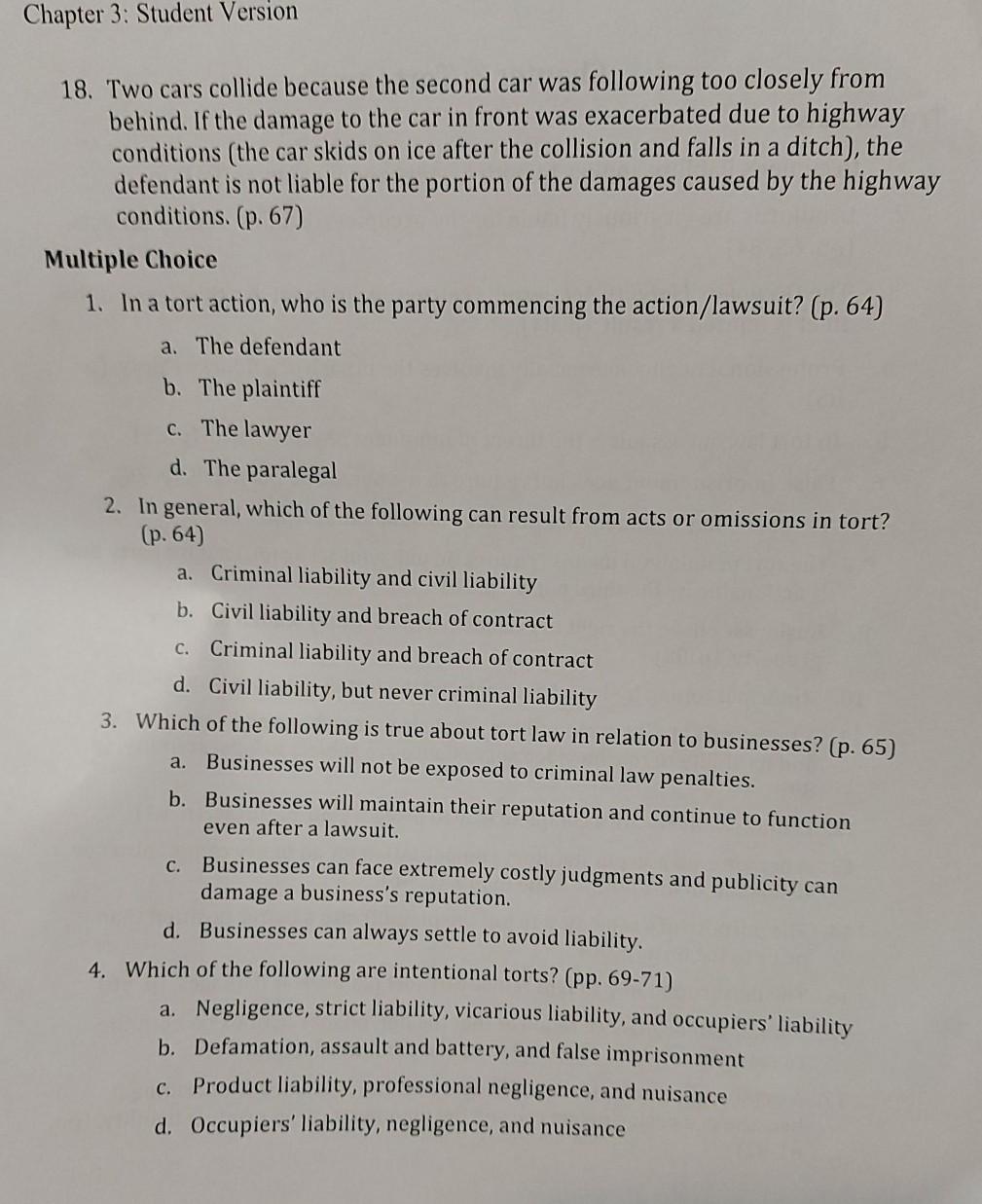
Chapter 3: Student Version 18. Two cars collide because the second car was following too closely from behind. If the damage to the car in front was exacerbated due to highway conditions (the car skids on ice after the collision and falls in a ditch), the defendant is not liable for the portion of the damages caused by the highway conditions. (p. 67) Multiple Choice 1. In a tort action, who is the party commencing the action/lawsuit? (p. 64) a. The defendant b. The plaintiff c. The lawyer d. The paralegal 2. In general, which of the following can result from acts or omissions in tort? (p. 64) a. Criminal liability and civil liability b. Civil liability and breach of contract C. Criminal liability and breach of contract d. Civil liability, but never criminal liability 3. Which of the following is true about tort law in relation to businesses? (p. 65) a. Businesses will not be exposed to criminal law penalties. b. Businesses will maintain their reputation and continue to function even after a lawsuit. c. Businesses can face extremely costly judgments and publicity can damage a business's reputation. d. Businesses can always settle to avoid liability. 4. Which of the following are intentional torts? (pp. 69-71) a. Negligence, strict liability, vicarious liability, and occupiers' liability b. Defamation, assault and battery, and false imprisonment c. Product liability, professional negligence, and nuisance d. Occupiers' liability, negligence, and nuisance
Step by Step Solution
There are 3 Steps involved in it
1 Expert Approved Answer
Step: 1 Unlock

Question Has Been Solved by an Expert!
Get step-by-step solutions from verified subject matter experts
Step: 2 Unlock
Step: 3 Unlock
 Study Help