







Question: Chapter 4 5 Chapter Questions Due Friday by 1 1 : 5 9 pm Points 3 0 Submitting a text entry box or a file
Chapter Chapter Questions
Due Friday by : pm Points Submitting a text entry box or a file upload
Available Feb at am Mar at :pm
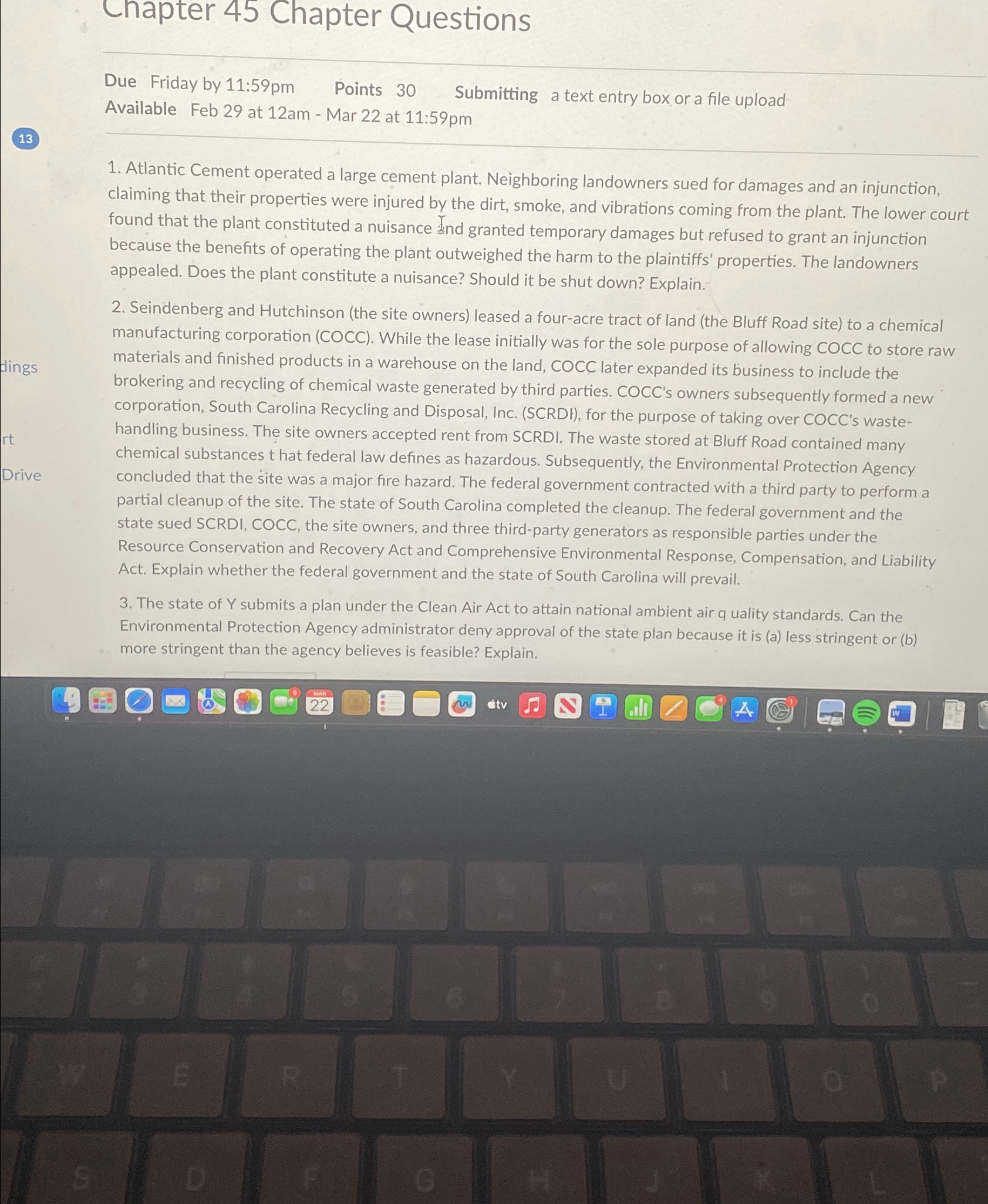
Atlantic Cement operated a large cement plant. Neighboring landowners sued for damages and an injunction, claiming that their properties were injured by the dirt, smoke, and vibrations coming from the plant. The lower court found that the plant constituted a nuisance the granted temporary damages but refused to grant an injunction because the benefits of operating the plant outweighed the harm to the plaintiffs' properties. The landowners appealed. Does the plant constitute a nuisance? Should it be shut down? Explain.
Seindenberg and Hutchinson the site owners leased a fouracre tract of land the Bluff Road site to a chemical manufacturing corporation COCC While the lease initially was for the sole purpose of allowing COCC to store raw materials and finished products in a warehouse on the land, COCC later expanded its business to include the brokering and recycling of chemical waste generated by third parties. COCC's owners subsequently formed a new corporation, South Carolina Recycling and Disposal, Inc. SCRDI for the purpose of taking over COCC's wastehandling business. The site owners accepted rent from SCRDI. The waste stored at Bluff Road contained many chemical substances hat federal law defines as hazardous. Subsequently, the Environmental Protection Agency concluded that the site was a major fire hazard. The federal government contracted with a third party to perform a partial cleanup of the site. The state of South Carolina completed the cleanup. The federal government and the state sued SCRDI, COCC, the site owners, and three thirdparty generators as responsible parties under the Resource Conservation and Recovery Act and Comprehensive Environmental Response, Compensation, and Liability Act. Explain whether the federal government and the state of South Carolina will prevail.
The state of submits a plan under the Clean Air Act to attain national ambient air q uality standards. Can the Environmental Protection Agency administrator deny approval of the state plan because it is a less stringent or b more stringent than the agency believes is feasible? Explain.
Step by Step Solution
There are 3 Steps involved in it
1 Expert Approved Answer
Step: 1 Unlock

Question Has Been Solved by an Expert!
Get step-by-step solutions from verified subject matter experts
Step: 2 Unlock
Step: 3 Unlock
 Study Help