







Question: Chapter 5 Homework 50 1 points References The accounting records of Wall's China Shop reflected the following balances as of January 1, Year 3:
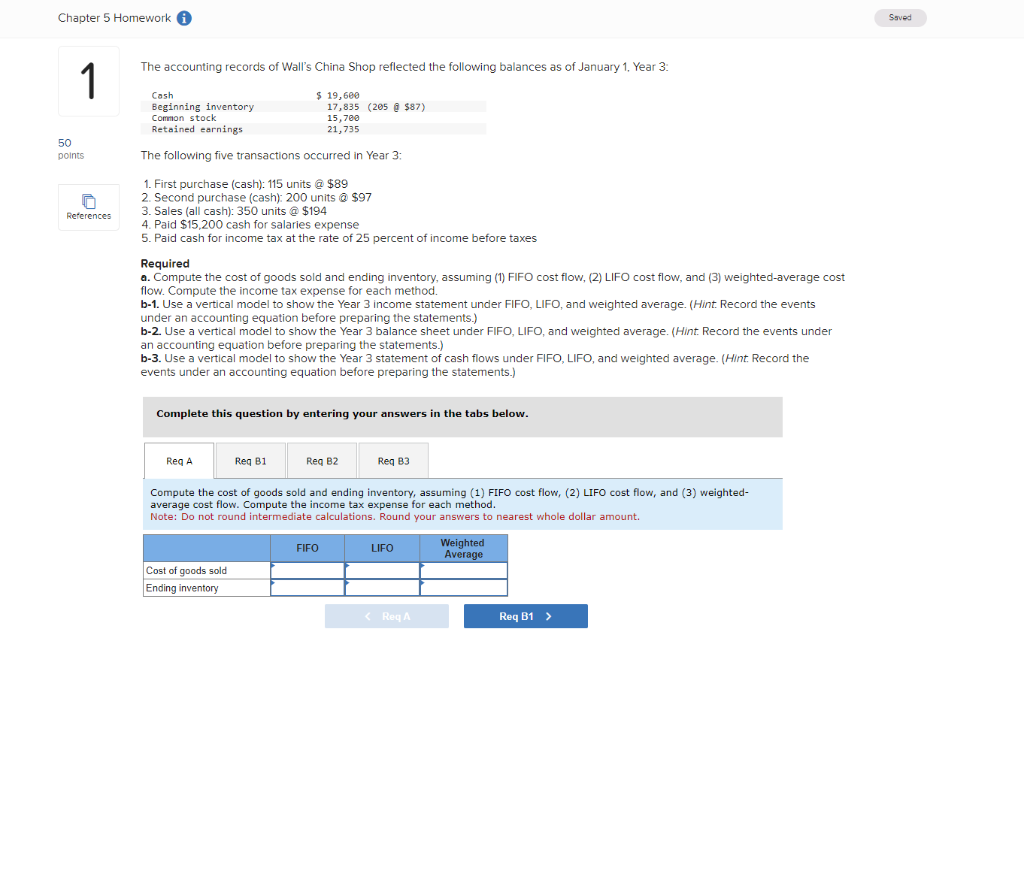
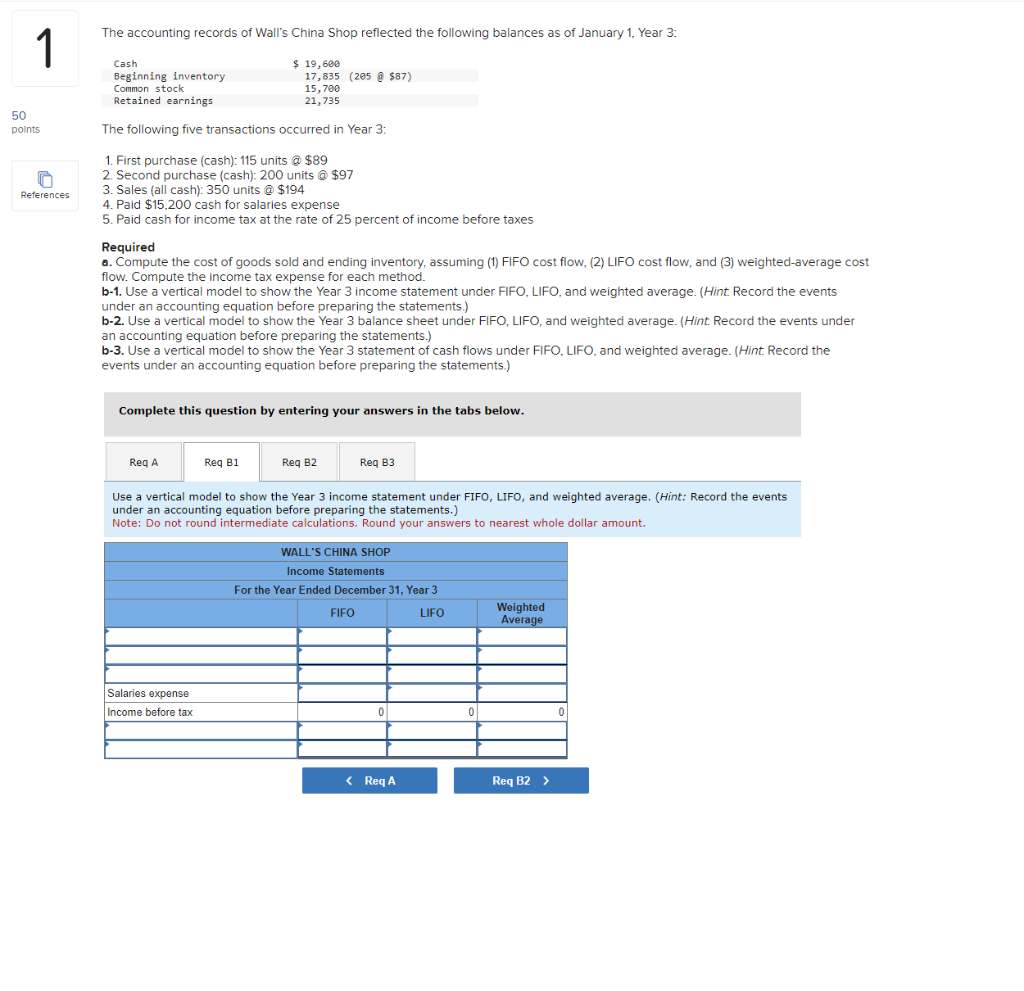
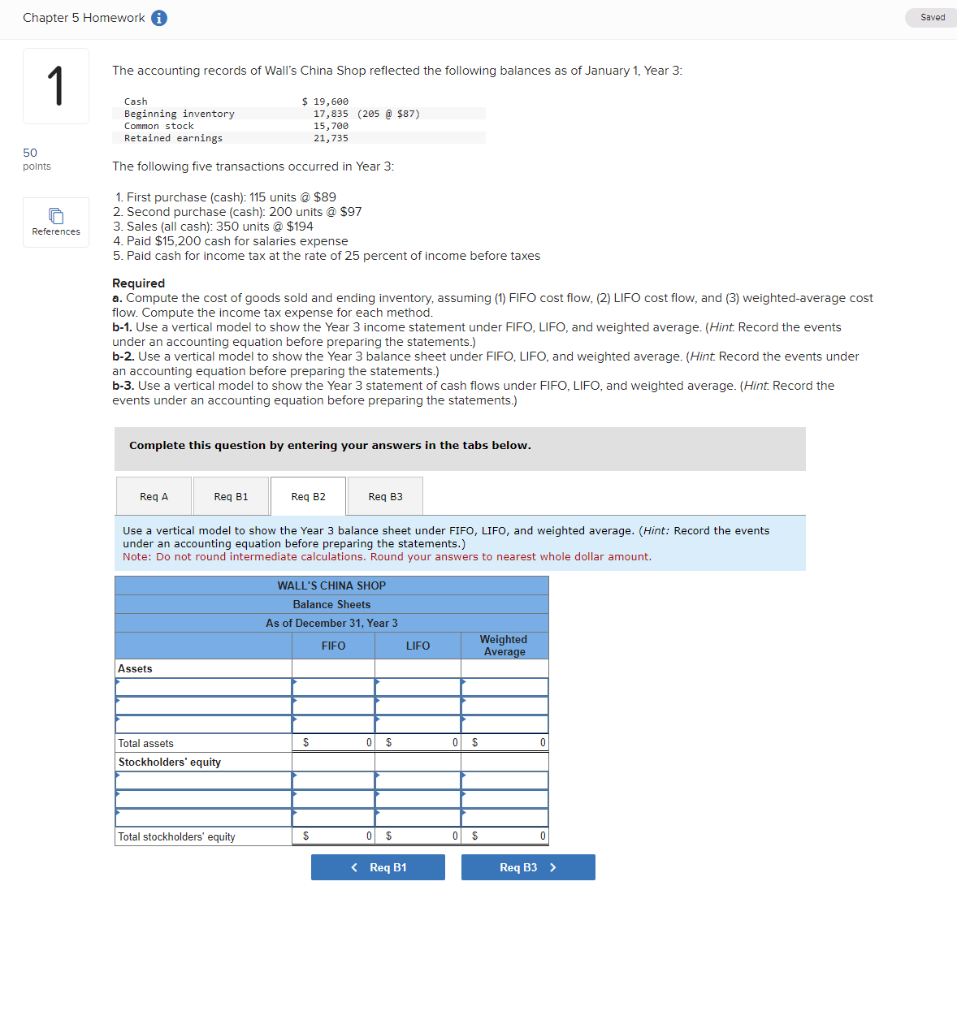
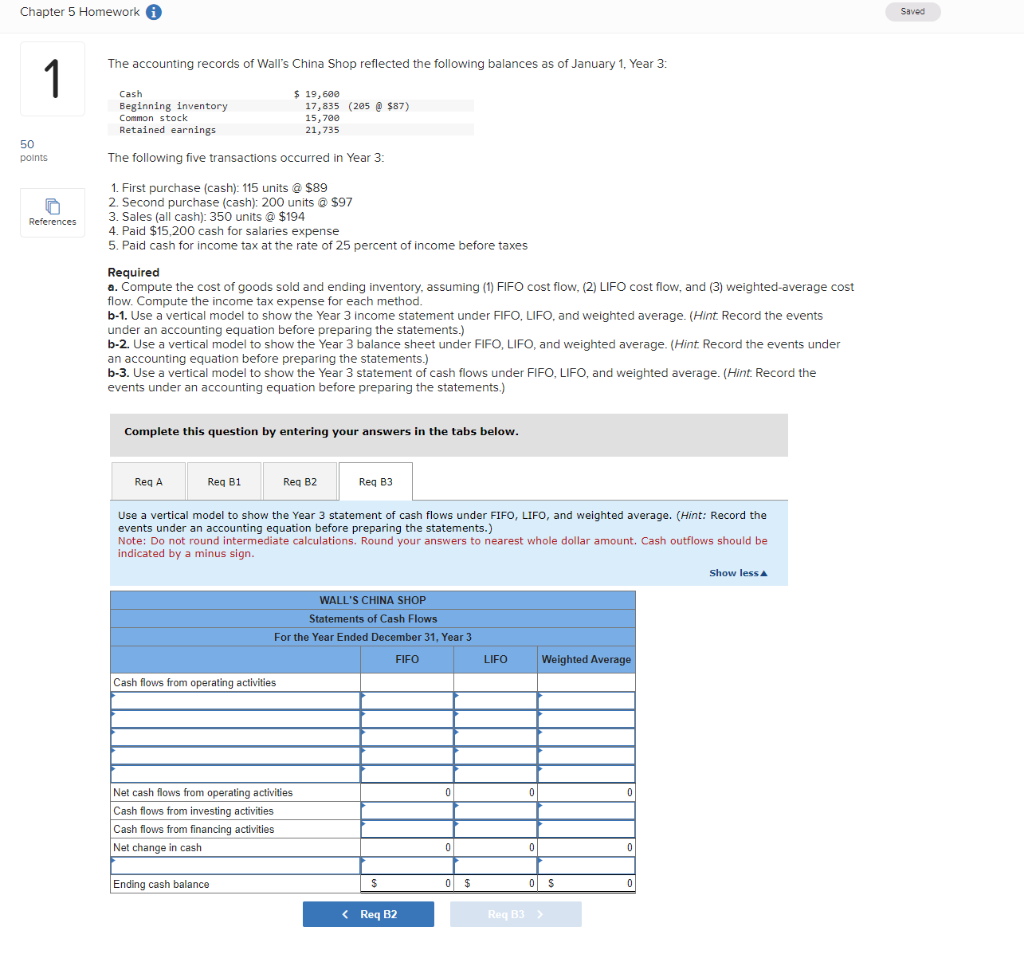
Chapter 5 Homework 50 1 points References The accounting records of Wall's China Shop reflected the following balances as of January 1, Year 3: Cash Beginning inventory Common stock Retained earnings $ 19,600 17,835 (205 @ $87) 15,700 21,735 The following five transactions occurred in Year 3: 1. First purchase (cash): 115 units @ $89 2. Second purchase (cash): 200 units @ $97 3. Sales (all cash): 350 units @ $194 4. Paid $15,200 cash for salaries expense 5. Paid cash for income tax at the rate of 25 percent of income before taxes Required a. Compute the cost of goods sold and ending inventory, assuming (1) FIFO cost flow, (2) LIFO cost flow, and (3) weighted-average cost flow. Compute the income tax expense for each method. b-1. Use a vertical model to show the Year 3 income statement under FIFO, LIFO, and weighted average. (Hint. Record the events under an accounting equation before preparing the statements.) b-2. Use a vertical model to show the Year 3 balance sheet under FIFO, LIFO, and weighted average. (Hint. Record the events under an accounting equation before preparing the statements.) b-3. Use a vertical model to show the Year 3 statement of cash flows under FIFO, LIFO, and weighted average. (Hint. Record the events under an accounting equation before preparing the statements.) Complete this question by entering your answers in the tabs below. Req A Req B1 Req B2 Req B3 Compute the cost of goods sold and ending inventory, assuming (1) FIFO cost flow, (2) LIFO cost flow, and (3) weighted- average cost flow. Compute the income tax expense for each method. Note: Do not round intermediate calculations. Round your answers to nearest whole dollar amount. FIFO Cost of goods sold Ending inventory LIFO Weighted Average < Req A Req B1 > Saved 50 1 points References The accounting records of Wall's China Shop reflected the following balances as of January 1, Year 3: Cash Beginning inventory Common stock Retained earnings $ 19,600 17,835 (205 @ $87) 15,700 21,735 The following five transactions occurred in Year 3: 1. First purchase (cash): 115 units @ $89 2. Second purchase (cash): 200 units @ $97 3. Sales (all cash): 350 units @ $194 4. Paid $15,200 cash for salaries expense 5. Paid cash for income tax at the rate of 25 percent of income before taxes Required a. Compute the cost of goods sold and ending inventory, assuming (1) FIFO cost flow, (2) LIFO cost flow, and (3) weighted-average cost flow. Compute the income tax expense for each method. b-1. Use a vertical model to show the Year 3 income statement under FIFO, LIFO, and weighted average. (Hint. Record the events under an accounting equation before preparing the statements.) b-2. Use a vertical model to show the Year 3 balance sheet under FIFO, LIFO, and weighted average. (Hint: Record the events under an accounting equation before preparing the statements.) b-3. Use a vertical model to show the Year 3 statement of cash flows under FIFO, LIFO, and weighted average. (Hint. Record the events under an accounting equation before preparing the statements.) Complete this question by entering your answers in the tabs below. Req A Req B1 Req B2 Req B3 Use a vertical model to show the Year 3 income statement under FIFO, LIFO, and weighted average. (Hint: Record the events under an accounting equation before preparing the statements.) Note: Do not round intermediate calculations. Round your answers to nearest whole dollar amount. WALL'S CHINA SHOP Income Statements For the Year Ended December 31, Year 3 Salaries expense Income before tax FIFO LIFO Weighted Average 0 0 0 < Req A Req B2 > Chapter 5 Homework 1 The accounting records of Wall's China Shop reflected the following balances as of January 1, Year 3: 50 points References Cash Beginning inventory Common stock Retained earnings $ 19,600 17,835 (205 @ $87) 15,700 21,735 The following five transactions occurred in Year 3: 1. First purchase (cash): 115 units @ $89 2. Second purchase (cash): 200 units @ $97 3. Sales (all cash): 350 units @ $194 4. Paid $15,200 cash for salaries expense 5. Paid cash for income tax at the rate of 25 percent of income before taxes Required a. Compute the cost of goods sold and ending inventory, assuming (1) FIFO cost flow, (2) LIFO cost flow, and (3) weighted-average cost flow. Compute the income tax expense for each method. b-1. Use a vertical model to show the Year 3 income statement under FIFO, LIFO, and weighted average. (Hint. Record the events under an accounting equation before preparing the statements.) b-2. Use a vertical model to show the Year 3 balance sheet under FIFO, LIFO, and weighted average. (Hint. Record the events under an accounting equation before preparing the statements.) b-3. Use a vertical model to show the Year 3 statement of cash flows under FIFO, LIFO, and weighted average. (Hint. Record the events under an accounting equation before preparing the statements.) Complete this question by entering your answers in the tabs below. Req A Req B1 Req B2 Req B3 Use a vertical model to show the Year 3 balance sheet under FIFO, LIFO, and weighted average. (Hint: Record the events under an accounting equation before preparing the statements.) Note: Do not round intermediate calculations. Round your answers to nearest whole dollar amount. WALL'S CHINA SHOP Balance Sheets As of December 31, Year 3 Assets FIFO LIFO Weighted Average Total assets $ 0 $ 0 $ 0 Stockholders' equity Total stockholders' equity $ $ < Req B1 Req B3 > Saved Chapter 5 Homework 50 points 1 References The accounting records of Wall's China Shop reflected the following balances as of January 1, Year 3: Cash Beginning inventory Common stock Retained earnings $ 19,600 17,835 (205 @ $87) 15,700 21,735 The following five transactions occurred in Year 3: 1. First purchase (cash): 115 units @ $89 2. Second purchase (cash): 200 units @ $97 3. Sales (all cash): 350 units @ $194 4. Paid $15,200 cash for salaries expense 5. Paid cash for income tax at the rate of 25 percent of income before taxes Required a. Compute the cost of goods sold and ending inventory, assuming (1) FIFO cost flow, (2) LIFO cost flow, and (3) weighted-average cost flow. Compute the income tax expense for each method. b-1. Use a vertical model to show the Year 3 income statement under FIFO, LIFO, and weighted average. (Hint. Record the events under an accounting equation before preparing the statements.) b-2. Use a vertical model to show the Year 3 balance sheet under FIFO, LIFO, and weighted average. (Hint. Record the events under an accounting equation before preparing the statements.) b-3. Use a vertical model to show the Year 3 statement of cash flows under FIFO, LIFO, and weighted average. (Hint. Record the events under an accounting equation before preparing the statements.) Complete this question by entering your answers in the tabs below. Req A Req B1 Req B2 Req B3 Use a vertical model to show the Year 3 statement of cash flows under FIFO, LIFO, and weighted average. (Hint: Record the events under an accounting equation before preparing the statements.) Note: Do not round intermediate calculations. Round your answers to nearest whole dollar amount. Cash outflows should be indicated by a minus sign. Cash flows from operating activities WALL'S CHINA SHOP Statements of Cash Flows For the Year Ended December 31, Year 3 Net cash flows from operating activities Cash flows from investing activities Cash flows from financing activities Net change in cash Ending cash balance FIFO LIFO Weighted Average 0 0 0 0 $ 0 $ < Req B2 0 0 $ 0 Req B3 > Show less Saved
Step by Step Solution
There are 3 Steps involved in it

Get step-by-step solutions from verified subject matter experts
 Study Help