Question: Chapter 9 An Introduction to Interventions during the intervention that presented a major obstacle to change, realized that the long-term objectives of the engagement had
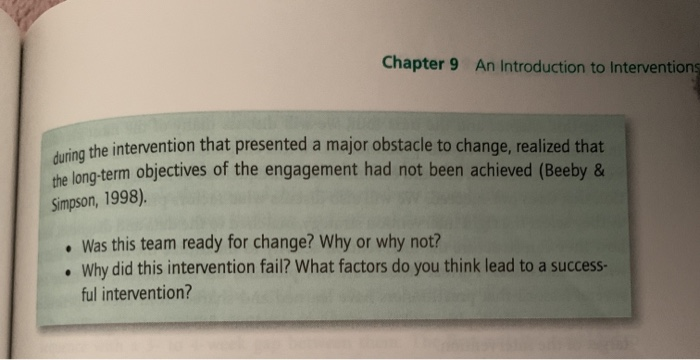
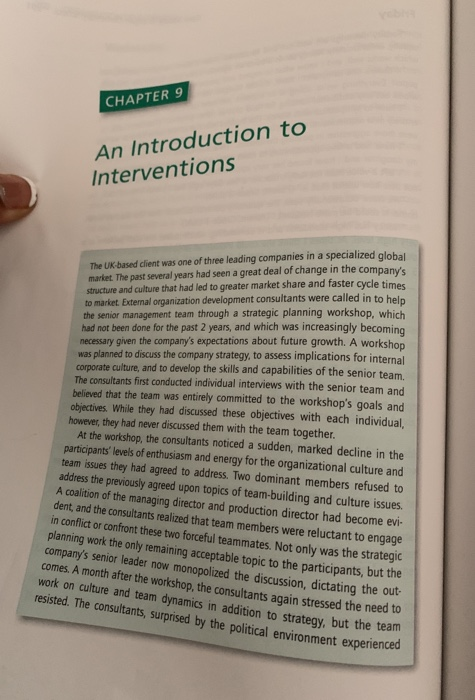
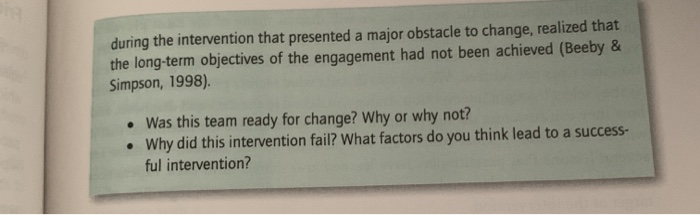
Chapter 9 An Introduction to Interventions during the intervention that presented a major obstacle to change, realized that the long-term objectives of the engagement had not been achieved (Beeby & Simpson, 1998). . Was this team ready for change? Why or why not? Why did this intervention fail? What factors do you think lead to a success- ful intervention? CHAPTER 9 An Introduction to Interventions The UK-based client was one of three leading companies in a specialized global market. The past several years had seen a great deal of change in the company's structure and culture that had led to greater market share and faster cycle times to market. External organization development consultants were called in to help the senior management team through a strategic planning workshop, which had not been done for the past 2 years, and which was increasingly becoming necessary given the company's expectations about future growth. A workshop was planned to discuss the company strategy, to assess implications for internal corporate culture, and to develop the skills and capabilities of the senior team. The consultants first conducted individual interviews with the senior team and believed that the team was entirely committed to the workshop's goals and objectives. While they had discussed these objectives with each individual, however, they had never discussed them with the team together. At the workshop, the consultants noticed a sudden, marked decline in the participants' levels of enthusiasm and energy for the organizational culture and team issues they had agreed to address. Two dominant members refused to address the previously agreed upon topics of team-building and culture issues. A coalition of the managing director and production director had become evi- dent, and the consultants realized that team members were reluctant to engage in conflict or confront these two forceful teammates. Not only was the strategic planning work the only remaining acceptable topic to the participants, but the company's senior leader now monopolized the discussion, dictating the out- comes. A month after the workshop, the consultants again stressed the need to work on culture and team dynamics in addition to strategy, but the team resisted. The consultants, surprised by the political environment experienced during the intervention that presented a major obstacle to change, realized that the long-term objectives of the engagement had not been achieved (Beeby & Simpson, 1998) Was this team ready for change? Why or why not? Why did this intervention fail? What factors do you think lead to a success- ful intervention









 Study Help