







Question: Chapter Summary Two major pricing objectives are (1) pricing to maximize profits-that is, set the price to sell the number of units that will generate
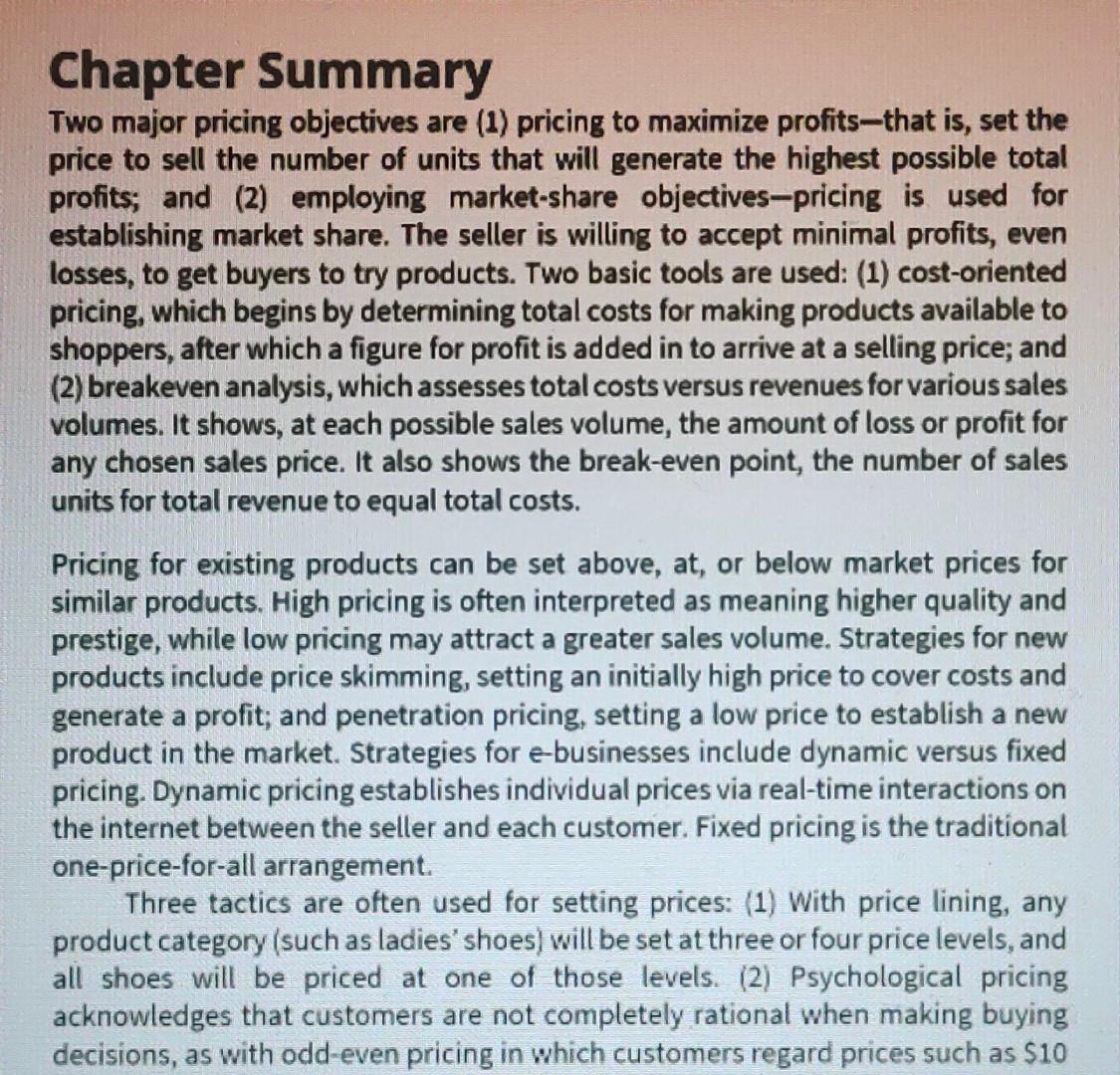
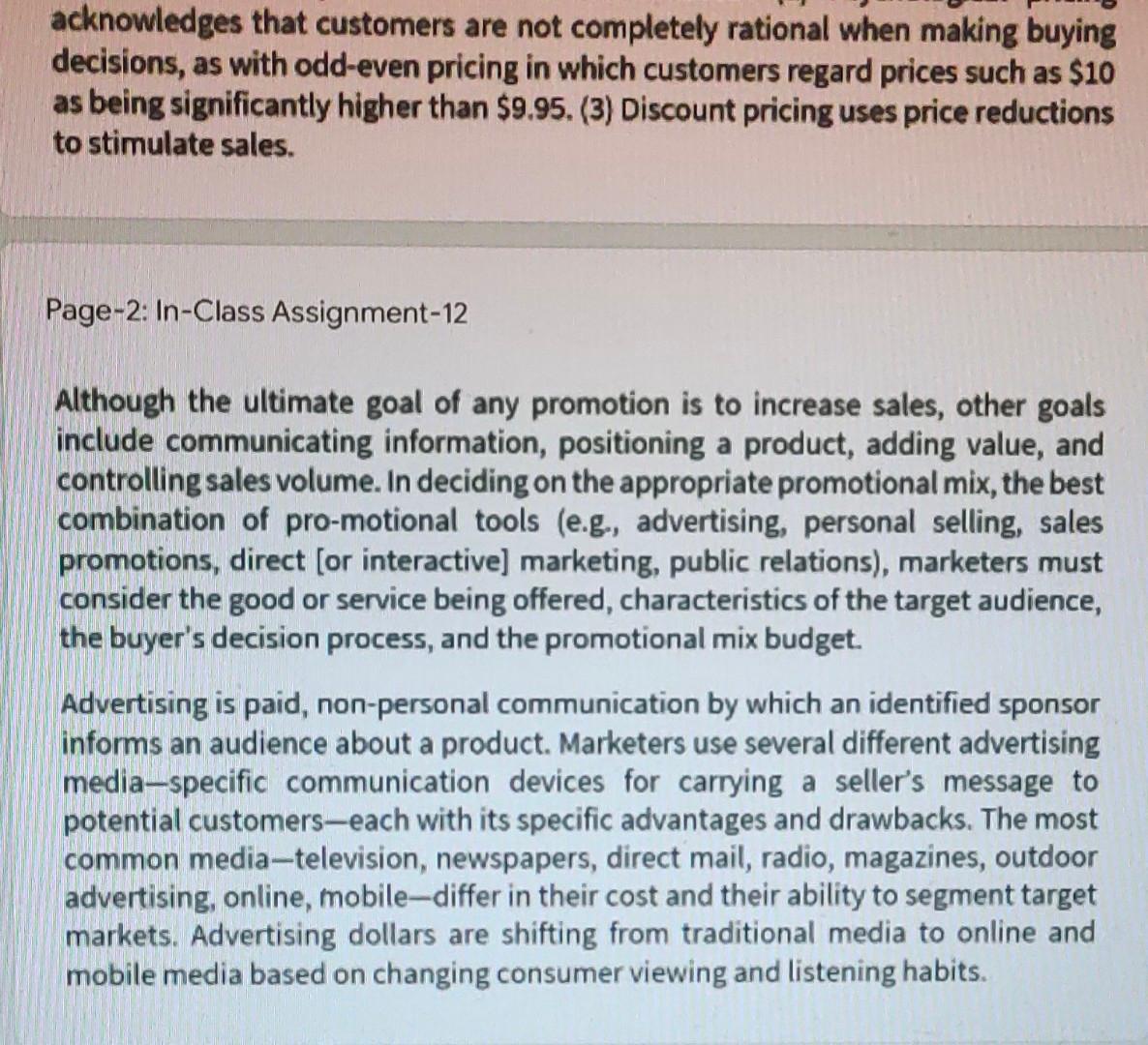
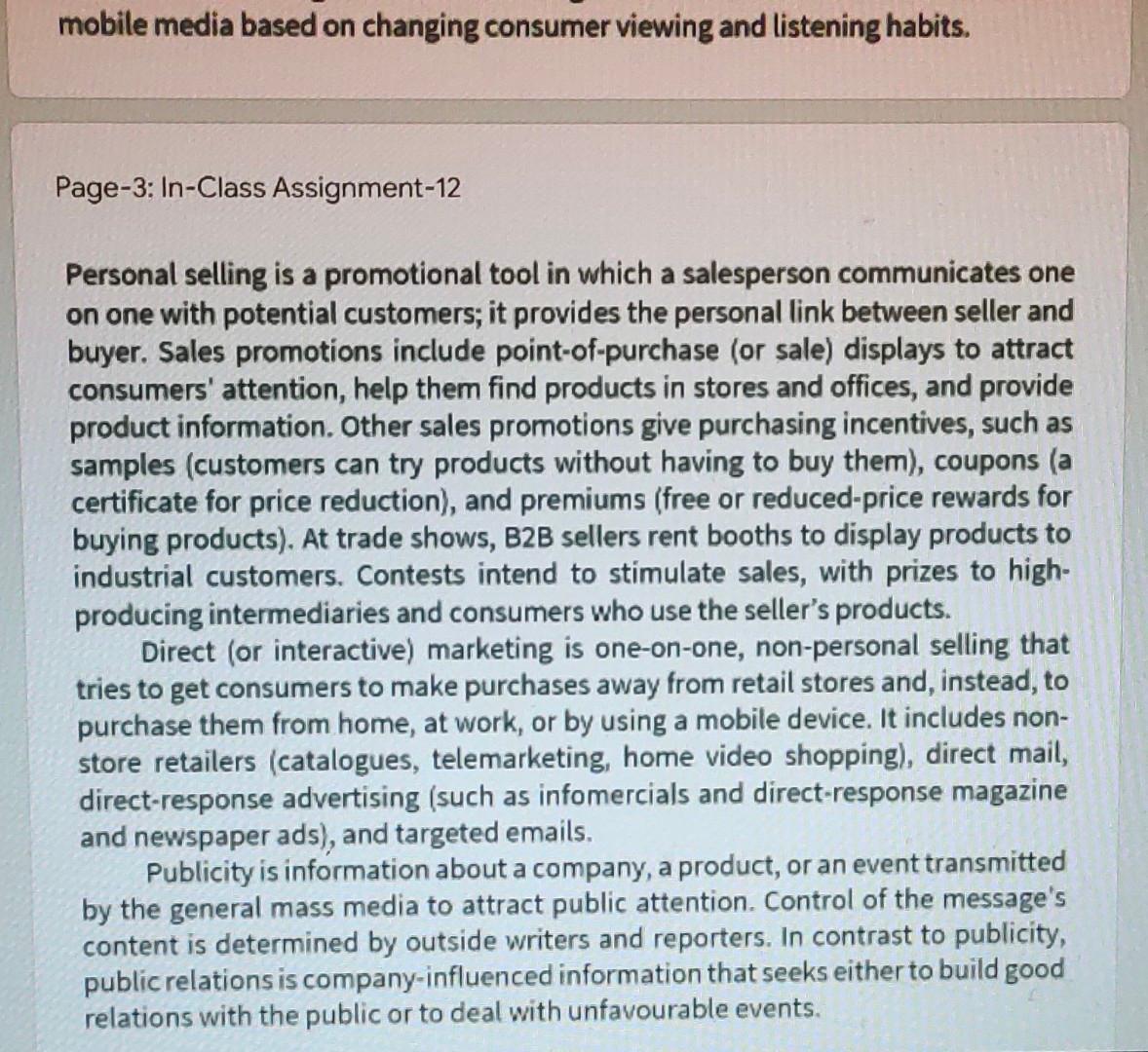
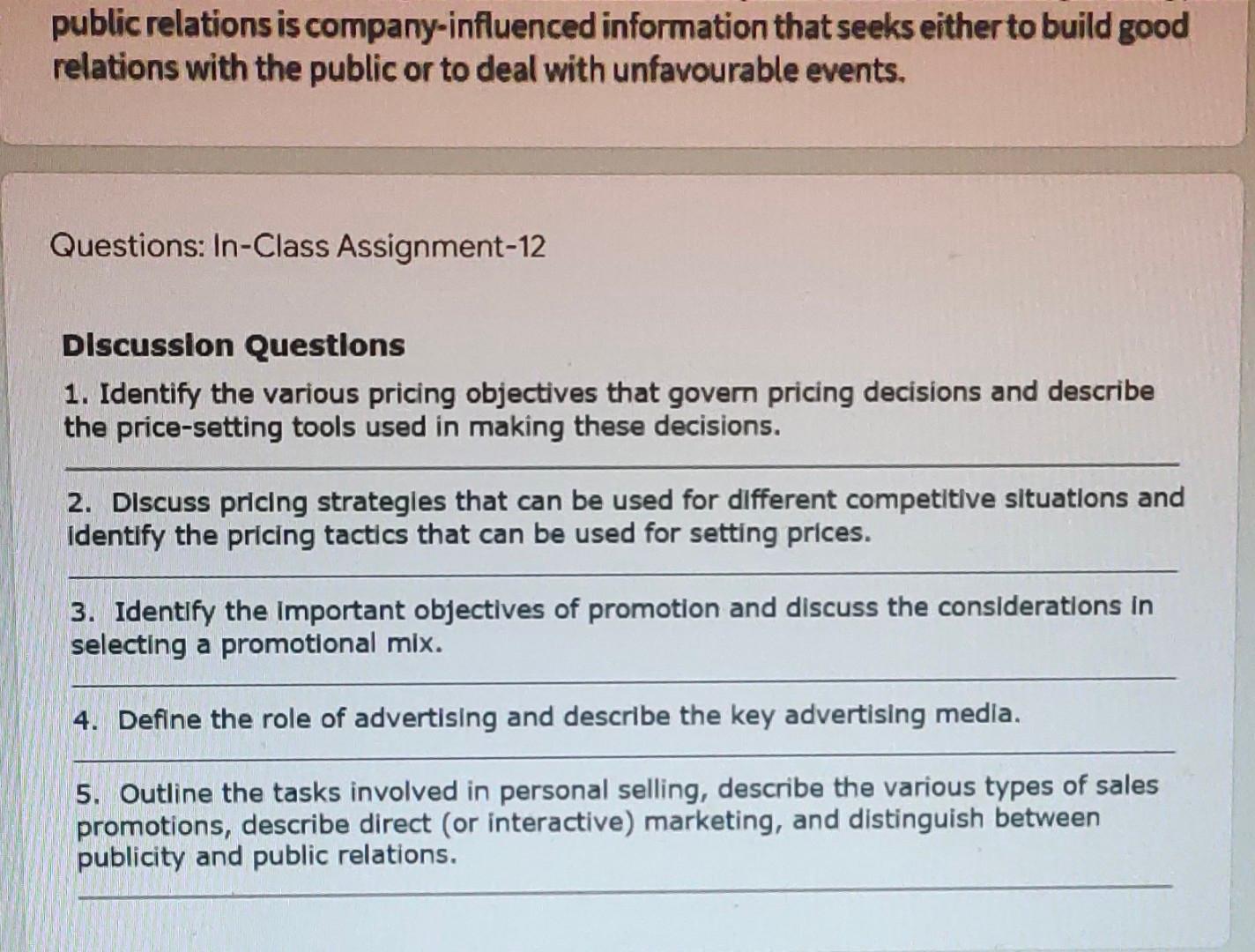
Chapter Summary Two major pricing objectives are (1) pricing to maximize profits-that is, set the price to sell the number of units that will generate the highest possible total profits; and (2) employing market-share objectives-pricing is used for establishing market share. The seller is willing to accept minimal profits, even losses, to get buyers to try products. Two basic tools are used: (1) cost-oriented pricing, which begins by determining total costs for making products available to shoppers, after which a figure for profit is added in to arrive at a selling price; and (2) breakeven analysis, which assesses total costs versus revenues for various sales volumes. It shows, at each possible sales volume, the amount of loss or profit for any chosen sales price. It also shows the break-even point, the number of sales units for total revenue to equal total costs. Pricing for existing products can be set above, at, or below market prices for similar products. High pricing is often interpreted as meaning higher quality and prestige, while low pricing may attract a greater sales volume. Strategies for new products include price skimming, setting an initially high price to cover costs and generate a profit; and penetration pricing, setting a low price to establish a new product in the market. Strategies for e-businesses include dynamic versus fixed pricing. Dynamic pricing establishes individual prices via real-time interactions on the internet between the seller and each customer. Fixed pricing is the traditional one-price-for-all arrangement. Three tactics are often used for setting prices: (1) With price lining, any product category (such as ladies' shoes) will be set at three or four price levels, and all shoes will be priced at one of those levels. (2) Psychological pricing acknowledges that customers are not completely rational when making buying decisions, as with odd-even pricing in which customers regard prices such as $10 acknowledges that customers are not completely rational when making buying decisions, as with odd-even pricing in which customers regard prices such as $10 as being significantly higher than $9.95. (3) Discount pricing uses price reductions to stimulate sales. Page-2: In-Class Assignment-12 Although the ultimate goal of any promotion is to increase sales, other goals include communicating information, positioning a product, adding value, and controlling sales volume. In deciding on the appropriate promotional mix, the best combination of pro-motional tools (e.g., advertising, personal selling, sales promotions, direct (or interactive) marketing, public relations), marketers must consider the good or service being offered, characteristics of the target audience, the buyer's decision process, and the promotional mix budget. Advertising is paid, non-personal communication by which an identified sponsor informs an audience about a product. Marketers use several different advertising media-specific communication devices for carrying a seller's message to potential customers-each with its specific advantages and drawbacks. The most common media-television, newspapers, direct mail, radio, magazines, outdoor advertising, online, mobile-differ in their cost and their ability to segment target markets. Advertising dollars are shifting from traditional media to online and mobile media based on changing consumer viewing and listening habits. mobile media based on changing consumer viewing and listening habits. Page-3: In-Class Assignment-12 Personal selling is a promotional tool in which a salesperson communicates one on one with potential customers; it provides the personal link between seller and buyer. Sales promotions include point-of-purchase (or sale) displays to attract consumers' attention, help them find products in stores and offices, and provide product information. Other sales promotions give purchasing incentives, such as samples (customers can try products without having to buy them), coupons (a certificate for price reduction), and premiums (free or reduced-price rewards for buying products). At trade shows, B2B sellers rent booths to display products to industrial customers. Contests intend to stimulate sales, with prizes to high- producing intermediaries and consumers who use the seller's products. Direct (or interactive) marketing is one-on-one, non-personal selling that tries to get consumers to make purchases away from retail stores and, instead, to purchase them from home, at work, or by using a mobile device. It includes non- store retailers (catalogues, telemarketing, home video shopping), direct mail, direct-response advertising (such as infomercials and direct-response magazine and newspaper ads), and targeted emails. Publicity is information about a company, a product, or an event transmitted by the general mass media to attract public attention. Control of the message's content is determined by outside writers and reporters. In contrast to publicity, public relations is company-influenced information that seeks either to build good relations with the public or to deal with unfavourable events. public relations is company-influenced information that seeks either to build good relations with the public or to deal with unfavourable events. Questions: In-Class Assignment-12 Discussion Questions 1. Identify the various pricing objectives that govern pricing decisions and describe the price-setting tools used in making these decisions. 2. Discuss pricing strategies that can be used for different competitive situations and Identify the pricing tactics that can be used for setting prices. 3. Identify the Important objectives of promotion and discuss the considerations in selecting a promotional mix. 4. Define the role of advertising and describe the key advertising media. 5. Outline the tasks involved in personal selling, describe the various types of sales promotions, describe direct (or interactive) marketing, and distinguish between publicity and public relations
Step by Step Solution
There are 3 Steps involved in it

Get step-by-step solutions from verified subject matter experts
 Study Help