







Question: class Node: def __init__(self, value): self.value = value self.next = None def __str__(self): return Node({}).format(self.value) __repr__ = __str__ class Stack: ''' Creates an empty Stack
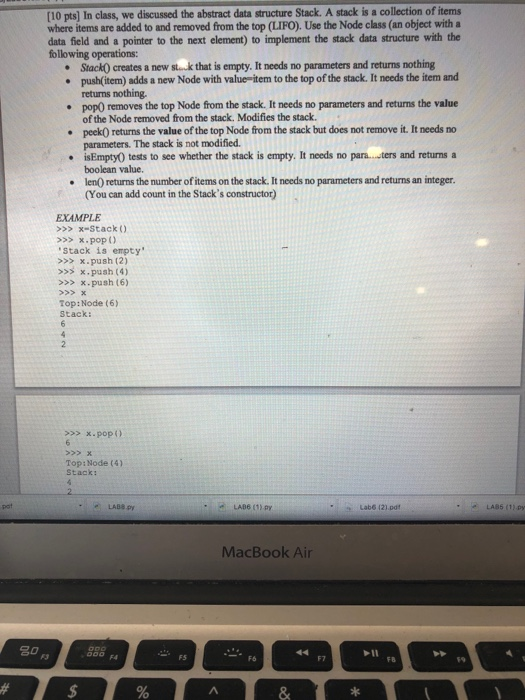
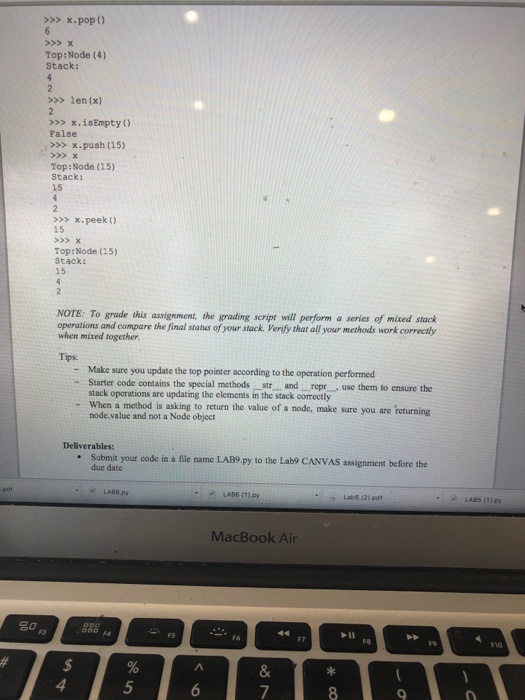
(10 pts] In class, we discussed the abstract data structure Stack. A stack is a collection of items where items are added to and removed from the top (LIFO). Use the Node class (an object with a data field and a pointer to the next element) to implement the stack data structure with the following operations: Stack0 creates a new steuk that is empty. It needs no parameters and returns nothing push item) adds a new Node with value-item to the top of the stack. It needs the item and returns nothing. pop0 removes the top Node from the stack. It needs no parameters and returns the value of the Node removed from the stack. Modifies the stack. peek0 returns the value of the top Node from the stack but does not remove it. It needs no parameters. The stack is not modified. isEmpty0 tests to see whether the stack is empty. It needs no para..ters and returns a boolean value. .len returns the number of items on the stack. It needs no parameters and returns an integer. (You can add count in the Stack 's constructor) EXAMPLE >>> x-Stack >>>x.pop ) Stack is empty' >>>x.push (2) >x.push (4) >>>x.push (6) >X Top: Node (6) Stack: >x.pop) Top: Node (4) Stack: LAB6 (1) py Lab6 121.pd LAB5 (1) py MacBook Air boo Fa F7 FB
Step by Step Solution
There are 3 Steps involved in it

Get step-by-step solutions from verified subject matter experts
 Study Help