







Question: Suppose the yield curve is flat. Bond investors expect that, two years from now, 1-year bonds will no longer be as desirable as they
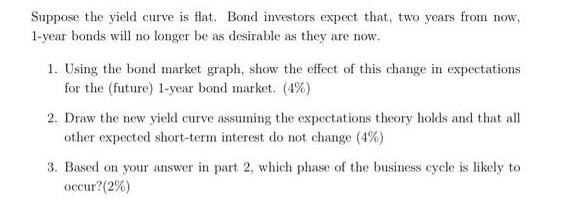
Suppose the yield curve is flat. Bond investors expect that, two years from now, 1-year bonds will no longer be as desirable as they are now. 1. Using the bond market graph, show the effect of this change in expectations for the (future) 1-year bond market. (4%) 2. Draw the new yield curve assuming the expectations theory holds and that all other expected short-term interest do not change (4%) 3. Based on your answer in part 2, which phase of the business cycle is likely to occur? (2%) Suppose the yield curve is flat. Bond investors expect that, two years from now, 1-year bonds will no longer be as desirable as they are now. 1. Using the bond market graph, show the effect of this change in expectations for the (future) 1-year bond market. (4%) 2. Draw the new yield curve assuming the expectations theory holds and that all other expected short-term interest do not change (4%) 3. Based on your answer in part 2, which phase of the business cycle is likely to occur? (2%) Suppose the yield curve is flat. Bond investors expect that, two years from now, 1-year bonds will no longer be as desirable as they are now. 1. Using the bond market graph, show the effect of this change in expectations for the (future) 1-year bond market. (4%) 2. Draw the new yield curve assuming the expectations theory holds and that all other expected short-term interest do not change (4%) 3. Based on your answer in part 2, which phase of the business cycle is likely to occur? (2%) Suppose the yield curve is flat. Bond investors expect that, two years from now, 1-year bonds will no longer be as desirable as they are now. 1. Using the bond market graph, show the effect of this change in expectations for the (future) 1-year bond market. (4%) 2. Draw the new yield curve assuming the expectations theory holds and that all other expected short-term interest do not change (4%) 3. Based on your answer in part 2, which phase of the business cycle is likely to occur? (2%) Suppose the yield curve is flat. Bond investors expect that, two years from now, 1-year bonds will no longer be as desirable as they are now. 1. Using the bond market graph, show the effect of this change in expectations for the (future) 1-year bond market. (4%) 2. Draw the new yield curve assuming the expectations theory holds and that all other expected short-term interest do not change (4%) 3. Based on your answer in part 2, which phase of the business cycle is likely to occur? (2%)
Step by Step Solution
3.38 Rating (145 Votes )
There are 3 Steps involved in it
SOLUTION STEP 1 EXPLANATION Solution Note that the given reaction must be of the fi... View full answer

Get step-by-step solutions from verified subject matter experts
 Study Help