







Question: CMSC 451 Homework3 1. Shown below is the code for the insertion sort consisting of two recursive methods that replace the two nested loops that
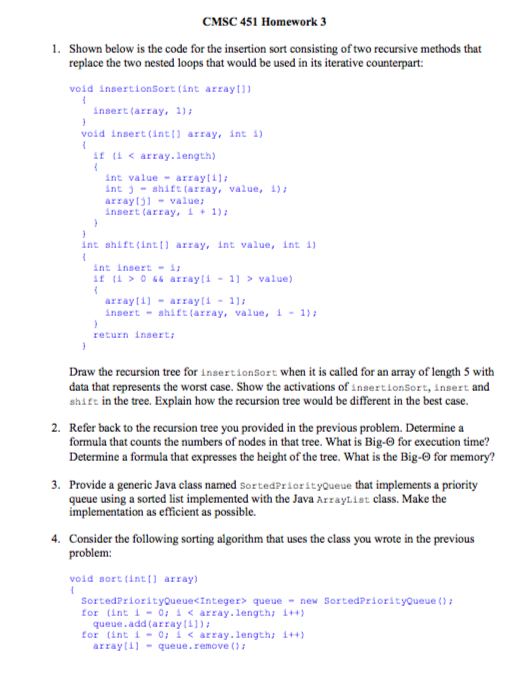
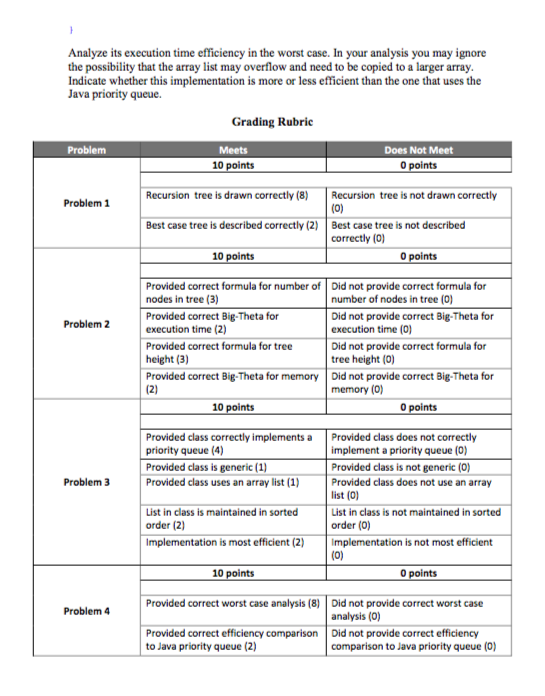
CMSC 451 Homework3 1. Shown below is the code for the insertion sort consisting of two recursive methods that replace the two nested loops that would be used in its iterative counterpart: void insertionSort (int array ) insert (array, 1) void insert (int) array, int ) L array.length) int value arraytil int-shift (array, value, 1) array 31-value; Insert (array, 1+1) int shift (int array, int value, int int Insert- if > O && array[1-1] > value) arrayti)-arrayti11 nsert-shifttarray, value, 1-1) return Insert Draw the recursion tree for insertionsort when it is called for an of length 5 with data that represents the worst case. Show the activations of insertionsort, insert and shift in the tree. Explain how the recursion tree would be different in the best case. 2. Refer back to the recursion tree you provided in the previous problem. Determine a formula that counts the numbers of nodes in that tree. what is Big- for execution time? Determine a formula that expresses the height of the tree. What is the Big- for memory? . Provide a generic Java class named SortedPrlorityQueue that implements a priority queue using a sorted list implemented with the Java ArrayList class. Make the implementation as efficient as possible. 4. Consider the following sorting algorithm that uses the class you wrote in the previous problem: void sort (int array Sorted?rlorityQueuecinteger> queue-new SortedPzlorityoueue tor (int1-0:
Step by Step Solution
There are 3 Steps involved in it

Get step-by-step solutions from verified subject matter experts
 Study Help