







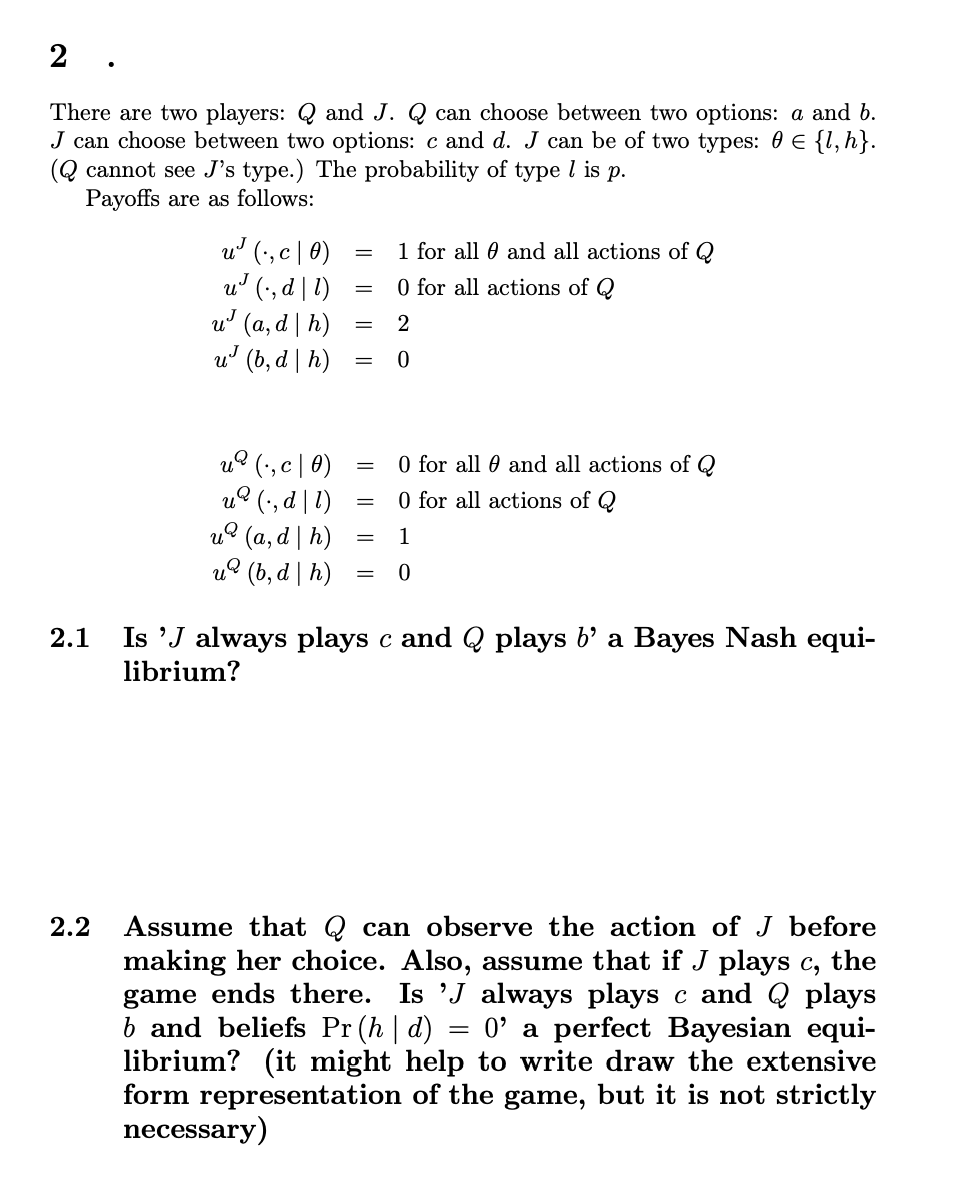
Question: code class = asciimath > There are two players: Q and J . Q can choose between two options: a and b . J can
code class"asciimath"There are two players: Q and JQ can choose between two options: a and b J can choose between two options: c and dJ can be of two types: theta inlhQ cannot see J s type.l is p Payoffs are as follows: uJctheta for all theta and all actions of Q uJdl for all actions of Q uJadh uJbdh uQctheta for all theta and all actions of Q uQdl for all actions of Q uQadh uQbdh Is J always plays c and Q plays b a Bayes Nash equi librium? Assume that Q can observe the action of J before making her choice. Also, assume that if J plays c the game ends there. Is J always plays c and Q plays b and beliefs Prhd a perfect Bayesian equi librium? it might help to write draw the extensive form representation of the game, but it is not strictly necessary
Step by Step Solution
There are 3 Steps involved in it
1 Expert Approved Answer
Step: 1 Unlock

Question Has Been Solved by an Expert!
Get step-by-step solutions from verified subject matter experts
Step: 2 Unlock
Step: 3 Unlock
 Study Help