







Question: Coded WBS Diagram. Three levels of breakdown plus work packages and activities. You can use the diagram or spreadsheet format. Clear breakdown of deliverables, sub
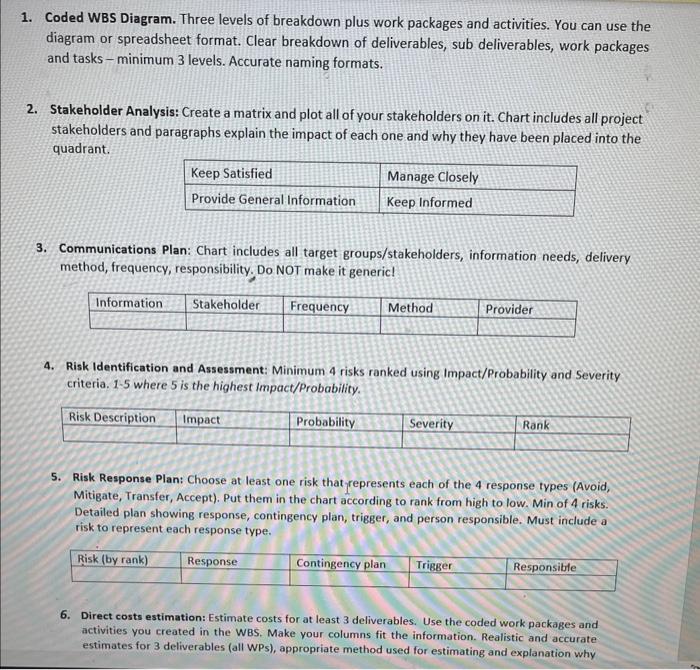
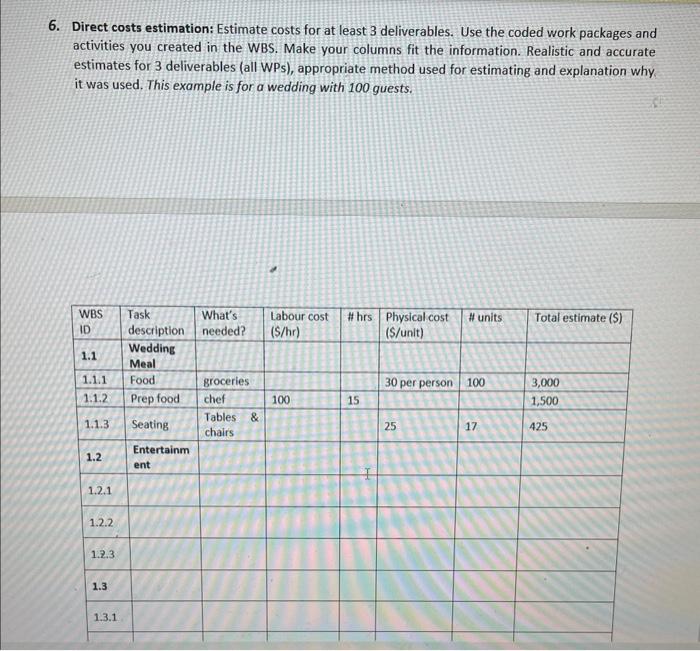
Coded WBS Diagram. Three levels of breakdown plus work packages and activities. You can use the diagram or spreadsheet format. Clear breakdown of deliverables, sub deliverables, work packages and tasks - minimum 3 levels. Accurate naming formats. 2. Stakeholder Analysis: Create a matrix and plot all of your stakeholders on it. Chart includes all project stakeholders and paragraphs explain the impact of each one and why they have been placed into the quadrant. 3. Communications Plan: Chart includes all target groups/stakeholders, information needs, delivery method, frequency, responsibility. Do NOT make it generic! 4. Risk Identification and Assessment: Minimum 4 risks ranked using Impact/Probability and Severity criteria. 15 where 5 is the highest /mpact/Probability. 5. Risk Response Plan: Choose at least one risk that represents each of the 4 response types (Avoid, Mitigate, Transfer, Accept). Put them in the chart according to rank from high to low. Min of 4 risks. Detailed plan showing response, contingency plan, trigger, and person responsible. Must include a risk to represent each response type. 6. Direct costs estimation: Estimate costs for at least 3 deliverables. Use the coded work packages and activities you created in the WBS. Make your columns fit the information. Realistic and accurate estimates for 3 deliverables (all WPs), appropriate method used for estimating and explanation why Direct costs estimation: Estimate costs for at least 3 deliverables. Use the coded work packages and activities you created in the WBS. Make your columns fit the information. Realistic and accurate estimates for 3 deliverables (all WPs), appropriate method used for estimating and explanation why it was used. This example is for a wedding with 100 guests. Coded WBS Diagram. Three levels of breakdown plus work packages and activities. You can use the diagram or spreadsheet format. Clear breakdown of deliverables, sub deliverables, work packages and tasks - minimum 3 levels. Accurate naming formats. 2. Stakeholder Analysis: Create a matrix and plot all of your stakeholders on it. Chart includes all project stakeholders and paragraphs explain the impact of each one and why they have been placed into the quadrant. 3. Communications Plan: Chart includes all target groups/stakeholders, information needs, delivery method, frequency, responsibility. Do NOT make it generic! 4. Risk Identification and Assessment: Minimum 4 risks ranked using Impact/Probability and Severity criteria. 15 where 5 is the highest /mpact/Probability. 5. Risk Response Plan: Choose at least one risk that represents each of the 4 response types (Avoid, Mitigate, Transfer, Accept). Put them in the chart according to rank from high to low. Min of 4 risks. Detailed plan showing response, contingency plan, trigger, and person responsible. Must include a risk to represent each response type. 6. Direct costs estimation: Estimate costs for at least 3 deliverables. Use the coded work packages and activities you created in the WBS. Make your columns fit the information. Realistic and accurate estimates for 3 deliverables (all WPs), appropriate method used for estimating and explanation why Direct costs estimation: Estimate costs for at least 3 deliverables. Use the coded work packages and activities you created in the WBS. Make your columns fit the information. Realistic and accurate estimates for 3 deliverables (all WPs), appropriate method used for estimating and explanation why it was used. This example is for a wedding with 100 guests
Step by Step Solution
There are 3 Steps involved in it

Get step-by-step solutions from verified subject matter experts
 Study Help