







Question: coding language Haskell Help with 1(b,c) and 2(a,b) ( [4 pts) is the following a legal list value in Haskell? If so, what is its
coding language Haskell
Help with 1(b,c) and 2(a,b) 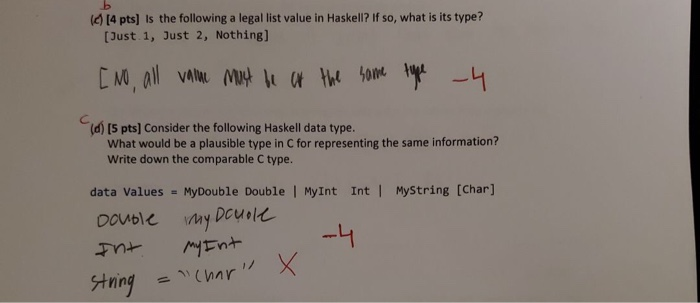
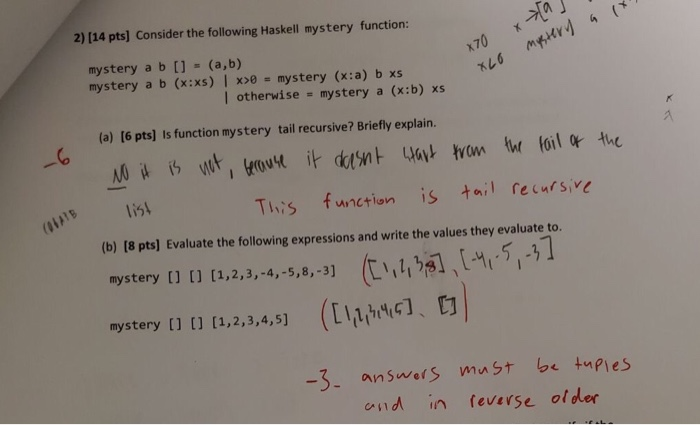
( [4 pts) is the following a legal list value in Haskell? If so, what is its type? [Just. 1, Just 2, Nothing] [ No all valme must be at the same type 4 (d) [5 pts] Consider the following Haskell data type. What would be a plausible type in C for representing the same information? Write down the comparable C type. data Values - MyDouble Double | MyInt Int | MyString (Char] Double my Doudle Int My Ent string = "char" X a 1x1 2) (14 pts] Consider the following Haskell mystery function: X70 x 7a X60 mystery mystery a b [] = (a,b) mystery a b (x:xs) | x>0 = mystery (x:a) b xs | otherwise = mystery a (x:b) xs from the fail of the (a) [6 pts) Is function mystery tail recursive? Briefly explain. No it is not, berause it doesn't start list This function is tail recursive 18 (b) (8 pts) Evaluate the following expressions and write the values they evaluate to. mystery [] [] [1,2,3,-4,-5,8,-3] mystery (0) 0 11,2,3,4,5) ([1,2,451. [1] answers must be tuples and in reverse order
Step by Step Solution
There are 3 Steps involved in it

Get step-by-step solutions from verified subject matter experts
 Study Help