







Question: Coding using C in linux and the expected output should be like this Project 3_Producer-Consumer Problem In Section 5.7.1, we consumer problem using a bounded
Coding using C in linux
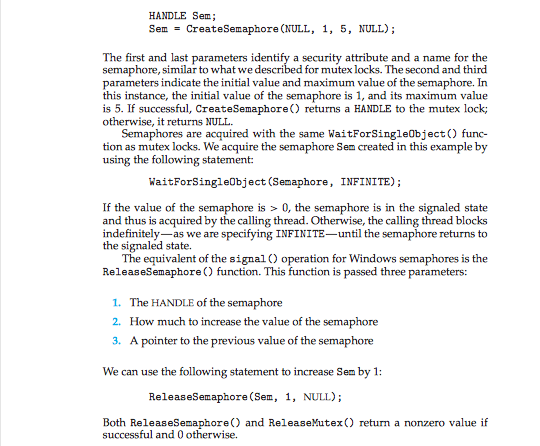
and the expected output should be like this 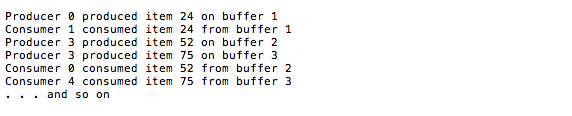
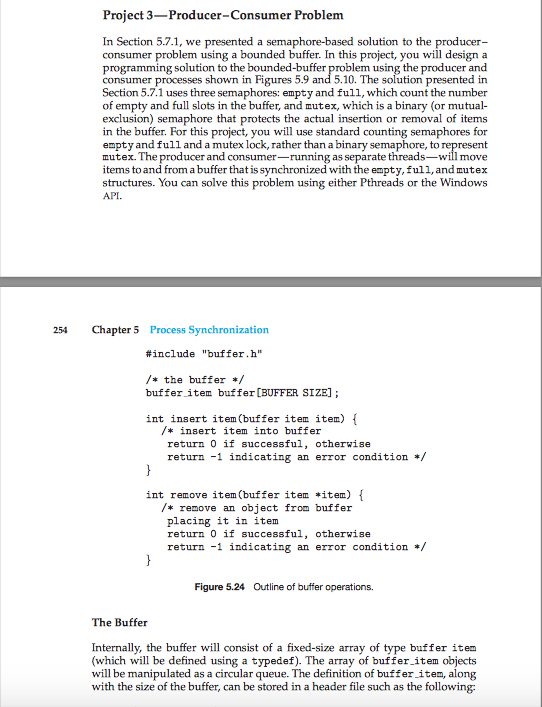
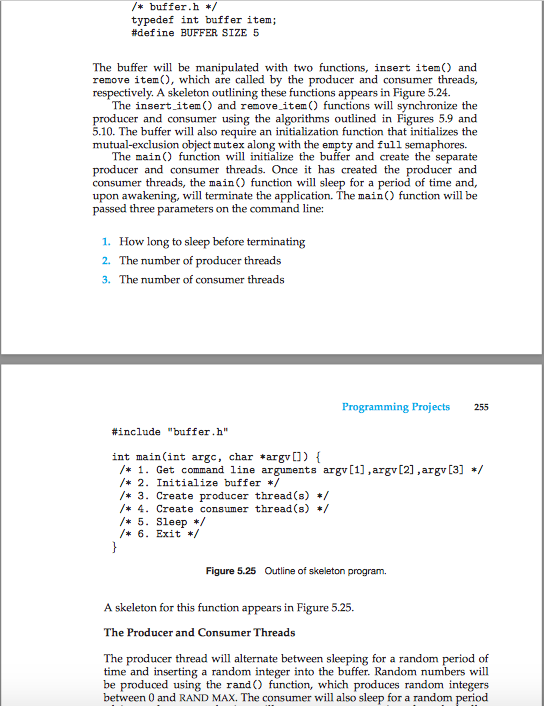
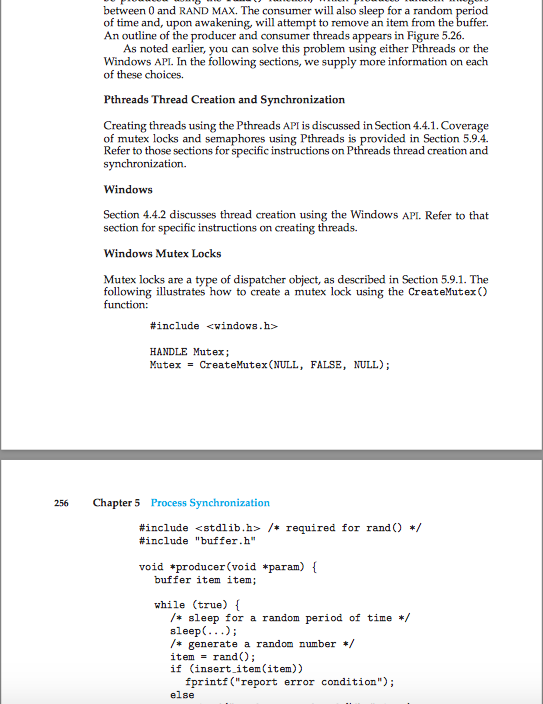
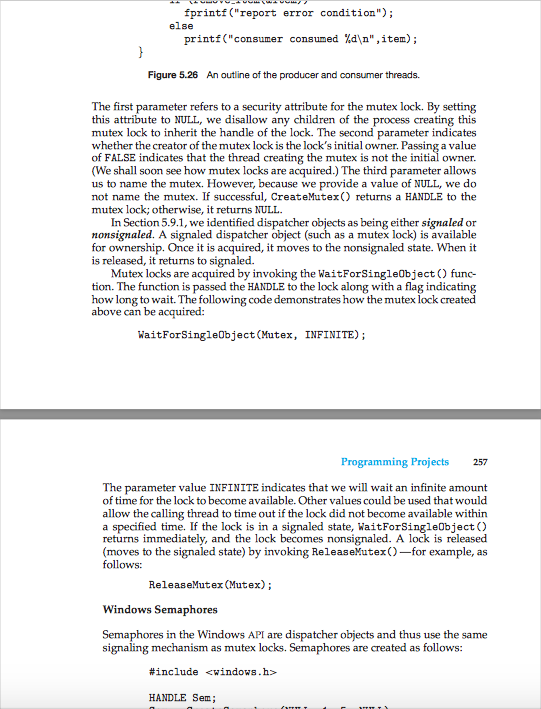
Project 3_Producer-Consumer Problem In Section 5.7.1, we consumer problem using a bounded buffer. In this project, you will design a programming solution to the bounded-buffer consumer processes Section 5.7.1 uses three semaphores: empty and full, which count the number of empty and full slots in the buffer, and mutex, which is a binary (or mutual- exclusion) semaphore that protects the actual insertion or removal of items in the buffer. For this project, you will use standard counting semaphores for empty and full and a mutex lock, rather than a binary semaphore, to mutex. The producer and consumer-running as separate threads-will move items to and from a buffer that is synchronized with the eapty, full, and mutex structures. You can solve this problem using either Pthreads or the Windows API presented a semaphore-based solution to the producer using the producer and shown in Figures 5.9 and 5.10. The solution presented in 254 Chapter 5 Process Synchronization #include "buffer . h" /the buffer/ buffer item buffer [BUFFER SIZE]; int insert item (buffer item item)1 /*insert item into buffer return 0 if successful, otherwise return -1 indicating an error condition / int remove item (buffer item *item) /*remove an object from buffer placing it in item return 0 if successful, otherwise return -1 indicating an error condition / Figure 5.24 Outline of buffer operations. The Buffer Internally, the buffer will consist of a fixed-size array of type buffer item (which will be defined using a typedef). The array of buffer.item objects will be manipulated as a circular queue. The definition of buffer item, along with the size of the buffer, can be stored in a header file such as the following
Step by Step Solution
There are 3 Steps involved in it

Get step-by-step solutions from verified subject matter experts
 Study Help