







Question: 1. The result of the following division: 1/1 a) is equal to 1 b) is equal to 1.0 c) cannot be evaluated d) cannot
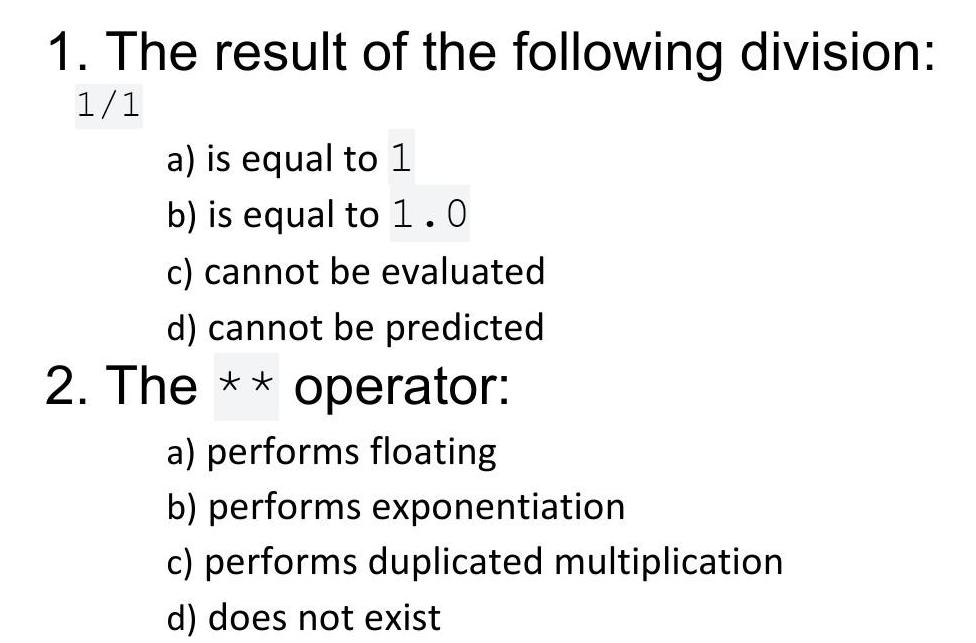
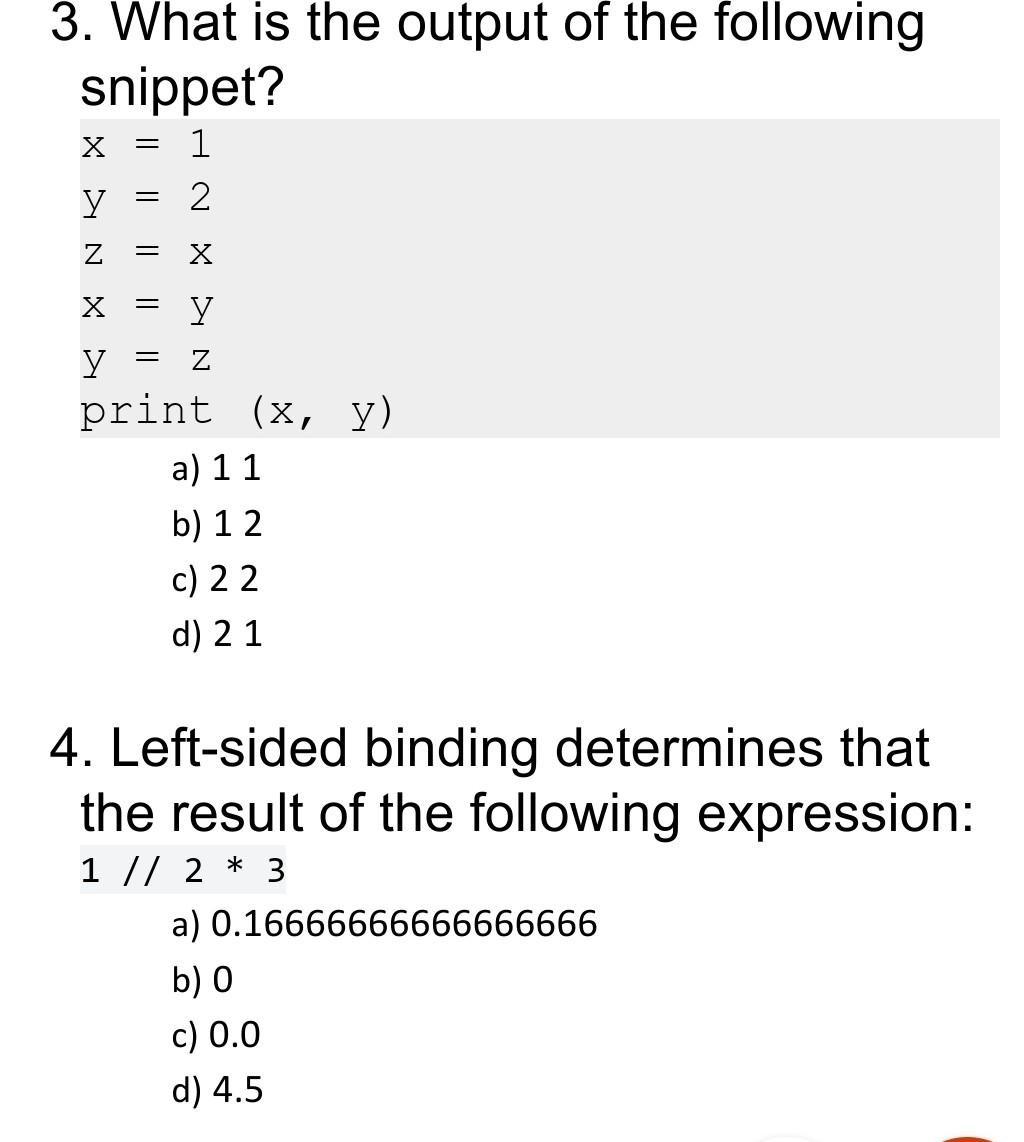
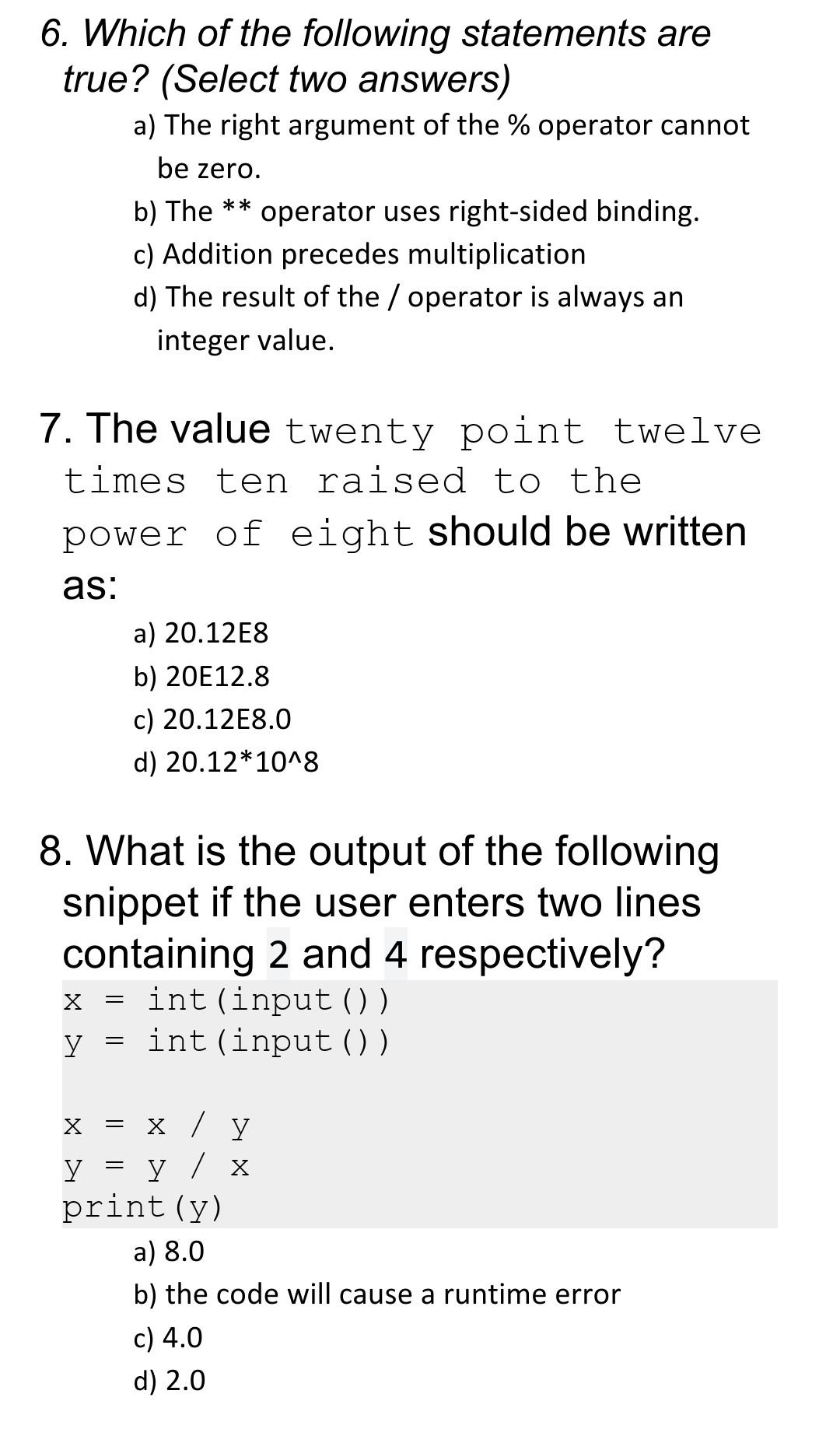
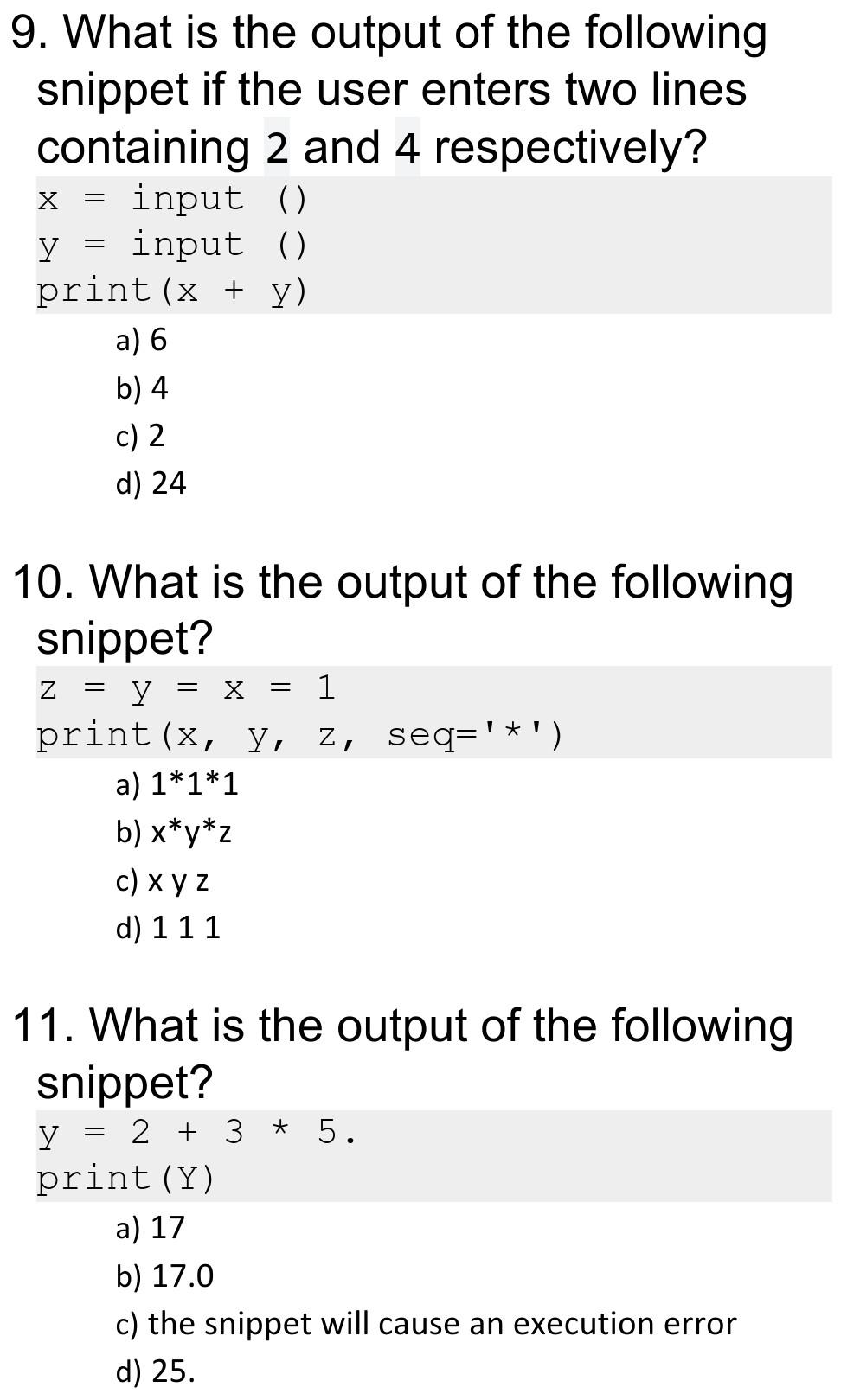
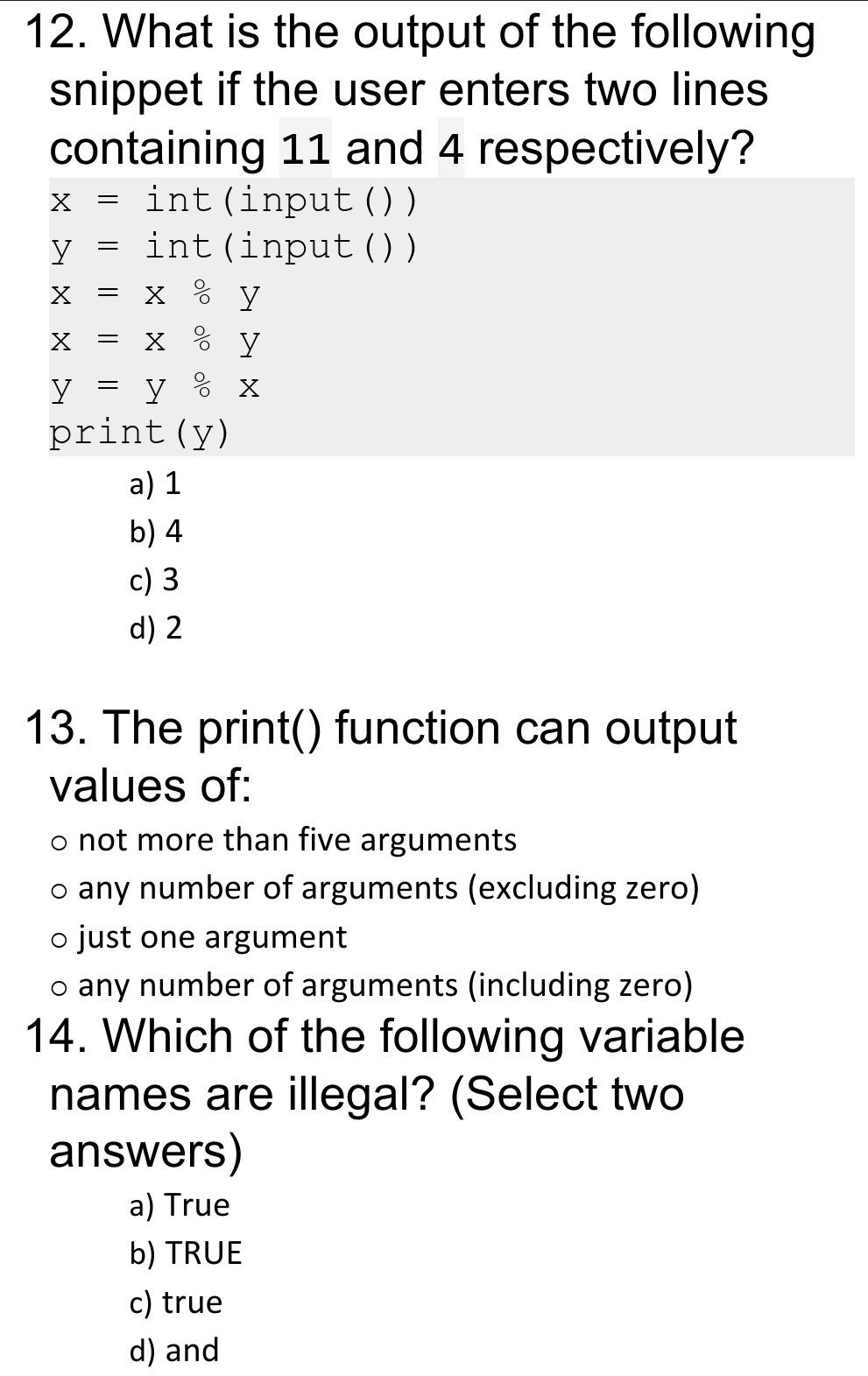
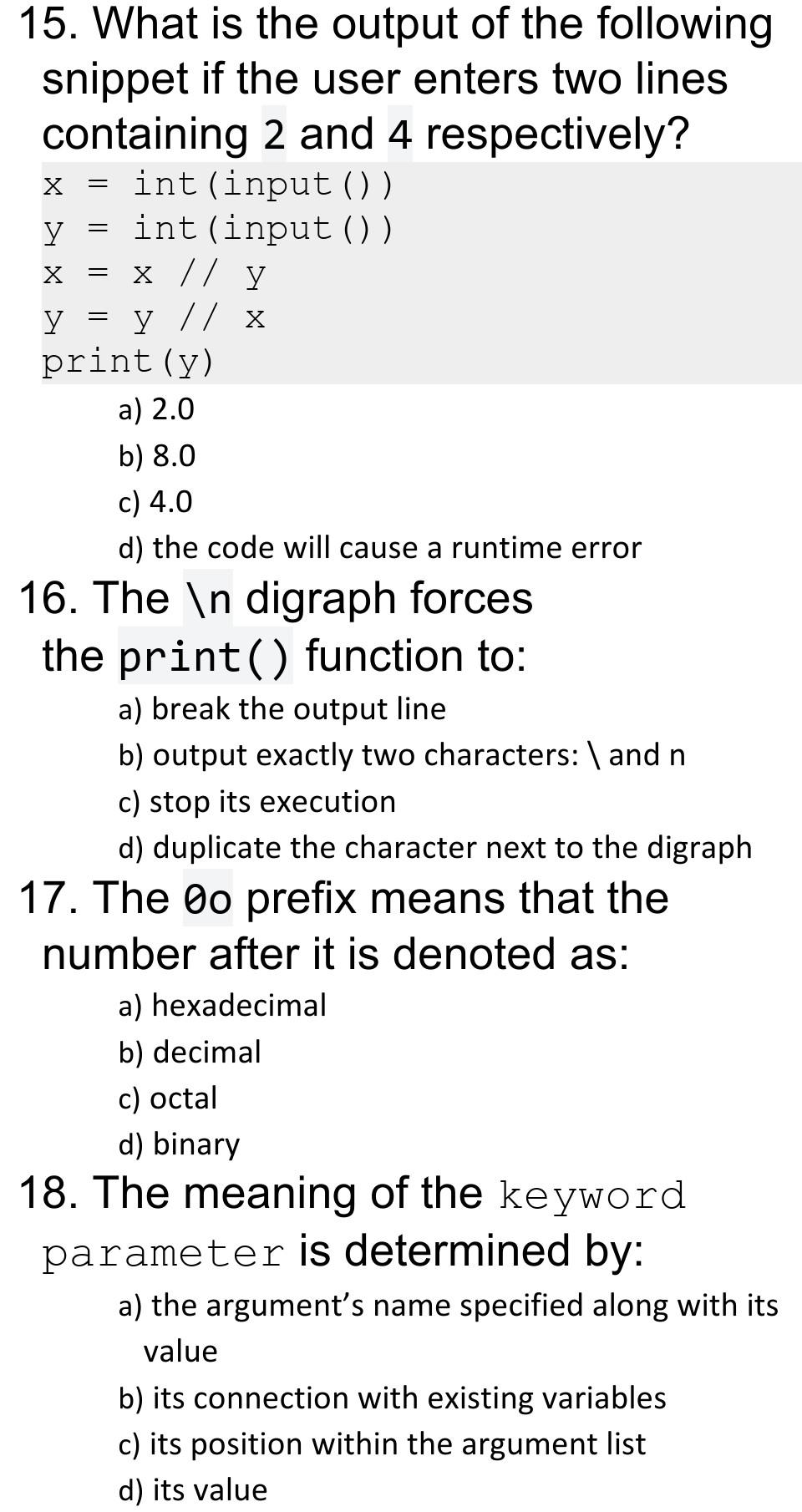
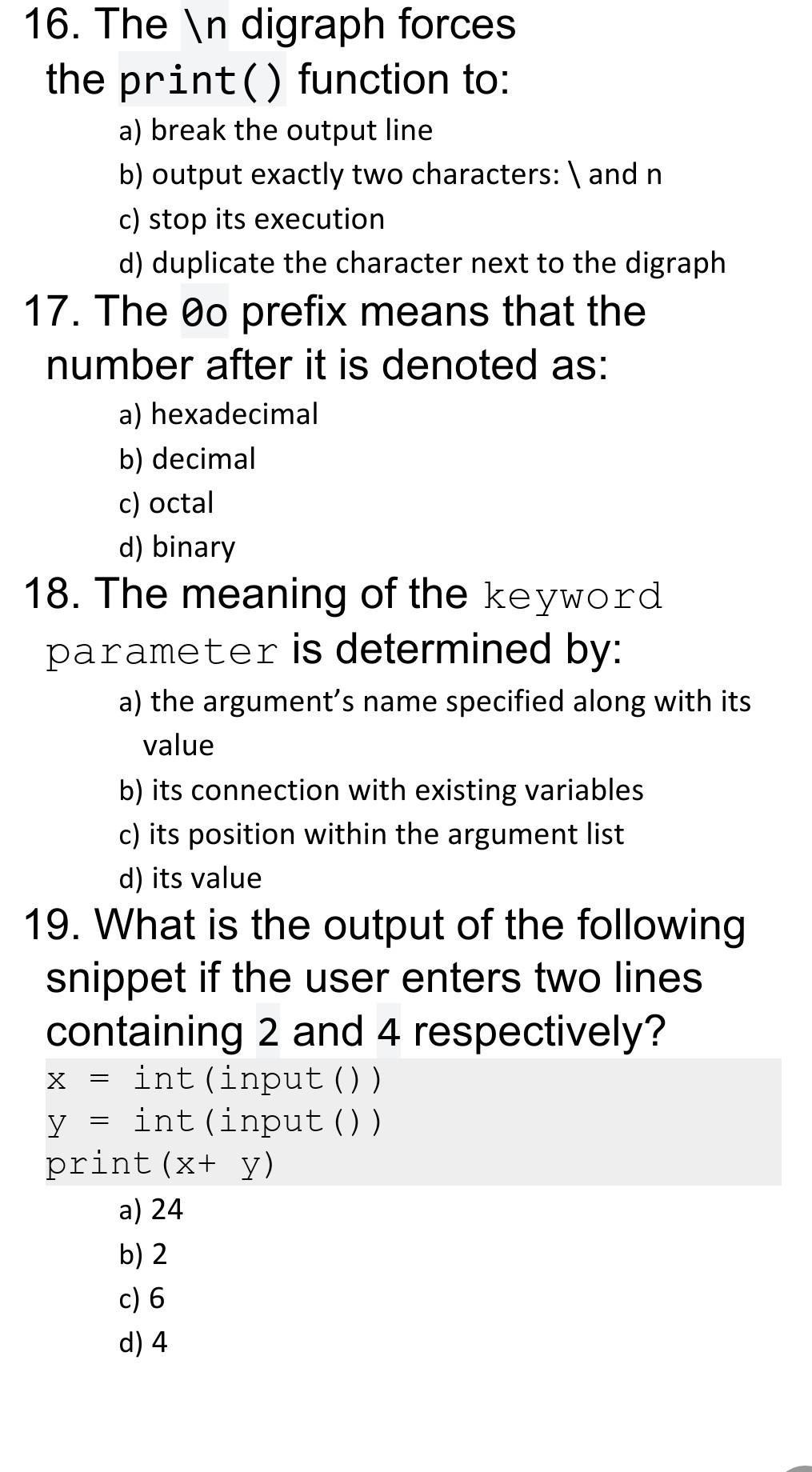
1. The result of the following division: 1/1 a) is equal to 1 b) is equal to 1.0 c) cannot be evaluated d) cannot be predicted operator: a) performs floating b) performs exponentiation c) performs duplicated multiplication d) does not exist 2. The 3. What is the output of the following snippet? = 1 2 X y KXNK X = = N y = print (x, y) a) 11 b) 12 c) 22 d) 21 4. Left-sided binding determines that the result of the following expression: 1 // 2 * 3 a) 0.16666666666666666 b) 0 c) 0.0 d) 4.5 6. Which of the following statements are true? (Select two answers) a) The right argument of the % operator cannot be zero. b) The ** operator uses right-sided binding. c) Addition precedes multiplication d) The result of the / operator is always an integer value. 7. The value twenty point twelve times ten raised to the power of eight should be written as: 8. What is the output of the following snippet if the user enters two lines containing 2 and 4 respectively? x = int (input ()) yint (input ( ) ) x / y y y / x print (y) a) 8.0 a) 20.12E8 b) 20E12.8 c) 20.12E8.0 d) 20.12*10^8 = = b) the code will cause a runtime error c) 4.0 d) 2.0 9. What is the output of the following snippet if the user enters two lines containing 2 and 4 respectively? x = input () y input () print (x + y) a) 6 b) 4 c) 2 d) 24 = 10. What is the output of the following snippet? Z = y = X = 1 print (x, y, z, seq='*') a) 1*1*1 y 11. What is the output of the following snippet? b) x*y*z c) x y z d) 111 = 2 + 3 print (Y) * 5. a) 17 b) 17.0 c) the snippet will cause an execution error d) 25. 12. What is the output of the following snippet if the user enters two lines containing 11 and 4 respectively? xint (input ()) yint (input ()) XXX Q = = XX = % y y X y y print (y) a) 1 b) 4 c) 3 d) 2 olo 13. The print() function can output values of: o not more than five arguments o any number of arguments (excluding zero) o just one argument o any number of arguments (including zero) 14. Which of the following variable names are illegal? (Select two answers) a) True b) TRUE c) true d) and 15. What is the output of the following snippet if the user enters two lines containing 2 and 4 respectively? X int (input ( ) ) y = int (input ( ) ) X = = x // y y y // x print (y) a) 2.0 b) 8.0 c) 4.0 d) the code will cause a runtime error = 16. The digraph forces the print() function to: a) break the output line b) output exactly two characters: \ and n c) stop its execution d) duplicate the character next to the digraph 17. The 00 prefix means that the number after it is denoted as: a) hexadecimal b) decimal c) octal d) binary 18. The meaning of the keyword parameter is determined by: a) the argument's name specified along with its value b) its connection with existing variables c) its position within the argument list d) its value 16. The digraph forces the print () function to: a) break the output line b) output exactly two characters: \ and n c) stop its execution d) duplicate the character next to the digraph 17. The 00 prefix means that the number after it is denoted as: a) hexadecimal b) decimal c) octal d) binary 18. The meaning of the keyword parameter is determined by: a) the argument's name specified along with its value b) its connection with existing variables c) its position within the argument list d) its value 19. What is the output of the following snippet if the user enters two lines containing 2 and 4 respectively? x = int (input ()) y = int (input()) print (x+ y) a) 24 b) 2 c) 6 d) 4
Step by Step Solution
3.32 Rating (149 Votes )
There are 3 Steps involved in it

Get step-by-step solutions from verified subject matter experts
 Study Help