







Question: Compare and contrast management decisions made in the Patagonia case with those made by Ford as described on page 210 (1) using three concepts from
Compare and contrast management decisions made in the Patagonia case with those made by Ford as described on page 210 (1) using three concepts from the chapter and (2) generally. Why do you think the companies chose such different paths 
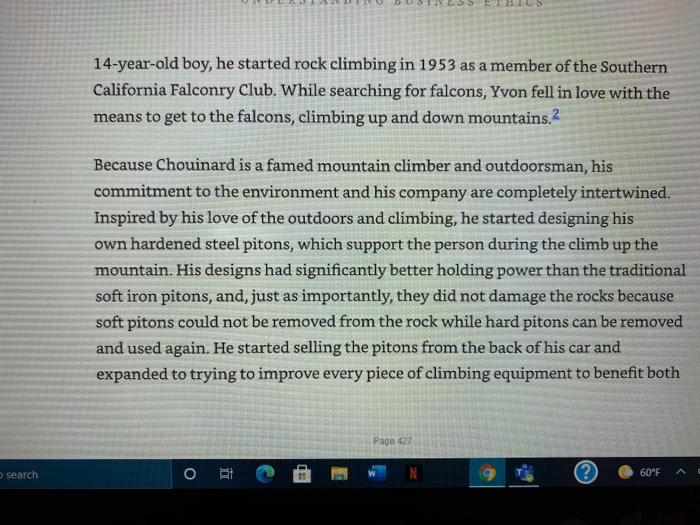
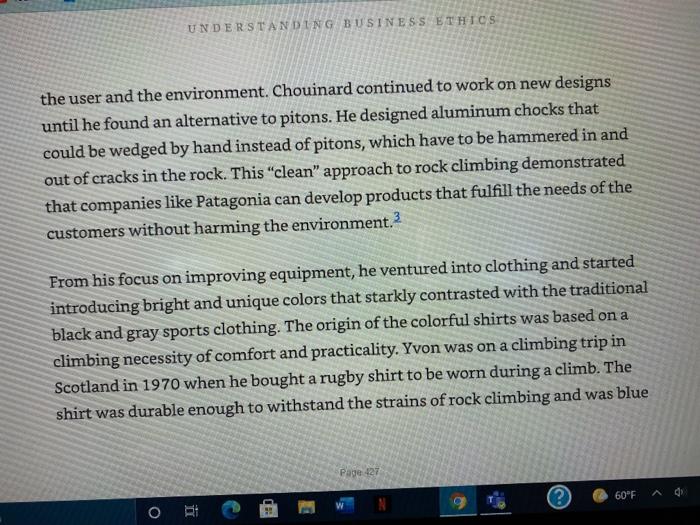
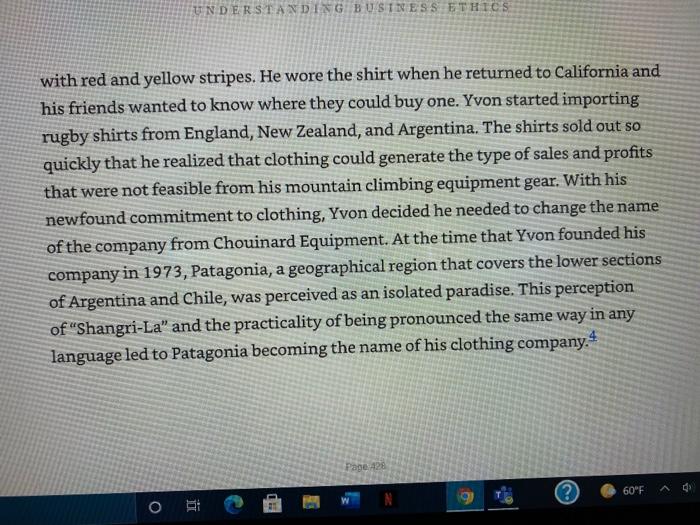
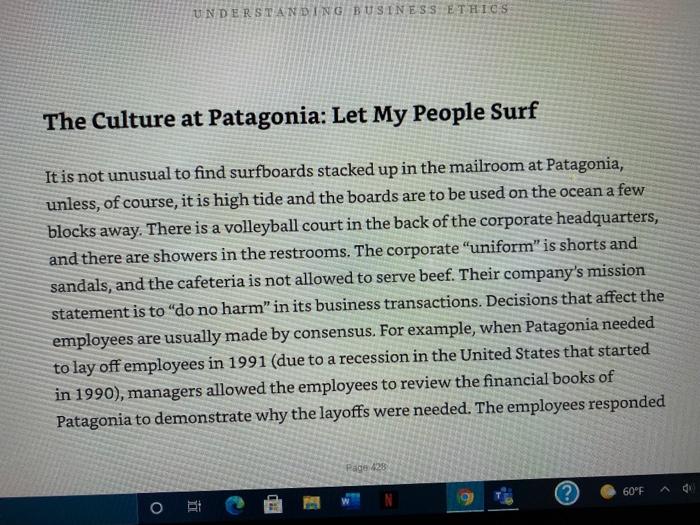
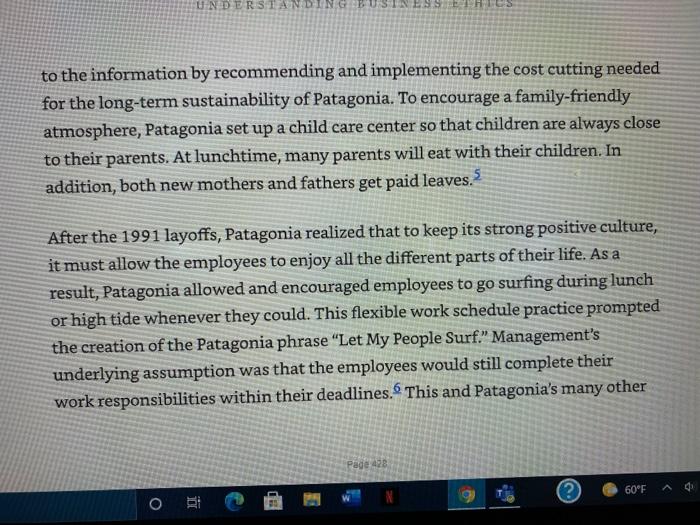
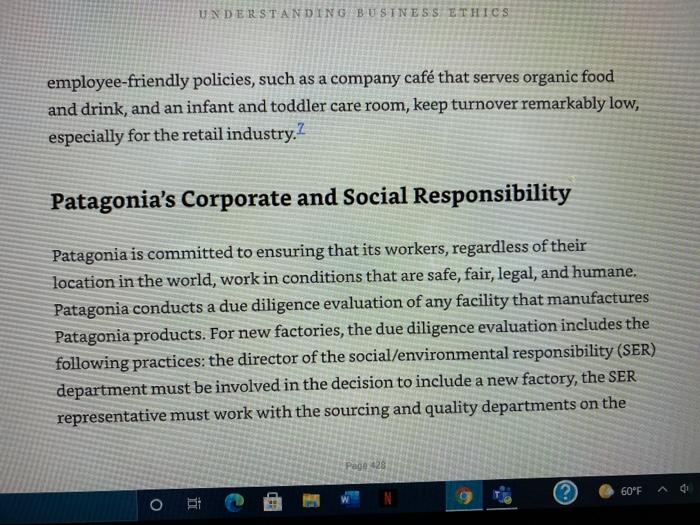
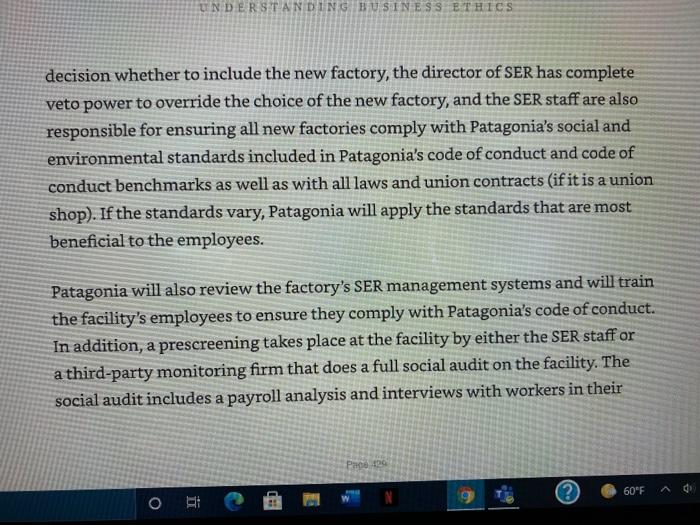
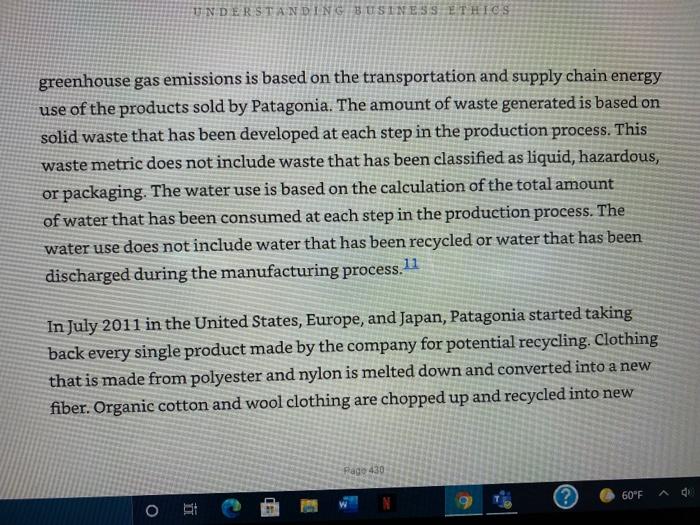
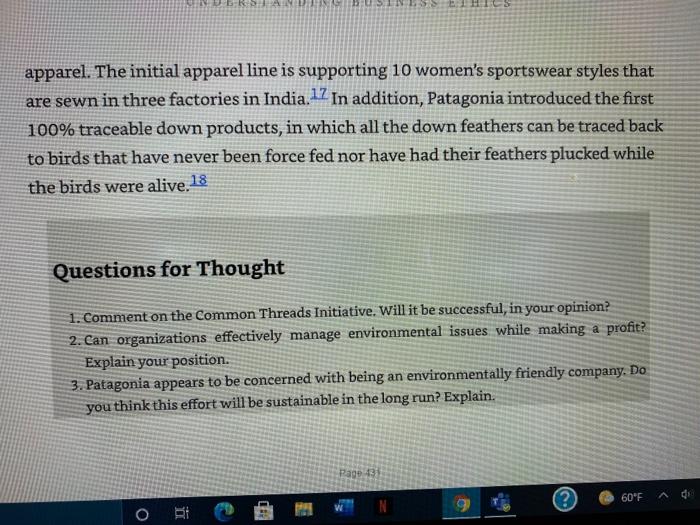
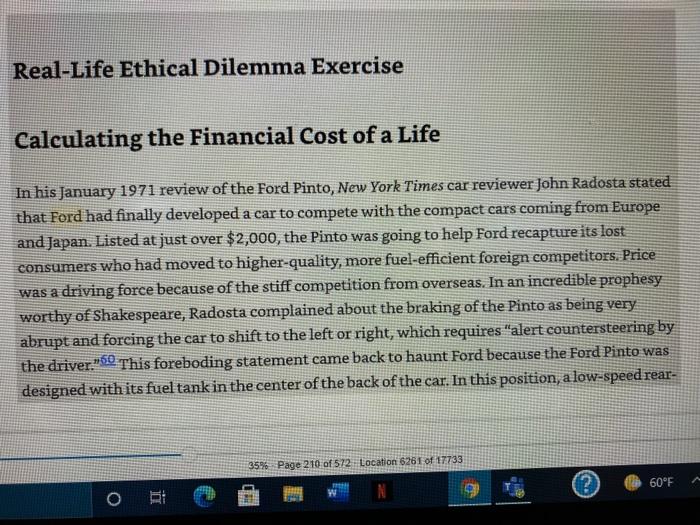
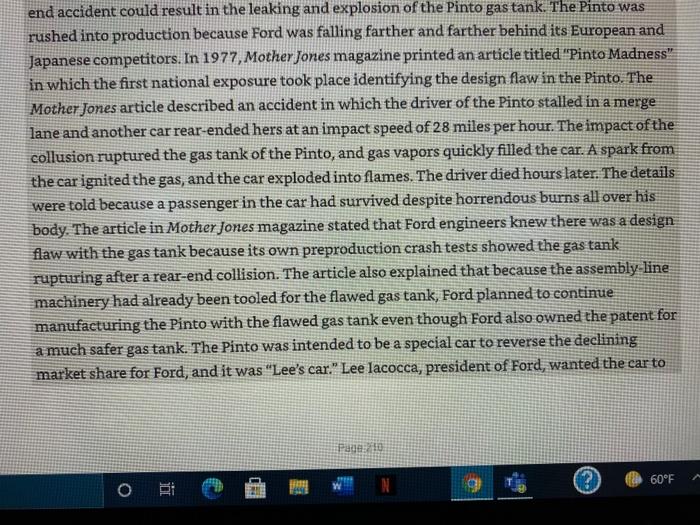
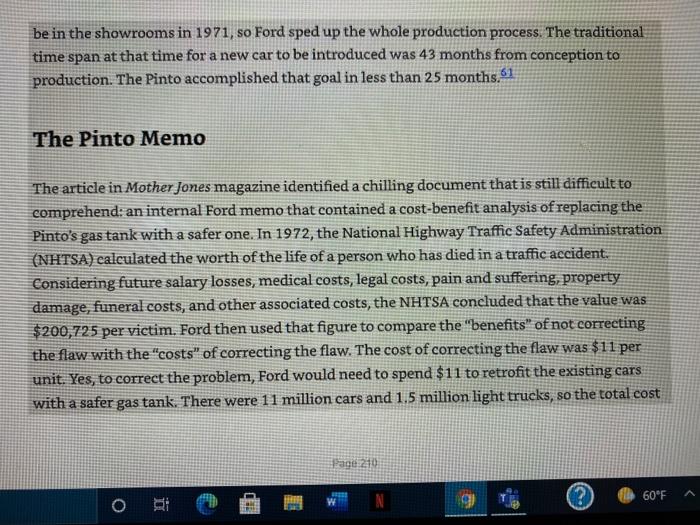
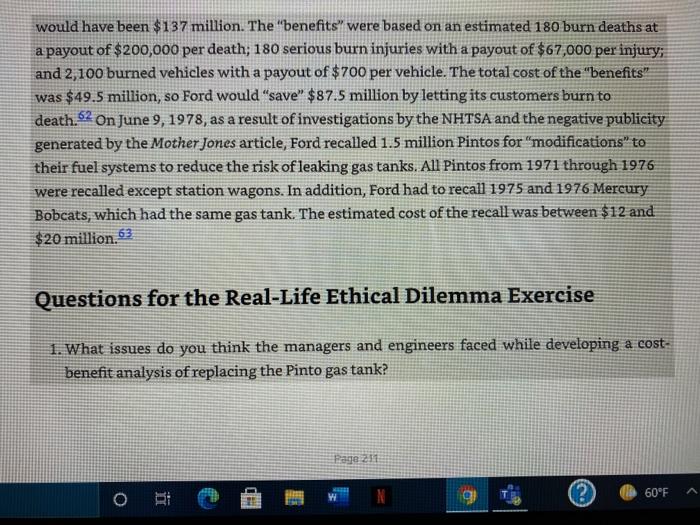
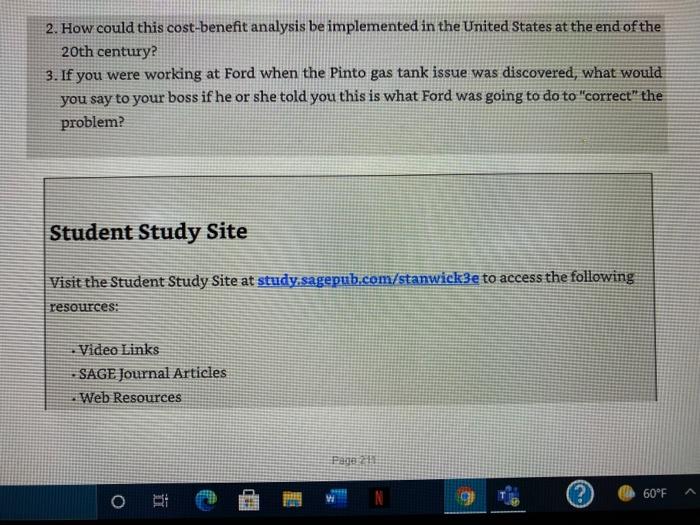
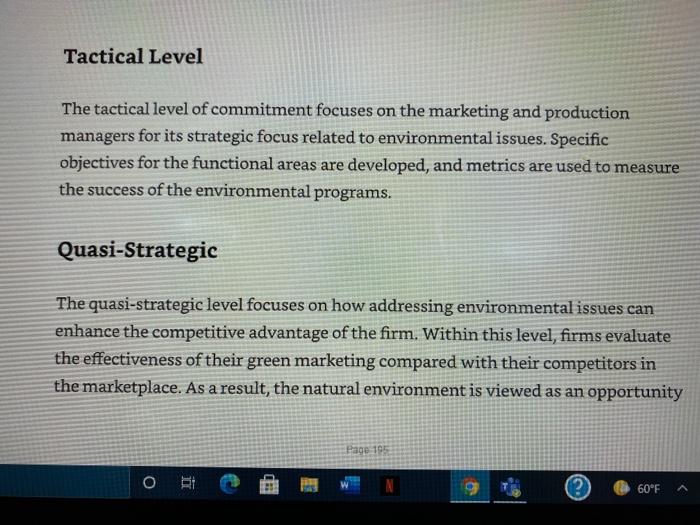
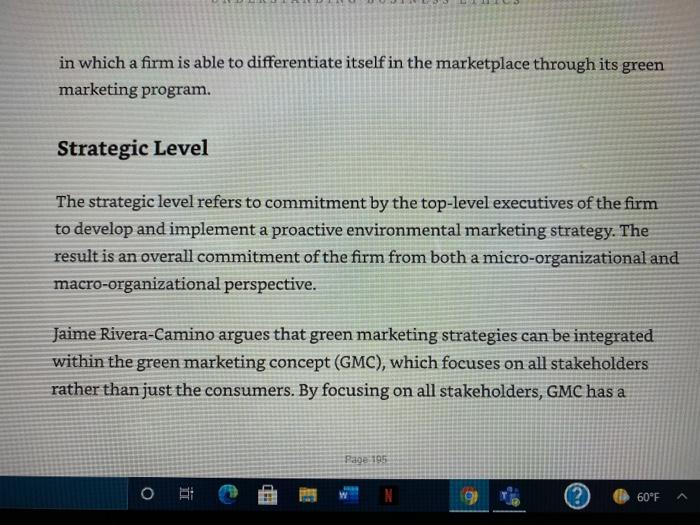
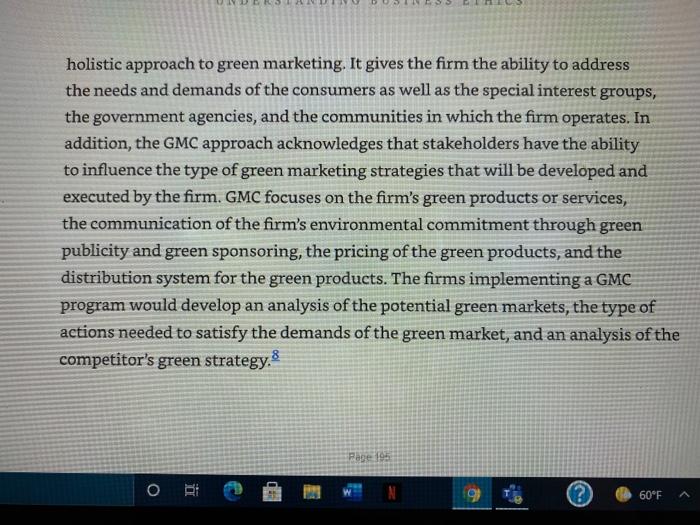
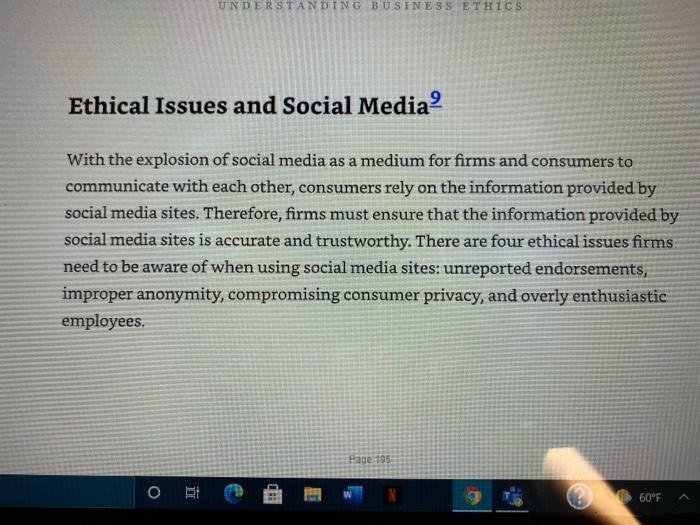
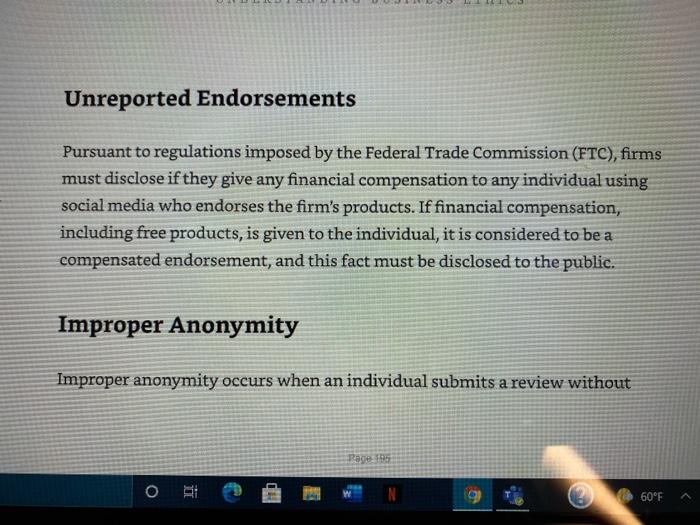
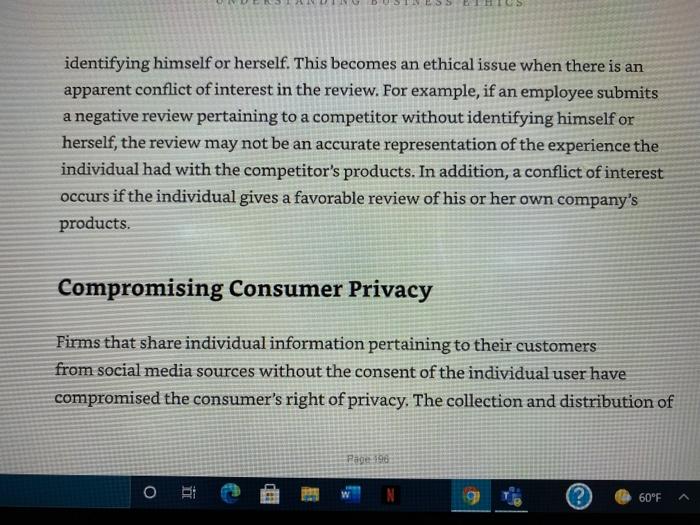
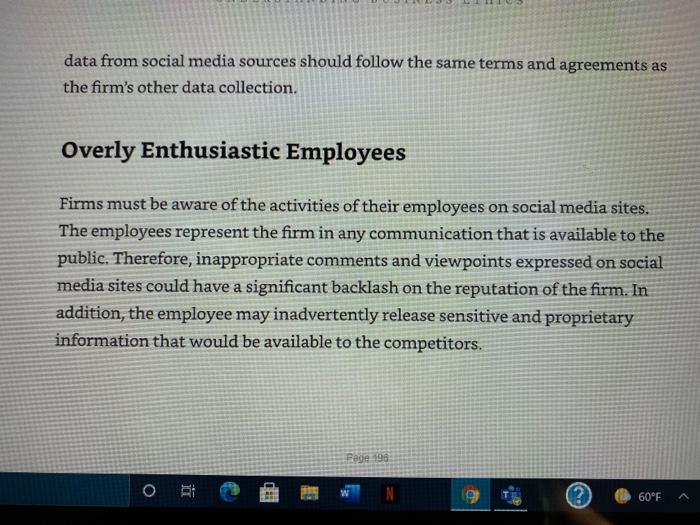
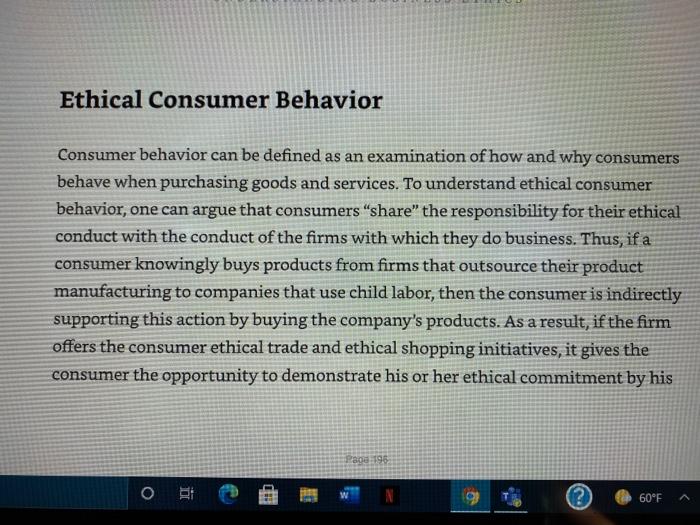
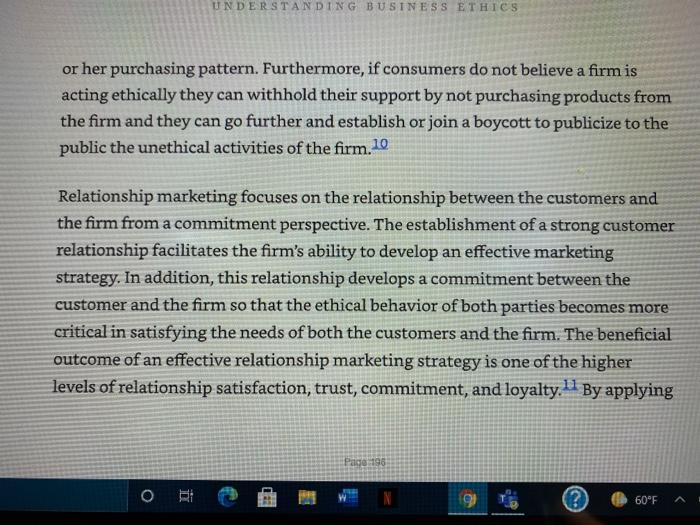
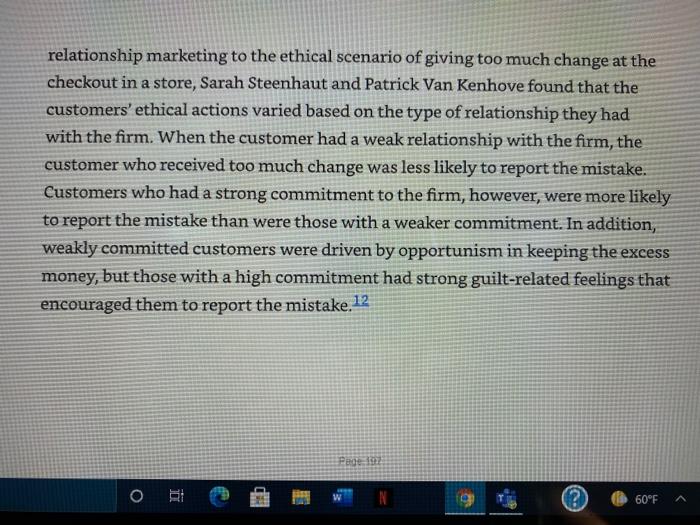
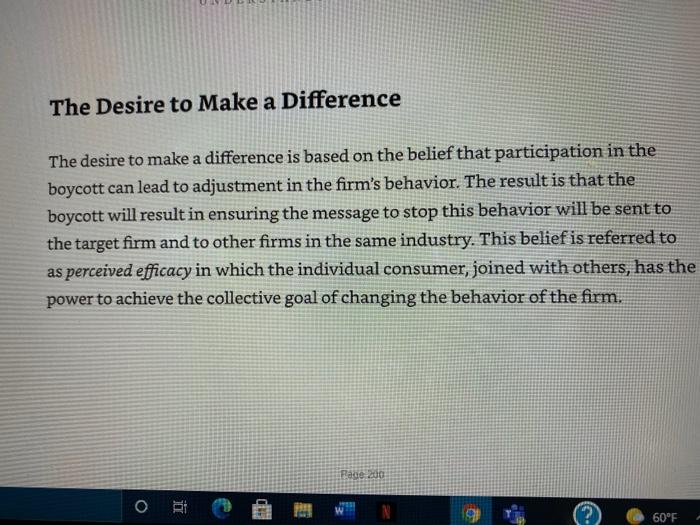
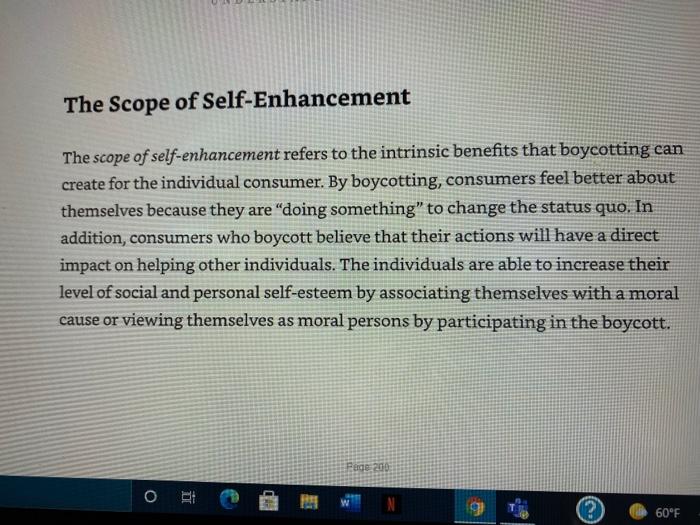
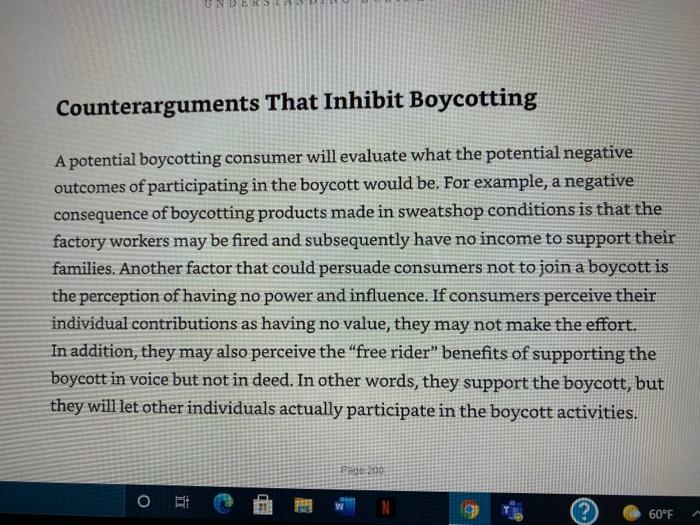
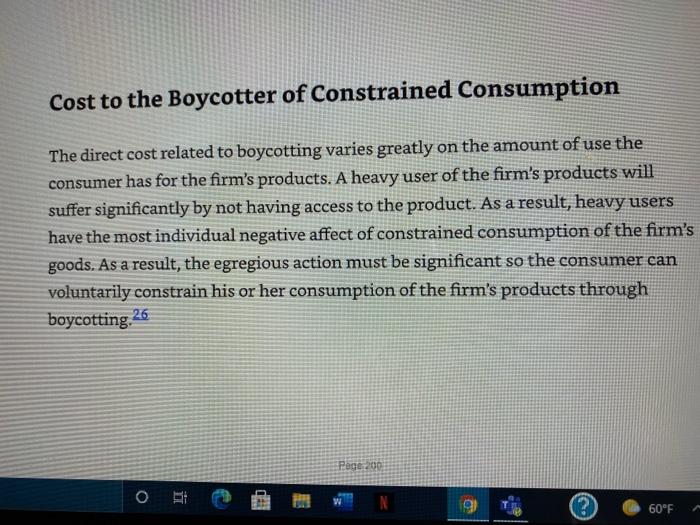
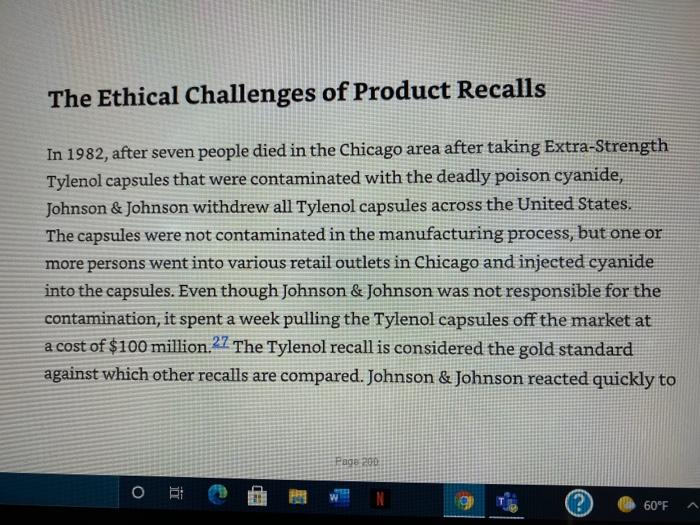
19 Patagonia: Don't Buy Our Stuff Build the best product, cause no unnecessary harm, use business to inspire and implement solutions to the environmental crisis. 1 -Patagonia's Mission Statement Patagonia's Mission Comes From Its Founder's Values Based in Ventura, California, Patagonia was founded by Yvon Chouinard. As a 67% Page 427 of 572 Location 11801 of 17733 search ORI 60'F 14-year-old boy, he started rock climbing in 1953 as a member of the Southern California Falconry Club. While searching for falcons, Yvon fell in love with the means to get to the falcons, climbing up and down mountains. Because Chouinard is a famed mountain climber and outdoorsman, his commitment to the environment and his company are completely intertwined. Inspired by his love of the outdoors and climbing, he started designing his own hardened steel pitons, which support the person during the climb up the mountain. His designs had significantly better holding power than the traditional soft iron pitons, and, just as importantly, they did not damage the rocks because soft pitons could not be removed from the rock while hard pitons can be removed and used again. He started selling the pitons from the back of his car and expanded to trying to improve every piece of climbing equipment to benefit both Page 427 search ORA 60F A UNDERSTANDING BUSINESS ETHICS the user and the environment. Chouinard continued to work on new designs until he found an alternative to pitons. He designed aluminum chocks that could be wedged by hand instead of pitons, which have to be hammered in and out of cracks in the rock. This clean approach to rock climbing demonstrated that companies like Patagonia can develop products that fulfill the needs of the customers without harming the environment.2 From his focus on improving equipment, he ventured into clothing and started introducing bright and unique colors that starkly contrasted with the traditional black and gray sports clothing. The origin of the colorful shirts was based on a climbing necessity of comfort and practicality. Yvon was on a climbing trip in Scotland in 1970 when he bought a rugby shirt to be worn during a climb. The shirt was durable enough to withstand the strains of rock climbing and was blue Page 427 ? 60"F o BA UNDERSTANDING BUSTIESS ETHICS with red and yellow stripes. He wore the shirt when he returned to California and his friends wanted to know where they could buy one. Yvon started importing rugby shirts from England, New Zealand, and Argentina. The shirts sold out so quickly that he realized that clothing could generate the type of sales and profits that were not feasible from his mountain climbing equipment gear. With his newfound commitment to clothing, Yvon decided he needed to change the name of the company from Chouinard Equipment. At the time that Yvon founded his company in 1973, Patagonia, a geographical region that covers the lower sections of Argentina and Chile, was perceived as an isolated paradise. This perception of "Shangri-La" and the practicality of being pronounced the same way in any language led to Patagonia becoming the name of his clothing company. Page 28 ? 60F O UNDERSTANDING BUSINESS ETHICS The Culture at Patagonia: Let My People Surf It is not unusual to find surfboards stacked up in the mailroom at Patagonia, unless, of course, it is high tide and the boards are to be used on the ocean a few blocks away. There is a volleyball court in the back of the corporate headquarters, and there are showers in the restrooms. The corporate "uniform" is shorts and sandals, and the cafeteria is not allowed to serve beef. Their company's mission statement is to "do no harm" in its business transactions. Decisions that affect the employees are usually made by consensus. For example, when Patagonia needed to lay off employees in 1991 (due to a recession in the United States that started in 1990), managers allowed the employees to review the financial books of Patagonia to demonstrate why the layoffs were needed. The employees responded Page 42 60F UNDERSTANDING to the information by recommending and implementing the cost cutting needed for the long-term sustainability of Patagonia. To encourage a family-friendly atmosphere, Patagonia set up a child care center so that children are always close to their parents. At lunchtime, many parents will eat with their children. In addition, both new mothers and fathers get paid leaves. After the 1991 layoffs, Patagonia realized that to keep its strong positive culture, it must allow the employees to enjoy all the different parts of their life. As a result, Patagonia allowed and encouraged employees to go surfing during lunch or high tide whenever they could. This flexible work schedule practice prompted the creation of the Patagonia phrase "Let My People Surf." Management's underlying assumption was that the employees would still complete their work responsibilities within their deadlines. This and Patagonia's many other Page 60F UNDERSTANDING BUSINESS ETHICS employee-friendly policies, such as a company caf that serves organic food and drink, and an infant and toddler care room, keep turnover remarkably low, especially for the retail industry.2 Patagonia's Corporate and Social Responsibility a Patagonia is committed to ensuring that its workers, regardless of their location in the world, work in conditions that are safe, fair, legal, and humane. Patagonia conducts a due diligence evaluation of any facility that manufactures Patagonia products. For new factories, the due diligence evaluation includes the following practices: the director of the social/environmental responsibility (SER) department must be involved in the decision to include a new factory, the SER representative must work with the sourcing and quality departments on the Page 28 ? 60F O i UNDERSTANDING BUSINESS ETHICS decision whether to include the new factory, the director of SER has complete veto power to override the choice of the new factory, and the SER staff are also responsible for ensuring all new factories comply with Patagonia's social and environmental standards included in Patagonia's code of conduct and code of conduct benchmarks as well as with all laws and union contracts (if it is a union shop). If the standards vary, Patagonia will apply the standards that are most beneficial to the employees. Patagonia will also review the factory's SER management systems and will train the facility's employees to ensure they comply with Patagonia's code of conduct. In addition, a prescreening takes place at the facility by either the SER staff or a third-party monitoring firm that does a full social audit on the facility. The social audit includes a payroll analysis and interviews with workers in their Post g Ne 60'F oli UNDERSTANDING BUSINESS ETHICS local language. Patagonia will not tolerate any facility that supports child or forced labor, worker abuse, worker harassment, or worker discrimination and will immediately reject the facility if they find any of these conditions. For those facilities that have minor violations, the factory owner must agree to correct all the violations before the facility can start manufacturing Patagonia products. Patagonia uses four criteria in selecting a new facility to produce its clothing: quality, business factors (technologies used in the plant, skills of workers, location of the plant, price per unit of clothing), customer service, and dependability based on the ability to deliver the final goods in time. In 2012, Patagonia made products in factories in Jordan, Nicaragua, Sri Lanka, India and Bangladesh, China, Thailand, Vietnam, Turkey, Mexico, Costa Rica, Colombia, El Salvador, Israel, the Philippines and the United States. The company tries to manufacture as many Page 429 9 ? 01 ? 60"F @ O li UNDERSTANDING BUSINESS ETHICS products as possible in the United States. In 2012, Patagonia had eight domestic factories in this country, but a lack of skilled garment laborers and higher labor costs prevent Patagonia from producing more clothing here.& Patagonia's SER staff visits all of its factory sites regularly to check current conditions and ensure that previously cited violations have been corrected. The SER staff will also consult and perform training for the employees if they have specific concerns that need to be addressed at the facility. Furthermore, Patagonia tracks the wage rates for the countries to which it outsources its manufacturing. Management will negotiate with the owners of the factories to work toward a higher fair or living wage rate for the workers who produce the Patagonia clothing. Many of Patagonia's plants pay workers more than the minimum wage Page 429 60F ? A 0 O ir 9 UNDERSTANDING BUSINESS ETHICS rate for the country. In 2010, Patagonia audited 90% of its supply chain for both social and environmental issues. 2 The Natural Environment and Patagonia With the founder's sustainability beliefs firmly entrenched, Patagonia has always been an environmental pioneer. In 1985, Patagonia became committed to donating 10% of pretax profits annually to grassroots environmental groups and later amended it to donating either 10% of pretax profits or 1% of sales, whichever amount is greater. To differentiate itself in the marketplace, Patagonia focuses on environmentally friendly materials. In 1996, Patagonia announced that its entire sportswear line would be produced using organic cotton. Patagonia also uses naturally grown hemp and recycled polyester in its clothing. Patagonia Page 29 60F o UNDERSTANDING BUSINESS ETHICS gets the material for its recycled polyester from used soda bottles and other sources. 10 Patagonia tracks the carbon footprint of its products throughout its supply chain. For each product being tracked, the company measures energy consumption, carbon dioxide emissions, waste generation, and water use. Patagonia defines the start of the supply chain as occurring at the origin of the primary material (cotton, wool, leather, polymer) and follows the process through the production of the garment from a fiber to a finished product. The supply chain is completed when the garment reaches Patagonia's distribution center in Reno, Nevada. The energy consumption that is measured through the supply chain includes the energy consumed during transportation and the energy consumption at each step in the manufacturing process. The measurement of carbon dioxide and other a Page 30 60F ? A di 3 o i UNDERSTANDING BUSINESS ETHICS greenhouse gas emissions is based on the transportation and supply chain energy use of the products sold by Patagonia. The amount of waste generated is based on solid waste that has been developed at each step in the production process. This waste metric does not include waste that has been classified as liquid, hazardous, or packaging. The water use is based on the calculation of the total amount of water that has been consumed at each step in the production process. The water use does not include water that has been recycled or water that has been discharged during the manufacturing process. 11 In July 2011 in the United States, Europe, and Japan, Patagonia started taking back every single product made by the company for potential recycling. Clothing that is made from polyester and nylon is melted down and converted into a new fiber. Organic cotton and wool clothing are chopped up and recycled into new Page 430 ? ? 60F A 0 0 apparel. The initial apparel line is supporting 10 women's sportswear styles that are sewn in three factories in India. 12 In addition, Patagonia introduced the first 100% traceable down products, in which all the down feathers can be traced back to birds that have never been force fed nor have had their feathers plucked while the birds were alive. 18 Questions for Thought 1. Comment on the Common Threads Initiative. Will it be successful in your opinion? 2. Can organizations effectively manage environmental issues while making a profit? Explain your position. 3. Patagonia appears to be concerned with being an environmentally friendly company. Do you think this effort will be sustainable in the long run? Explain. Page 43 ? 60'F A di O CH BE Real-Life Ethical Dilemma Exercise Calculating the Financial Cost of a Life In his January 1971 review of the Ford Pinto, New York Times car reviewer John Radosta stated that Ford had finally developed a car to compete with the compact cars coming from Europe and Japan. Listed at just over $2,000, the Pinto was going to help Ford recapture its lost consumers who had moved to higher-quality, more fuel-efficient foreign competitors. Price was a driving force because of the stiff competition from overseas. In an incredible prophesy worthy of Shakespeare, Radosta complained about the braking of the Pinto as being very abrupt and forcing the car to shift to the left or right, which requires "alert countersteering by the driver. 50 This foreboding statement came back to haunt Ford because the Ford Pinto was designed with its fuel tank in the center of the back of the car. In this position, a low-speed rear- 35% Page 210 of 572 Location 6261 of 17733 2 ? 60F o end accident could result in the leaking and explosion of the Pinto gas tank. The Pinto was rushed into production because Ford was falling farther and farther behind its European and Japanese competitors. In 1977, Mother Jones magazine printed an article titled "Pinto Madness" in which the first national exposure took place identifying the design flaw in the Pinto. The Mother Jones article described an accident in which the driver of the Pinto stalled in a merge lane and another car rear-ended hers at an impact speed of 28 miles per hour. The impact of the collusion ruptured the gas tank of the Pinto, and gas vapors quickly filled the car. A spark from the car ignited the gas, and the car exploded into flames. The driver died hours later. The details were told because a passenger in the car had survived despite horrendous burns all over his body. The article in Mother Jones magazine stated that Ford engineers knew there was a design flaw with the gas tank because its own preproduction crash tests showed the gas tank rupturing after a rear-end collision. The article also explained that because the assembly-line machinery had already been tooled for the flawed gas tank, Ford planned to continue manufacturing the Pinto with the flawed gas tank even though Ford also owned the patent for a much safer gas tank. The Pinto was intended to be a special car to reverse the declining market share for Ford, and it was "Lee's car." Lee lacocca, president of Ford, wanted the car to a Page 10 60F o Rt 0 IN be in the showrooms in 1971, so Ford sped up the whole production process. The traditional time span at that time for a new car to be introduced was 43 months from conception to production. The Pinto accomplished that goal in less than 25 months. 61 The Pinto Memo The article in Mother Jones magazine identified a chilling document that is still difficult to comprehend: an internal Ford memo that contained a cost-benefit analysis of replacing the Pinto's gas tank with a safer one. In 1972, the National Highway Traffic Safety Administration (NHTSA) calculated the worth of the life of a person who has died in a traffic accident. Considering future salary losses, medical costs, legal costs, pain and suffering, property damage, funeral costs, and other associated costs, the NHTSA concluded that the value was $200,725 per victim. Ford then used that figure to compare the benefits" of not correcting the flaw with the "costs" of correcting the flaw. The cost of correcting the flaw was $11 per unit. Yes, to correct the problem, Ford would need to spend $11 to retrofit the existing cars with a safer gas tank. There were 11 million cars and 1.5 million light trucks, so the total cost Page 20 60F would have been $137 million. The "benefits" were based on an estimated 180 burn deaths at a payout of $200,000 per death; 180 serious burn injuries with a payout of $67,000 per injury; and 2,100 burned vehicles with a payout of $ 700 per vehicle. The total cost of the "benefits" was $49.5 million, so Ford would "save" $87.5 million by letting its customers burn to death.52 On June 9, 1978, as a result of investigations by the NHTSA and the negative publicity generated by the Mother Jones article, Ford recalled 1.5 million Pintos for "modifications" to their fuel systems to reduce the risk of leaking gas tanks. All Pintos from 1971 through 1976 were recalled except station wagons. In addition, Ford had to recall 1975 and 1976 Mercury Bobcats, which had the same gas tank. The estimated cost of the recall was between $12 and $20 million. 63 Questions for the Real-Life Ethical Dilemma Exercise 1. What issues do you think the managers and engineers faced while developing a cost- benefit analysis of replacing the Pinto gas tank? Page 211 2 60F 2. How could this cost-benefit analysis be implemented in the United States at the end of the 20th century? 3. If you were working at Ford when the Pinto gas tank issue was discovered, what would you say to your boss if he or she told you this is what Ford was going to do to "correct" the problem? Student Study Site Visit the Student Study Site at study.sagepub.com/stanwick3e to access the following resources: - Video Links - SAGE Journal Articles . Web Resources Panel 60F O O i Examples of why not? products include using unleaded gasoline and reusing detergent bottles by buying detergent refills. Enviro-Preneurial Marketing Strategies For a firm to be successful in implementing an effective green marketing strategy, the firm must identify which levels within the firm are committed to proactive environmental strategies. The different levels of commitment have been described as "enviro-preneurial" marketing strategies that include functional or tactical level strategies, quasi-strategic or business level strategies, and the firm's strategic level. Page 1 of @w 2 60F Tactical Level The tactical level of commitment focuses on the marketing and production managers for its strategic focus related to environmental issues. Specific objectives for the functional areas are developed, and metrics are used to measure the success of the environmental programs. Quasi-Strategic The quasi-strategic level focuses on how addressing environmental issues can enhance the competitive advantage of the firm. Within this level, firms evaluate the effectiveness of their green marketing compared with their competitors in the marketplace. As a result, the natural environment is viewed as an opportunity Page 19 ORI CE g ? 60F in which a firm is able to differentiate itself in the marketplace through its green marketing program. Strategic Level The strategic level refers to commitment by the top-level executives of the firm to develop and implement a proactive environmental marketing strategy. The result is an overall commitment of the firm from both a micro-organizational and macro-organizational perspective. Jaime Rivera-Camino argues that green marketing strategies can be integrated within the green marketing concept (GMC), which focuses on all stakeholders rather than just the consumers. By focusing on all stakeholders, GMC has a Page 195 ORI CEL 9 60F holistic approach to green marketing. It gives the firm the ability to address the needs and demands of the consumers as well as the special interest groups, the government agencies, and the communities in which the firm operates. In addition, the GMC approach acknowledges that stakeholders have the ability to influence the type of green marketing strategies that will be developed and executed by the firm. GMC focuses on the firm's green products or services, the communication of the firm's environmental commitment through green publicity and green sponsoring, the pricing of the green products, and the distribution system for the green products. The firms implementing a GMC program would develop an analysis of the potential green markets, the type of actions needed to satisfy the demands of the green market, and an analysis of the competitor's green strategy. Page 1 9 g 3 60F UNDERSTANDING BUSINESS ETHICS Ethical Issues and Social Media With the explosion of social media as a medium for firms and consumers to communicate with each other, consumers rely on the information provided by social media sites. Therefore, firms must ensure that the information provided by social media sites is accurate and trustworthy. There are four ethical issues firms need to be aware of when using social media sites: unreported endorsements, improper anonymity, compromising consumer privacy, and overly enthusiastic employees Page 195 O 9 60F Unreported Endorsements Pursuant to regulations imposed by the Federal Trade Commission (FTC), firms must disclose if they give any financial compensation to any individual using social media who endorses the firm's products. If financial compensation, including free products, is given to the individual, it is considered to be a compensated endorsement, and this fact must be disclosed to the public. Improper Anonymity Improper anonymity occurs when an individual submits a review without o 60F identifying himself or herself. This becomes an ethical issue when there is an apparent conflict of interest in the review. For example, if an employee submits a negative review pertaining to a competitor without identifying himself or herself, the review may not be an accurate representation of the experience the individual had with the competitor's products. In addition, a conflict of interest occurs if the individual gives a favorable review of his or her own company's products Compromising Consumer Privacy Firms that share individual information pertaining to their customers from social media sources without the consent of the individual user have compromised the consumer's right of privacy. The collection and distribution of Rao o i ? 60F data from social media sources should follow the same terms and agreements as the firm's other data collection. Overly Enthusiastic Employees Firms must be aware of the activities of their employees on social media sites. The employees represent the firm in any communication that is available to the public. Therefore, inappropriate comments and viewpoints expressed on social media sites could have a significant backlash on the reputation of the firm. In addition, the employee may inadvertently release sensitive and proprietary information that would be available to the competitors. Pede196 0 3 . 60F Ethical Consumer Behavior Consumer behavior can be defined as an examination of how and why consumers behave when purchasing goods and services. To understand ethical consumer behavior, one can argue that consumers "share" the responsibility for their ethical conduct with the conduct of the firms with which they do business. Thus, if a consumer knowingly buys products from firms that outsource their product manufacturing to companies that use child labor, then the consumer is indirectly supporting this action by buying the company's products. As a result, if the firm offers the consumer ethical trade and ethical shopping initiatives, it gives the consumer the opportunity to demonstrate his or her ethical commitment by his Pan196 Of HD 9 ? 60F UNDERSTANDING BUSINESS ETHICS or her purchasing pattern. Furthermore, if consumers do not believe a firm is acting ethically they can withhold their support by not purchasing products from the firm and they can go further and establish or join a boycott to publicize to the public the unethical activities of the firm. 10 Relationship marketing focuses on the relationship between the customers and the firm from a commitment perspective. The establishment of a strong customer relationship facilitates the firm's ability to develop an effective marketing strategy. In addition, this relationship develops a commitment between the customer and the firm so that the ethical behavior of both parties becomes more critical in satisfying the needs of both the customers and the firm. The beneficial outcome of an effective relationship marketing strategy is one of the higher levels of relationship satisfaction, trust, commitment, and loyalty. By applying 11 Page 198 ? 60F A relationship marketing to the ethical scenario of giving too much change at the checkout in a store, Sarah Steenhaut and Patrick Van Kenhove found that the customers' ethical actions varied based on the type of relationship they had with the firm. When the customer had a weak relationship with the firm, the customer who received too much change was less likely to report the mistake. Customers who had a strong commitment to the firm, however, were more likely to report the mistake than were those with a weaker commitment. In addition, weakly committed customers were driven by opportunism in keeping the excess money, but those with a high commitment had strong guilt-related feelings that encouraged them to report the mistake. 12 O BE 60F The Desire to Make a Difference The desire to make a difference is based on the belief that participation in the boycott can lead to adjustment in the firm's behavior. The result is that the boycott will result in ensuring the message to stop this behavior will be sent to the target firm and to other firms in the same industry. This belief is referred to as perceived efficacy in which the individual consumer, joined with others, has the power to achieve the collective goal of changing the behavior of the firm, Fade 200 Of . 60F The Scope of Self-Enhancement The scope of self-enhancement refers to the intrinsic benefits that boycotting can create for the individual consumer. By boycotting, consumers feel better about themselves because they are "doing something" to change the status quo. In addition, consumers who boycott believe that their actions will have a direct impact on helping other individuals. The individuals are able to increase their level of social and personal self-esteem by associating themselves with a moral cause or viewing themselves as moral persons by participating in the boycott. Fade 200 o ? 60F UNDER Counterarguments That Inhibit Boycotting A potential boycotting consumer will evaluate what the potential negative outcomes of participating in the boycott would be. For example, a negative consequence of boycotting products made in sweatshop conditions is that the factory workers may be fired and subsequently have no income to support their families. Another factor that could persuade consumers not to join a boycott is the perception of having no power and influence. If consumers perceive their individual contributions as having no value, they may not make the effort. In addition, they may also perceive the "free rider" benefits of supporting the boycott in voice but not in deed. In other words, they support the boycott, but they will let other individuals actually participate in the boycott activities. Fe 200 O DI 60F Cost to the Boycotter of Constrained Consumption The direct cost related to boycotting varies greatly on the amount of use the consumer has for the firm's products. A heavy user of the firm's products will suffer significantly by not having access to the product. As a result, heavy users have the most individual negative affect of constrained consumption of the firm's goods. As a result, the egregious action must be significant so the consumer can voluntarily constrain his or her consumption of the firm's products through boycotting 26 Pege 200 0 60F The Ethical Challenges of Product Recalls In 1982, after seven people died in the Chicago area after taking Extra-Strength Tylenol capsules that were contaminated with the deadly poison cyanide, Johnson & Johnson withdrew all Tylenol capsules across the United States. The capsules were not contaminated in the manufacturing process, but one or more persons went into various retail outlets in Chicago and injected cyanide into the capsules. Even though Johnson & Johnson was not responsible for the contamination, it spent a week pulling the Tylenol capsules off the market at a cost of $100 million.22 The Tylenol recall is considered the gold standard against which other recalls are compared. Johnson & Johnson reacted quickly to Page 20 ORI 60F page 210 and the chapter
Step by Step Solution
There are 3 Steps involved in it
1 Expert Approved Answer
Step: 1 Unlock

Question Has Been Solved by an Expert!
Get step-by-step solutions from verified subject matter experts
Step: 2 Unlock
Step: 3 Unlock
 Study Help