







Question: Compared to most objects, sound waves travel very fast. It is fast enough that measuring the speed of sound is a technical challenge. One method
Compared to most objects, sound waves travel very fast. It is fast enough that measuring the speed of sound is a technical challenge. One method you could use would be to time an echo. For example, if you were in an open field with a large building a quarter of a kilometer away, you could start a stop watch when a loud noise was made and stop it when you heard the echo. You could then calculate the speed of sound.
To use the same technique over short distances, you need a faster timing system, such as a computer. In this experiment you will use this technique with a Microphone connected to a computer to determine the speed of sound at room temperature. The Microphone will be placed next to the opening of a hollow tube. When you make a sound by snapping your fingers next to the opening, the computer will begin collecting data. After the sound reflects off the opposite end of the tube, a graph will be displayed showing the initial sound and the echo. You will then be able to determine the round trip time and calculate the speed of sound.
OBJECTIVES
Measure how long it takes sound to travel down and back in a long tube.
Determine the speed of sound.
Compare the speed of sound in air to the accepted value.
MATERIALS
Power Macintosh or Windows PC | tube, 1-2 meters long |
Universal Lab Interface | book or plug to cover end of tube |
Logger Pro | thermometer or temperature probe |
Vernier ULI Microphone | meter stick or tape measure |
PRELIMINARY QUESTION
1. A common way to measure the distance to lightning is to start counting, one count per second, as soon as you see the flash. Stop counting when you hear the thunder and divide by five to get the distance in miles. Use this information to estimate the speed of sound in m/s.
PROCEDURE
1. Connect the Vernier Microphone to DIN 1on the Universal Lab Interface.
2. Prepare the computer for data collection by opening "Exp 24" from the Physics with Computersexperiment files of Logger Pro. A graph of sound level vs.time will be displayed. The time of data collection will be 0.030 s.
3. Close the end of the tube. This can be done by inserting a plug or standing a book against the end so it is sealed. Measure and record the length of the tube.
4. Use a thermometer or temperature probe to measure the air temperature of the classroom and record the value in the data table.
5. Place the Microphone as close to the end of the long tube as possible, as shown in Figure 1. Position it so that it can detect the initial sound and the echo coming back down the tube.
Figure 1
6. Click to begin data collection. Snap your fingers near the opening of the tube. You can instead clap your hands or strike two pieces of wood together. This sharp sound will trigger the interface to begin collecting data.
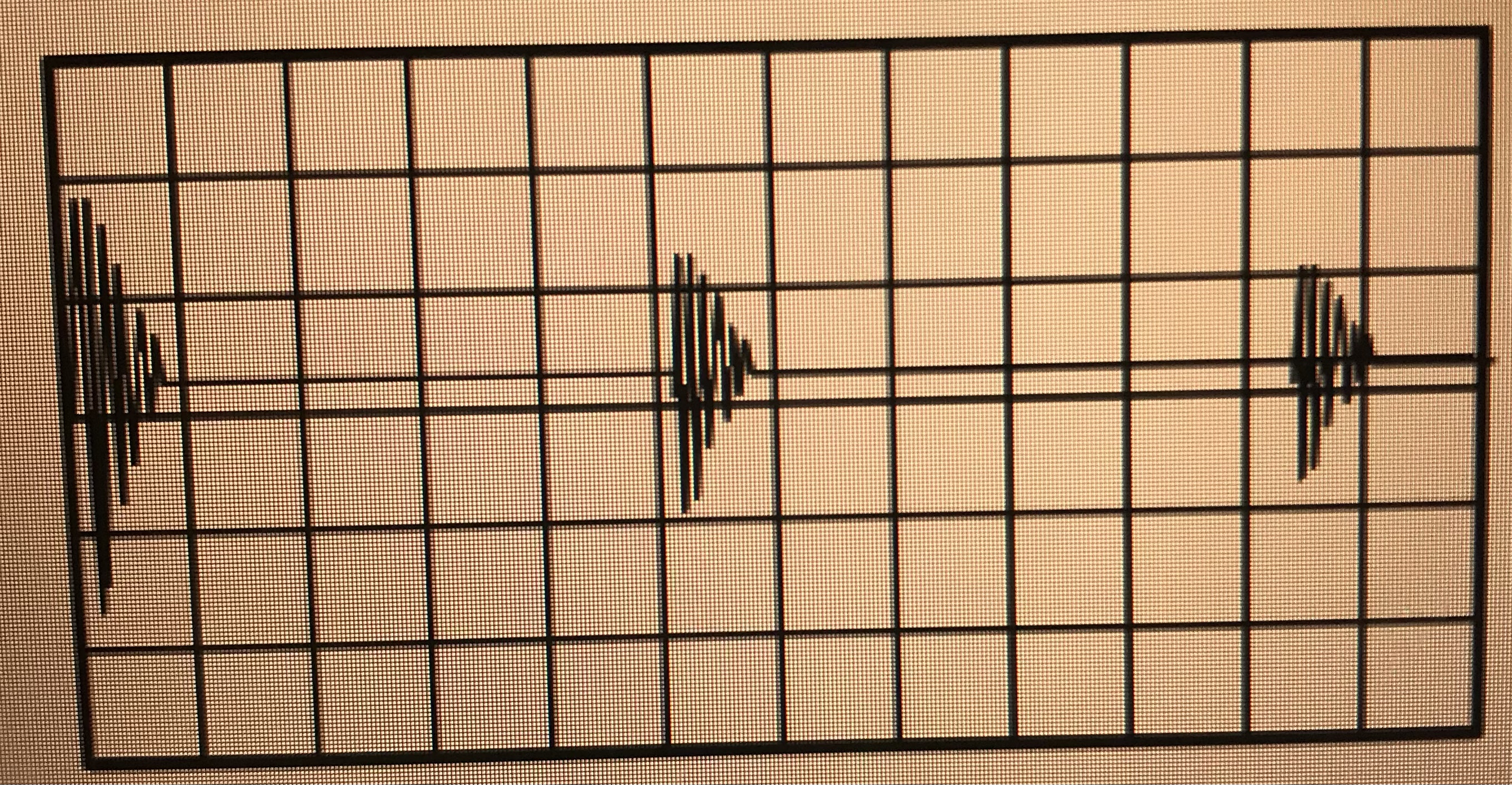
7. If you are successful, the graph will resemble the one below. Repeat your run if necessary. The second set of vibrations with appreciable amplitude marks the echo. Click the Examine button, . Move the mouse and determine the time interval between the start of the first vibration and the start of the echo vibration. Record this time interval in the data table.
Step by Step Solution
There are 3 Steps involved in it
Sure lets break this down step by step to ensure the process is clear Preliminary Question Estimating the Speed of Sound Using Lightning and Thunder Y... View full answer

Get step-by-step solutions from verified subject matter experts
 Study Help