







Question: Complete the architecture below to build an 8-bit saturating adder: add the two operands, but if the sum is greater than what can be
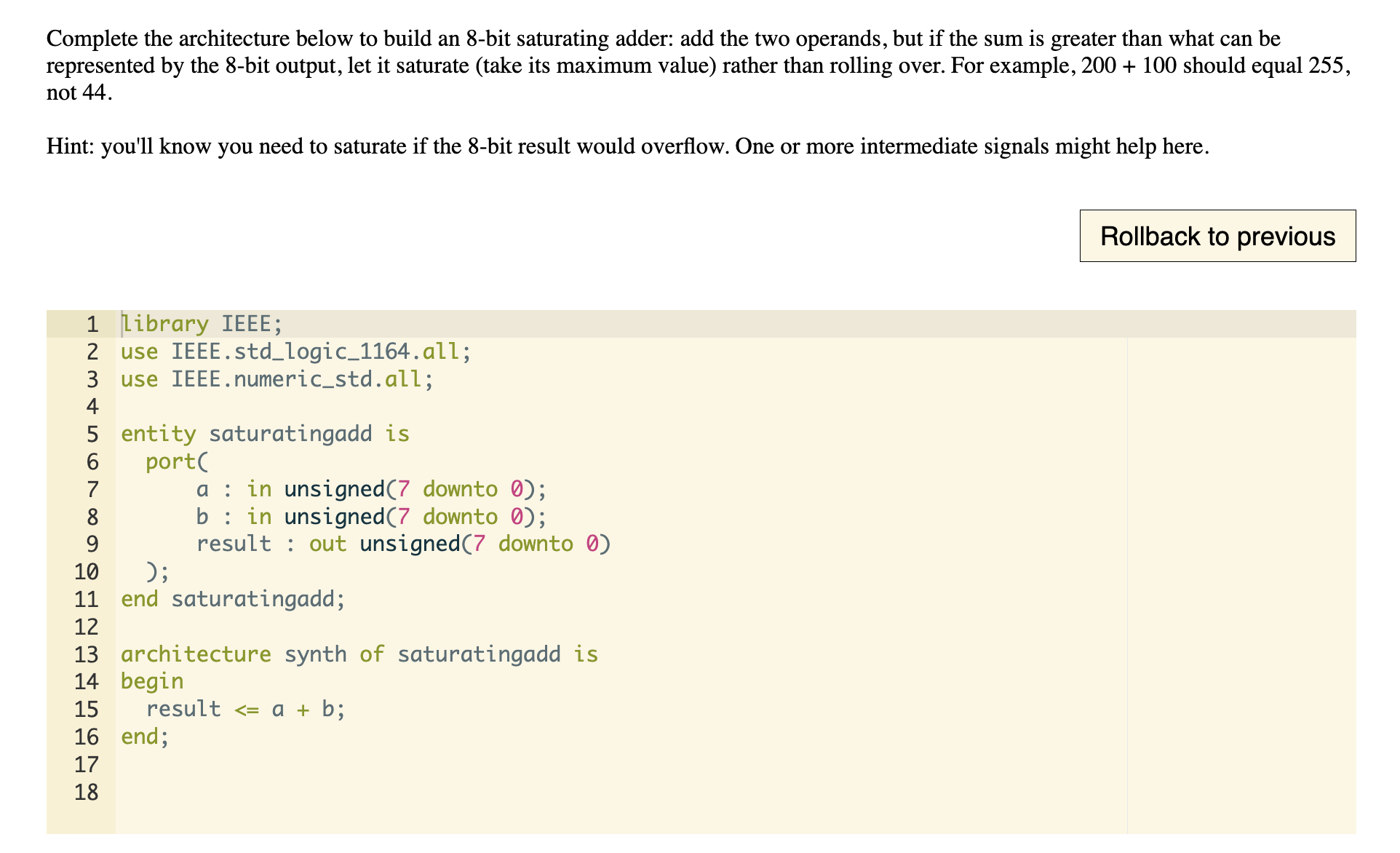
Complete the architecture below to build an 8-bit saturating adder: add the two operands, but if the sum is greater than what can be represented by the 8-bit output, let it saturate (take its maximum value) rather than rolling over. For example, 200 + 100 should equal 255, not 44. Hint: you'll know you need to saturate if the 8-bit result would overflow. One or more intermediate signals might help here. 1 library IEEE; 2 use IEEE.std_logic_1164.all; 3 use IEEE.numeric_std.all; 4 entity saturatingadd is port( 5 6 7 8 9 10 ); 11 end saturatingadd; 12 a in unsigned (7 downto 0); b in unsigned(7 downto 0); result out unsigned(7 downto 0) 13 architecture synth of saturatingadd is 14 begin 15 result
Step by Step Solution
There are 3 Steps involved in it
The code snippet provided is a starting point for defining an 8bit sat... View full answer

Get step-by-step solutions from verified subject matter experts
 Study Help