







Question: COMPLETE THE FOLLOWING PROGRAM IN C (ONLY EDIT basicexe.c): mshell.h: #ifndef _MSHELL_H_ #define _MSHELL_H_ #define R_NONE 0 /* No redirections */ #define R_INPUT 1 /*
COMPLETE THE FOLLOWING PROGRAM IN C (ONLY EDIT basicexe.c):
mshell.h:
#ifndef _MSHELL_H_
#define _MSHELL_H_
#define R_NONE 0 /* No redirections */
#define R_INPUT 1 /* input redirection bit */
#define R_OUTPUT 2 /* output redirection bit */
#define R_APPEND 4 /* append redirection bit */
#define TRUE 1
#define FALSE 0
#define ERROR_MSG(x) fprintf(stderr, "%s ", (x))
enum Kind {
noCMD = 0, exitCMD, cdCMD, basicCMD, pipelineCMD
};
typedef struct Stage {
int num_args;
char ** args;
int fdin;
int fdout;
pid_t child;
} Stage;
typedef struct Command {
char* cmd;
enum Kind kind;
int mode;
char* input;
char* output;
char** args;
int num_args;
Stage** stages;
int num_stages;
} Command;
int basicExecute(char* com,int mode,char* input,char* output,char** args);
int setupCommandPipeline(Command * c);
/* You may call this function to see the stage you are dealing with */
void printStage(Stage*);
#endif
mshell.c:
#define _POSIX_C_SOURCE 200809L
#include
#include
#include
#include
#include
#include
#include
#include
#include
#include
#include
#include "mshell.h"
#define BUFFER_SIZE 1024
#define MAXRD 255
static int extractRedirect(char* buf, char* input, char* output);
static char* skipWS(char* arg);
static Command* addCommandStage(Command* c, Stage* s);
static void freeStage(Stage* s);
/* Skip white spaces.
* Returns a pointer to the first non-space character
* or NULL if there is none.
* */
static char * skipWS(char * arg)
{
while (arg && *arg && isspace(*arg))
arg++;
return arg;
}
/*
* Returns NULL on errors
* Otherwise, returns a pointer to a string, which can be empty!
* pos will be changed to the position of NULL or the character after the current argument.
*/
static char *get_argument(char * buffer, int *pos)
{
char *p0 = skipWS(buffer + *pos);
if (! *p0) // empty argument
return p0;
if (*p0 == '\'' || *p0 == '"') {
int qmark = *p0 ++;
// quoted. search for the first qmark
char *p = strchr(p0, qmark);
if (p == NULL) {
ERROR_MSG("String missing the ending quotation mark.");
return NULL;
}
*p ++ = 0;
*pos = p - buffer;
}
else {
// search for the first WB
char *p = p0;
while (*p && ! isspace(*p))
p ++;
if (*p) {
*p++ = 0;
}
*pos = p - buffer;
}
return p0;
}
#if 0
/* remove trailing white spaces */
int trimString(char* buf, int len)
{
char* ptr = buf + len - 1;
while (ptr >= buf && isspace(*ptr))
ptr--, len--;
*++ptr = 0;
return len;
}
#endif
/* Allocate memory for a new command */
static Command* allocCommand()
{
Command * r = (Command*)calloc(1, sizeof(Command));
// The following assignments are not really necessary.
r->cmd = NULL;
r->kind = noCMD;
r->mode = R_NONE;
return r;
}
/* free the space of a command */
static Command * freeCommand(Command * c)
{
if (c->cmd)
free(c->cmd);
if (c->input)
free(c->input);
if (c->output)
free(c->output);
for (int i = 0; i num_args; i++)
if (c->args[i])
free(c->args[i]);
free(c->args);
if (c->stages) {
for(int j = 0; j num_stages; j++)
freeStage(c->stages[j]);
free(c->stages);
}
free(c);
return NULL;
}
static Command * setCommand(Command* c, enum Kind k, char* com)
{
c->kind = k;
if (c->cmd)
free(c->cmd);
c->cmd = strdup(com);
return c;
}
// allocate (nb+1) pointers
// copy strings
// set the last pointer to be NULL
static Command * setCommandArgs(Command * c, int na, char** args)
{
c->num_args = na + 1;
c->args = (char**) malloc(sizeof(char*) * c->num_args);
for (int i = 0; i
c->args[i] = strdup(args[i]);
c->args[na] = NULL;
return c;
}
static Command* addCommandStage(Command* c, Stage* s)
{
printf("New stage:");
printStage(s);
c->stages = realloc(c->stages, sizeof(Stage*) * (c->num_stages + 1));
c->num_stages += 1;
c->stages[c->num_stages - 1] = s;
return c;
}
static void printCommand(Command* c)
{
if (c->mode & R_INPUT)
printf("input);
if (c->mode & R_OUTPUT)
printf("> [%s] ", c->output);
if (c->mode & R_APPEND)
printf(">> [%s] ", c->output);
printf("CORE: %s ", c->cmd);
for(int i = 0; i num_args; i++)
printf("\targs[%d] = %s ", i, c->args[i]);
if (c->num_stages > 0) {
printf("Stages:");
for (int i = 0; i num_stages; i++)
printStage(c->stages[i]);
printf(" ");
}
}
/* ==== functions about stages ==== */
// print all the arguments in this stage
void printStage(Stage* s)
{
printf("\t(%d)[",s->num_args);
for (int i = 0; i num_args; i++)
if (s->args[i] != NULL)
printf("%s ",s->args[i]);
else
printf("null ");
printf("] ");
}
// allocate memory for Stages
static Stage * allocStage(int nba, char ** args)
{
Stage* s = (Stage*)calloc(1, sizeof(Stage));
s->num_args = nba + 1;
s->args = (char**)calloc(s->num_args, sizeof(char*));
s->fdin = s->fdout = -1;
s->child = -1;
for (int i = 0; i
s->args[i] = strdup(args[i]);
// used calloc. s->args[nba] should be NULL.
return s;
}
// free the memory for Stages
static void freeStage(Stage* s)
{
for (int i = 0; i num_args; i++)
if (s->args[i] != NULL) // should be fine to free NULL too
free(s->args[i]);
free(s->args);
free(s);
}
#define GET_ARG(a) do{(a) = get_argument(buffer, &pos); if (!(a)) return freeCommand(c);} while (0)
/* ==== the messy function that makes Command from the command line ==== */
static Command* makeCommand()
{
char buffer[BUFFER_SIZE];
int i;
char ch;
printf("%% ");
fflush(stdout);
// Read a command into buffer
i = 0;
while (i
buffer[i++] = ch;
if (i == BUFFER_SIZE) { // too long
ERROR_MSG("Command is too long. ");
while ((ch = getchar()) != ' ' && ch != EOF);
return NULL;
}
buffer[i] = 0;
Command* c = allocCommand();
if (ch == EOF) {
if (buffer[0])
ERROR_MSG("A command does not end with a new line.");
return setCommand(c, exitCMD, "exit");
}
{ // dealing with indirect
char input[BUFFER_SIZE];
char output[BUFFER_SIZE];
*input = *output = 0;
int mode = extractRedirect(buffer, input, output);
if (mode
return freeCommand(c);
c->mode = mode;
c->input = strdup(input);
c->output = strdup(output);
}
int pos = 0;
char * pipe = strchr(buffer, '|');
if (pipe == NULL) {
// basic command
char * sc;
GET_ARG(sc);
if (*sc == 0) {
if (c->mode)
ERROR_MSG("An empty command with redirect.");
return freeCommand(c);
} else if (!strcmp(sc, "cd")) {
char * a0 = get_argument(buffer, &pos);
char * args[1] = {a0};
return setCommandArgs(setCommand(c, cdCMD, sc), 1, args);
} else if (strcmp(sc,"exit") == 0) {
return setCommand(c,exitCMD,sc);
} else { // basic command
char * args[BUFFER_SIZE];
int na = 0;
char * arg = sc;
while (*arg) {
args[na++] = arg;
assert(na
GET_ARG(arg);
}
return setCommandArgs(setCommand(c, basicCMD, args[0]), na, args);
}
} else { // This is a pipeline.
char * args[BUFFER_SIZE];
int na;
char * arg;
int done = 0;
setCommand(c, pipelineCMD, "");
do {
if (pipe) // if there are more than one stage, turn '|' to NULL
*pipe = 0;
na = 0;
do {
GET_ARG(arg);
if (*arg) {
args[na++] = arg;
assert(na
}
} while (*arg);
if (na == 0) {
ERROR_MSG("Empty pipeline stage.");
return freeCommand(c);
}
addCommandStage(c, allocStage(na, args));
if (pipe) {
pos = (pipe - buffer) + 1;
pipe = strchr(pipe + 1, '|');
}
else
done = 1;
} while (! done);
return c;
}
return c;
}
/* Find a file path, save it to fn.
* Replace the characters in buf with space.
* fn has at least MAXRD bytes.
* Return the pointer to a space or NULL if successful.
* return NULL on erros.
*/
static char * get_redirect_file (char *buf, char *fn)
{
char *p = skipWS(buf);
int ch, i = 0;
while ((ch = *p) != 0) {
if (isalnum(ch) || ch == '.' || ch == '-' || ch == '/' || ch == '_') {
// valid characters in file path
if (i + 1 >= MAXRD) {
ERROR_MSG("File path is too long.");
return NULL;
}
fn[i ++] = ch;
} else {
ERROR_MSG("Invalid characters in file path.");
return NULL;
}
*p ++ = ' ';
}
fn[i] = 0;
return p;
}
/* The routine extracts any redirects and replaces those parts of the command
by whitespaces.
save the input file path in input.
save the output file path in input.
return a negative value on errors.
return a valid mode otherwsie.
*/
static int extractRedirect(char* buf, char* input, char* output)
{
char* ptr = buf; // may use buf directly
int mode = R_NONE;
while (ptr && *ptr) {
int ch = *ptr;
if (ch == '
if (mode & R_INPUT) {
ERROR_MSG("Ambiguous input redirect.");
return -1;
}
ptr[0] = ' ';
ptr = get_redirect_file(ptr + 1, input);
if (ptr == NULL)
return -2;
if (! input[0]) {
ERROR_MSG("Input redirect file name not found.");
return -3;
}
mode |= R_INPUT;
} else if (ch == '>' && ptr[1] == '>') {
if (mode & (R_APPEND | R_OUTPUT)) {
ERROR_MSG("Ambiguous output redirect ");
return -11;
}
ptr[0] = ' ';
ptr[1] = ' ';
ptr = get_redirect_file(ptr + 2, output);
if (ptr == NULL)
return -12;
if (! output[0]) {
ERROR_MSG("Output redirect file name not found.");
return -13;
}
mode |= R_APPEND;
} else if (ch == '>') {
if (mode & (R_APPEND | R_OUTPUT)) {
ERROR_MSG("Ambiguous output redirect ");
return -21;
}
ptr[0] = ' ';
ptr = get_redirect_file(ptr + 1, output);
if (ptr == NULL)
return -22;
if (! output[0]) {
ERROR_MSG("Output redirect file name not found.");
return -23;
}
mode |= R_OUTPUT;
} else
ptr++;
}
return mode;
}
// execut a command
static int executeCommand (Command * c)
{
switch (c->kind) {
case cdCMD: {
// redirect is ignored
int st = chdir(c->args[0]);
if (st == -1)
fprintf(stderr, "cd error: [%s] ", strerror(errno));
return TRUE;
}
case exitCMD:
return FALSE;
case basicCMD: {
return basicExecute(c->cmd,c->mode,c->input,c->output,c->args);
}
case pipelineCMD: {
setupCommandPipeline(c);
return TRUE;
}
case noCMD: {
return TRUE;
}
default:
ERROR_MSG("oops, unknown command type.");
return TRUE;
}
}
int main(int argc,char* argv[])
{
int loop = 1;
while (loop) {
Command * cmd = makeCommand();
if (cmd == NULL)
continue;
printCommand(cmd);
loop = executeCommand(cmd);
freeCommand(cmd);
}
return 0;
}
basicexe.c:
#define _POSIX_C_SOURCE 200809L
#include
#include
#include
#include
#include
#include
#include
#include
#include
#include
#include
#include "mshell.h"
// ================================================================================
// Write the basic command logic here.
// ================================================================================
int basicExecute(char* com,int mode,char* input,char* output,char** args)
{
// TODO
return 1;
}
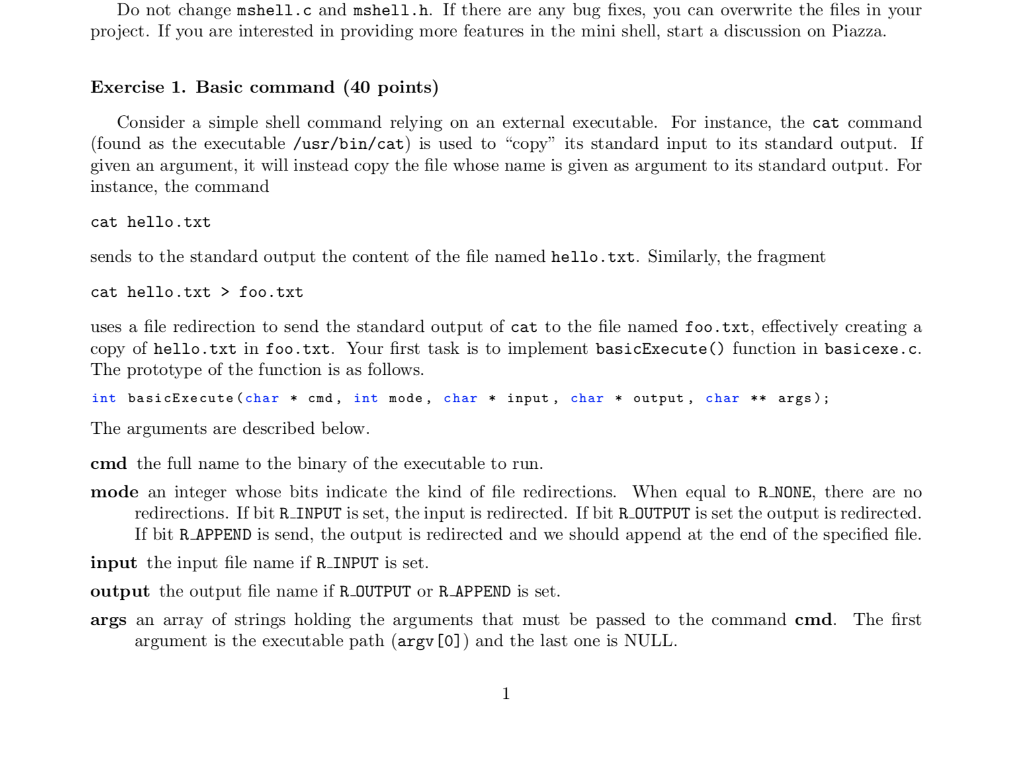
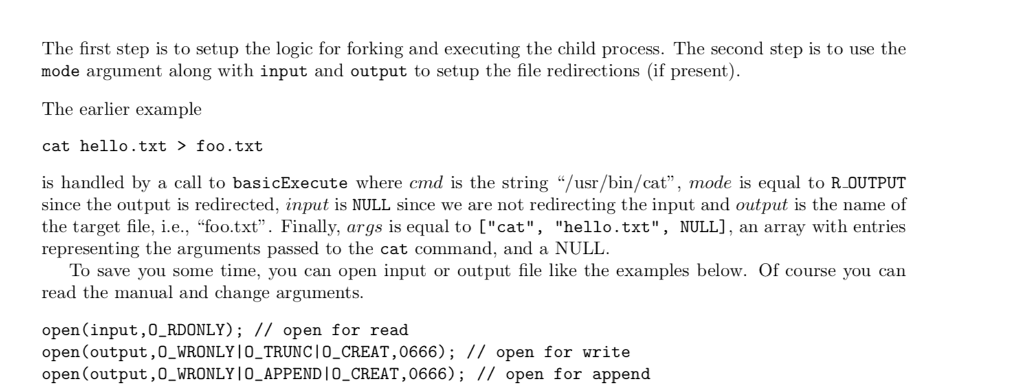
Do not change mshell.c and mshell.h. If there are any bug fixes, you can overwrite the files in your project. If you are interested in providing more features in the mini shell, start a discussion on Piazza. Exercise 1. Basic command (40 points) Consider a simple shell command relying on an external executable. For instance, the cat command (found as the executable /usr/bin/cat) is used to "copy" its standard input to its standard output. If given an argument, it will instead copy the file whose name is given as argument to its standard output. For instance, the command cat hello.txt sends to the standard output the content of the file named hello.txt. Similarly, the fragment cat hello.txt foo.txt uses a file redirection to send the standard output of cat to the file named foo.txt, effectively creating a copy of hello.txt in foo.txt. Your first task is to implement basicExecute function in basicexe.c. The prototype of the function is as follows int basicExecute(char * d, int mode, char * input, char * output, char ** args); The arguments are described below cmd the full name to the binary of the executable to run mode an integer whose bits indicate the kind of file redirections. When equal to R NONE, there are no redirections. If bit RINPUT is set, the input is redirected. If bit R OUTPUT is set the output is redirected If bit R-APPEND is send, the output is redirected and we should append at the end of the specified file input the input file name if RINPUT is set output the output file name if R.OUTPUT or R APPEND is set args an array of strings holding the arguments that must be passed to the command cmd. The first argument is the executable path (argv [O]) and the last one is NULL
Step by Step Solution
There are 3 Steps involved in it

Get step-by-step solutions from verified subject matter experts
 Study Help