



Question: Complete the table to determine the cost assigned to ending inventory and cost of goods sold using specific identification. 2. Determine the cost assigned to
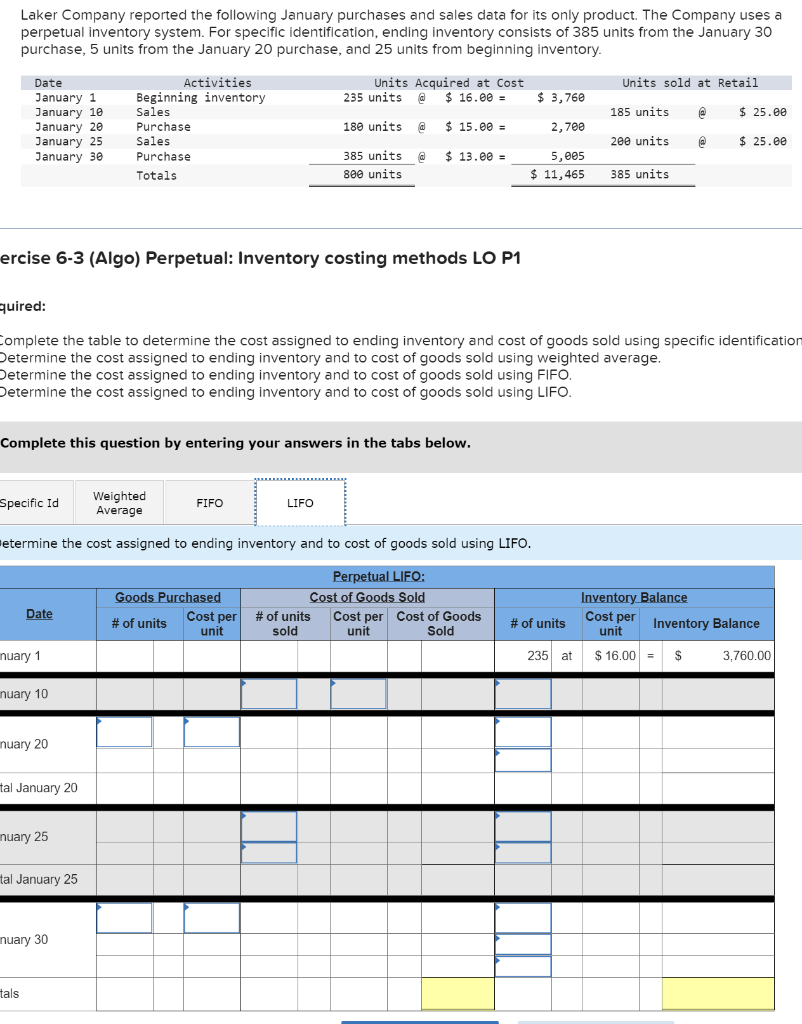
Complete the table to determine the cost assigned to ending inventory and cost of goods sold using specific identification. 2. Determine the cost assigned to ending inventory and to cost of goods sold using weighted average. 3. Determine the cost assigned to ending inventory and to cost of goods sold using FIFO. 4. Determine the cost assigned to ending inventory and to cost of goods sold using LIFO.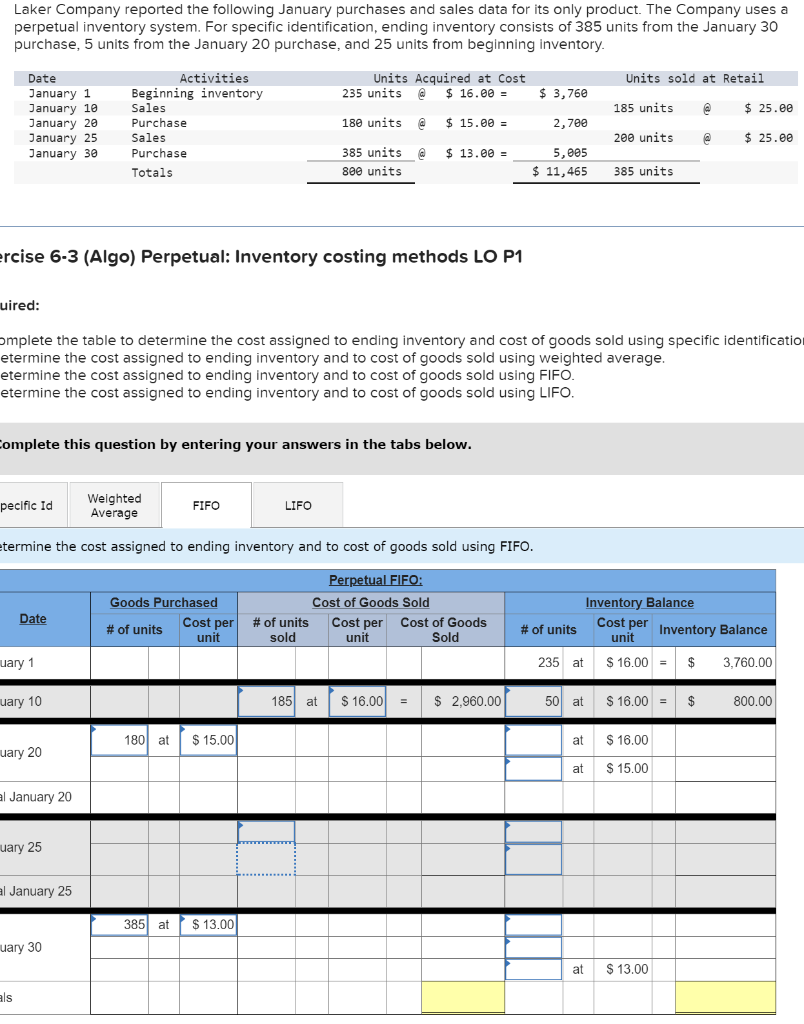
 3. Compute the cost assigned to ending inventory using (a) FIFO, (b) LIFO, (c) weighted average, and (d) specific identification. For specific identification, units sold include 125 units from beginning inventory, 255 units from the March 5 purchase, 105 units from the March 18 purchase, and 145 units from the March 25 purchase.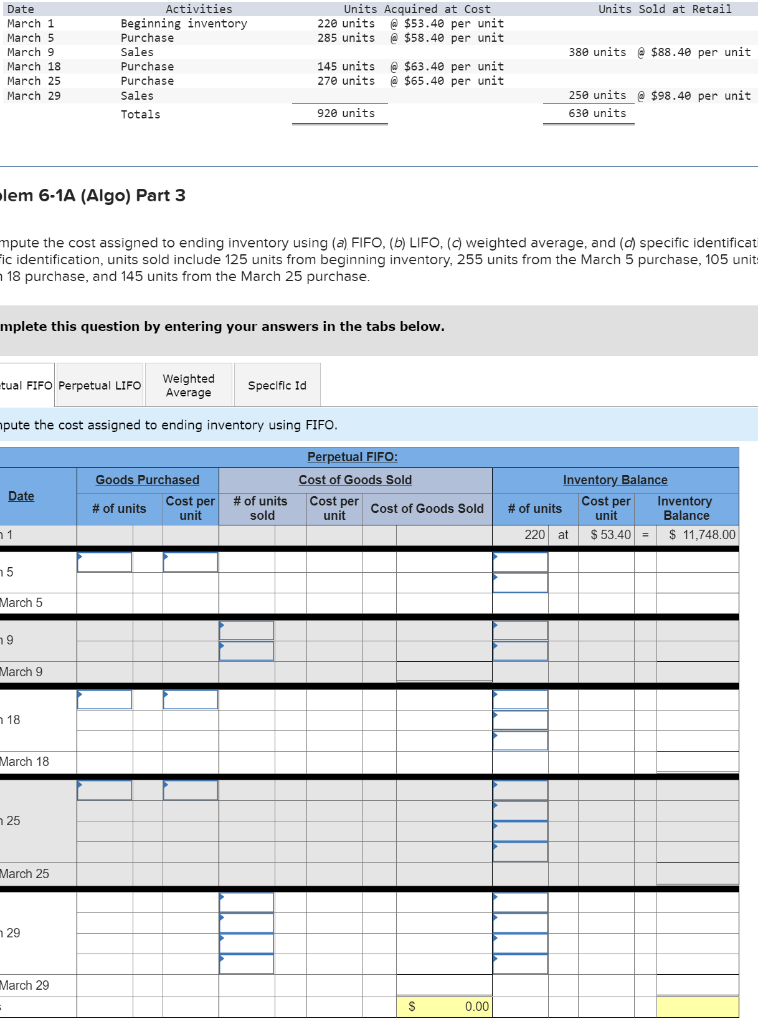
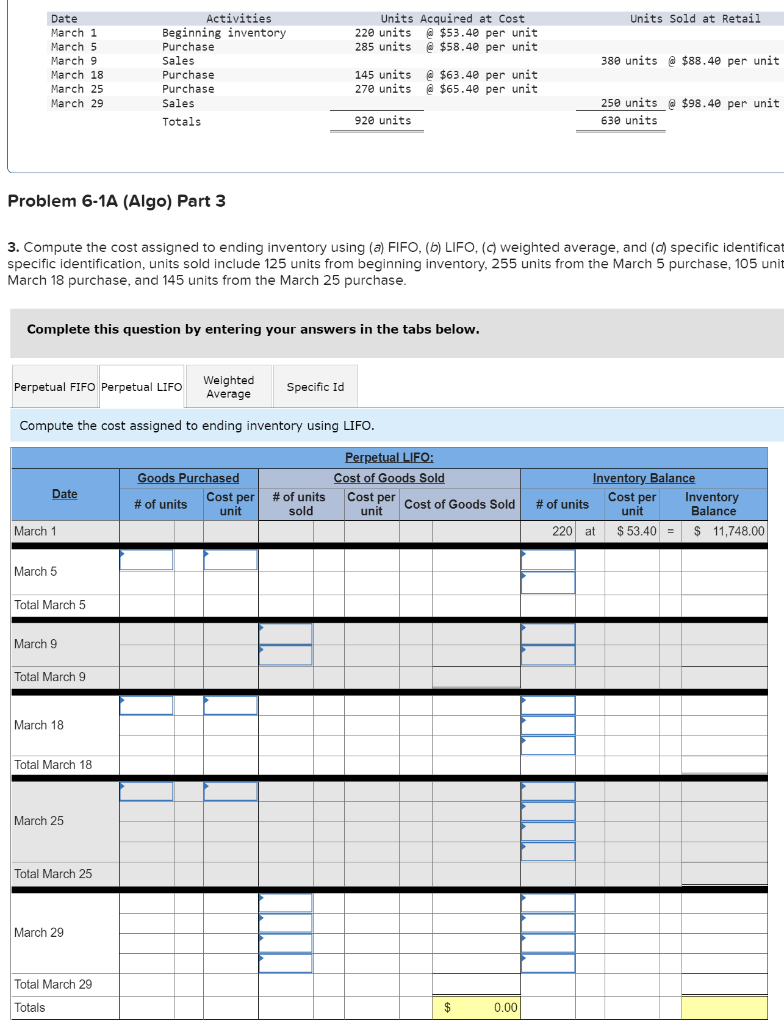
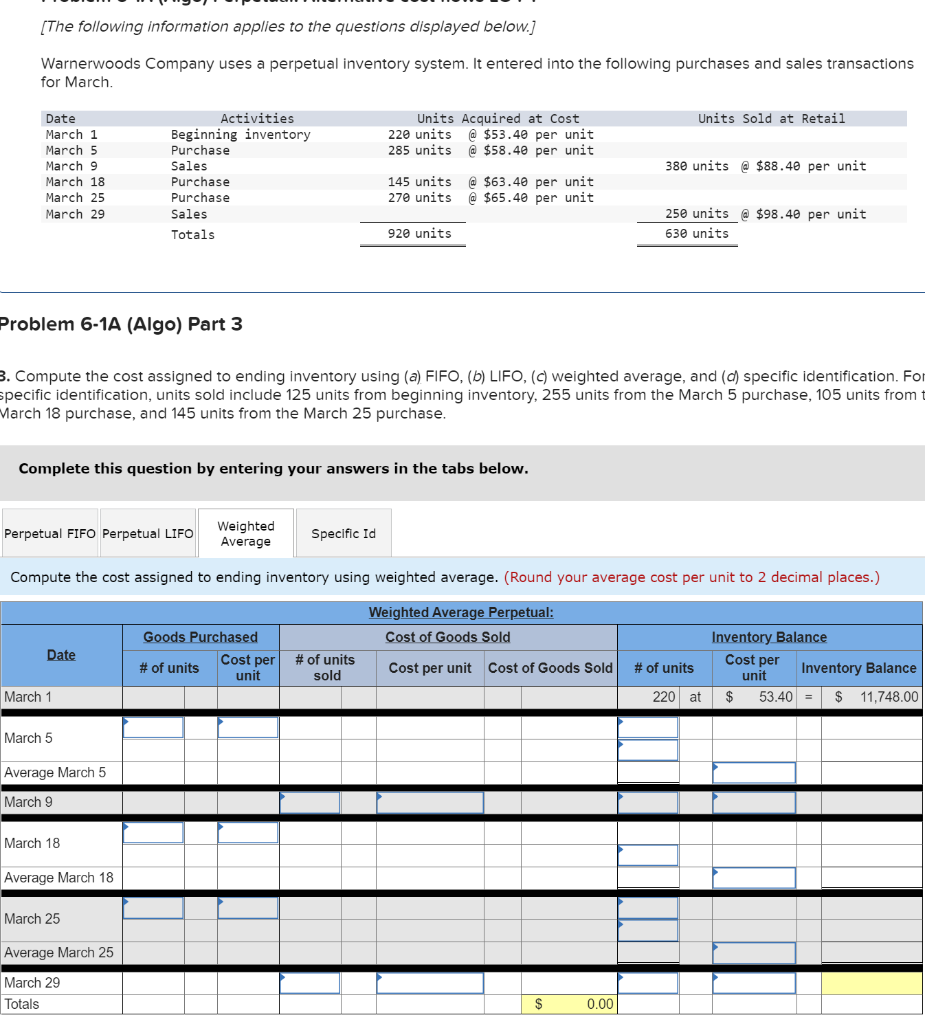
Laker Company reported the following January purchases and sales data for its only product. The Company uses a perpetual inventory system. For specific identification, ending inventory consists of 385 units from the January 30 purchase, 5 units from the January 20 purchase, and 25 units from beginning inventory. Units sold at Retail Units Acquired at Cost 235 units @ $ 16.00 = $ 3,760 185 units @ $ 25.00 Date January 1 January 10 January 20 January 25 January 30 Activities Beginning inventory Sales Purchase Sales Purchase Totals 180 units @ $ 15.00 = 2,700 200 units @ $ 25.00 @ $ 13.00 = 385 units 800 units 5,005 $ 11,465 385 units rcise 6-3 (Algo) Perpetual: Inventory costing methods LO P1 uired: omplete the table to determine the cost assigned to ending inventory and cost of goods sold using specific identificatio etermine the cost assigned to ending inventory and to cost of goods sold using weighted average. etermine the cost assigned to ending inventory and to cost of goods sold using FIFO. etermine the cost assigned to ending inventory and to cost of goods sold using LIFO. omplete this question by entering your answers in the tabs below. pecific Id Weighted Average FIFO LIFO termine the cost assigned to ending inventory and to cost of goods sold using FIFO. Perpetual FIFO: Cost of Goods Sold # of units Cost per Cost of Goods sold unit Sold Goods Purchased # of units Cost per unit Date Inventory Balance Cost per Inventory Balance unit # of units uary 1 235 at $ 16.00 = $ 3,760.00 uary 10 185 at $ 16.00 = $ 2,960.00 50 at $ 16.00 = $ 800.00 180 at $ 15.00 at $ 16.00 uary 20 at $ 15.00 al January 20 muary 25 al January 25 385 at $ 13.00 uary 30 at $ 13.00 als Laker Company reported the following January purchases and sales data for its only product. The Company uses a perpetual Inventory system. For specific identification, ending inventory consists of 385 units from the January 30 purchase, 5 units from the January 20 purchase, and 25 units from beginning inventory. Units sold at Retail Units Acquired at Cost 235 units @ $ 16.00 = $ 3,76 185 units @ $ 25.00 Date January 1 January 10 January 20 January 25 January 30 Activities Beginning inventory Sales Purchase Sales Purchase Totals 180 units @ $15.00 = 2,700 200 units @ $ 25.ee @ $ 13.00 = 385 units 800 units 5,005 $ 11,465 385 units ercise 6-3 (Algo) Perpetual: Inventory costing methods LO P1 quired: Complete the table to determine the cost assigned to ending inventory and cost of goods sold using specific identification Determine the cost assigned to ending inventory and to cost of goods sold using weighted average. Determine the cost assigned to ending inventory and to cost of goods sold using FIFO. Determine the cost assigned to ending inventory and to cost of goods sold using LIFO. Complete this question by entering your answers in the tabs below. Specific Id Weighted Average FIFO LIFO etermine the cost assigned to ending inventory and to cost of goods sold using LIFO. Perpetual LIFO: Cost of Goods Sold # of units Cost per Cost of Goods sold unit Sold Date Goods Purchased # of units Cost per unit Inventory Balance Cost per unit Inventory Balance # of units nuary 1 235 at $ 16.00 = $ 3,760.00 nuary 10 nuary 20 tal January 20 nuary 25 tal January 25 nuary 30 tals Date Units Sold at Retail Units Acquired at Cost 220 units @ $53.40 per unit 285 units @ $58.40 per unit 380 units @ $88.40 per unit March 1 March 5 March 9 March 18 March 25 March 29 Activities Beginning inventory Purchase Sales Purchase Purchase Sales Totals 145 units 270 units @ $63.40 per unit @ $65.40 per unit 250 units @ $98.40 per unit 630 units 920 units lem 6-1A (Algo) Part 3 mpute the cost assigned to ending inventory using (a) FIFO, (b) LIFO, (C) weighted average, and (d) specific identificat fic identification, units sold include 125 units from beginning inventory, 255 units from the March 5 purchase, 105 unit 18 purchase, and 145 units from the March 25 purchase. mplete this question by entering your answers in the tabs below. tual FIFO Perpetual LIFO Weighted Average Specific Id pute the cost assigned to ending inventory using FIFO. Perpetual FIFO: Cost of Goods Sold Cost per Cost of Goods Sold unit Goods Purchased Cost per # of units unit Date # of units sold Inventory Balance Cost per Inventory # of units unit Balance 220 at $53.40 = $ 11,748.00 1 75 March 5 19 March 9 18 March 18 25 March 25 29 March 29 S 0.00 Units Sold at Retail Date March 1 March 5 March 9 March 18 March 25 March 29 Activities Beginning inventory Purchase Sales Purchase Purchase Sales Totals Units Acquired at Cost 220 units @ $53.40 per unit 285 units @ $58.40 per unit 145 units @ $63.42 per unit 270 units @ $65.40 per unit 380 units @ $88.40 per unit 250 units @ $98.40 per unit 630 units 920 units Problem 6-1A (Algo) Part 3 3. Compute the cost assigned to ending inventory using (a) FIFO, (6) LIFO, (c) weighted average, and (d) specific identificat specific identification, units sold include 125 units from beginning inventory, 255 units from the March 5 purchase, 105 unit March 18 purchase, and 145 units from the March 25 purchase. Complete this question by entering your answers in the tabs below. Perpetual FIFO Perpetual LIFO Weighted Average Specific Id Compute the cost assigned to ending inventory using LIFO. Perpetual LIFO: Cost of Goods Sold # of units Cost per sold unit Cost of Goods Sold Goods Purchased Cost per # of units unit Date Inventory Balance Cost per Inventory # of units unit Balance 220 at $53.40 = $ 11,748.00 March 1 March 5 Total March 5 March 9 Total March 9 March 18 Total March 18 March 25 Total March 25 March 29 Total March 29 Totals $ 0.00 [The following information applies to the questions displayed below.] Warnerwoods Company uses a perpetual inventory system. It entered into the following purchases and sales transactions for March Units Sold at Retail Units Acquired at Cost 220 units @ $53.40 per unit 285 units @ $58.40 per unit Date March 1 March 5 March 9 March 18 March 25 March 29 380 units @ $88.40 per unit Activities Beginning inventory Purchase Sales Purchase Purchase Sales Totals 145 units 270 units @ $63.40 per unit @ $65.40 per unit 250 units @ $98.40 per unit 630 units 920 units Problem 6-1A (Algo) Part 3 3. Compute the cost assigned to ending inventory using (a) FIFO, (6) LIFO, (C) weighted average, and (d) specific identification. For specific identification, units sold include 125 units from beginning inventory, 255 units from the March 5 purchase, 105 units from March 18 purchase, and 145 units from the March 25 purchase. Complete this question by entering your answers in the tabs below. Perpetual FIFO Perpetual LIFO Weighted Average Specific Id Compute the cost assigned to ending inventory using weighted average. (Round your average cost per unit to 2 decimal places.) Weighted Average Perpetual: Cost of Goods Sold Inventory Balance Date Goods Purchased Cost per # of units unit # of units sold Cost per unit Cost of Goods Sold # of units Cost per unit Inventory Balance March 1 220 at $ 53.40 = $ 11,748.00 March 5 Average March 5 March 9 March 18 Average March 18 March 25 Average March 25 March 29 Totals $ 0.00
Step by Step Solution
There are 3 Steps involved in it

Get step-by-step solutions from verified subject matter experts