







Question: complied the code: #include // needed for getchar() function. #include // needed for logarithmic function. #define PI 3.1415926535897932384 // pi to 20 significant figures (source:
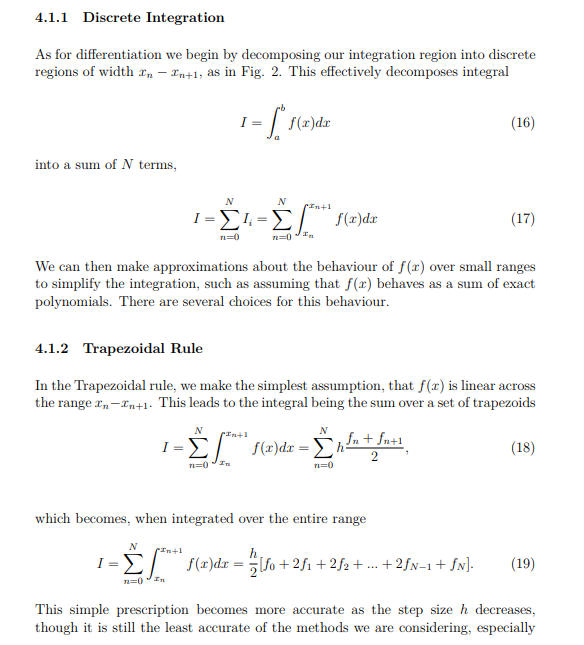
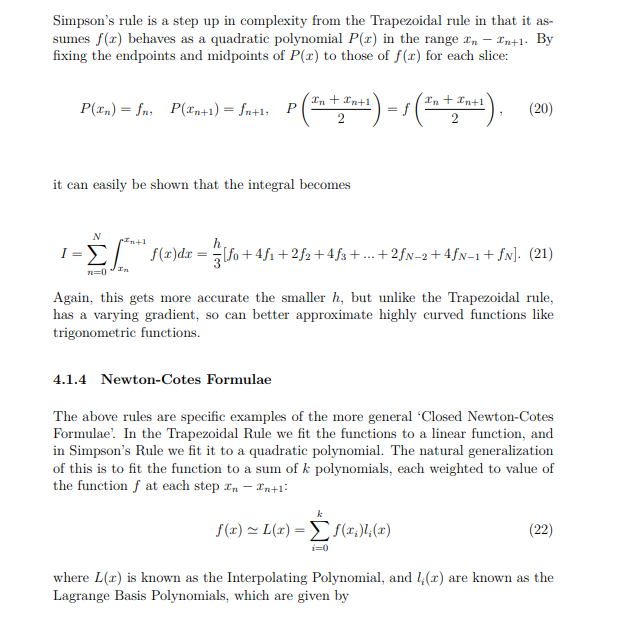
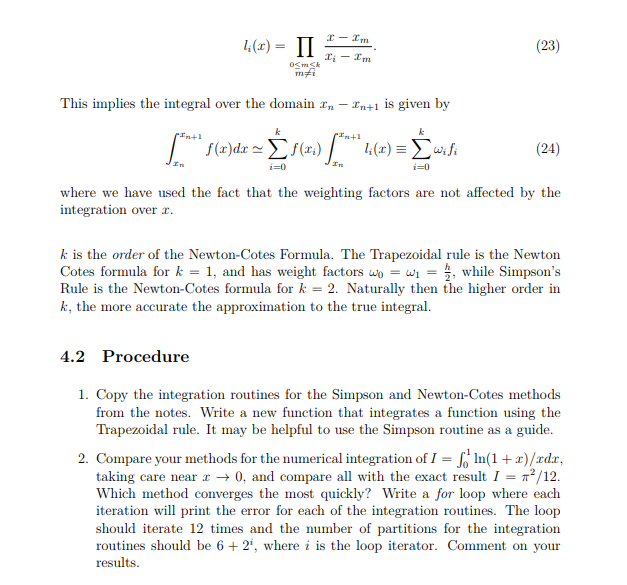
complied the code:
#include // needed for getchar() function. #include // needed for logarithmic function. #define PI 3.1415926535897932384 // pi to 20 significant figures (source: wolfram alpha). double integrateTrapezoidal( double left_bound, double right_bound, int n_partitions ); double integrateSimpson( double left_bound, double right_bound, int n_partitions ); double newtonCotesDegree3( double left_bound, double right_bound, int n_partitions ); double my_function( double x ); void main() { double analyticResult = PI * PI / 12.0; // Write a for loop to print and compare the error between the trapezoidal and Simpson rules for various numbers of partitions. // You can use the function pow( base, exponent ) for exponentiation. getchar(); return; } double integrateTrapezoidal( double left_bound, double right_bound, int n_partitions ) { // Complete the trapezoidal method code here. // The idea is to add all of the terms in the series to a current_sum (initially defined as zero) variable. // Note: There is no need to add code to force n_partitions to be a multiple of some number like there is for // the integrateSimpson and newtonCotesDegree3 functions. } double integrateSimpson( double left_bound, double right_bound, int n_partitions ) { if (n_partitions Step by Step Solution
There are 3 Steps involved in it
1 Expert Approved Answer
Step: 1 Unlock

Question Has Been Solved by an Expert!
Get step-by-step solutions from verified subject matter experts
Step: 2 Unlock
Step: 3 Unlock
 Study Help