







Question: concatenate Implement a method which takes two LinkedIntLists as input and returns a new list containing all the items of the first followed by all
concatenate
Implement a method which takes two LinkedIntLists as input and returns a new list containing all the items of the first followed by all the items of the second. Don't modify the input lists; use the new keyword to create new objects instead. Your implementation should run in linear time i.e. without the use of nested for-loops.
list1: front ? 1 ? 2 ? 3 ? /list2: front ? 4 ? 5 ? 6 ? /If you made the call concatenate(list1, list2), then it should return a new list:
return: front ? 1 ? 2 ? 3 ? 4 ? 5 ? 6 ? /and list1 and list2 would remain unchanged:
list1: front ? 1 ? 2 ? 3 ? /list2: front ? 4 ? 5 ? 6 ? /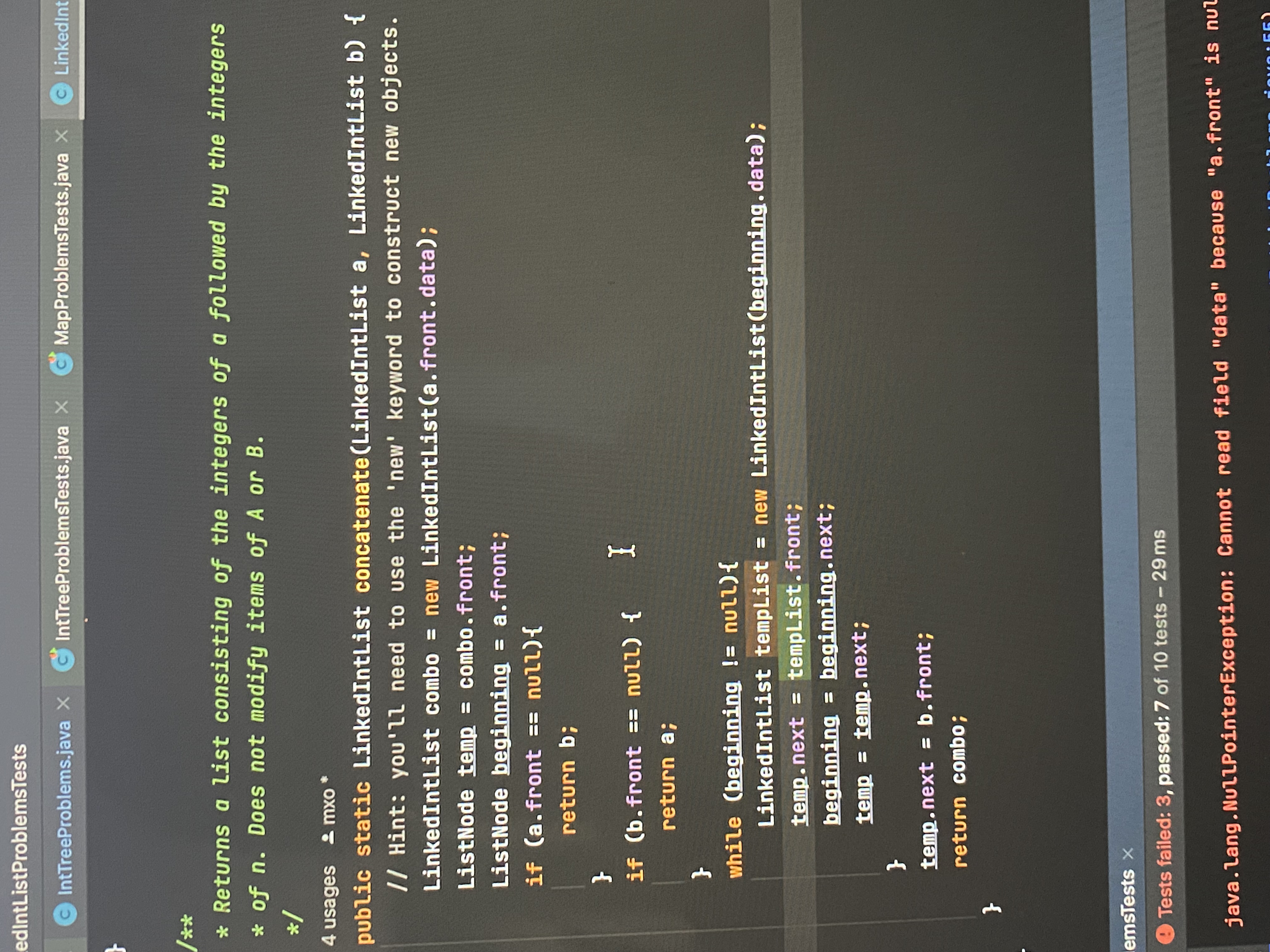
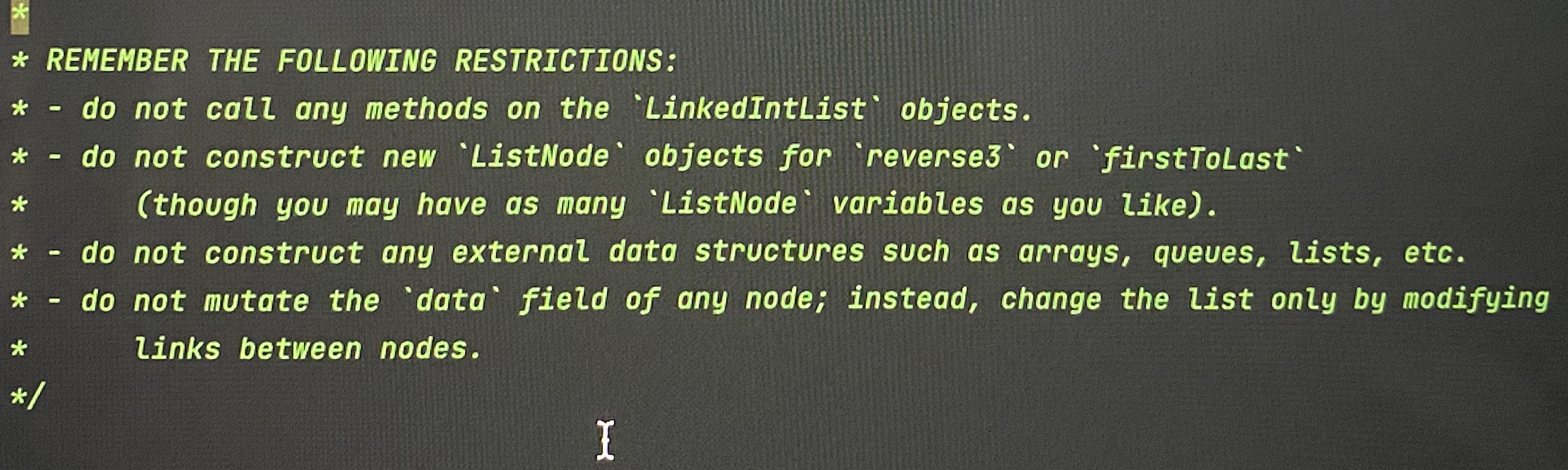
edintListProblemsTests IntTreeProblems.java X IntTreeProblemsTests.java X MapProblemsTests.java X LinkedIn /** * Returns a list consisting of the integers of a followed by the integers * of n. Does not modify items of A or B. */ 4 usages _ mxo* public static LinkedIntList concatenate (LinkedIntList a, LinkedIntList b) { // Hint: you'll need to use the 'new' keyword to construct new objects. LinkedIntList combo = new LinkedIntList(a. front. data) ; ListNode temp = combo . front; ListNode beginning = a. front; if (a. front == null) { return b; if (b. front == null) { { return a; while (beginning != null) { LinkedIntList tempList = new LinkedIntList (beginning. data); temp. next = tempList. front; beginning = beginning. next; temp = temp. next; temp. next = b. front; return combo; emsTests x O Tests failed: 3, passed: 7 of 10 tests - 29ms java . lang. NullPointerException: Cannot read field "data" because "a. front" is nutE * REMEMBER THE FOLLOWING RESTRICTIONS: - do not call any methods on the 'LinkedIntList' objects. - do not construct new 'ListNode' objects for 'reverses' or 'firstToLast' (though you may have as many 'ListNode' variables as you like). do not construct any external data structures such as arrays, queues, lists, etc. do not mutate the 'data' field of any node; instead, change the list only by modifying links between nodes
Step by Step Solution
There are 3 Steps involved in it

Get step-by-step solutions from verified subject matter experts
 Study Help