Question: Conflict tends to be lower when organizations created clear rules and procedures. O True O False p CASE: Two divisions in Quality Plus Company produce
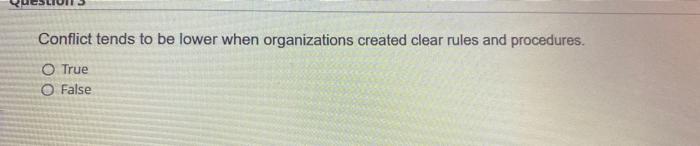

Conflict tends to be lower when organizations
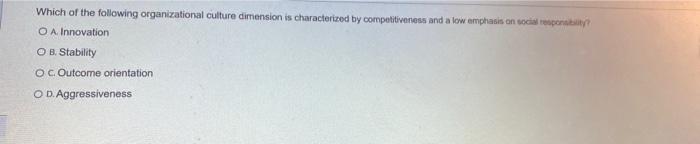
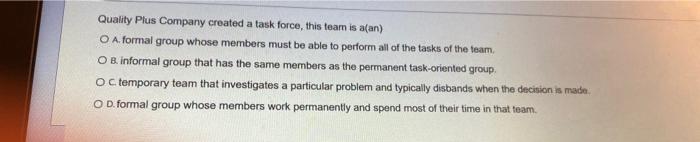
Conflict tends to be lower when organizations created clear rules and procedures. O True O False p CASE: Two divisions in Quality Plus Company produce completely different products but must seek funding from the same head office for a capital expansion project QUESTION: Which type of interdependence is presented in this case? For the toolbar You decided to apply the yielding style of conflict resolution that involves making no concessions and several conditional promises for the conting party O True O False The drive to bond and the dynamics of social identity theory both explain why people tend to ignore team norms whenever possible O True O False The storming stage is marked by interpersonal conflict as members become more proactive and compete for various team roles O True O False Which of the following organizational culture dimension is characterized by competitiveness and a low emphasis on social responsibility? OA. Innovation OB. Stability OC. Outcome orientation O D. Aggressiveness One advantage of countercultures is that they OA ensure that corporate mergers occur without any culture clashes. OB rarely exist in real organizations. OC. maintain surveillance over and critically review the company's dominant culture. OD. prevent organizations from developing a corporate culture. Quality Plus Company created a task force, this team is a(an) O A. formal group whose members must be able to perform all of the tasks of the team. OB. informal group that has the same members as the permanent task-oriented group. OC. temporary team that investigates a particular problem and typically disbands when the decision is made. O D. formal group whose members work permanently and spend most of their time in that team. How do norms affect the behavior of team members? OA They help the team regulate and guide the behaviors of its members. OB. They encourage the members to think out of the box and provide innovative solutions. OC. They encourage members to try new behaviors not previously sanctioned by the team. OD. They help the team move from the forming to storming stages of team development. Email and other forms of written digital communication tend to: O A reduce the volume of messages transmitted throughout the organization. OB increase status differences between the sender and receiver. OC reduce communication between executives and employees further down the hierarchy. O D. reduce stereotyping and prejudice between sender and receiver. Effective communication occurs when OA information is sent through informal rather than formal channels. OB. information is collected from various sources but sent to a limited audience. OC information is transmitted and understood between two or more people. O D. the sender convinces the receiver to accept the information sent

Step by Step Solution

There are 3 Steps involved in it

1 Expert Approved Answer
Step: 1 Unlock blur-text-image

Question Has Been Solved by an Expert!

Get step-by-step solutions from verified subject matter experts

Step: 2 Unlock
Step: 3 Unlock

Students Have Also Explored These Related General Management Questions!