



Question: Consider a many-to-one matching problem between two firms {fi(large), fs (small)} and three workers {j(junior 1), 2(junior 2), s(senior)}. The pref- erences are given
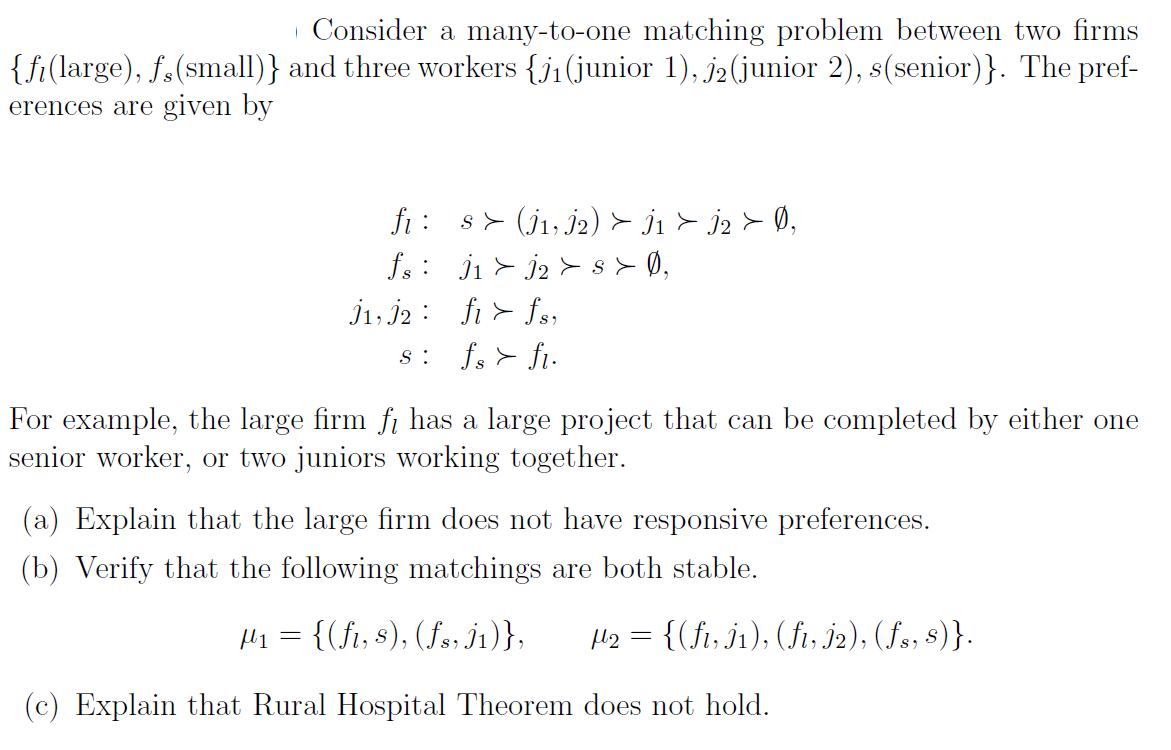
Consider a many-to-one matching problem between two firms {fi(large), fs (small)} and three workers {j(junior 1), 2(junior 2), s(senior)}. The pref- erences are given by fi: s (J1, 2) 1 > 2 > , fs: 11 12 s> 0, 11,12 f1 fs, S: fs > fi. For example, the large firm fi has a large project that can be completed by either one senior worker, or two juniors working together. (a) Explain that the large firm does not have responsive preferences. (b) Verify that the following matchings are both stable. P = {(fi, 8), (fs, j1)}, H = {(f, ), (f1, 12), (fs, s)}. (c) Explain that Rural Hospital Theorem does not hold.
Step by Step Solution
3.28 Rating (148 Votes )
There are 3 Steps involved in it
The image you have provided contains three parts of a question related to a manytoone matching problem between two firms and three workers with given preferences I will address each part separately a ... View full answer

Get step-by-step solutions from verified subject matter experts