







Question: Consider a variant of Example 2 shown in class. In this variant, only a tough player 2 has a dominant strategy: 1Tough 2 Consider a
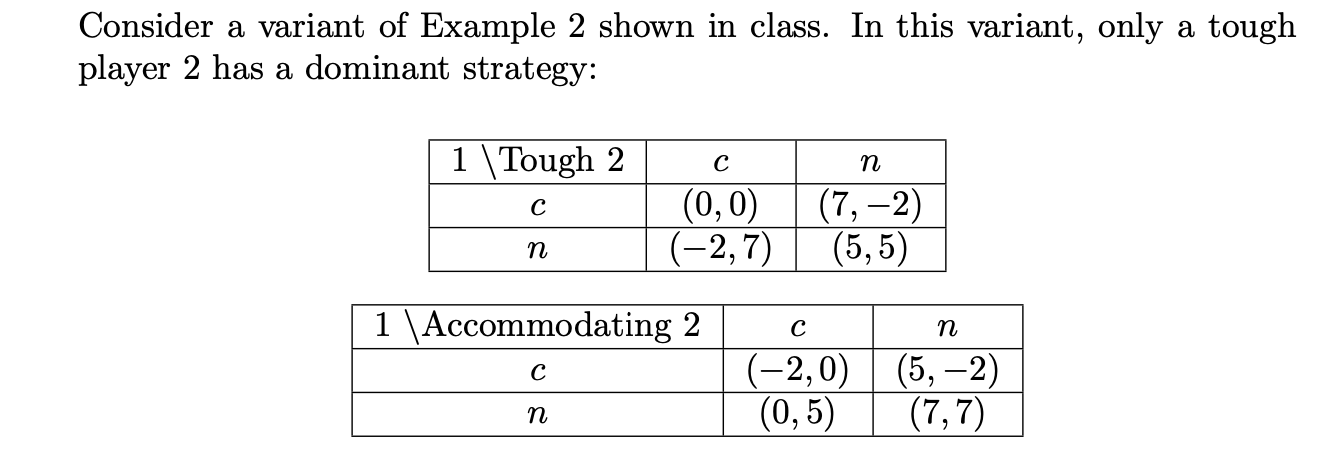

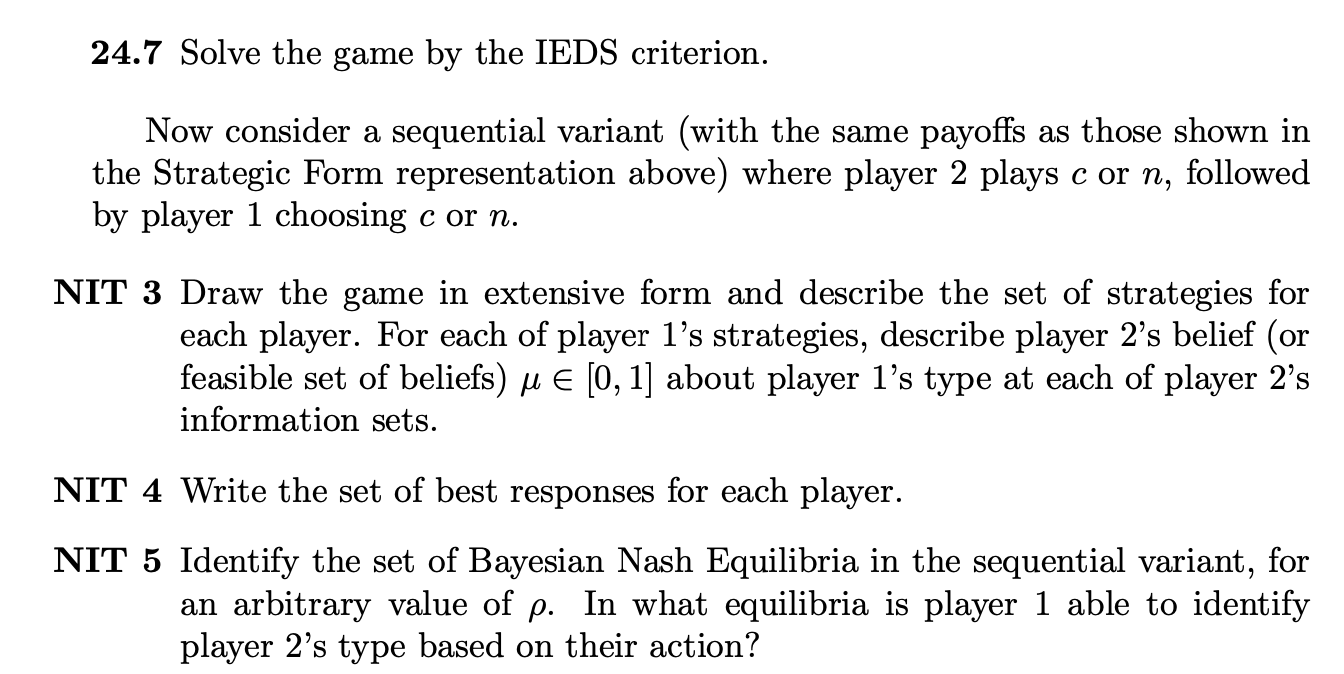
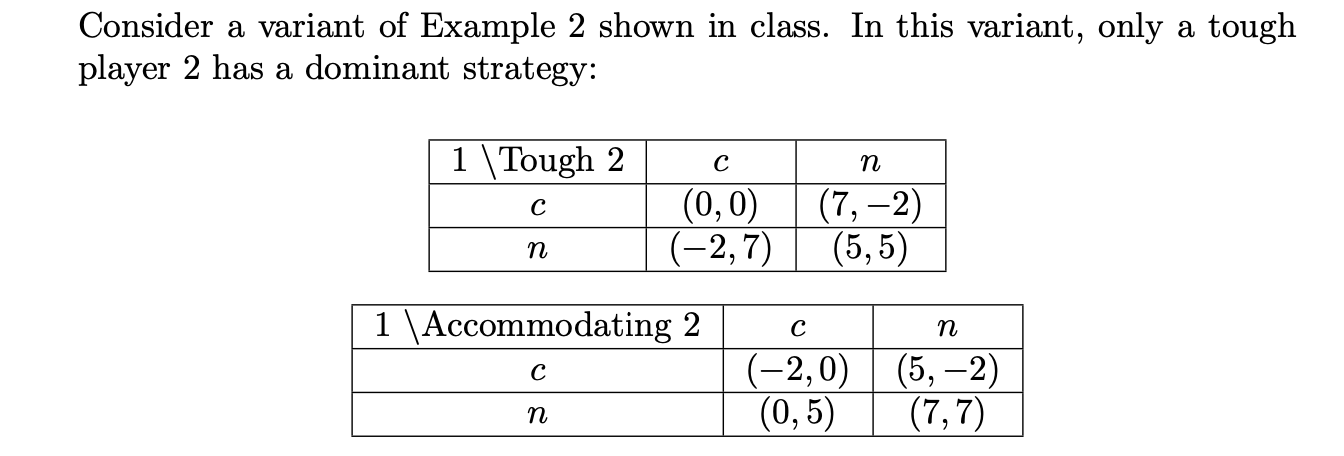

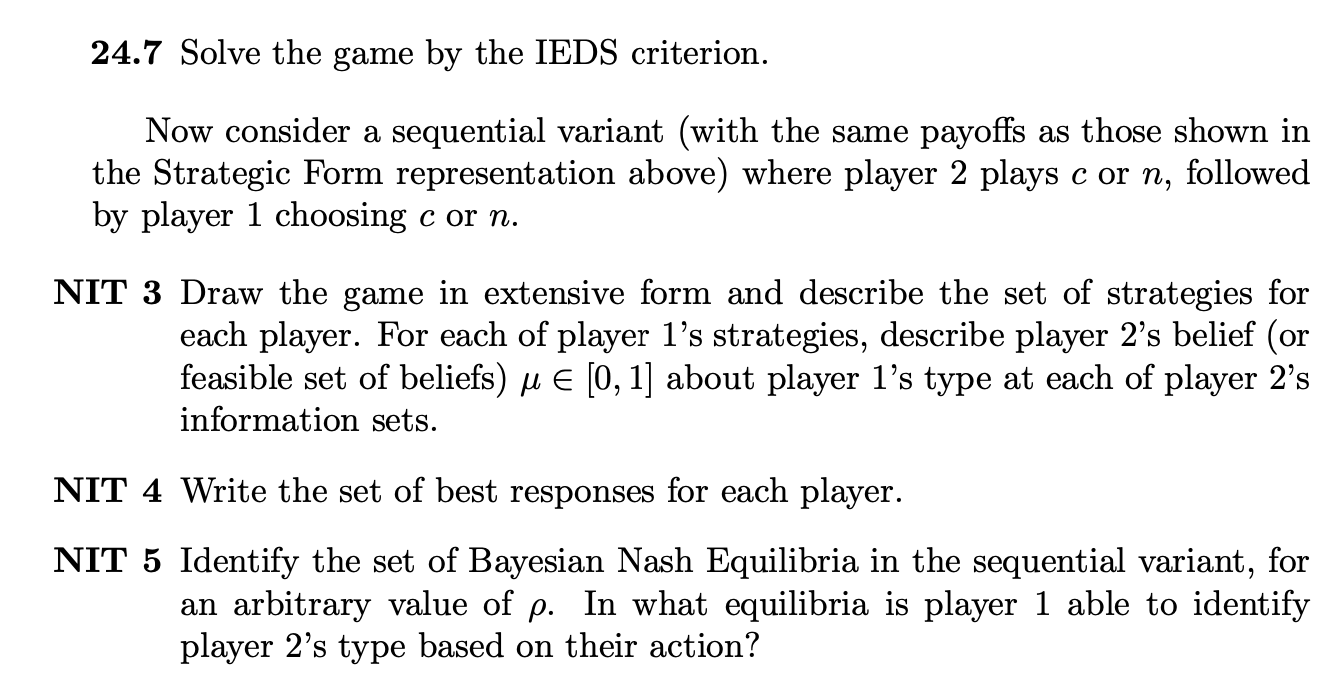
Consider a variant of Example 2 shown in class. In this variant, only a tough player 2 has a dominant strategy: 1\\Tough 2 Consider a modification to the above game such that the payoffs for (c, n) when player 2 is tough are (5, -2) and the payoffs for (n, n) when player 2 is tough are (7, 5).24.7 Solve the game by the IEDS criterion. Now consider a sequential variant (with the same payoffs as those shown in the Strategic Form representation above) where player 2 plays 0 or n, followed by player 1 choosing c or n. NIT 3 Draw the game in extensive form and describe the set of strategies for each player. For each of player 1's strategies, describe player 2's belief (or feasible set of beliefs) u E [0, 1] about player 1's type at each of player 2's information sets. NIT 4 Write the set of best responses for each player. NIT 5 Identify the set of Bayesian Nash Equilibria in the sequential variant, for an arbitrary value of p. In what equilibria is player 1 able to identify player 2's type based on their action
Step by Step Solution
There are 3 Steps involved in it

Get step-by-step solutions from verified subject matter experts
 Study Help