







Question: Consider an allocator that uses an implicit free list. The layout of each allocated and free memory block is as follows: Header Footer 3 1
Consider an allocator that uses an implicit free list. The layout of each allocated and free memory block is as follows:
Header
Footer
Block Size bytes
Block Size bytes
Each memory block, either allocated or free, has a size that is a multiple of eight bytes. Thus, only the higher order bits in the header and footer are needed to record block size, which includes the header and footer. The usage of the remaining lower order bits is as follows:
bit indicates the use of the current block: for allocated, for free.
bit indicates the use of the previous adjacent block: for allocated, for free.
bit is unused and is always set to be
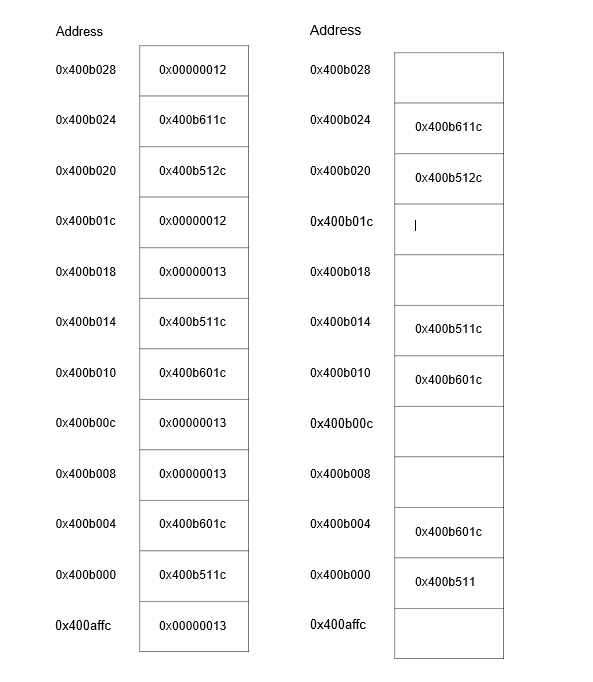
Given the contents of the heap shown on the next page, show the new contents of the heap in the right table after a call to freexb is executed. Your answers should be given as hex values. Note that the address grows from bottom up Assume that the allocator uses immediate coalescing, that is adjacent free blocks are merged immediately each time a block is freed.
Give a short explanation of your answer:
Step by Step Solution
There are 3 Steps involved in it
1 Expert Approved Answer
Step: 1 Unlock

Question Has Been Solved by an Expert!
Get step-by-step solutions from verified subject matter experts
Step: 2 Unlock
Step: 3 Unlock
 Study Help