







Question: Consider the data contained in the table below, which lists 30 monthly excess returns to two different actively managed stock portfolios (A and B) and
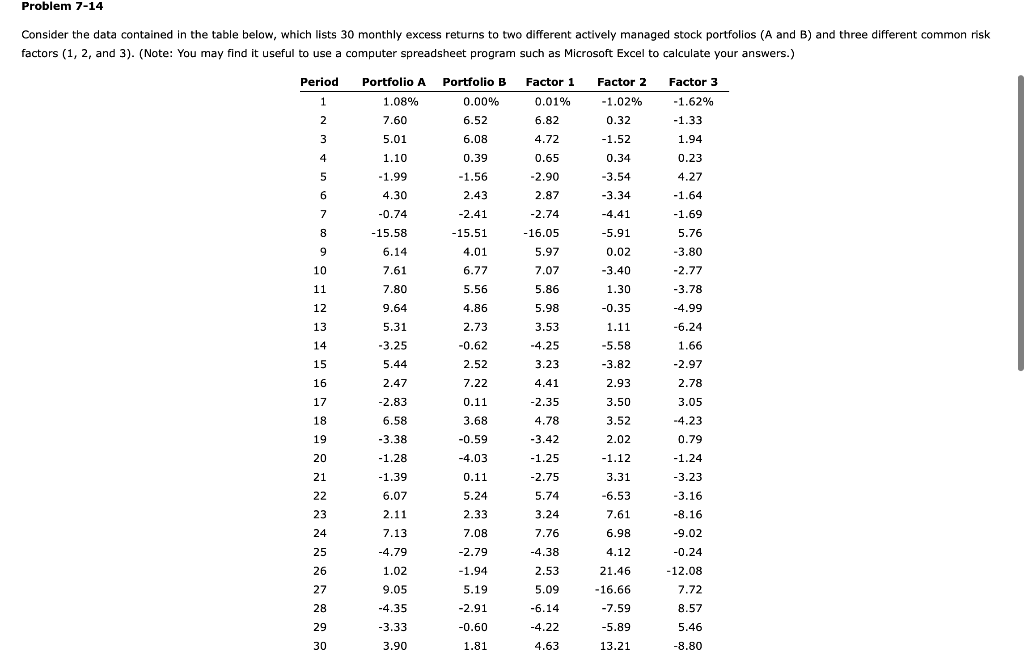
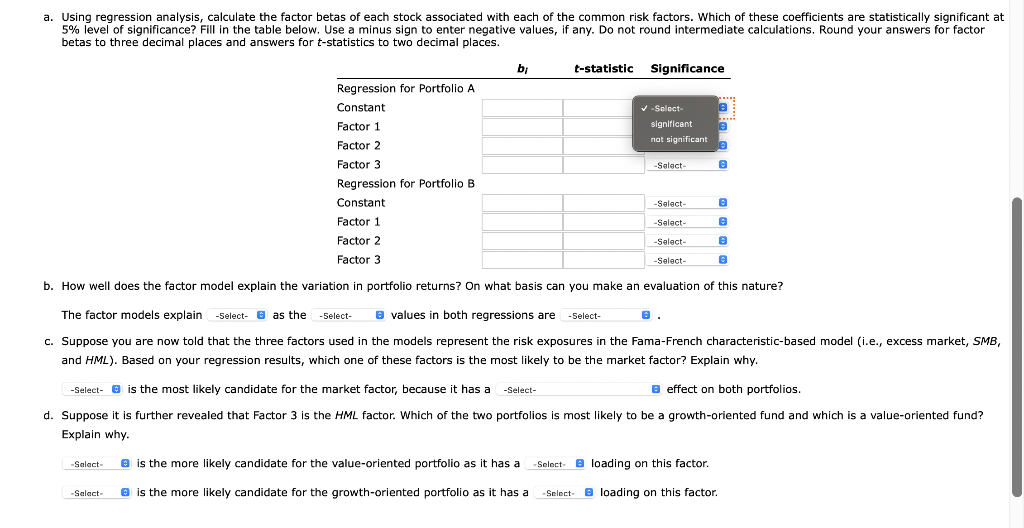
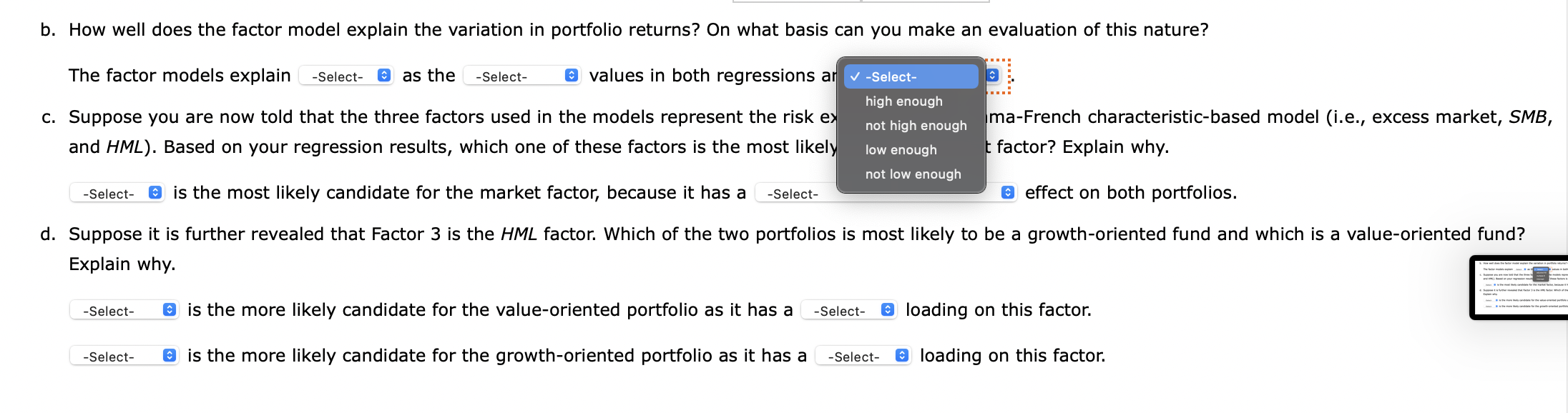
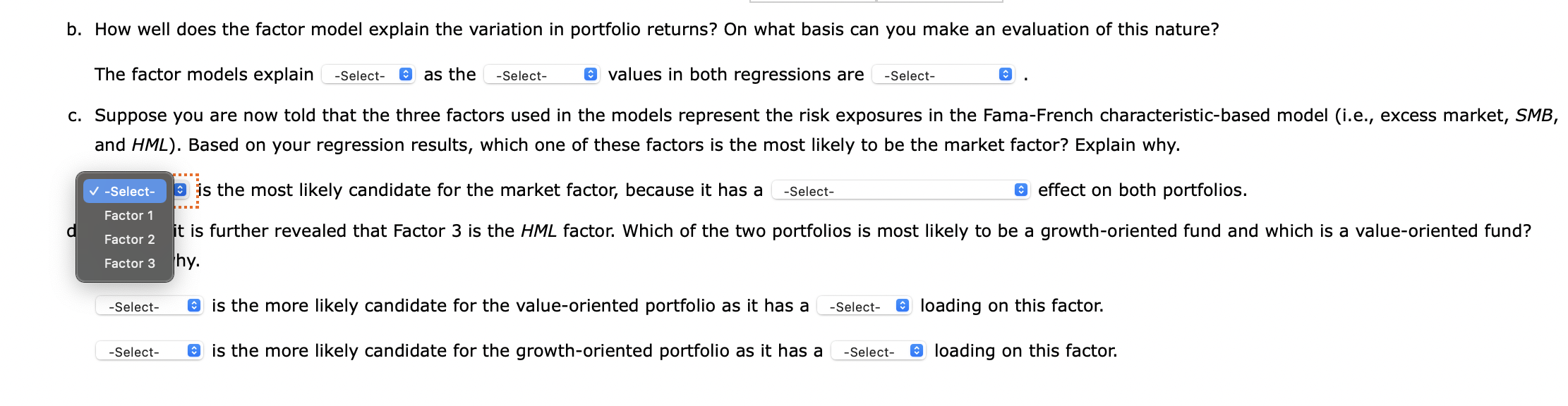
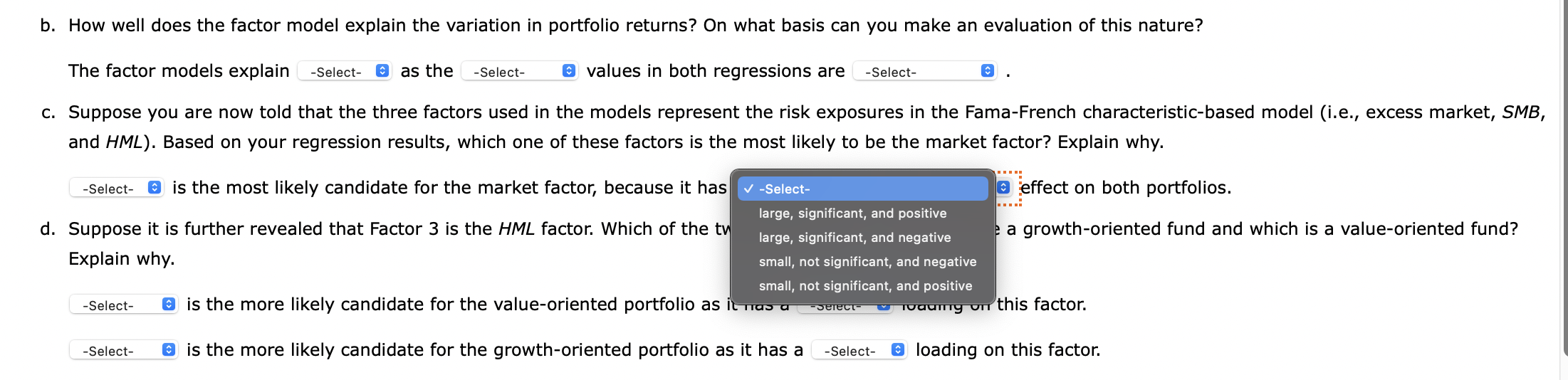

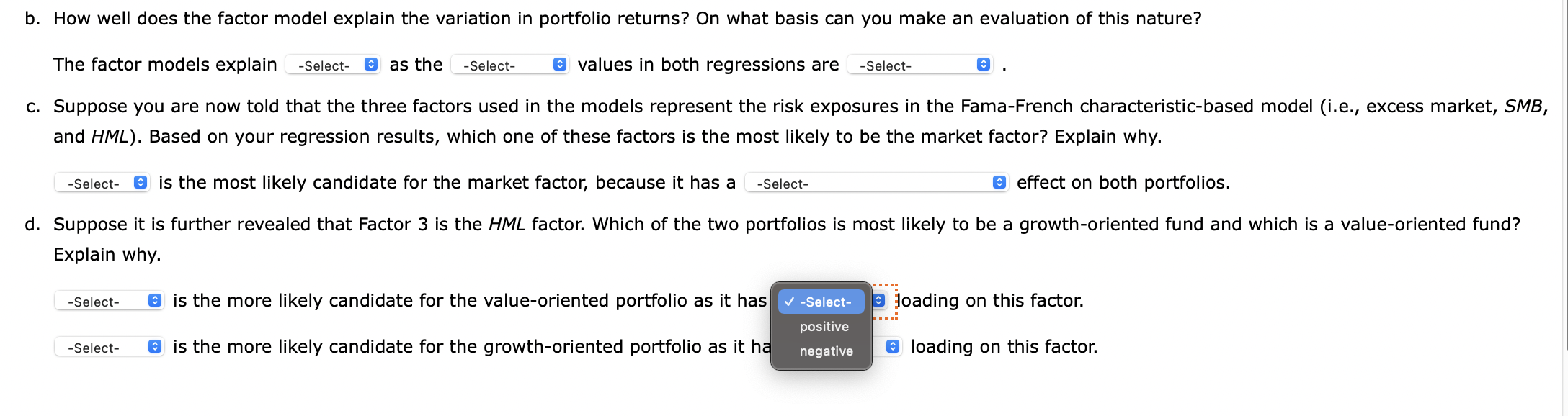
Consider the data contained in the table below, which lists 30 monthly excess returns to two different actively managed stock portfolios (A and B) and three different common risk factors ( 1,2 , and 3 ). (Note: You may find it useful to use a computer spreadsheet program such as Microsoft Excel to calculate your answers.) a. Using regression analysis, calculate the factor betas of each stock associated with each of the common risk factors. Which of these coefficients are statistically significant at 5% level of significance? Fill in the table below. Use a minus sign to enter negative values, if any. Do not round intermediate calculations. Round your answers for factor betas to three decimal places and answers for t-statistics to two decimal places. b. How well does the factor model explain the variation in portfolio returns? On what basis can you make an evaluation of this nature? The factor models explain as the values in both regressions are c. Suppose you are now told that the three factors used in the models represent the risk exposures in the Fama-French characteristic-based model (i.e., excess market, SMB, and HML ). Based on your regression results, which one of these factors is the most likely to be the market factor? Explain why. is the most likely candidate for the market factor, because it has a effect on both portfolios. d. Suppose it is further revealed that Factor 3 is the HML factor. Which of the two portfolios is most likely to be a growth-oriented fund and which is a value-oriented fund? Explain why. is the more likely candidate for the value-oriented portfolio as it has a loading on this factor. is the more likely candidate for the growth-oriented portfolio as it has a loading on this factor. b. How well does the factor model explain the variation in portfolio returns? On what basis can you make an evaluation of this nature? The factor models expla values in both regressions are c. Suppose you are now to the factors used in the models represent the risk exposures in the Fama-French characteristic-based model (i.e., excess market, SMB, and HML ). Based on your regression results, which one of these factors is the most likely to be the market factor? Explain why. is the most likely candidate for the market factor, because it has a effect on both portfolios. d. Suppose it is further revealed that Factor 3 is the HML factor. Which of the two portfolios is most likely to be a growth-oriented fund and which is a value-oriented fund? Explain why. is the more likely candidate for the value-oriented portfolio as it has a loading on this factor. is the more likely candidate for the growth-oriented portfolio as it has a loading on this factor. b. How well does the factor model explain the variation in portfolio returns? On what basis can you make an evaluation of this nature? The factor models explain as th c. Suppose you are now told that the three fa le models represent the risk exposures in the Fama-French characteristic-based model (i.e., excess market, SMB, and HML). Based on your regression result: these factors is the most likely to be the market factor? Explain why. is the most likely candidate for the market factor, because it has a effect on both portfolios. d. Suppose it is further revealed that Factor 3 is the HML factor. Which of the two portfolios is most likely to be a growth-oriented fund and which is a value-oriented fund? Explain why. is the more likely candidate for the value-oriented portfolio as it has a loading on this factor. is the more likely candidate for the growth-oriented portfolio as it has a loading on this factor. b. How well does the factor model explain the variation in portfolio returns? On what basis can you make an evaluation of this nature? The factor models explain as the values in both regressions a c. Suppose you are now told that the three factors used in the models represent the risk e: a--French characteristic-based model (i.e., excess market, SMB and HML ). Based on your regression results, which one of these factors is the most likel actor? Explain why. is the most likely candidate for the market factor, because it has a -select- effect on both portfolios. d. Suppose it is further revealed that Factor 3 is the HML factor. Which of the two portfolios is most likely to be a growth-oriented fund and is a value-oriented fund Explain why. is the more likely candidate for the value-oriented portfolio as it has a loading on this factor. is the more likely candidate for the growth-oriented portfolio as it has a loading on this factor. b. How well does the factor model explain the variation in portfolio returns? On what basis can you make an evaluation of this nature? The factor models explain as the values in both regressions are c. Suppose you are now told that the three factors used in the models represent the risk exposures in the Fama-French characteristic-based model (i.e., excess market, SMB, and HML ). Based on your regression results, which one of these factors is the most likely to be the market factor? Explain why. "is the most likely candidate for the market factor, because it has a effect on both portfolios. is further revealed that Factor 3 is the HML factor. Which of the two portfolios is most likely to be a growth-oriented fund and which is a value-oriented fund? 1. is the more likely candidate for the value-oriented portfolio as it has a loading on this factor. is the more likely candidate for the growth-oriented portfolio as it has a loading on this factor. b. How well does the factor model explain the variation in portfolio returns? On what basis can you make an evaluation of this nature? The factor models explain as the values in both regressions are c. Suppose you are now told that the three factors used in the models represent the risk exposures in the Fama-French characteristic-based model (i.e., excess market, SMB, and HML ). Based on your regression results, which one of these factors is the most likely to be the market factor? Explain why. is the most likely candidate for the market factor, because it has effect on both portfolios. d. Suppose it is further revealed that Factor 3 is the HML factor. Which of the tv a growth-oriented fund and which is a value-oriented fund? Explain why. is the more likely candidate for the value-oriented portfolio as it this factor. is the more likely candidate for the growth-oriented portfolio as it has a loading on this factor. b. How well does the factor model explain the variation in portfolio returns? On what basis can you make an evaluation of this nature? The factor models explain as the values in both regressions are c. Suppose you are now told that the three factors used in the models represent the risk exposures in the Fama-French characteristic-based model (i.e., excess market, SMB, and HML ). Based on your regression results, which one of these factors is the most likely to be the market factor? Explain why. is the most likely candidate for the market factor, because it has a effect on both portfolios. d. Suppose it is further revealed that Factor 3 is the HML factor. Which of the two portfolios is most likely to be a growth-oriented fund and which is a value-oriented fund? Explain why. is the more likely candidate for the value-oriented portfolio as it has a loading on this factor. is the more likely candidate for the growth-oriented portfolio as it has a loading on this factor. b. How well does the factor model explain the variation in portfolio returns? On what basis can you make an evaluation of this nature? The factor models explain as the values in both regressions are c. Suppose you are now told that the three factors used in the models represent the risk exposures in the Fama-French characteristic-based model (i.e., excess market, SMB, and HML ). Based on your regression results, which one of these factors is the most likely to be the market factor? Explain why. is the most likely candidate for the market factor, because it has a effect on both portfolios. d. Suppose it is further revealed that Factor 3 is the HML factor. Which of the two portfolios is most likely to be a growth-oriented fund and which is a value-oriented fund? Explain why. is the more likely candidate for the value-oriented portfolio as it has rading on this factor. is the more likely candidate for the growth-oriented portfolio as it hi loading on this factor. Consider the data contained in the table below, which lists 30 monthly excess returns to two different actively managed stock portfolios (A and B) and three different common risk factors ( 1,2 , and 3 ). (Note: You may find it useful to use a computer spreadsheet program such as Microsoft Excel to calculate your answers.) a. Using regression analysis, calculate the factor betas of each stock associated with each of the common risk factors. Which of these coefficients are statistically significant at 5% level of significance? Fill in the table below. Use a minus sign to enter negative values, if any. Do not round intermediate calculations. Round your answers for factor betas to three decimal places and answers for t-statistics to two decimal places. b. How well does the factor model explain the variation in portfolio returns? On what basis can you make an evaluation of this nature? The factor models explain as the values in both regressions are c. Suppose you are now told that the three factors used in the models represent the risk exposures in the Fama-French characteristic-based model (i.e., excess market, SMB, and HML ). Based on your regression results, which one of these factors is the most likely to be the market factor? Explain why. is the most likely candidate for the market factor, because it has a effect on both portfolios. d. Suppose it is further revealed that Factor 3 is the HML factor. Which of the two portfolios is most likely to be a growth-oriented fund and which is a value-oriented fund? Explain why. is the more likely candidate for the value-oriented portfolio as it has a loading on this factor. is the more likely candidate for the growth-oriented portfolio as it has a loading on this factor. b. How well does the factor model explain the variation in portfolio returns? On what basis can you make an evaluation of this nature? The factor models expla values in both regressions are c. Suppose you are now to the factors used in the models represent the risk exposures in the Fama-French characteristic-based model (i.e., excess market, SMB, and HML ). Based on your regression results, which one of these factors is the most likely to be the market factor? Explain why. is the most likely candidate for the market factor, because it has a effect on both portfolios. d. Suppose it is further revealed that Factor 3 is the HML factor. Which of the two portfolios is most likely to be a growth-oriented fund and which is a value-oriented fund? Explain why. is the more likely candidate for the value-oriented portfolio as it has a loading on this factor. is the more likely candidate for the growth-oriented portfolio as it has a loading on this factor. b. How well does the factor model explain the variation in portfolio returns? On what basis can you make an evaluation of this nature? The factor models explain as th c. Suppose you are now told that the three fa le models represent the risk exposures in the Fama-French characteristic-based model (i.e., excess market, SMB, and HML). Based on your regression result: these factors is the most likely to be the market factor? Explain why. is the most likely candidate for the market factor, because it has a effect on both portfolios. d. Suppose it is further revealed that Factor 3 is the HML factor. Which of the two portfolios is most likely to be a growth-oriented fund and which is a value-oriented fund? Explain why. is the more likely candidate for the value-oriented portfolio as it has a loading on this factor. is the more likely candidate for the growth-oriented portfolio as it has a loading on this factor. b. How well does the factor model explain the variation in portfolio returns? On what basis can you make an evaluation of this nature? The factor models explain as the values in both regressions a c. Suppose you are now told that the three factors used in the models represent the risk e: a--French characteristic-based model (i.e., excess market, SMB and HML ). Based on your regression results, which one of these factors is the most likel actor? Explain why. is the most likely candidate for the market factor, because it has a -select- effect on both portfolios. d. Suppose it is further revealed that Factor 3 is the HML factor. Which of the two portfolios is most likely to be a growth-oriented fund and is a value-oriented fund Explain why. is the more likely candidate for the value-oriented portfolio as it has a loading on this factor. is the more likely candidate for the growth-oriented portfolio as it has a loading on this factor. b. How well does the factor model explain the variation in portfolio returns? On what basis can you make an evaluation of this nature? The factor models explain as the values in both regressions are c. Suppose you are now told that the three factors used in the models represent the risk exposures in the Fama-French characteristic-based model (i.e., excess market, SMB, and HML ). Based on your regression results, which one of these factors is the most likely to be the market factor? Explain why. "is the most likely candidate for the market factor, because it has a effect on both portfolios. is further revealed that Factor 3 is the HML factor. Which of the two portfolios is most likely to be a growth-oriented fund and which is a value-oriented fund? 1. is the more likely candidate for the value-oriented portfolio as it has a loading on this factor. is the more likely candidate for the growth-oriented portfolio as it has a loading on this factor. b. How well does the factor model explain the variation in portfolio returns? On what basis can you make an evaluation of this nature? The factor models explain as the values in both regressions are c. Suppose you are now told that the three factors used in the models represent the risk exposures in the Fama-French characteristic-based model (i.e., excess market, SMB, and HML ). Based on your regression results, which one of these factors is the most likely to be the market factor? Explain why. is the most likely candidate for the market factor, because it has effect on both portfolios. d. Suppose it is further revealed that Factor 3 is the HML factor. Which of the tv a growth-oriented fund and which is a value-oriented fund? Explain why. is the more likely candidate for the value-oriented portfolio as it this factor. is the more likely candidate for the growth-oriented portfolio as it has a loading on this factor. b. How well does the factor model explain the variation in portfolio returns? On what basis can you make an evaluation of this nature? The factor models explain as the values in both regressions are c. Suppose you are now told that the three factors used in the models represent the risk exposures in the Fama-French characteristic-based model (i.e., excess market, SMB, and HML ). Based on your regression results, which one of these factors is the most likely to be the market factor? Explain why. is the most likely candidate for the market factor, because it has a effect on both portfolios. d. Suppose it is further revealed that Factor 3 is the HML factor. Which of the two portfolios is most likely to be a growth-oriented fund and which is a value-oriented fund? Explain why. is the more likely candidate for the value-oriented portfolio as it has a loading on this factor. is the more likely candidate for the growth-oriented portfolio as it has a loading on this factor. b. How well does the factor model explain the variation in portfolio returns? On what basis can you make an evaluation of this nature? The factor models explain as the values in both regressions are c. Suppose you are now told that the three factors used in the models represent the risk exposures in the Fama-French characteristic-based model (i.e., excess market, SMB, and HML ). Based on your regression results, which one of these factors is the most likely to be the market factor? Explain why. is the most likely candidate for the market factor, because it has a effect on both portfolios. d. Suppose it is further revealed that Factor 3 is the HML factor. Which of the two portfolios is most likely to be a growth-oriented fund and which is a value-oriented fund? Explain why. is the more likely candidate for the value-oriented portfolio as it has rading on this factor. is the more likely candidate for the growth-oriented portfolio as it hi loading on this factor
Step by Step Solution
There are 3 Steps involved in it

Get step-by-step solutions from verified subject matter experts
 Study Help