







Question: Consider the following assembly code for a function F2 with three integer arguments: Fl: push EBE mov EBP, ESP mov ECX, DWORD PTR [ebp+16] mov
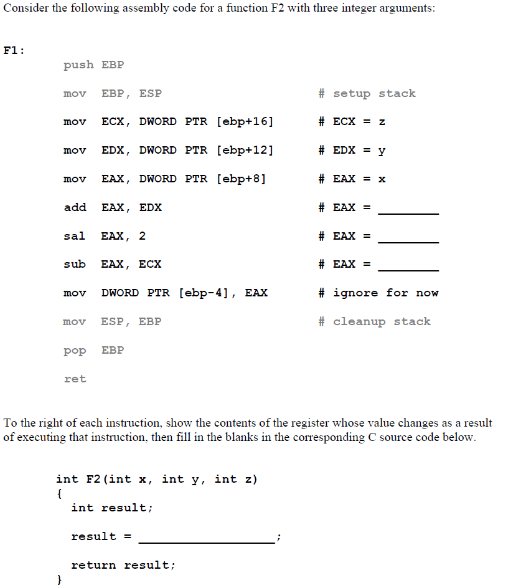
Consider the following assembly code for a function F2 with three integer arguments: Fl: push EBE mov EBP, ESP mov ECX, DWORD PTR [ebp+16] mov EDX, DWORD PTR [ebp+12] mov EAX, DWORD PTR [ebp+8] add EAX, EDX sal EAX, 2 sub EAX , ECX mov DWORD PTR [ebp-4], EAX mov ESP, EBP pop EBP # setup stack #EAX #EAX # ignore for now # cleanup stack ret To the right of each instruction, show the contents of the register whose value changes as a result of executing that instruction, then fill in the blanks in the corresponding C source code below int F2 (int x, int y, int z) int result; result- return result
Step by Step Solution
There are 3 Steps involved in it
1 Expert Approved Answer
Step: 1 Unlock

Question Has Been Solved by an Expert!
Get step-by-step solutions from verified subject matter experts
Step: 2 Unlock
Step: 3 Unlock
 Study Help