







Question: Consider the following class definition: public class Widget { private int value; public Widget (int val) { value = val; public int get (){ return
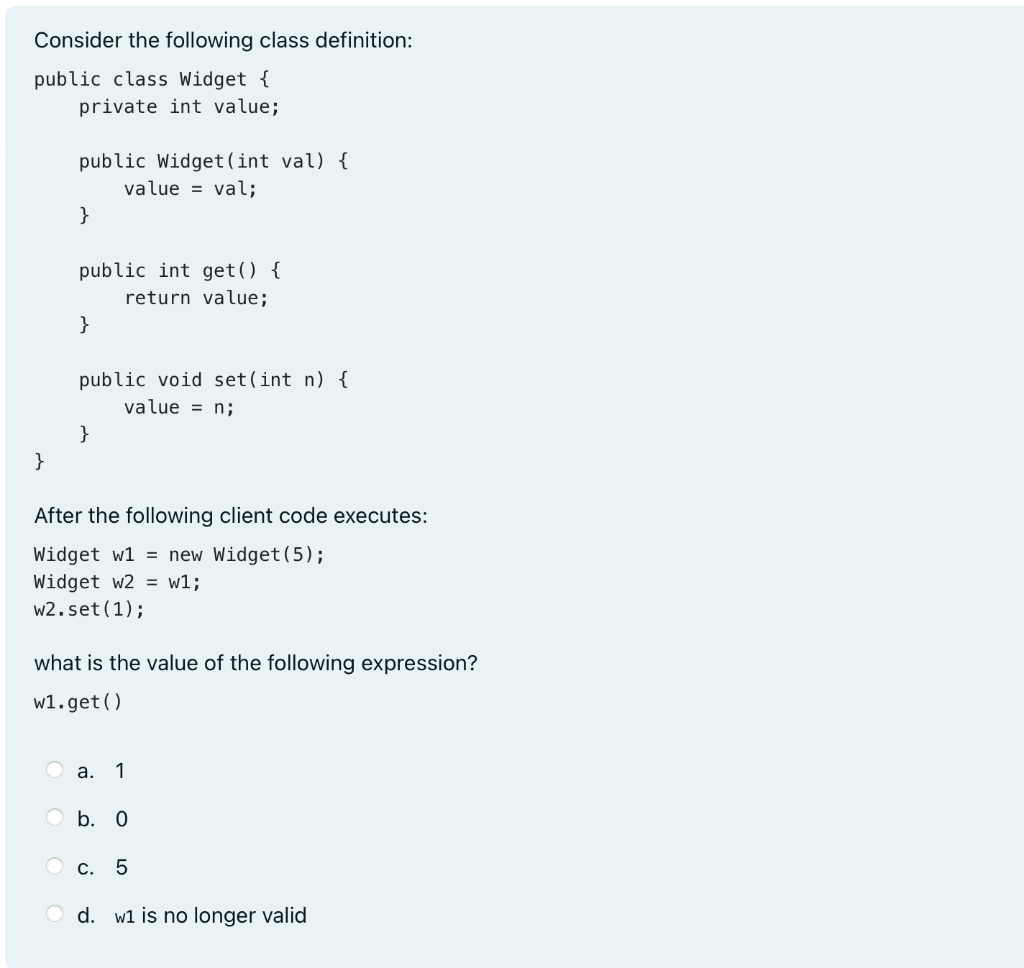
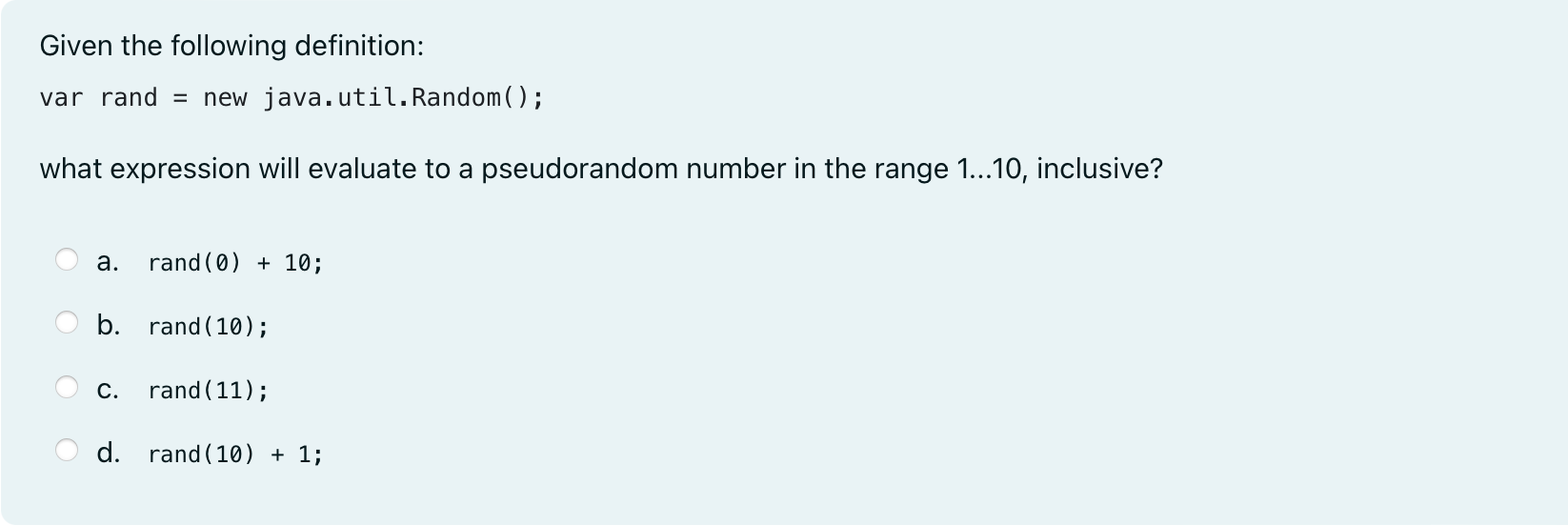
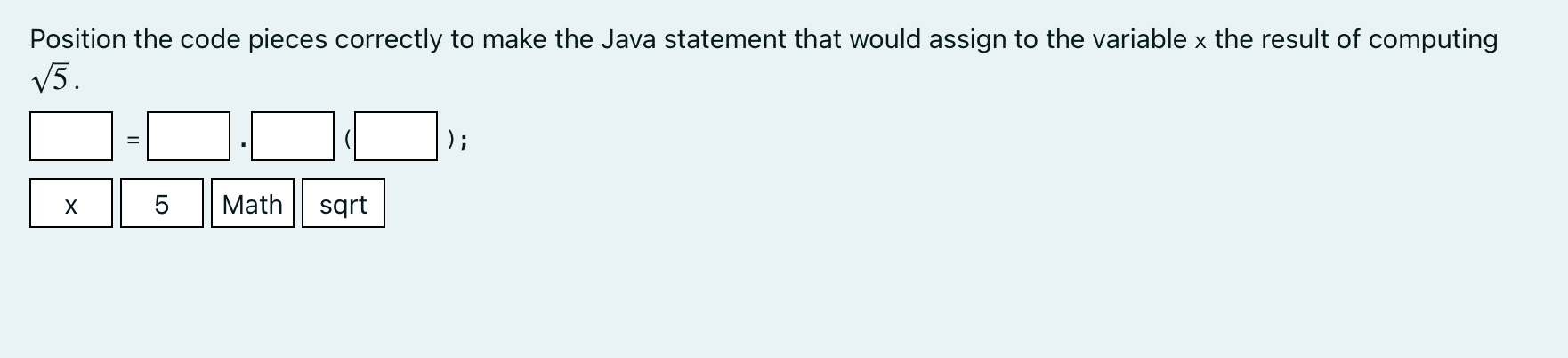
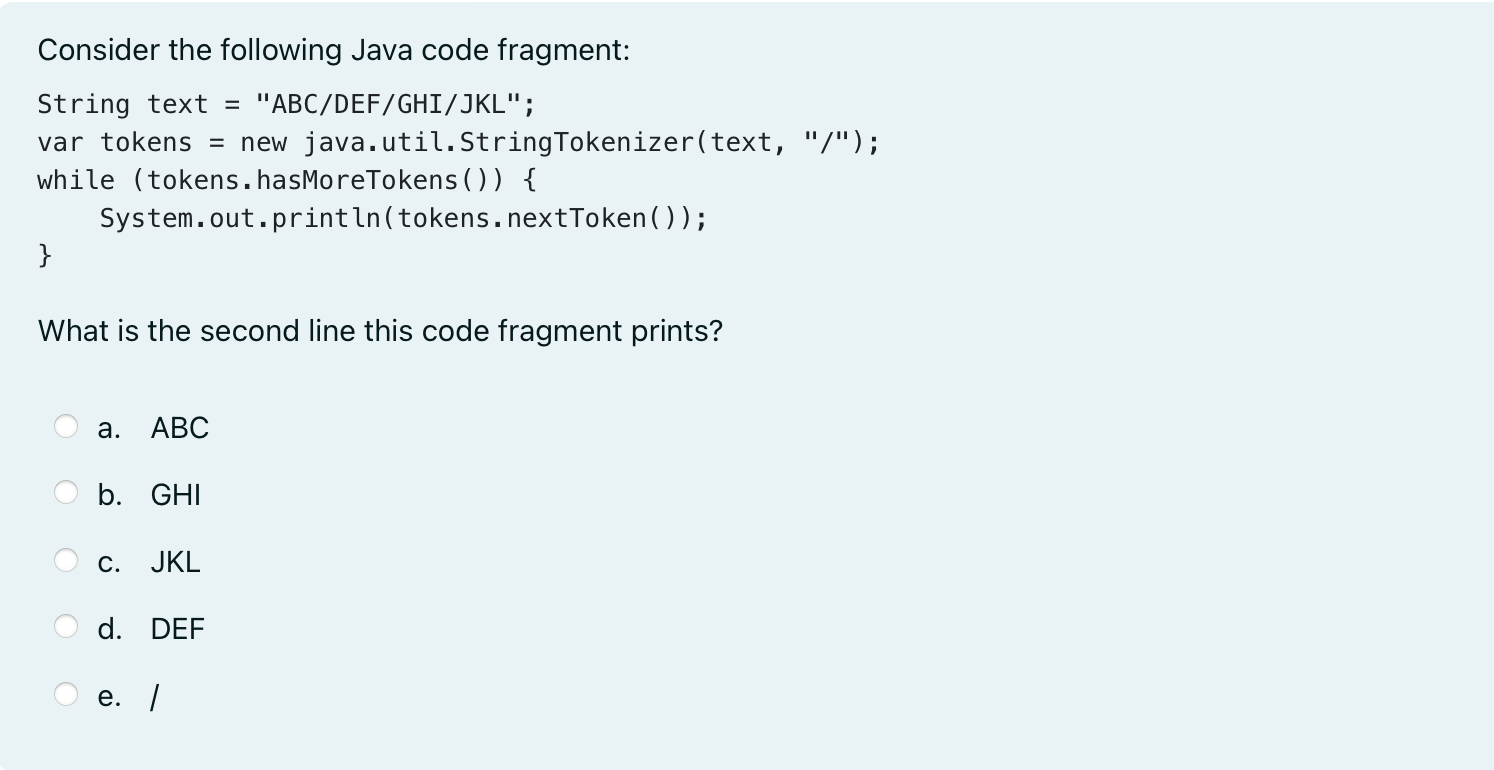
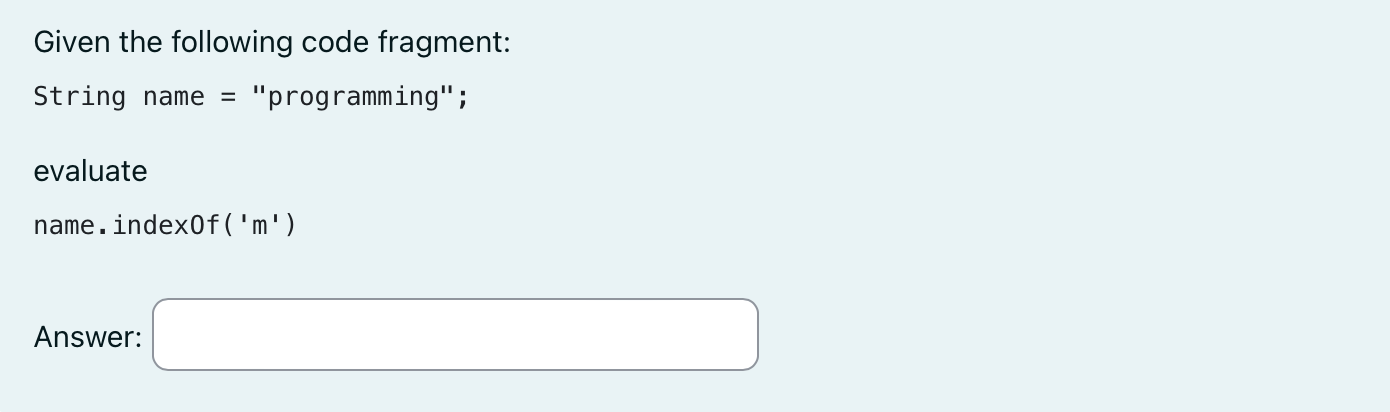
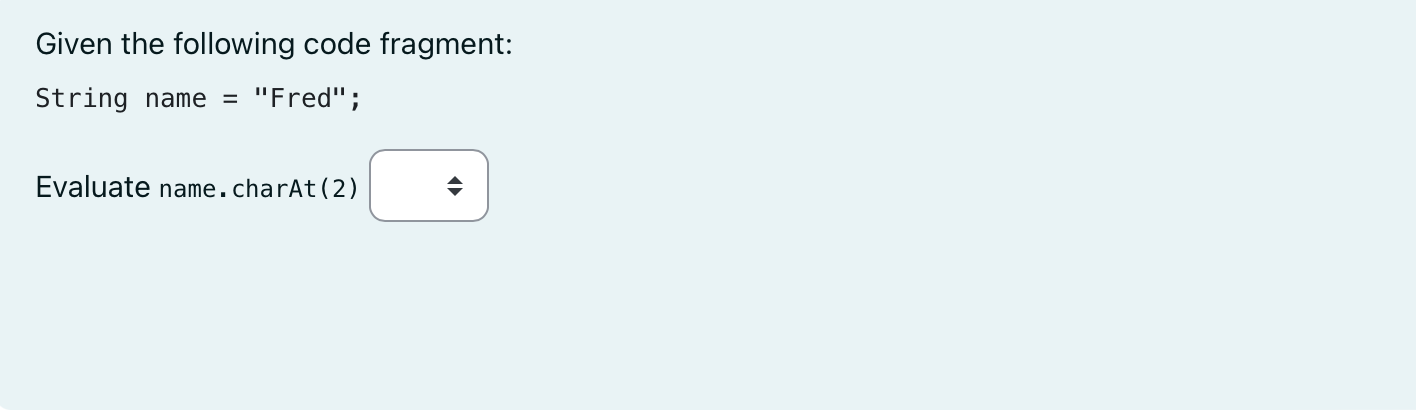
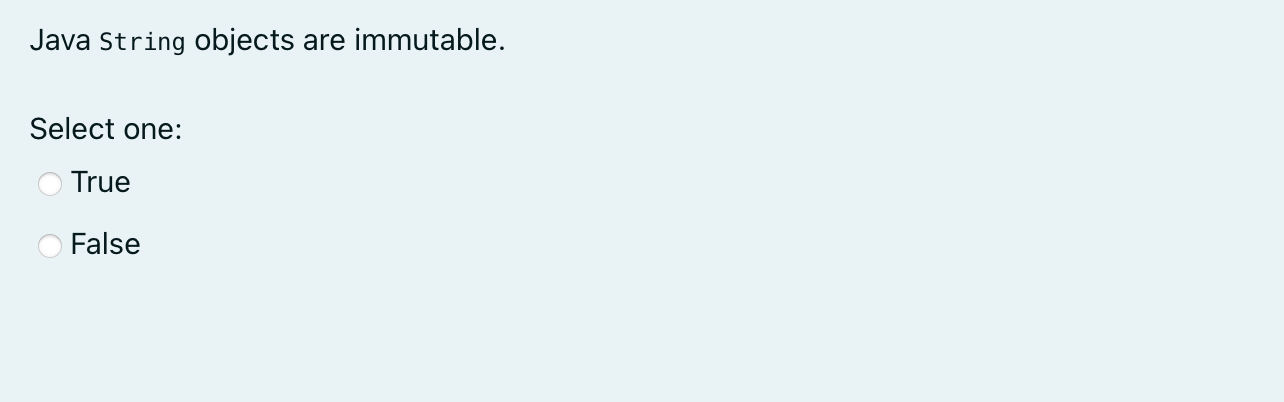
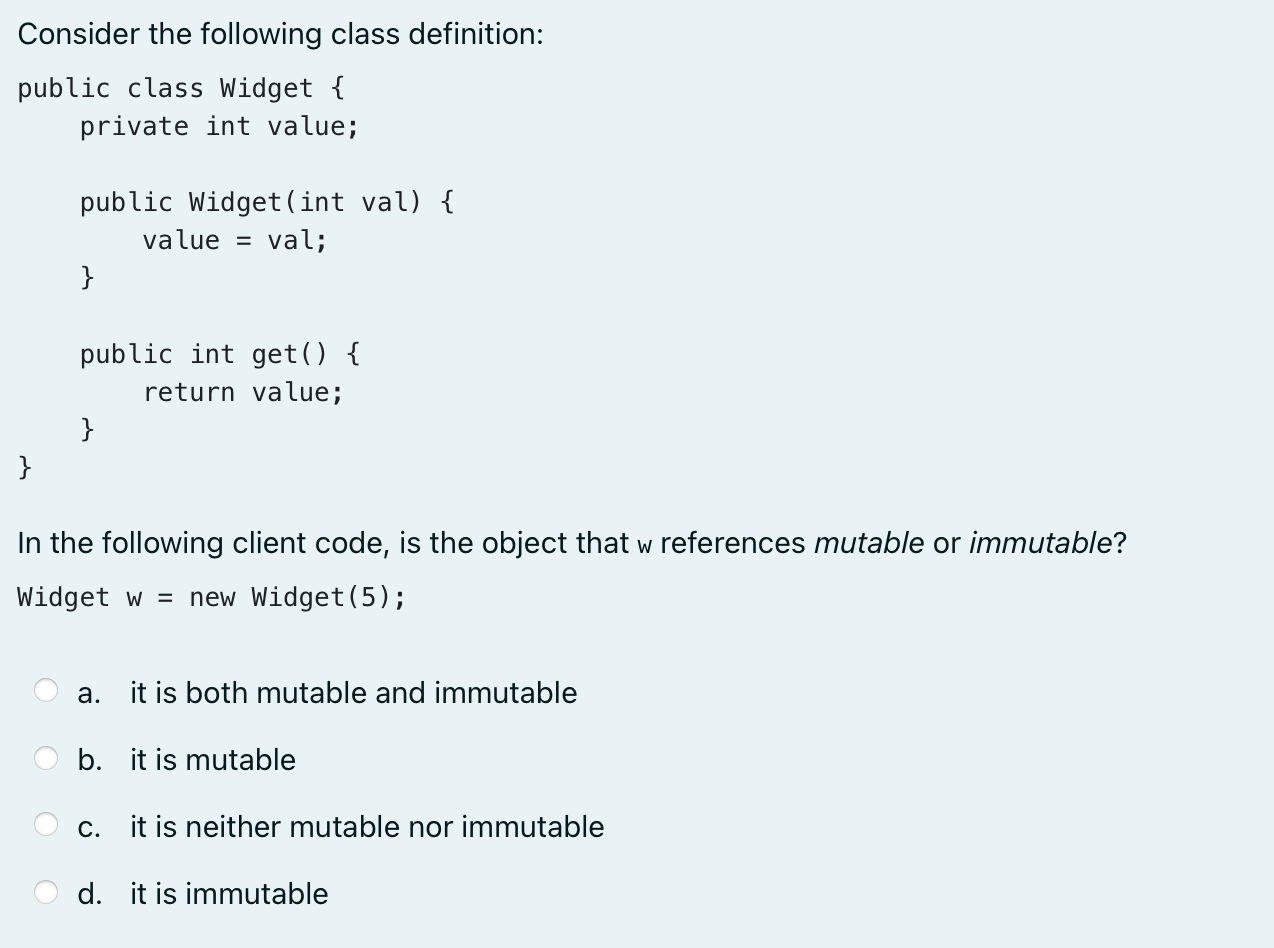
Consider the following class definition: public class Widget \{ private int value; public Widget (int val) \{ value = val; public int get ()\{ return value; public void set ( int n){ value =n; \} After the following client code executes: Widget w1= new Widget (5); Widget w2=w1; w2. set(1); what is the value of the following expression? w1.get ( ) a. 1 b. 0 c. 5 d. w is no longer valid Given the following definition: var rand = new java. util.Random(); what expression will evaluate to a pseudorandom number in the range 1...10, inclusive? a. rand()+10; b. rand(10); c. rand(11); d. rand(10)+1; Position the code pieces correctly to make the Java statement that would assign to the variable x the result of computing 5 =(1); Consider the following Java code fragment: String text = "ABC/DEF/GHI/JKL"; var tokens = new java.util.StringTokenizer(text, "/"); while (tokens. hasMoreTokens()) System.out.println(tokens.nextToken()); \} What is the second line this code fragment prints? a. ABC b. GHI C. JKL d. DEF e. I Given the following code fragment: String name = "programming"; evaluate name.index0f( ' m ' ) Answer: Given the following code fragment: String name = "Fred"; Evaluate name. charAt (2) Java String objects are immutable. Select one: True False Consider the following class definition: public class Widget \{ private int value; public Widget(int val) \{ value = val; \} public int get() \{ return value; \} In the following client code, is the object that w references mutable or immutable? Widget w= new Widget (5); a. it is both mutable and immutable b. it is mutable c. it is neither mutable nor immutable d. it is immutable
Step by Step Solution
There are 3 Steps involved in it

Get step-by-step solutions from verified subject matter experts
 Study Help