







Question: Consider the following code: public interface Switchable { boolean isSwitched(); void mySwitch(); } = SW public class SwitchScene implements Switchable { private boolean switched; public
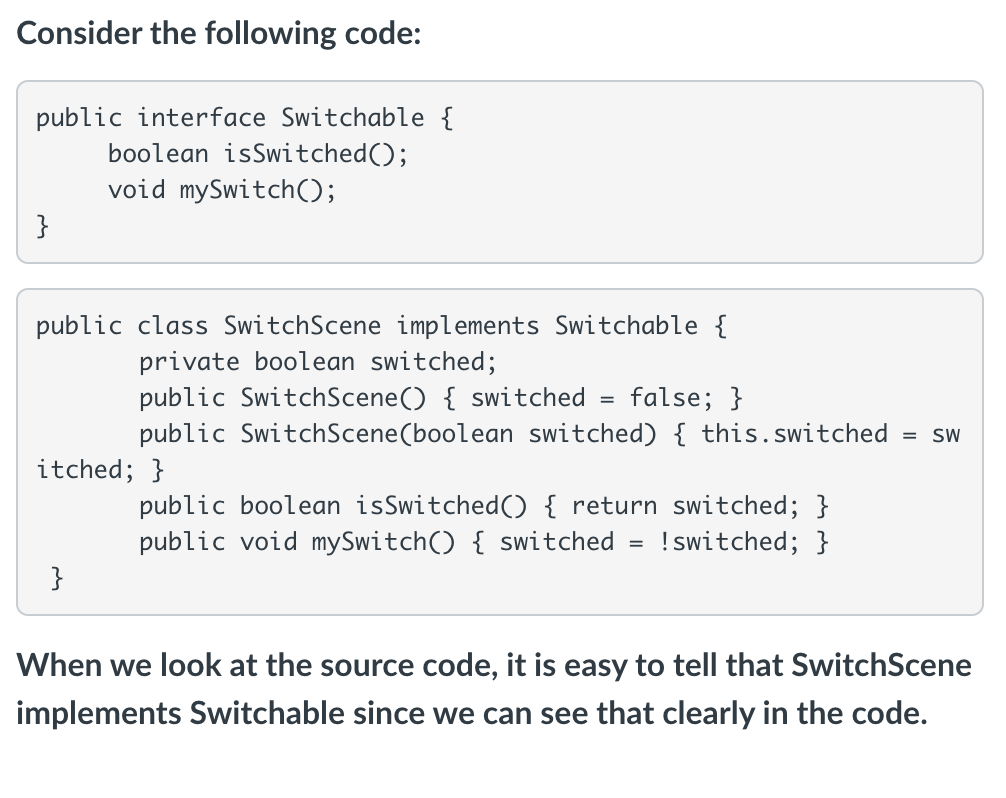
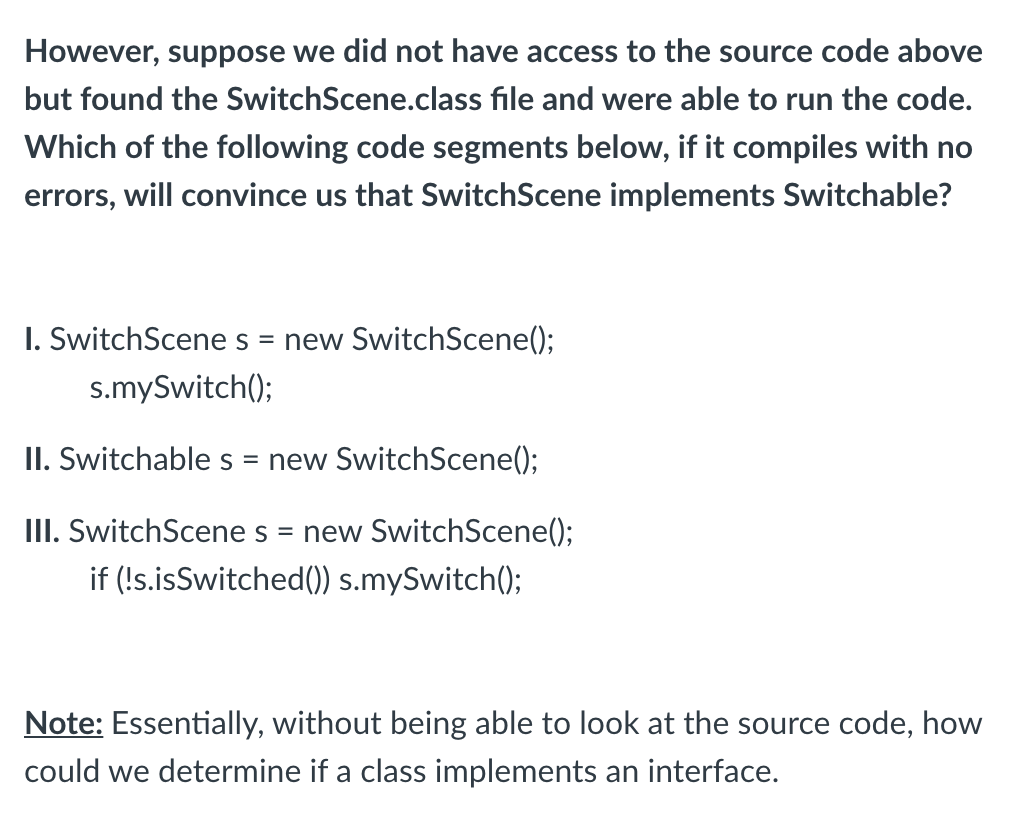
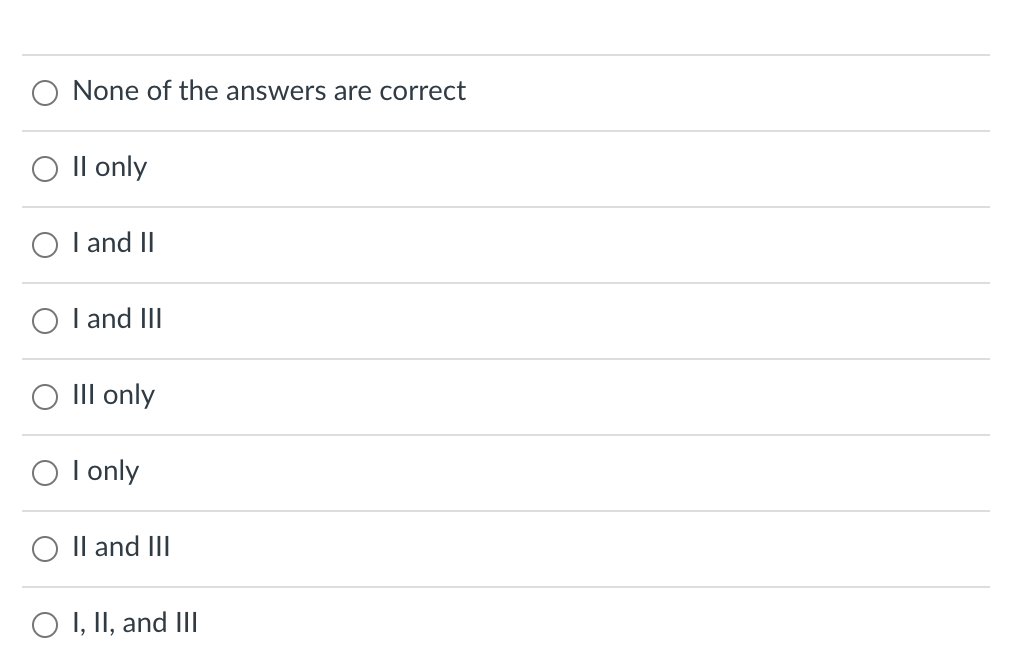
Consider the following code: public interface Switchable { boolean isSwitched(); void mySwitch(); } = SW public class SwitchScene implements Switchable { private boolean switched; public SwitchScene() { switched = false; } public SwitchScene(boolean switched) { this.switched itched; } public boolean isSwitched() { return switched; } public void mySwitch() { switched ! switched; } } When we look at the source code, it is easy to tell that SwitchScene implements Switchable since we can see that clearly in the code. However, suppose we did not have access to the source code above but found the SwitchScene.class file and were able to run the code. Which of the following code segments below, if it compiles with no errors, will convince us that SwitchScene implements Switchable? I. SwitchScene s = new SwitchScene(); s.mySwitch(); II. Switchable s = new SwitchScene(); III. SwitchScene s = new SwitchScene(); if (!s.is Switched()) s.mySwitch(); Note: Essentially, without being able to look at the source code, how could we determine if a class implements an interface. None of the answers are correct O II only O I and II I and III O III only O I only O II and III O I, II, and
Step by Step Solution
There are 3 Steps involved in it

Get step-by-step solutions from verified subject matter experts
 Study Help